
Translated material
Caution, reading!
Litell, Ershov, Sobibor: the book still gives rise to scandals, but this speaks more about society than about the authors
The Russian public has been prepared thoroughly for the renewal of the Nobel Prize in Literature.
In Taganrog, the teacher of the kindergarten was fired, she incorrectly, in the opinion of her parents, interpreted a line from the Yershov fairy tale “Horse-Bobunok”.
The children asked what it was to “put on a stake”, she replied: “The man was put on a stake, stake passed through his body and then the man died.”
It seems to be not to complain, but one of the children had fears and unwillingness to go to the garden. The Court of Appeal in Rostov-on-Don upheld the first decision-to dismiss. That is, fairy tales now need to give a humanistic sound and somehow avoid what is actually written in them.
Meanwhile, on the Internet, disputes around Lev Sobibor’s book unfolded. Afterword ". The author is one of the discoverers in Russia the topics of the uprising in the death camp Sobibor, the first edition was published in 2013. With a reprint they hurried. For six years, a fundamental breakthrough took place in the study of the topic: work in English, Polish, German, Russian languages came out. They were not taken into account in the new edition. As a result, Mikhail Edelstein, the philologist and scientific director of the fund Alexander Pechersky, wrote in the journal Historical Expertise about many inaccuracies and actual mistakes. This greatly reduces the value of the book. If she had a scientific editor, such an embarrassment could be avoided.
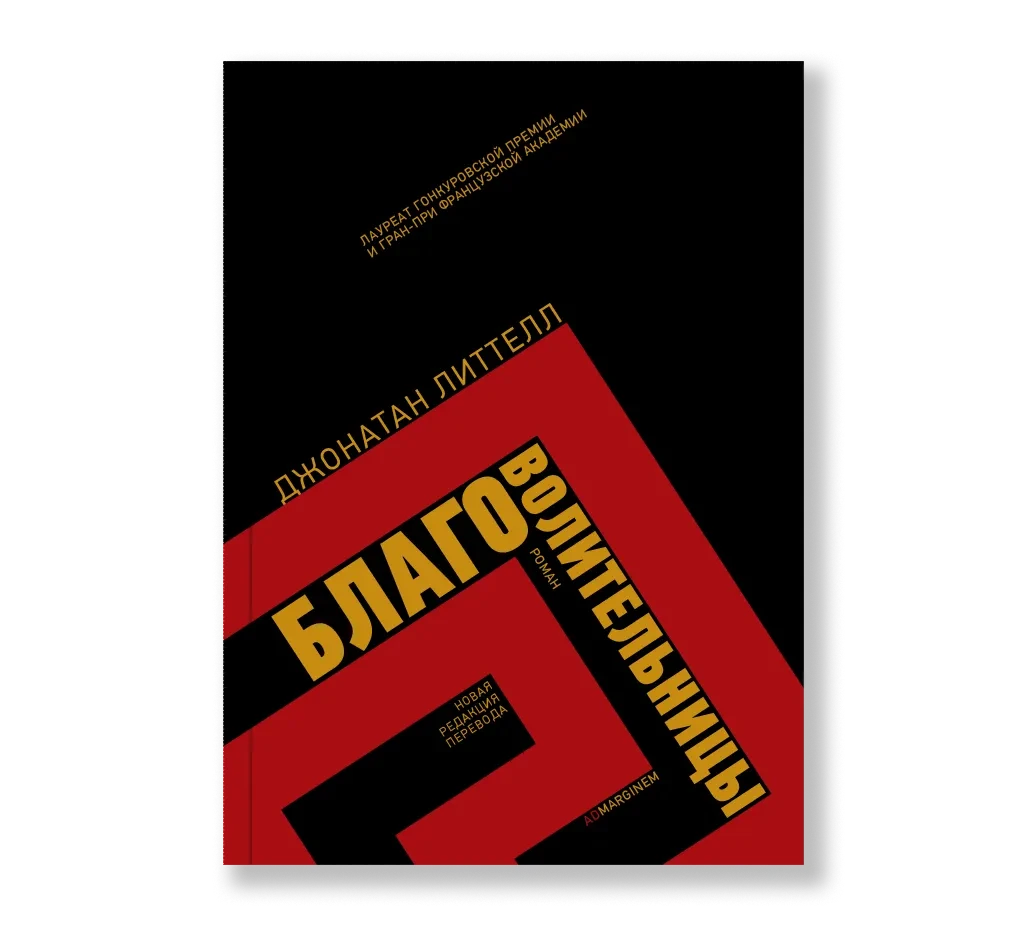
The new edition of the novel by Jonathan Littlel also caused a loud polemic. Seven years ago in Russia it was unlikely that something was more popular than “goodwriters”. The book, published in the AD Marginem fashion publishing house, became a bestseller, in France itself the circulation reached a million. The author received the main literary awards: Goncurovskaya and the Grand Prix of the French Academy.
But once, the classic wrote, everything secret becomes obvious. It turned out that the Russian translation is notolon.
Not only individual phrases and sentences disappeared, but also large paragraphs: reductions affected erotic, homosexual and other complex topics.
Littlel learned about what happened in 2016 thanks to the Latvian translator Densu Diminsh. During the translation, Polyglot Diminsh compared the publications in different languages and found gaps in the Russian text. A total of 785 editorial invasions, not one page of the disappeared text. Now they are all posted on the Internet. At one time, a similar undeclared invasion overtook Henry Bell. 150 semantic acts were introduced into the Soviet translation of the “group portrait with a lady”.
After long negotiations, AD Marginem released a new, full edition. The writer offers to count the book to everyone who read it before. The Council is ironic - 800 pages, how much in modern culture is deserved by such victims?
It is possible to argue whether to the benefit of editing the original, even if he is a bestseller (the bestsellers of editing are just to face). We can talk about the right of the editor in some cases of translation and wrong in others. But this is his work in order to offer and discuss, the author insists. The publishing house talks about the conspiracy versions of the reaction of Littlel, they say, he does not like Putin, he will be foreseen. The polemic occurs against the background of the tragedy - the editor Maria Tomashevskaya died these days after a long illness.
Her departure is not caused by a scandal, although the engaged news agencies and television throw headlines - "the translator was bored with the liberal intelligentsia."
In propaganda rage, it is easy to replace the essence, Tomashevskaya is an editor of the book. Her editing had to be agreed, this is the obligation of the publishing house. It is unlikely that the invasion was allowed by the copyright holder Gallimard, who usually directly prescribes a ban on changing the text in the contract. Partners are unlikely to be satisfied - the first edition of Littlel was published with financial support for the Foreign Ministry and the Ministry of Culture of France. Moreover, the Pushkin program and the national center of the book almost do not give grants together. They could cover all the expenses for the publication of the bestseller, the publisher had something to hire both a scientific editor and literary.
Three stories seem different - fear of the text, saving on a scientific editor and following the Soviet tradition, but they combine a lot. They have been talking about mass inability to read and understand the text for a long time, young people are also sick with this disease. Brand publishers are much less likely to get into trouble, their work is still evaluated on a high account. But the Hamburg account as a whole in Russia has long been there for a long time, deprofessionization has affected all spheres of public and business life, science is no exception. In an atmosphere of mutual weakening of requirements, intellectual and ethical norms are also subjected to deviation, it is not possible to maintain the previous level without resistance energy.