
Translated material
Mary Bird: Civilizations

Mary Bird 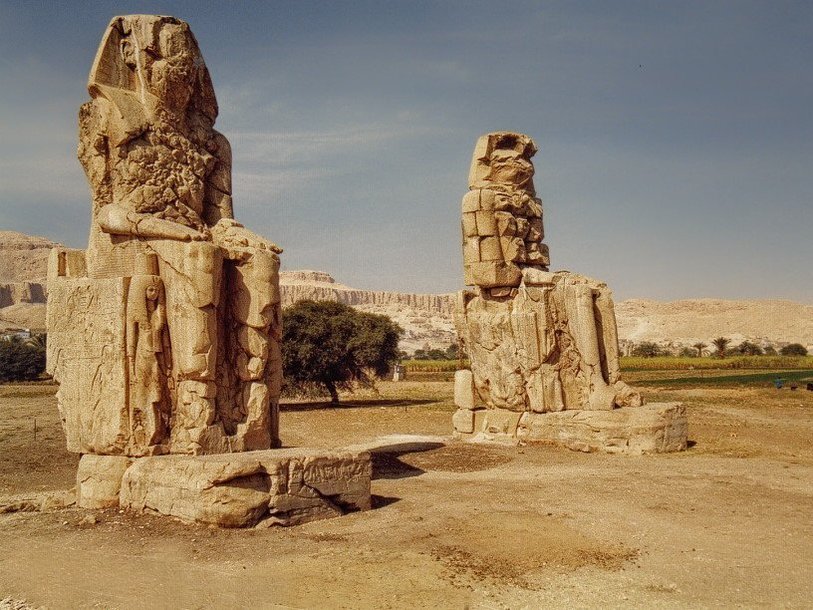 Colosses Memnon Ray in Manila/Flickr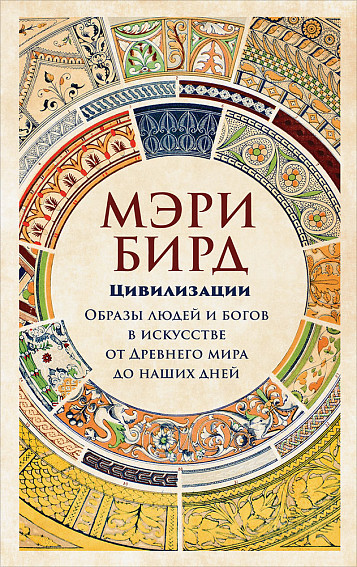
 Colosses Memnon Ray in Manila/Flickr
 The publishing house "Alpina Non-Fix" published a book by the British historian of antiquity Mary Bird "Civilization. Images of people and gods in art from the ancient world to the present day ”(translator Natalya Narcissova, scientific editor Nadezhda Prokazina) .
In this book, a professor of history of the ancient world of Cambridge University Mary Bird (previously known to the Russian reader from the books “ SPQR. History of the Ancient World” and “Women and Power”) proposes a new look at the idea of civilization, as well as the role that artistic images play in it. In the focus of her attention, there are images of the human body and gods in different religions, as well as accompanying these images of polemic and conflicts.
In the first part, the author explores how the human figure was depicted in one of the earliest works of art in the world - from giant stone heads carved by the Olmks of Central America, to the statues and clay products of ancient Greeks and the terracotta army of the first emperor of China. She explains how one specific version of the representation of the human body, which goes back to the ancient world, still affects (and sometimes distort) on how people in the West see their own culture and culture of others. Throughout this story, she is interested not only in the artists who made the images, but also to those who used them, looked and interpreted. In other words: what do we look like?
In the second part, Mary Bird turns to relations between art and religion. For centuries, religion has inspired art: from the Hindu temple in Angkor-Vat to the Christian mosaic of Ravenna and the exquisite calligraphy of Islamic mosques.
We offer to get acquainted with a fragment of the book.
In November 130, Emperor Adrian and his retinue arrived in the Egyptian city of Thebes, now Luxor, located about 800 km from the Mediterranean coast. By that time, the yard of the emperor - not only he and his wife Sabina, but also a whole motorcade of the servants, slaves, prappers, servants, guards and other many accompanying - was on the way (including the water) for more than one month. The most enthusiastic and enthusiastic traveler from all Roman rulers, Adrian seems to have managed to visit everywhere. An inquisitive tourist, a devout pilgrim and smart ruler, he wanted to know what was happening in his empire.
However, now the situation at the court was somewhat tense: only a couple of weeks ago, Adrian lost the greatest love of his life - no, not to Sabin, but a young man named Antina, who was also in his retinue. He, under mysterious circumstances, drowned in the waters of the Nile. The versions of what happened were different: murder, suicide and even human sacrifice.
But even a personal drama - or guilt - did not force the emperor to abandon the intention to visit the most famous object of the Egyptian cultural heritage and one of the most popular tourist attractions of the ancient world. We are talking about two giant, 20 meters high, sculptural images of the pharaoh Amenhotep III, sculpted in the XIV century. BC. e., to guard his tombs. By the time of Adrian, after almost one and a half thousand years, the history of these colosses was largely forgotten, and at least one of the statues was considered an image of the mythical Egyptian king of Memnon, the son of the goddess Zari, who fought on the side of the Trojans in the war with the Greeks and was killed by Achilles. It was this statue that attracted Roman tourists - not so much by its size as due to a more surprising fact: it could sing. Having come to her at dawn, it was possible, if you were lucky, to hear how Memnon welcomes his mother: the colossus made a sound that one ancient traveler was mundanely compared with the sounds made by the lyre with a torn string.
Where did this sound come from - a mystery. One or two skeptical Romans suggested that the boys were hiding behind the statue with such a lyre. Nowadays, a completely scientific theory has been adopted: after the earthquake has damaged a stone figure, it, heated and drying out in the morning sun, made a whistling sound in the places of faults. In any case, after the restoration conducted by the Romans, the statue stopped singing. But even in the prime of her glory, the sounds were not heard every day, therefore, when this happened, this was considered a very good omen. In the first visit to the imperial retinue, Memnon remained silent - a real disaster in the eyes of public opinion and a clear refutation of the version of “hiding boys”, which would probably be quite accommodating.
We know about the failure that befell the emperor on that first morning, since this event was described in verses by one of his companions, an influential court lady named Julia Balbill, an aristocrat, which came from the Middle Eastern Royal family, the sister of Filopopap, whose tombstone monument on the hill of Philopappa still remains one of the attractions of Athens. Her wirshs, more than 50 lines written in Greek, in four verses, were knocked out on the left leg of the Colossus, where they can now be seen and read along with a hundred other initiations to Memnon and its power composed by ancient travelers. But do not imagine how a balbil or one of the noble visitors climbs onto a statue with a cutter in his hand to make an inscription. Probably, they conveyed their texts written on a papyrus, to some local craftsman or official, so that he, of course, for a reward-found a clear place on his leg, which, by the beginning of the 2nd century. There was little left, and knocked out the inscription on behalf of the customer.
Balbill's poetry was not distinguished by literary virtues (“some [verses] are disgusting,” according to the strict judgment of one modern critic); But this is an amazing, almost diary entry, telling about her impressions of visiting the statue of mememnon. Balbill managed to come up with a flattering excuse for the initial silence of Colossus. In a poem, entitled “When we did not hear Memnon on the first day,” she (with her characteristic unstable) writes:
Yesterday, Memnon accepted the wife of the emperor,
without making a sound
So that the beautiful Sabina comes here again,
After all, the great appearance of our empress
I captivated you ...
After the next morning, Adrian still heard Memnon, the tone of Balbill became completely triumphant. She compares the sound with “ringing bronze”, and not with a frustrated lyre, and ascribes a triple scream (instead of the usual one -time) special mercy of the gods to her lord. In the next lines, it dares to assume that mememnon will exist forever: "I do not think that your statue will be destroyed." I’m sure she would be pleased to know that she was not mistaken!
There is something particularly exciting in walking in the footsteps of the close Adrian and peer into what they looked at 2000 years ago, even if we, alas, cannot hear singing. However, in this story, more importantly, it demonstrates how ancient people perceived the sculptural and picturesque images of other people - not as passive works of art, but as active characters playing a role in the life of those who look at them. Whether the singing was cheating, cunning or a miracle of nature, the statue of Memnon reminds us that the images often did anything. And the poetry of Balbilla recalls that art is not just a history of artists, men and women who painted and sculpted. It is also the story of men and women who, like her, looked and interpreted what they saw, as well as the story of how the methods of vision and perception changed.
If we want to comprehend the artistic images of people, we should return the spectators “to the frame”. And there is no better place for this than another attraction of the ancient world - a city that was also dear to Adrian. The emperor often visited there and willingly financed him. We are talking about Athens, the culture of which we can study very deeply, literally from the inside, thanks to thousands of images and millions of words - in poetry, prose, scientific hypotheses and philosophical reasoning, which the ancient Athenians left us.