
Translated material
Patriots-millionaires
Physics, lyrics and fighters with abortion received state support from the Kremlin, but not the defenders of human rights: a sign of time
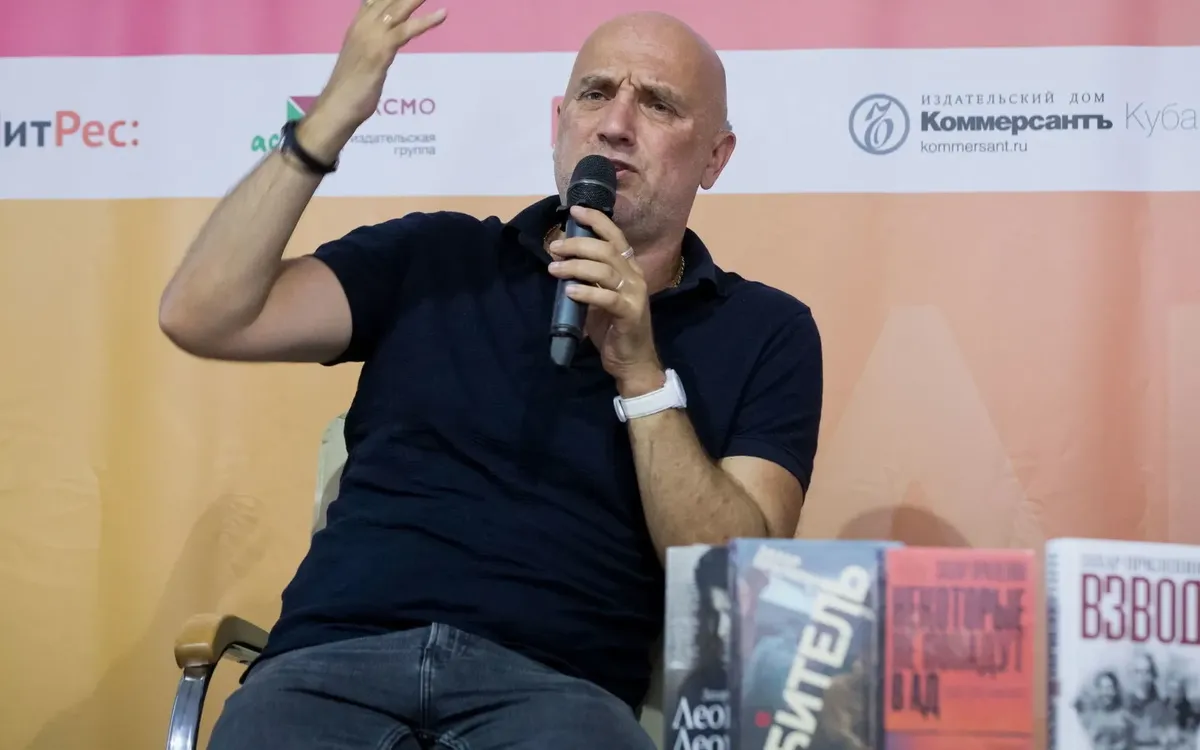
The Presidential Grants Fund summed up the results of the second competition for 2019. According to the choice of the jury, out of 4.3 billion rubles allocated for this half -year, 75 million will receive the organizers of the International Student Programming Championship, 50 million - the organizers of the Golden Mask festival. The other projects that won grants included a program for the prevention of abortion, a religious YouTube channel and the writer courses of Zakhara Prilepin.
The project for the prevention of abortion "Agency for Social Technologies in Defense of Family Values" received 12.2 million rubles. The agency should spend this money on supporting pro-literactions in eight regions of Russia: Tatarstan, Sverdlovsk, Magadan, Moscow, Omsk, Pskov and Rostov regions and Stavropol Territory.
The jury allocated 6 million rubles to create the Faith & Fiction YouTube channel from the Center for Ethno-religious Research. The channel is aimed at the prevention of “inter -religious and worldview tension”, which plans to fight with the help of videos and streams. According to the authors of the application, one of the reasons for the creation of the channel was “violation of social architecture, leading to undermining the fragile balance of civil society and the rule of law,” which is observed in the country in recent years.
The creative space "Russian Forest" for young authors Zakhar Prilepin received 2.6 million rubles from the presidential grants. As stated in the description of the project, writing courses are aimed at supporting young authors and publicists in order to develop patriotic literature. It is assumed that the leading seminars and workshops will be the writers Lev Danilkin, Sergey Lukyanenko, journalists Alexander Kotz, Dmitry Steshin and other publicists of a “patriotic orientation”.
Among the applications that rejected: “The Interregional Public Movement of the Crimean Tatar people“ Kyrym ”and the Fund for Assistance to the victims of the radiation influences“ Nadezhda ”. The Kyrym movement planned to win 10.8 million rubles for the provision of legal assistance to representatives of repressed peoples, and the Nadezhda Foundation was going to open a memorial, a museum and a monument to the victims of radio and disasters in Chelyabinsk at 3.66 million.
Grant also refused the projects of the Memorial human rights center: “Khabarovsk shipping - crossroads of fate” and “migration and law”.
According to the chairman of the Council of the Memorial human rights center, Alexander Cherkasov, the center has long submitted applications for its humanitarian and educational programs, but he has not seen money for many years.
According to him, the status of a “foreign agent” is partly affected by the decision.
“In addition, there is a strange distribution of money through the relevant funds,” says Cherkasov. - They are received by projects to protect human rights that are little related to [to activity] and, surprisingly, as those who are among them. In addition, it is not clear how much the issue of conflict of interests between members of the bodies distributing grants and organizations receiving them is resolved. There is a feeling that there is a conflict of interest here.
According to the Director of the Center for Protection of the Rights of Media Galina Arapova, who three years ago left the jury of “civil dignity” (in 2017 the movement became the operator of presidential grants), questions for the distribution of financing were even earlier. Arapova left the jury when experts began to put pressure on some projects.
“Grants were not given very much to human rights organizations,” says Arapova. - Cases when, instead of a strong project, co -financing was received by one who simply could not withstand critics, have been before.
The most egregious case was when Grant received a project with political concerts. At the same time, in the same competition, financing was not allocated almost the only children's hospice in St. Petersburg.
In addition, once, another expert appreciated the same project in a radically opposite way.
When such things happen, it becomes clear that the results of the competition are either politicized, or my voice does not affect them. The system has now been reformed, but judging by what I see, unfortunately, is all the same.