
Translated material
The new phone from Google understands the waves of his hands and sees the approach of the owner. This was taught by the Russian engineer Ivan Pupyrev
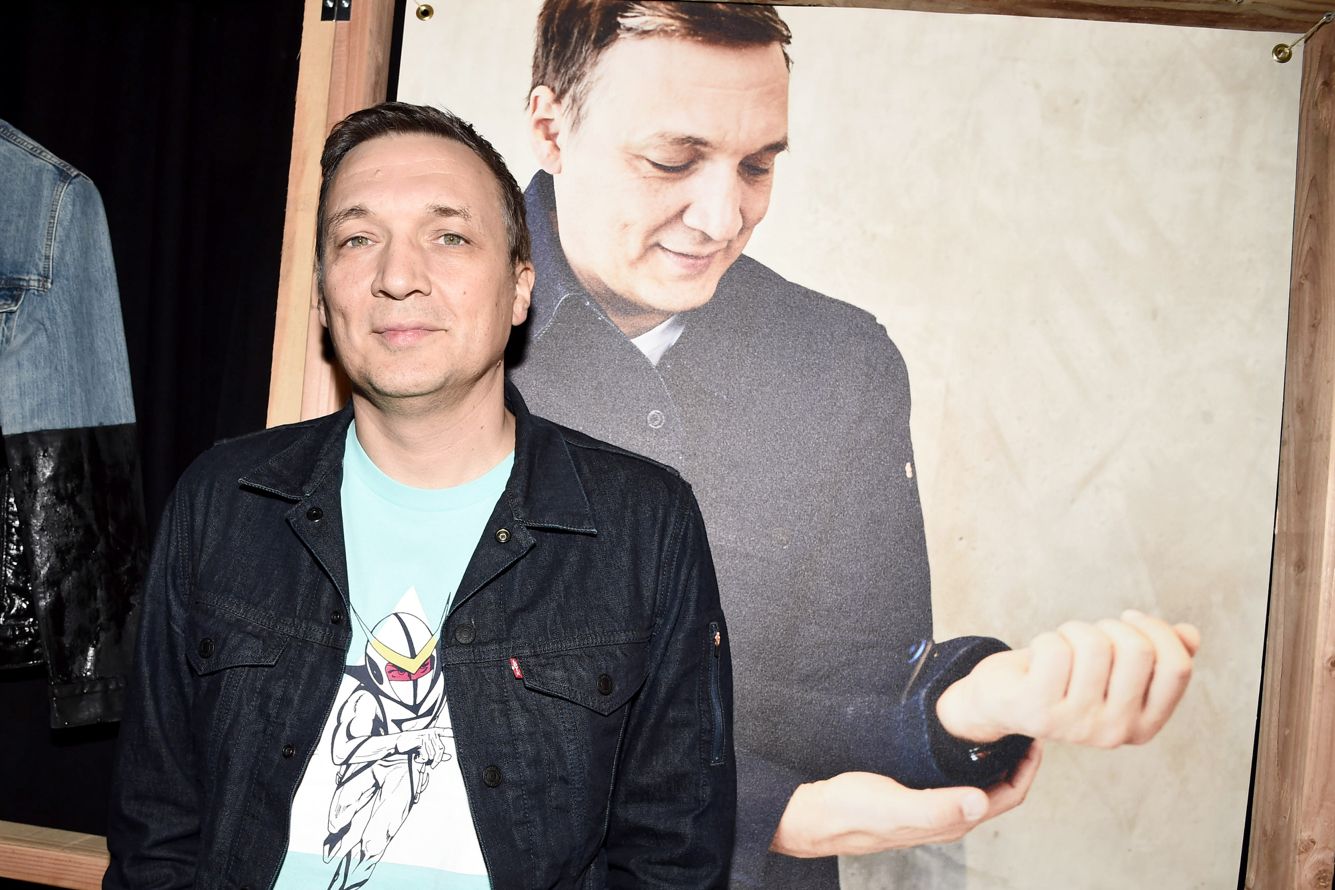
On October 15, Google conducted a presentation of its new products, the central place of which was occupied by the new Pixel 4 phone - the first model in the market, which understands the waves of the hands in front of the screen, and also quickly recognizes the owner's face from any angle. These innovations are responsible for the technical director of one of the Google divisions Ivan Pupyrev, a graduate of a Moscow university, a scientist and an engineer who managed to work at Sony and Disney, anticipate the iPhone era, and become one of the most significant visionaries of the company. Medusa tells the story of Pupyrev and his amazing projects.
Google has been developing a new functionality for phones for five years
The list of new products in Pixel 4 is a new powerful camera with an eight -fold zoom and a recorder that turns speech into text in real time. However, during the presentation of the phone, the company focused on another, fundamentally new technology for the market called Motion Sense. This is a mini-radar built into the upper part of the phone, which recognizes human gestures and waves with his hands without touching the screen. In particular, it allows you to switch music tracks, turn off the alarm or muffle calls with hand gestures.
Motion Sense is also responsible for instant activation of face recognition, tracking the appearance of the owner of the phone nearby. Thanks to this, Pixel 4 will immediately recognize the owner - so he does not have to deal with the lock screen at all, Google claims , calling Pixel 4 recognition the fastest in the market (and the person can be at any angle to the screen). The company promises that the variety of recognized gestures and functions will constantly grow.
A group of advanced technologies and projects (Advanced Technology and Projects Team, Atap), which is part of Google as a semi -autonomous unit, has worked on the creation of a radar for five years. The project, called Soli , was invented and headed by a graduate of the Moscow Aviation Institute, a scientist and engineer Ivan Pupyrev, who has been operating in the West since 1994.
In the Google promotionalik, Pupyrev explains the meaning of his technology about the new phone: “Make sure that language interaction with technology becomes closer to our ordinary behavior.”
In a conversation with the technological publication of The Verge, following the presentation of the phone, the researcher admitted that he laid out more serious functionality in Soli than the one that eventually entered the market. The company had to sacrifice the "vocabulary" of gestures in order to achieve trouble -free communication. “For example, what is a swipe? - the engineer argues. - We spent weeks, trying to understand what it was. There are dozens and dozens of ways that people are daring. ” However, to the remark of the publication that Motion Sense has so far seems to seem more like a marketing trick than a breakthrough idea, Pupyrev objects that the essence of any successful technology is the simplification and elimination of “small friction” in everyday reality. This is exactly what Soli does, he says.
After graduation from MAI, Pupyrev was engaged in research for the US Ministry of Defense, Disney and Sony
In the spring of 1994, a professor at Japanese University Hiroshima Tadao Ichikav received a letter from Pupyrev-at that time the 26-year-old graduate of the MAI, wrote to RBC in 2017. The engineer told the professor that he had read his article on virtual reality technologies and would like to learn from him. Pupyrev received a scholarship from the university and went to receive a doctoral degree in it. “The beginning of the 1990s for young people is high-risk times,” Pupyrev explained his departure in an interview with RBC. - There was confusion: what to do next? Because all the plans that you did, they went ... in a different direction. "
He soon replaced Japanese University to the Hitlab laboratory at Washington University in Seattle, which studied the money of the American Ministry of Defense as augmented reality technology can be used in field medicine. Pupyrev had experience in this area: in Moscow, he worked at the Bakulev Cardiac and Assembly Institute, developing the mathematical foundations of predicting the patient's condition during open heart operations.
Three years later, without breaking his connections with Hitlab, he returned to Japan to add a dissertation. His colleague in the laboratory, Hirokaza, Kato recalled that he was remembered by the Russian as one of the most talented interactive designers. “He also knew how to drink a lot, but it must have been a common story for Russian,” said the Japanese.
Then Pupyrev decided, in his expression, to “tie” with virtual reality: “It seemed that it was too early: the graphics are weak, there were no powerful computers, smartphones did not exist then.”
In the early 2000s, the scientist moved to Sony, where he first began to create commercial products. He decided to develop an analogue of buttons on the touchscreen - the interface gave a click feeling when pressing the display. Sony has released such control panels for TVs and home electronics to the American market in 2002. And in 2004, together with his colleagues, he presented the Gummi project - a small display on which you can drive a finger on the back of the device to move objects. He never entered the market.
“The tactile screens that we invented in the early 2000s entered the market in a product with Tachskrins,” Pupyrev recalled his work in Sony in an interview with VC.ru. - And then the iPhone came and killed everyone. Then we made a system of content design for ordinary phones with buttons. Also, the iPhone killed everything. Then we made a Vita version for the PSP - there the touchscreen was made behind. It was also our development in the 2000s, the project was the project. The iPhone also came and killed everything. That is, the iPhone killed everything to the hell. ” The scientist himself foresaw the success of tactile screens - but “in those days no one really believed in the touchscreen,” he complained in the same interview.
As a result, Sony began to lose money and close projects, so in 2009 the scientist returned to the United States, but already to Disney, which opened the research laboratory. There he created the forerunner of the radar for Google - Touché technology. It allows you to recognize the touch of a person to the object and even to water. Disney integrated her into the attractions. For example, in Disneyland in Shanghai there are “digital plants” that meet the sound of touch. Another large -scale project was the Surround Haptics technology - it allows you to simulate tactile sensations and a sense of acceleration thanks to the sensors on chairs and clothes. Based on this technology, in 2017, Disney opened an attraction dedicated to the film “Avatar” in his park in Florida, a virtual flight on the dragon’s back.
Google lured Pupyrev a promise to make it part of the "gang of pirates"
In 2014, the head of ATAP Regina Dugan called the scientist to work in her unit, promising him freedom of action - although taking into account the requirements of commercial products once every few years. She described Atap as “a small gang of pirates on a very fast boat” (then the laboratory was still part of Motorola, already absorbed in Google). Pupyrev became the head of two ATAP projects, including Soli. And in 2015, Google has already begun to talk about technology in the formulas.
In 2016, the scientist presented the “smart” clock with this chip. The clock understood gestures of switching between messages and access to the desired message on the list.
In the same year, Google was presented by another niche product - a high -tech Jackard jacket, released together with Leviʼs. Micro -combat motion in the cuffs made an interactive fabric - it reacts to gestures and touch, connects to the phone via Bluetooth and allows you to respond to a call, check messages, control the player and the like. The jacket cost $ 350 and had no much success. In September 2019, the company introduced the second version - the price dropped to $ 248, and the jacket itself became even smarter - it can, for example, find out if your Uber taxi is far.
Pupyrev, already in the status of the technical manager of ATAP, continues to come to Russia from time to time - he gives lectures and gives an interview. In one of them, he said that the main lesson that he carried out of work on Google: “Draw an idea” is not enough. “When you invent something, you just need to prove that your idea works, and to produce the product you need to demonstrate that it always works. It was a great revelation for me - it sounds obviously, but many do not understand this, ”he explained.
Google, meanwhile, is already planning new projects involving SOLI. In January 2019, the company got from the Federal Commission for the Commission of permission to increase the power of the radar in consumer products. The resolution says that this will allow users with speech impairments or mobility to control devices contactlessly. Google also promises that the sensor will allow users to press the “invisible button” between the index and thumb. In addition, the radar signal will be able to penetrate through the fabric, allowing you to control devices in a pocket or backpack. The technology “will serve as public interests, providing innovative devices management functions”, the commission agreed, issuing permission.
Peter Lokhov