
Translated material
Farewell tour of the spr
The reason for Fedotov’s resignation is the president’s reluctance to publicly discuss the actions of “courts and law enforcement agencies”
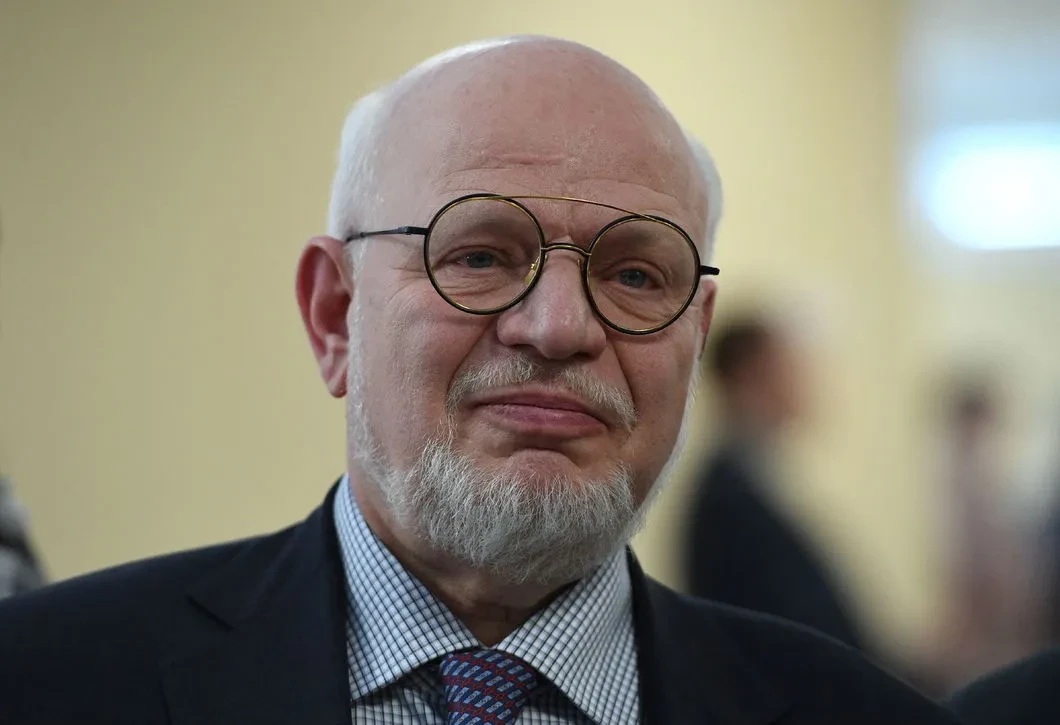
When on the afternoon of October 17, the first reports appeared in the media about the likely resignation of the Chairman of the Council for Human Rights, Mikhail Fedotov himself conducted in St. Petersburg an exit meeting of the HRC Commission for Civil Liberties and Civil Activity, along with Nikolai Svanidze, Alexander Sokurov and other members of the Council. Some of us learned about the impending decision of the president the day before, and Fedotov before, but he continued to conduct a hearing as nothing, but I must say that they passed intensely.
In one hall (information and exhibition center D.S. Likhachev), this time and those who walked (and more often stood) in the third column of the May Day procession on Nevsky Prospekt, and those who very harshly detained and dispersed them were collected. To express claims to the eyes of the “security forces”, for example, one of the applicants of the action, Alexander Shurshev, whose brutal detention was a jump on his back during a peaceful conversation with the police colonel “exploded the Internet” on the same day.
The Human Rights Council of St. Petersburg (he is headed by a member of the HRC Natalya Evdokimova) created a commission that conducted an investigation into the circumstances of the conflict on May 1, interviewed hundreds of participants, examined thousands of photographs and hours of videos. In fact, this work, initiated by the St. Petersburg sociologist Vladimir Kostyushev, replaced the internal official investigation of the police and the Russian Guard, which we hardly learn about whether it was carried out or not.
So, regarding the actions of the “astronaut without identifying signs”, who grabbed behind the neck of Shurshev and threw it on the asphalt, a consensus seemed to be reached at the meeting: this is a crime, it is impossible.
But to the question of whether this employee, who came to the meeting, did not answer, referring to the competence of the Investigative Committee, whose representatives were invited, but did not come (like representatives of the judiciary).
All the texture collected by the public commission entered the report, which was later published by a separate brochure "in defense of human dignity." The Commissioner for Human Rights in St. Petersburg, Alexander Shishlov, in May demanded to change the agenda of the Legislative Assembly in order to immediately discuss the events of May 1 and the actions of the security forces, but was supported only by a few deputies, and all the work done was not interested in government representatives until the exit meeting of the HRC on October 17.
At this meeting, the vice-governor of St. Petersburg Vladimir Kirillov, the head of the Federal Antimonopoly Service of the National Guard Mikhail Sobolev, acting Ivan Yeremeyev and others, the head of the public order protection department, and others tried to dispute the conclusions of the human rights commission - and partly reasoned. These disagreements, explained when looking from two sides, was easy to remove in hot pursuit, but the authorities deliberately did not go to cooperation with civil society, and the deputies of the Legislative Assembly did not want to, although they could, give the investigation the status of parliamentary. The arrival of the HRC Commission was also postponed for six months, so as not to “politicize the issue” before the elections in September (in fact, following the conclusions of the public commission, the dispersal of the third column was primarily connected with the requirement of the honest elections of the governor).
Meanwhile, if you do not delve into the texture, but talk only about the conclusions of the report, they come down to the fact that
The “security forces”, having missed the first (pro -government) columns of the procession on May 1, in relation to the third from the very beginning behaved provocatively.
The “disagreements” were immediately taken into the ring exceeding them in strength and in number in the rows of “astronauts”, a pre -agreed sound technique and part of the banners were not missed into the column, and festive relaxation was replaced by stress. The detention began before the start of the procession, and then continued “pointwise”, by wedging into the crowd, and the choice of those who were grabbed, beaten and pulled by the anonymous “astronauts”, the remaining did not explain. These actions gave rise to a purely human reaction of the rest of the participants, initially not configured to any clashes (there were never before at the May Day demonstrations in St. Petersburg). But attempts to protect the comrades and with someone to explain themselves only multiplied the cruelty of the detainees and the number of detainees.
In the same way, in fact, the “astronauts without identification marks” behaved and several months later during summer shares in Moscow, and it was not so important whether they were allowed or not.
The main thing in this tactic is the injection of voltage and provocation, which are then cut out of the research framework in court and public discussion.
Actions in St. Petersburg became a rehearsal of similar actions of the security forces in Moscow, and it can be argued that if the finished report of the Commission of the Human Rights Council of St. Petersburg was publicly discussed in May, then in Moscow the actions of the security forces could be more humane. However, the “security forces” are not ready to discuss this with civil society voluntarily - only under pressure from the presidential administration, and even then in the pre -set style of the “acquittal”. This means that the game of exacerbation is part of a more general political strategy. The HRC still, as he could, interfered with this, calling for a dialogue.
The mutually biased mood of human rights activists and “law enforcement agencies” plus the efforts of the appointed speakers from the “security forces” just in case (for the future) also to shove responsibility to each other make this conversation very difficult, but still possible - if there is such a diplomatic intermediary as Fedotov. But someone can at least not like such a bitter medicine that can at least weaken the increasing tension in relations between the state and society.
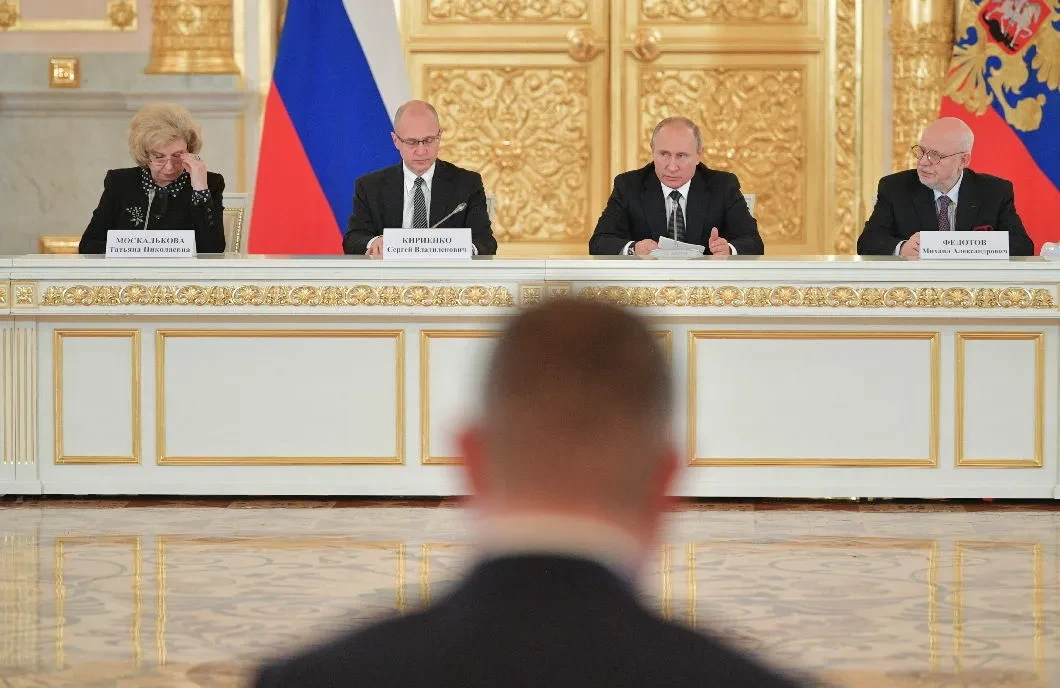
The already predetermined, apparently, the resignation of Fedotov will occur on the eve of the meeting of the president with the entire composition of the HRC. At the Presidium of the Council, back in September, the order of speeches at this meeting was discussed.
The first question on our part was to be a report on violations in the 2019 elections,
the second - tough and meaningless detentions on mass promotions,
The third is the crazy undertaking of the Investigative Committee on “Mass Riots” and the complete helplessness of the vessels before this.
Further, within the framework of the time allotted to us by the president, the ecology should have already been discussed,
And there are more vegetarian issues - like the fate of thick literary magazines.
The new chairman of the HRC will have the right and the opportunity to change this order to the president, and the reports themselves are entrusted to other members of the council - we are different there ...
Probably, the president was tired of listening to the same thing about the arbitrariness and unprofessionalism of the “law enforcement agencies”, and even “with outsiders” on the air, and perhaps he himself can’t do anything with them, but he is shy about this.
What the HRC managed to do in St. Petersburg is largely due to the activity and sequence of St. Petersburg colleagues-it will hardly be repeated at the federal level in Moscow.