
Translated material
After us, at least a protopop
Why the Kremlin Old Believers and how they showed themselves in the Crimea and in Ukraine
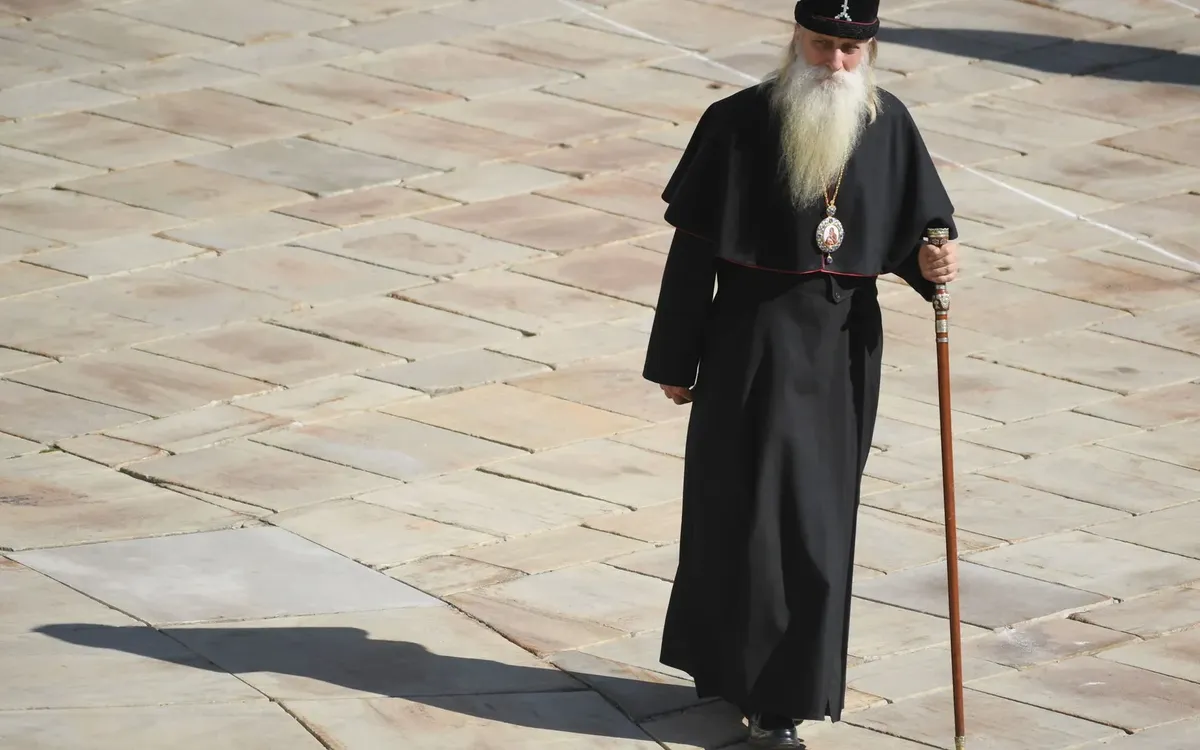
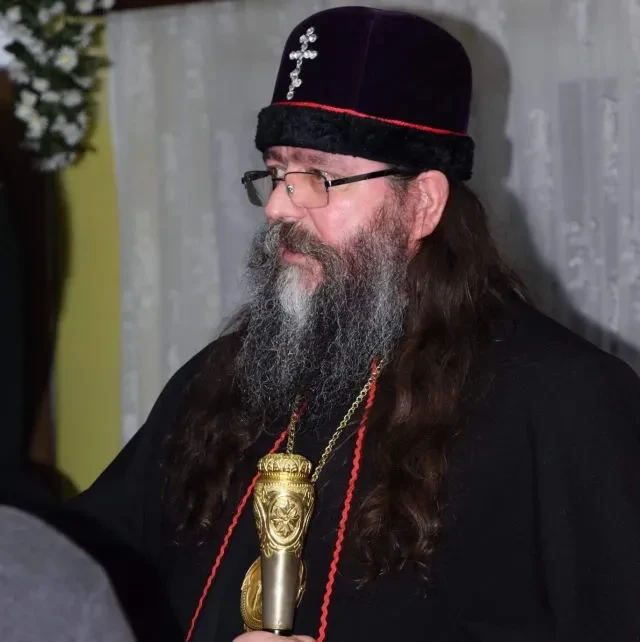
Vladimir Putin became the first Russian leader to personally arrive at the Rogozhsky cemetery, to the spiritual center of the largest consent of the Russian Old Believers - Belokrinitsky. This happened on May 31, 2017. The sovereign guest was accepted by the 70-year-old Metropolitan Cornelius (Titov)-the Primate of the Russian Orthodox Old Believer Church (RPSC), uniting 370 parishes. Before that, they met in the Kremlin.
During the events of 2014, the RPSC is much more active than the Russian Orthodox Church, supported the actions of the Russian authorities in the Crimea and in the Donbass. The few Crimean parishes of the RPSC were transferred from Kyiv to the Moscow diocese, and at worships they introduced prayers about the Russian army and "conquering enemies and adversaries."
But this is an external, ceremonial side of the event. Few people know that a few days after Putin’s visit, Pokrovsky Cathedral on Rogozhsky - the main temple of the RPSC - was re -consecrated at the insistence of a group of conservative parishioners. The rank of small consecration “secretly” was performed by Priest John Mikheev (son of the Chisinau Bishop Evmenia), who after that was transferred from Vereya near Moscow to Sevastopol - to build a new temple of St. Vladimir.
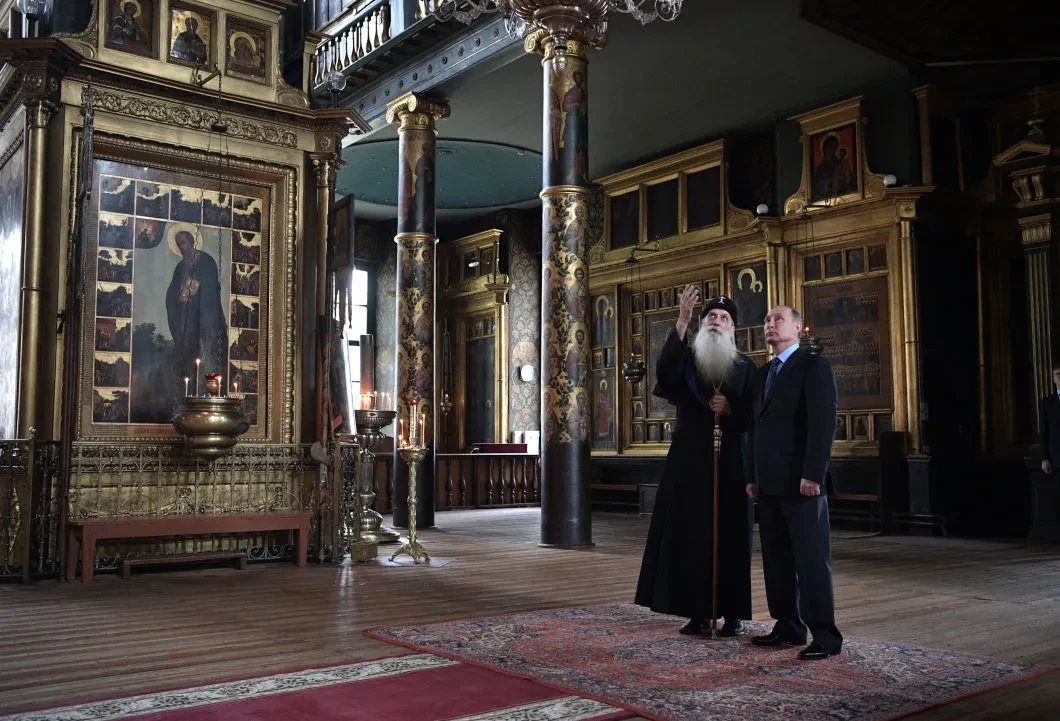
Of course, the parishioners explain his need for re -reference, of course, the parishioners explain his need for the actions of the president’s protection, who entered the temple with weapons, and the bait was allegedly sniffed by service dogs.
The visit itself also passed “behind closed doors”: only a small choir and several assistants to the Metropolitan were allowed into the cathedral. At this time, parishioners and employees of the Metropolitan of the Russian Orthodox Church were closed in one of the administrative buildings in the neighborhood.
In the invalid Christmas church, next door to Pokrovsky Cathedral Putin, an exhibition of icons and church utensils was shown, which, according to the priest of the Russian Orthodox Church Alexei Lopatin, "more than half consisted of objects not belonging to the metropolis." It was then that Metropolitan Cornelius asked the president at the state level to celebrate the 400th anniversary of Protopop Avvakum (having allocated the corresponding budget), to return the RPSC that belonged to her before the revolution of the building and provide the land of the Old Believers who want to move to the Russian Federation from South America. These three projects have become the main directions of grant support to the RPSC of the last two years.
Foggy projects, hidden beneficiaries and tragedy of a migrant
One of the largest was the Presidential Grant in the amount of 6.5 million rubles allocated in 2018, the Old Believers' Duration and Educational Center "Krinitsa" at the Nikolsky Church at the Belorussky Station in Moscow. The aim of the project was to create and post in the open Internet production of book monuments of ancient Russian culture and art preserved by the Old Believers. Head of the Library Department of Metropolis Fr. Alexei Lopatin reported on the Cathedral of the RPSC of 2018 on digitization and publication of more than 200 monuments and the development of a systematic catalog of the meeting. True, it is impossible to see the fruits of his works:
At the end of the grant project, Metropolitan Cornelius refused to find 20 thousand rubles in the Metropolis budget to pay for the hosting of the official website of the RPSC, where the meeting was posted.
(The official site was also reconstructed at the expense of the presidential grant fund, which is proudly reported on his title page.) “Unfortunately, complains about. Alexey, - from the part of the Metropolis there is no financial support for publications that the [library] department is preparing. Almost all books came to the money of our philanthropists. ”
A little less-3.5 million rubles-received in 2017 the Cultural and Puli Center named after Protopop Avvakum. The content of his project is much more vague than that of Krinitsa, and it is difficult to measure its results. On the fund’s website, this content is stated as follows: “The development of cultural ties and cultural exchange with foreign Old Believer associations, the popularization of the cultural heritage of the Old Believers.” As part of the project, some lectures were given and a conference was held. The Orthodox community of the Orthodox community, located in Primorsko-Akhtarsk, received presidential support for a similar project-“Preservation and popularization of the spiritual heritage of the Russian Old Believers and the support of historical and cultural ties with communities abroad”.
Obviously, the presidential administration is seriously interested in the "foreign policy" potential of the Old Believers.
To solve more specific problems, 4 Old Believer consents (two priestly and two Popovsky) last year created the Russian Pravda Foundation. Igor Zavyalov, Deputy General Director for Financial Affairs of Rostec Group of Companies, became the chairman of his board of trustees. His office, however, is located not in the Rostec building, but in the Moscow House of House, which was rebuilt for the money of the Moscow government in the Rogozhsky cemetery.
By the way, this is not the only office in the huge church building - at the same address (Rogozhsky village, 29) is the construction company "Eurostroy". In the neighboring houses of the spiritual and administrative center of the RPSC, Aerokom-Service, Euroclinic, Granitarium are located ... In the former almshouse of Belov of the 19th century, where the child was the house of the child, some kind of “sports equipment” was located.
The informal business center at the cemetery is protected by the Cossack Stanitsa public organization, officially formalized as the “Public Paragraph of Process of Order”. The representatives of the “village” during the services are very colorful, impressive at the entrance to the Pokrovsky Cathedral, quite unceremoniously lifting random tourists or unlucky new universes who tried to cross themselves with three fingers. The parishioners complain that the Cossacks, who were plunging in the Rogozhsky, intervene in intra -communal affairs, demanding, for example, to excommunicate from the sacrament of a particular opponent from the "indigenous" old -oven ones.
The Cossack Stanitsa protects the main financial secret of the Rogozhsky cemetery: who is the beneficiary of all this lease activity?
The Russian Truth Foundation states that its main mission at the initial stage is the relocation of foreign Old Believers to Russia, mainly from Latin America. For several years, the Russian authorities have been trying to organize this resettlement, but often it ends with scandals.
The story of Danila Zaitsev is indicative, who tried to move from Uruguay to the Far East, then to the Belgorod region, but collided with corruption, deceit and arbitrariness of officials, which made him return to Uruguay. According to Danila, at the beginning of the “zero” settlements of the Russian Old Believers in Argentina, Brazil, Bolivia, Uruguay and Chile, “different ambassadors, consuls, doctors of political sciences, and everyone convinced us to return to our homeland.” But all that they told, "turned out to be a lie."
“Many immigrants poured bloody tears. 17 billion rubles were invested in the program, and not a single project took place by relocation, ”Zaitsev told Ekhu Moscow. - Wash the money, the project to inflate for several million dollars - this was the interaction of immigrants with the "native" authorities. "
“Not the mother accepted us, the stepmother accepted us,” Danila made a bitter conclusion ...
Despite the fact that after the president’s visit around the RPSC, considerable money is now spinning, employees of the Rogozh community almost die of hunger. They complained to the author of these lines, that many officially employed in the community of Kychoshan, ringing, watchmen receive the minimum wage rate, and they delay the TU for four months. Attempts to find out something from the authorities are stumbled upon shifting responsibility between two legal entities-Metropolitan and community. Their legal relations are confused, and in most cases it is not clear who exactly and how to form a wage fund.
"Borovsky technology"
Old Believers are subtle connoisseurs of ancient Russian art, primarily icon painting. Their meetings were almost completely ruined under the Soviet regime, but from the remaining grains, something often disappears, then surfacing at international auctions. The most valuable monuments are lost due to the incompetence of “restorers” hired by the Metropolitan “at an affordable price” (despite the fact that solid amounts from the state budget are allocated for this work). In the April of this year, the Scientific and Restoration Commission removed from working with the icons of the Pokrovsky Cathedral of a certain Dmitry Yurov, who painted over the oldest masterpieces with modern colors.
So the icon of St. Cyril of the 16th century was irreparably spoiled.
“The commission, which included restorers, representatives of the Metropolis and the Rogozh community,” the official act said, ”D. Yurov examined the restoration workshop. Painted paint, materials and aggressive solvents were discovered for use during the restoration of icons. ” The case was referred to the Ministry of Culture of the Russian Federation, supervising the protection of cultural monuments, the issue of initiating a criminal case is considered. At the same time, Dmitry Yurov moved to the Kazan diocese of the RPSC, where he not only continues experiments on the icons, but also tries to train local young restorers.
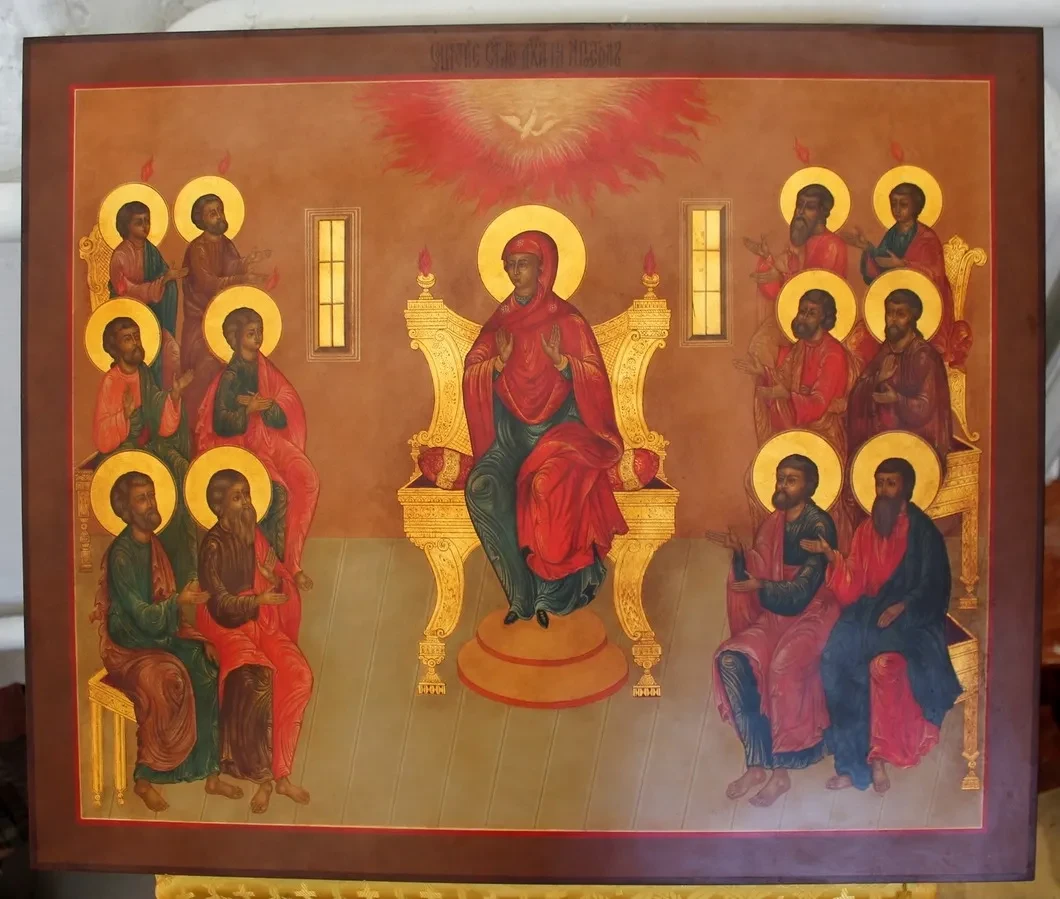
A more alarming story occurred in the Vvedensky church of the RPSC in Borovsk (Kaluga region). There, under the guise of restoration, two icons of the Old Believer letters of the XVIII-XIX centuries were replaced-the Savior of the Miraculous and the Descent of the Holy Spirit on the Apostles. Original icons were replaced by the newly described - approximately the same size and similar compositions. At the same time, the pseudobsators did not even try to “grow out” the boards. It is impossible not to notice such a substitution, but, unfortunately, we did not succeed in finding out that the abbot of the Borovsky community, Archpriest Artemon Schendrigailov. It is noteworthy that it was Borovsk who was elected to the RPSC by the center of celebrations on the occasion of the 400th anniversary of Avvakum.
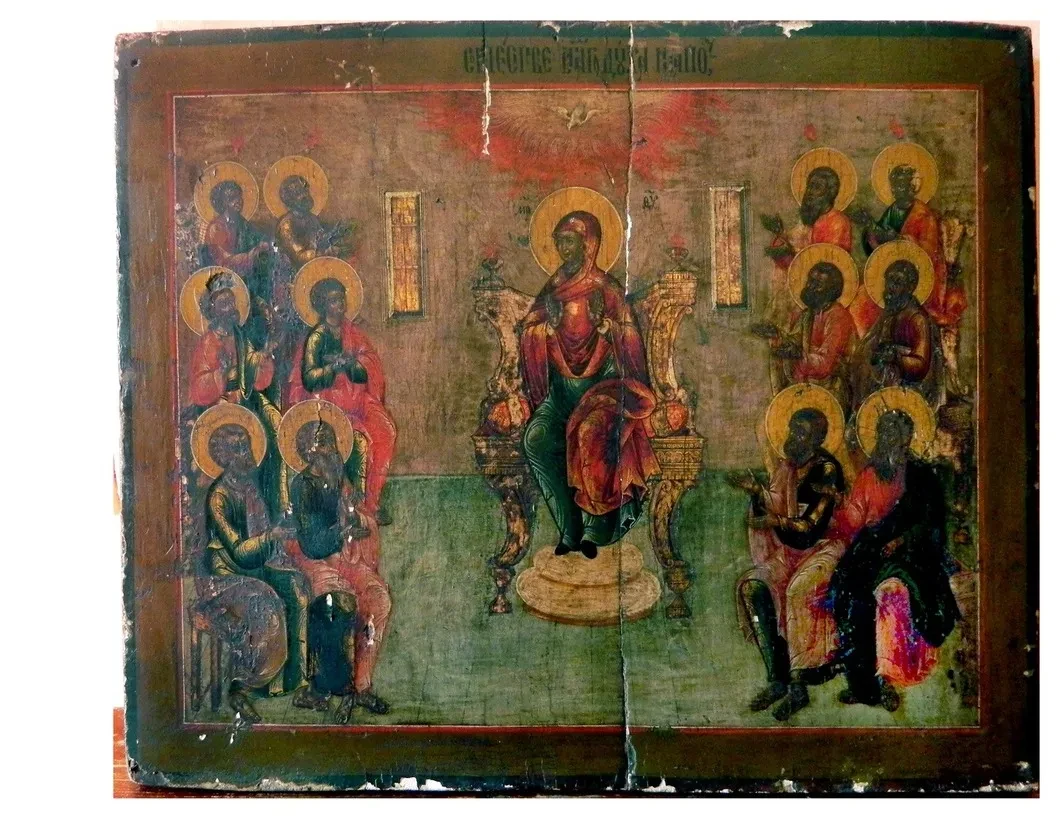

In more remote parishes from Moscow, “Borovskaya Technology” is used on a large scale. Our interlocutors in the metropolis claim that
By replacing, under the guise of restoration, about 10 ancient icons in Minusinsk and Novosibirsk were lost.
This is probably due to the new fashion for the Old Believer icons and books in the auction houses "Christis" and "Sotbis", where they are willingly acquired by bona fide collectors, for the most part - Russian ones. Last year, the State Historical Museum in Moscow exhibited a collection of the singer and composer Grigory Leps “Preferenne Arty”. It was compiled mainly from the works of Old Believer masters - it is no coincidence that the curator of the exhibition was the chief specialist of the GMM in Old Believers Elena Yukhimenko.
From the "loyal" communists to radical "Eurasians"
In the pre-revolutionary Old Believers, the church was ruled by the community-mainly, competent laity (reckoners) and merchants. Until the middle of the 19th century, they completely controlled the “cursory” priesthood, crossing from the official (“dominant”) church sometimes from selfish motives. After the appearance of a full-fledged hierarchy with the foreign center (in the White Krinitsa on Bukovina, which was then as part of Austria-Hungary), the bishops remained depending on the merchants and the reinforcements. The Soviet period, when the Old Believer merchants that created Russian capitalism was completely destroyed, made adjustments to the RPSC. It began to resemble orders in the Russian Orthodox Church more and more, and the current Old Believer Metropolitan Cornelius (in the world - Konstantin Titov) significantly limited the role of laity in church administration. These trends may be associated with some facts of the biography of the metropolitan.
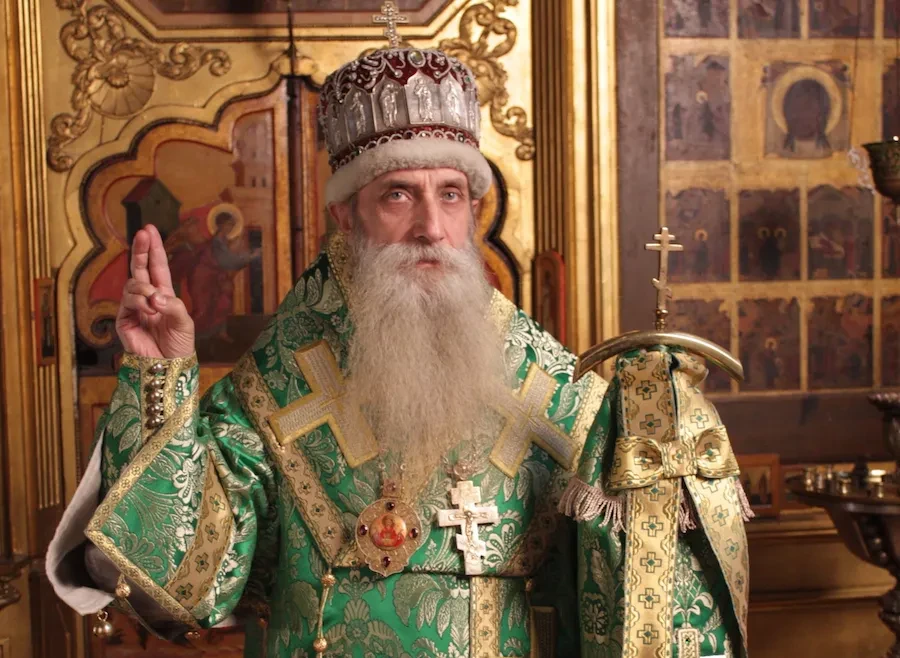
He was born in a worker Orekhovo-Zuev in 1947 and lost his parents early. Until 9 years old, he lived with his grandmother, who took the costs to services to the then modest Old Believer prayer house. Then the future metropolitan ended up in a boarding school, where they demanded to remove the pectoral cross and renounce the faith from him. Titov made a rather successful Soviet career-he joined the CPSU, headed the trade union committee and the OTC of the Litera and Mechanical Plant, and successfully played in the People’s Theater. He did not marry, although attempts to marry him were made "on the Komsomol line." The faith began to return after 40, against the backdrop of the collapse of the USSR, the CPSU and the native plant.
In 1991, the rector of the Orekhovo-Zuevsky parish of the RPSC about. Leonty Pimenov invited Konstantin to head the parish council. The communist past, to which the Old Believers, as a rule, are sharply negative, did not embarrass Fr. Leonty, since he was a priest of the “new formation”. According to the monk Alimpia (Verbitsky), “Fr. Leonty publicly complained that in the old days the party vigilantly monitored order in the church. ” After 6 years about. Leonty was able to advance his ward into deacons, and only in 2003 Konstantin Titov became a priest and accepted tonsure with the name Cornelius. Just a year later, he became a bishop, and in 2005, after the sudden death of the comparative young Metropolitan Andrian (Thursday), after three rounds of voting, he is elected to a new metropolitan.
In his first interview, stammering, he admitted his inexperience, assigning all the hope of supporting the senior brothers-episodes and the priesthood.
The inexperience of the new metropolitan activated different “groups of influence” in the RPSC. In the very first years of the reign of Cornelia, the church shocked the split, which have not been in it for almost a hundred years. From the cathedral of 2007, she left loudly the door, almost the entire Far Eastern diocese, headed by Bishop Herman (Saveliev) and Archpriest Elisei Eliseev, later left the RPSC, the former referent of Metropolitan Alexei Ryabtsev, the Ryazan priest Alexander Chernogor and the monk Alimpius with his monastery, and a number of clergy and laity. The canonical claims to the metropolitan were that he was too actively approaching the Russian Orthodox Church, recognizes her sacraments, and all because he was once a communist. Membership in the CPSU obliged the propaganda of atheism and the “struggle against religious prejudices”, which is tantamount to renunciation of faith. And according to the canons, a Christian, who renounced the faith after baptism, cannot be a priest and - especially - a bishop. Kornilius was baptized in infancy.
Dmitry Baranovsky, who later left the RPSC, made a report “Communism as an occult-mystical teaching” at the 2007 Cathedral. He called on the Metropolitan to voluntarily accept the schema and leave the post. Fr. then stood to defend his spiritual son. Leonty Pimenov, who claimed that communism was a state ideology, and membership in the CPSU was only a conscientious civil position. Kornil eventually justified the opinion of the medieval Byzantine canonist Valsamon that the ordination in the bishop abolishes all the sins committed before. Now, if the “communism” of Cornelius was revealed when he was a deacon or priest, he would have to deprive him of his dignity. Such a stretched excuse did not really convince the jealous of the old faith, and the distrust of Cornelius is still in the RPSC.
Its past is really made of itself to felt: at every opportunity, the Primate of the RPSC demonstrates extreme patriotism: puts on the St. George ribbon and goes to the procession of the "Immortal Regiment", angrily condemns the "Kyiv junta",
He prays for the “victory of Russian weapons” in the Donbass and in Syria, stigmatizes the “godless” West and equality of faiths.
At the International Conference “The Way to the Dialogue” last year, he said: “The Russian people have their own history, and therefore tradition and, ultimately, values - its own ... the further we are from the West, the closer to our tradition, and therefore closer to salvation.” Ideologically and stylistically, this text, like many “patriotic” performances of Cornelius, resembles the works of Valery Mikhailovich Korovin - an informal referent and speaker of the Primate of the RPSC, to whom he instructed to head the “International Old Believer Union”.
It is noteworthy that just a year ago, Cornelius took part in the World Old Believers forum, at which the World Union of Old Believers, led by the hereditary Don old-building Cossack Leonid Sevastynov, was created. He is as deideologized as much as possible, open to cooperation with the Old Believers of all consent and generally with all Christians. Metropolitan Cornelius chose to choose another course.
Valery Korovin is not just an Old Believer. Он директор «Центра геополитических экспертиз», замруководителя Центра консервативных исследований социологического факультета МГУ, член Евразийского комитета, главред портала «Евразия», член Изборского клуба, один из самых верных последователей Александра Дугина. Коровин входил в пятый состав Общественной палаты РФ, но не был переизбран из-за странного призыва с трибуны палаты создать в горах Чечни «теократический анклав для молодых мусульман».
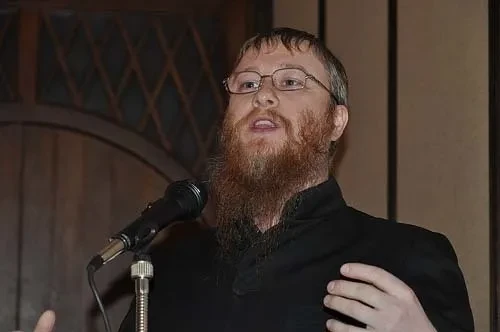
Свой политический путь начал в 18-летнем возрасте в запрещенной и упраздненной ныне Национал-большевистской партии, где возглавил «бригаду № 1». Потом возглавлял боевой отряд Дугина — Евразийский союз молодежи, составив его «Катехизис» (как ни странно, не признанный в РФ экстремистским материалом), вызывающий прямые ассоциации с некоторыми документами из немецкой истории ХХ века.
Вот лишь несколько цитат: « Ты должен быть господином... Ты рожден править Евразией... Ты больше, чем человек... Наша цель — абсолютная власть... ( выделено в оригинале. — А. С.). Мы не согласны на меньшее, чем власть над миром... Таков белый завет Евразии». При этом «у нашего Союза есть абсолютный враг. This is the USA. Это начало и конец нашей ненависти... Наша идея — Третья Русь ». А дальше немного о понимании Коровиным старообрядчества: «Прошлое учит нас тому, как надо жить — без парламентов, телевизоров, «прав человека», электронной плесени городов. Прошлое реально, настоящее виртуально... Все в Традиции прекрасно. Особенно то, что неразумно, непонятно, необоснованно, что превышает мелкий плешивый разум... Наш Союз предпочитает войну. Там все быстро становится на свои места» .
На официальном сайте РПСЦ (созданном, как мы помним, на деньги президентского гранта) в этом году размещены две статьи, проповедующие дугинскую идеологию: «Философия истории» и «Православные ценности» за подписью «Кирилл Михайлов».
Непонятным для старообрядцев выглядит увлечение митрополита Корнилия нетрадиционной медициной — в частности, народной целительницей из деревни Смолево Московской области Павлиньей Перфильевной, которая лично демонстрировала мне икону св. Пантелеимона, подаренную ей предстоятелем РПСЦ. С бабкой Павлиньей митрополита свел их общий духовный отец — протоиерей Леонтий Пименов. Павлинья была одной из главных попечительниц орехово-зуевского храма РПСЦ. Бывая в Крыму, митрополит посещает еще одну «древлеправославную знахарку» —Феодосию Ивановну, супругу «доктора энергоинформационных наук» Эдуарда Гуляева, широко развернувшего свой нетрадиционный бизнес после аннексии Крыма.
Заграница поможет?
Недавно в частной беседе митрополит Корнилий вспомнил известное высказывание новообрядческого святого Серафима Саровского о том, что староверие — это такая маленькая лодочка, которая еще плывет только потому, что привязана к большому кораблю Греко-российской церкви. Как последователи РПЦ, недовольные позицией и деятельностью патриарха Кирилла, ищут церковные альтернативы, так и
старообрядцы все чаще задают вопрос: а кто, если не Корнилий?
Белокриницкое согласие, к которому относится РПСЦ, представлено двумя митрополиями: Московской (она получила этот статус только в 1988 году) и собственно Белокриницкой, которая существует с самого момента возникновения иерархии в 1846 году. Тогда в старую веру перешел греческий митрополит Амвросий, которому император Австро-Венгрии разрешил поселиться в эмигрантском старообрядческом монастыре в Белой Кринице, где и были рукоположены первые белокриницкие епископы.
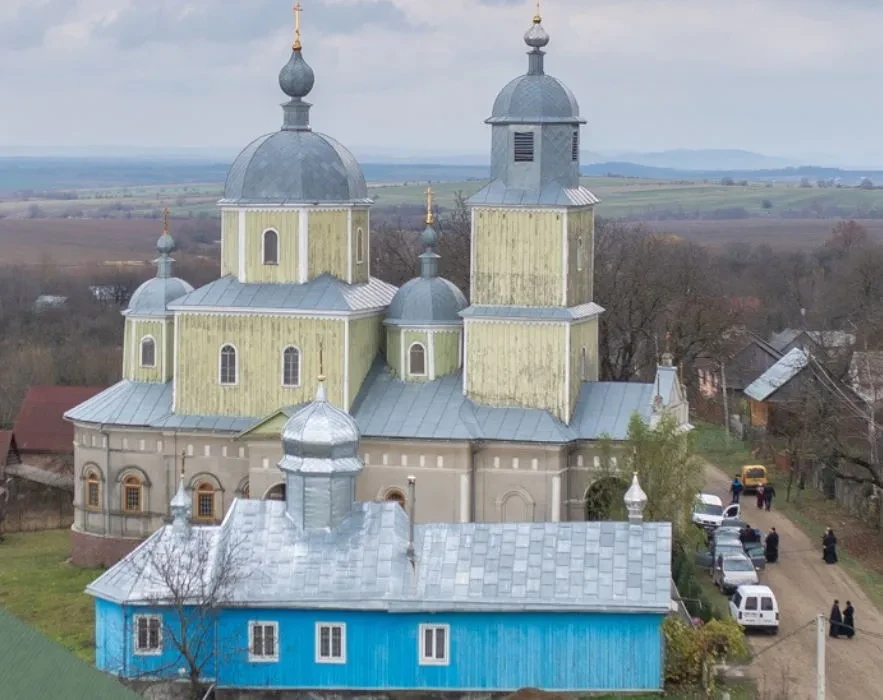
В 1940 году Белую Криницу в составе Северной Буковины оккупировал СССР, а старообрядческий митрополит бежал в соседнюю Румынию, где и пребывает благополучно до сих пор в городе Браила, возглавляя 40-тысячное этнокультурное сообщество русских-липован. Монастырь в Белой Кринице советская власть разорила, оставив местным старообрядцам приходской храм, который до сих пор находится в юрисдикции Московской митрополии.
Вскоре после своего изгнания из Белокриницкой митрополии, в 1940 году, старообрядческие иерархи в Румынии решили вернуться в Белую Криницу, как только падет «иго советов». Теперь это территория независимой Украины, и собор в Браиле 2008 года постановил: «Просить Митрополита [Белокриницкого] Леонтия вернуться на свою историческую кафедру в село Белая Криница».
Тот же собор разорвал каноническое общение с Московской митрополией РПСЦ, фактически поддержав оппозицию митрополиту Корнилию. Потом, ценой отказа от претензий на Белую Криницу, отношения двух митрополий удалось кое-как восстановить, но сегодня они вновь на грани разрыва. Новым вызовом стало вступление Корнилия в общение с некоей Древлеправославной архиепископией, отколовшейся от беглопоповского согласия, иерархию которого Браила не признает.
Нынешние брожения в старообрядческой среде, особенно на территории Украины (где действует 60 приходов РПСЦ), учитывая жестко антиукраинскую позицию митрополита Корнилия, могут привести к некоторому повторению сюжета с украинской автокефалией, только на старообрядческой почве.
Если украинское государство пригласит митрополита Леонтия вернуться в Белую Криницу, то разрыв двух старообрядческих митрополий станет неизбежным,
а Белокриницкий первоиерарх распространит свою юрисдикцию на всю территорию Украины. И ничто не помешает ему в дальнейшем принимать под свой омофор российские приходы, не согласные с «корнилианством». В старообрядчестве вопрос с канонической юрисдикцией традиционно решался проще, чем в РПЦ, — всегда существовали десятки разных согласий и толков, между которыми можно свободно выбирать.
Конечно, есть альтернативные кандидаты и внутри РПСЦ, и есть проект возрождения «неокружничества» — довольно строгого течения в Белокриницком согласии, епископат которого был полностью уничтожен советской властью. Как бы то ни было, повышение социального статуса российского старообрядчества и грядущий юбилей протопопа Аввакума делают неизбежной широкую дискуссию о судьбе РПСЦ.