Date
Author
Павел Огородников

Preserved copy
Translated material
How I made my way to Baikonur
The legacy of the Soviet space continues to calmly rust in different parts of the world . One of these artifacts of the era is the Buran spacecraft. In the USSR, more than two and a half million people took part during the development in its creation. Today, his remains are pulled on metal-and only it is a matter of it. The reader of Samizdat, 23-year-old Pavel Ogorodnikov, made his way to the cosmodrome through the guards, prickly wire and kilometers of the steppe to see the abandoned spaceships and photograph the same Buran.
The same story is a section that transforms our readers into authors. You can also tell your story to our editor Kostya Valyakin .
I am lying on a foam, wrapping myself in a sleeping bag, trying not to make a sound. The comrades are sitting next to a hug with heavy backpacks and listen intensely to the sounds. Right now, somewhere below, the police inspect the first floor of the huge hangar and are looking for us, which illegally entered the territory of the tourist cosmodrome. Confident steps down the stairs louder and closer. I already understand that this is the end, but I still believe that someone there on the stairs for some reason will simply change their minds to rise higher. How stupid to walk tens of kilometers on foot on the steppe, pass the barriers and grate your legs to look at the abandoned Soviet spaceships, and so stupidly get caught.
In May of this year, my friends visited the Baikonur cosmodrome. When I watched their photos, I realized that I was obliged to see it with my own eyes. Just imagine: abandoned. Cosmic. Ships. In August, I could not stand it and bought tickets to Kazakhstan. Ahead was waiting for the endless steppes, temperature differences and rows of barbed wire: Baikonur - a closed object, access to which is possible only on special passes.
It was too dangerous to go in the summer - the heat in Kazakhstan reaches a plus of forty -five, so the campaign was planned for September, when the air in the steppe warms up to 25 degrees during the day, and falls to zero at night.
The Baikonur campaign season begins in April and ends at the end of September. In winter, no one risks: it is cold, traces remain in the snow, and the silhouettes of people are better visible on a white background. Very often they go here to look at the launch of missiles . A few days before our trip, the police caught and took a group of Belarusians who hid in the MZK to see the launch of the rocket, being a kilometer from the starting place.
Moscow
2510 kilometers to the target
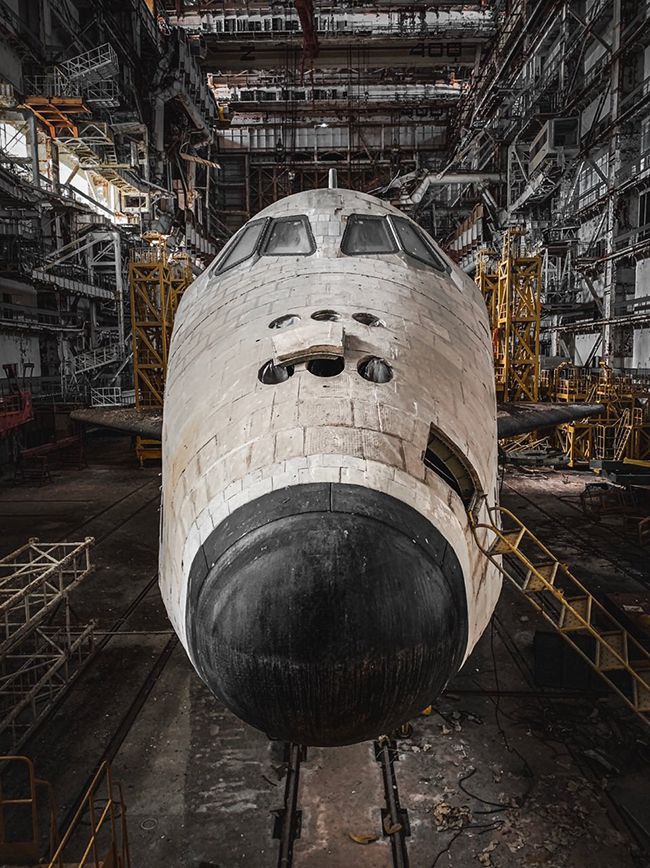
The purpose of the campaign is the abandoned hangars of the cosmodrome, in which the "Burana" rust for the past twenty years. “Buran” is a Soviet response to the American shuttle, the most technological spaceship of the USSR, the electronics of which could control it and put it on Earth without the participation of a pilot. It was a grandiose project, 86 ministries and departments and 1286 enterprises of the USSR (about 2.5 million people) took part in its creation. The only cosmic flight of Buran took place on November 15, 1988. The Energia launch vehicle, which was developed specifically for the "Buran", started from the Baikonur cosmodrome and brought the ship to orbit. The tests took place perfectly. Buran twice flew around the ground and landed, but on the approach to the cosmodrome, the on -board computer found out about a strong wind - smart electronics decided that the conditions for landing were not the most suitable, and independently changed the course. "Buran" unexpectedly for everyone made a sharp maneuver and disappeared from the radar.
Having lost the ship, the flight control center fell into panic. Before launching Buran, explosives were installed - in case the ship falls into the territory of another state in order to maintain development in secrecy. On Earth, they were already preparing to destroy their work, only Vera Stepan Mikoyan, one of the designers responsible for landing the ship, stopped. He convinced Tsup to wait a little more.
At the last moment, Buran still appeared on the radars and successfully completed the flight, confirming the status of one of the most technological Soviet developments.
The lonely telescope Daria Krasovskaya , Nadezhda Zheleznova Samizdat found out how Russian scientists tried to return the “best telescope of the solar system”, but lost the bureaucracy, life and lack of moneyOur preparation has passed much easier than I thought. Several of my friends have already visited Baikonur, from their stories I learned how to build a route, what to take with me and what to expect from a possible meeting with the police.
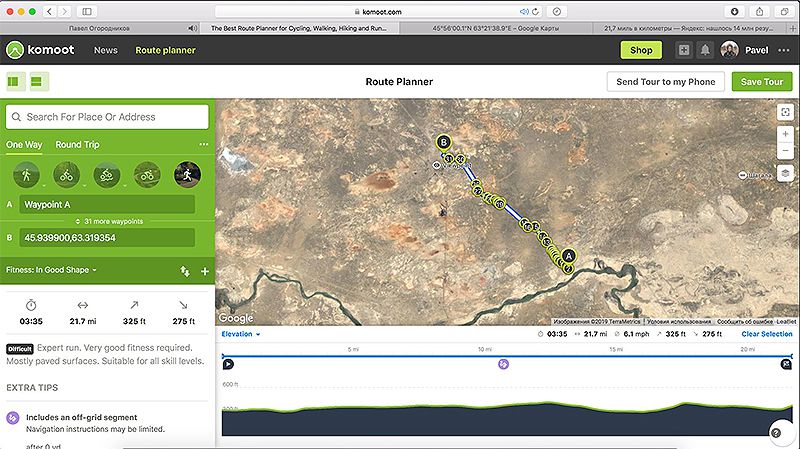
There are two routes to the workshops with abandoned “Buran” - East and Western. Both are about 35 kilometers, western is more interesting, but much more dangerous: on the way more often than in the east, working objects of the cosmodrome are found. We decided not to take risks and chose the eastern path that all my friends went. The first 19 kilometers pass along a dirt road, the rest - along the non -crossed terrain: sand, dried lakes, thorns and holes of steppe animals.
The most important point in preparation is the choice of comfortable shoes. I heard stories about how people rubbed their legs along the road and surrendered to the police, realizing that they would not reach. One guy even lay in a hospital with terrible corns for a week. I chose light running sneakers, with an inflatable valve - they fit well to the leg, without rubbing. Nights in September are already cold, so it was important to take warm clothes and sleeping bags.
Recruiting a team, I thought about the conditions of the campaign: we needed hardy friends who could pass 35 kilometers along a night steppe with heavy backpacks. I suggested the idea of Artyom and Lesha. We met seven or eight years ago, often communicate and live together in Mitino. Artyom is an engineer in the service center, Lesha is a programmer. Both with experience on hikes. The guys immediately agreed, and a little later Artyom invited to go with us a common acquaintance - the operator and photographer Vanya.
You can’t say that in our free time we are trying to climb into the cosmodrome. We are the same as everyone: we go to work, study at universities, someone is already raising children-and at leisure we make our way to roofs and closed objects. I started my travels when I was sixteen. I visited the four stars of the Stalinist skyscrapers, climbed all the towers in the City, studied the territory of the ZIL factory that had long been abandoned by all, rode in abandoned churches and children's camps in the region and penetrated protected territories. When this was not enough, I began to go abroad and climbed to the Roman Colosseum and Barcelona Sagrada Família. Years later, I understand that my strange hobby developed against the backdrop of strong stress: parents were then close to divorce. This can be compared with extreme sports: someone climbs on the roofs, someone-in abandoned factories, someone-on underground communications. And someone everywhere a little. But the main thing is to get to where the ordinary person is closed. Because if something is guarded, then it is interesting there.
Kyzylorda
255 kilometers to the target
On September 26, we arrived at Sheremetyevo Airport in order to fly away from there to Kyzylorda - the closest city to Baikonur, where regular flights from Moscow fly.
Fearing that someone could hear our conversation and convey to the security service, I suggested that during the flight, not to say a word about the cosmodrome or “storm”. According to legend, we headed to look at the dried Aral Sea, which is located 400 kilometers from Kyzylorda. Everything was not in vain. On the border, we were really awaiting the questions of the border guards.
We rented a number for four at the Baiterek hotel and went to bed at four in the morning. The tough mattress and stuffiness did not allow to fall asleep for a long time, I tossed turning, thinking that one of the most difficult sorties in my life would begin soon.
At 11 o’clock I left the hotel on a dusty road and caught a taxi from my hand to the station. There, according to plan, we had to buy food and water and find a driver who would throw us 220 kilometers from the city to the start of the start of our hiking.
After digging up to about 11, we advanced into the city. The main tasks were to buy food and water, and find a taxi driver who would take us to the start point, 220 km from the city. As you can guess, we cope with the brilliance with these not the most difficult tasks. pic.twitter.com/aryvh58z87
- Pavel (@ogrdnkv) October 2, 2019
There was a question with the return. I wanted to surrender to the guard so as not to go 35 kilometers back, but Artyom, Lesha and Vanya were against it. I had to agree and take water with a margin on the return trip. Initially, my backpack weighed about eight kilograms: a camera, two lenses, a warm jacket, five socks, legs, inflatable foam, sleeping bags and spare light shoes. After the purchase of food and water, the backpack grew to 15 kilograms: six liters of water, two packs of nuts, five apples and five chocolate bars were added. It is not very easy, but Vanya dragged even more on his back: almost all of his equipment are different lenses and tripods.
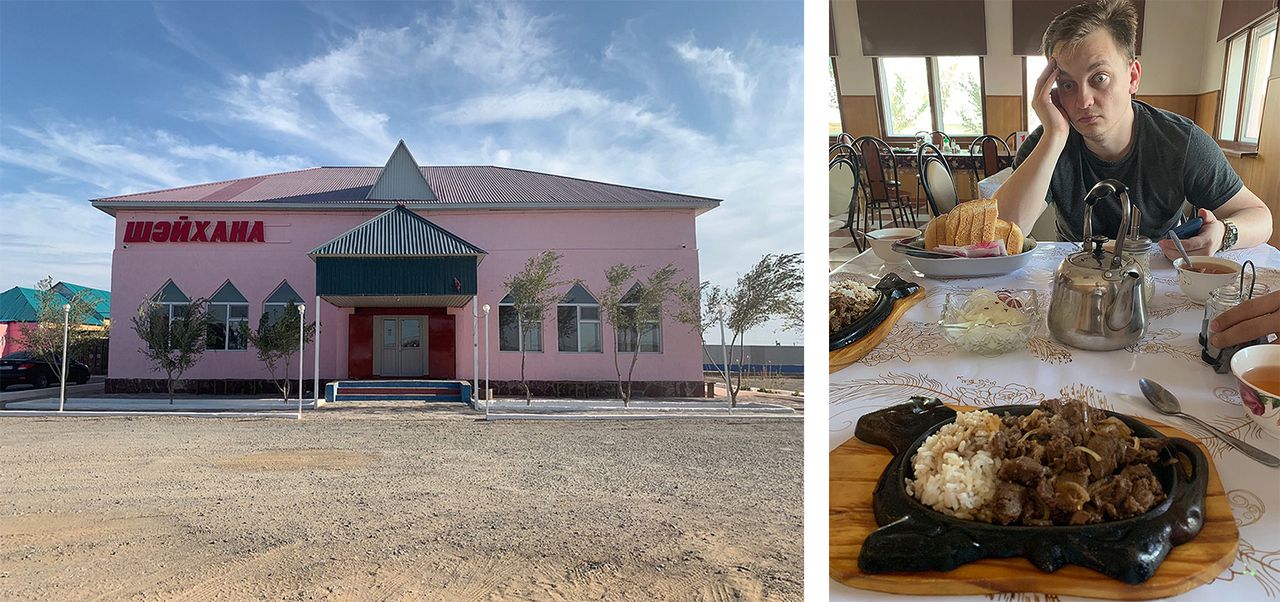
My acquaintances paid the taxi driver to take their first 10 kilometers of the route. It makes no difference to the Kazakhs who go and where, the main thing is to pay. But we decided not to take risks: we caught the car to Dirmentobe - a small half -steam from a cafe in the middle of the steppe and repeated the taxi driver several times that we were waiting for a friend with whom we will go to the Aral Sea.
We ate tightly in the cafe: in the next day or two, we had to eat chocolate, nuts, bars and water.
17:00, it's time to go out.
Dirmentobe
35 kilometers to the target
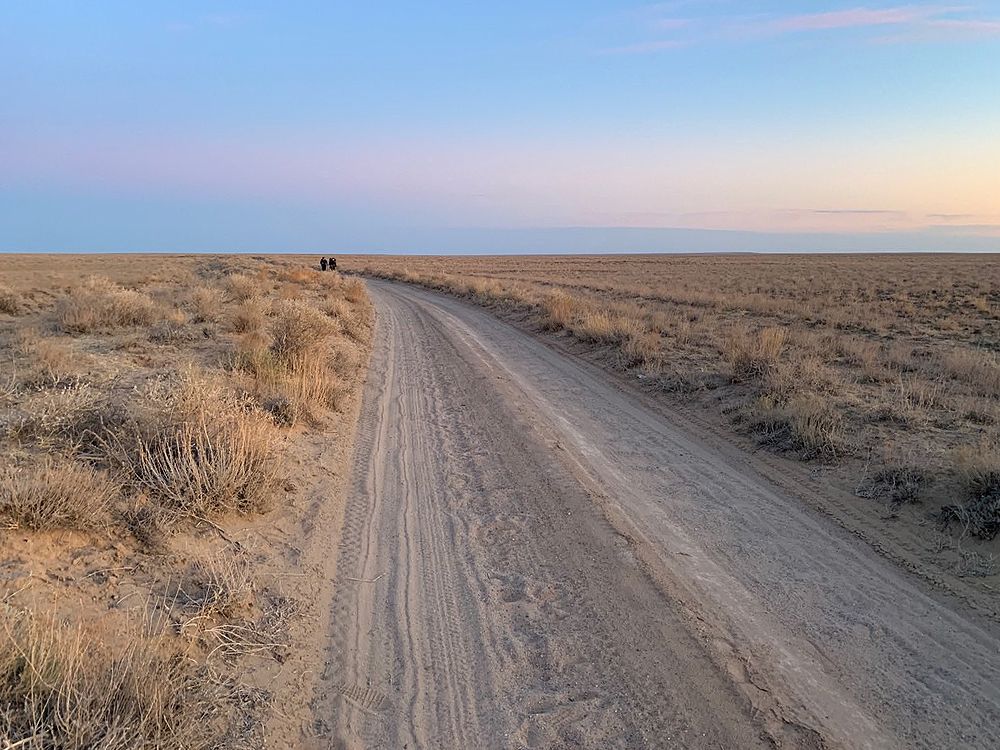
The first 19 kilometers, the route ran along a regular dirt road, in some places very tagged.
At first we walked fun, chatted, poisoned stories, but after a couple of hours it began to roll the first fatigue. The landscape practically did not change: the road around the endless steppe, sometimes the supports of the power transmission lines, which perpendicular to our paths go over the horizon in both directions.
-Stand! Look! -Artyom noticed some silhouettes on the horizon. There was no binoculars with us, but we could clearly distinguish that the silhouettes were moving.
The smaller the distance became, the clearer that the silhouettes were clearly more than human. At some point, we realized that it was horses or camels, next to them there was a narrow silhouette, which was already more like a person-we were most afraid of him. If we were noticed by people from the cosmodrome, we could immediately send the guards behind us, and then the campaign would end ahead of schedule.
When the distance was completely reduced, it became clear that the same horse was a narrow silhouette, but not in profile, but in the FAS. But she was not alone - a whole herd of wild horses. The shepherd or someone who would follow them was not nearby.
The results of the expedition in Kazakhstan in search of disastrous lights Theodor Glagolev report on a weekly expedition to Kazakhstan and the premiere of a documentary: the souls of the dead, mystical radiance in the steppe, bloody diarrhea, tumors and hunger, signals into space, giant signs on the ground, Adolf Hitler and Kazakh Aryans, Prometheus and Zegustra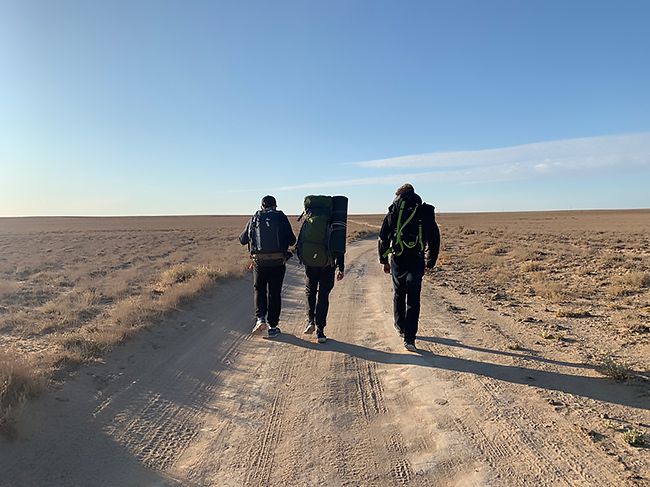
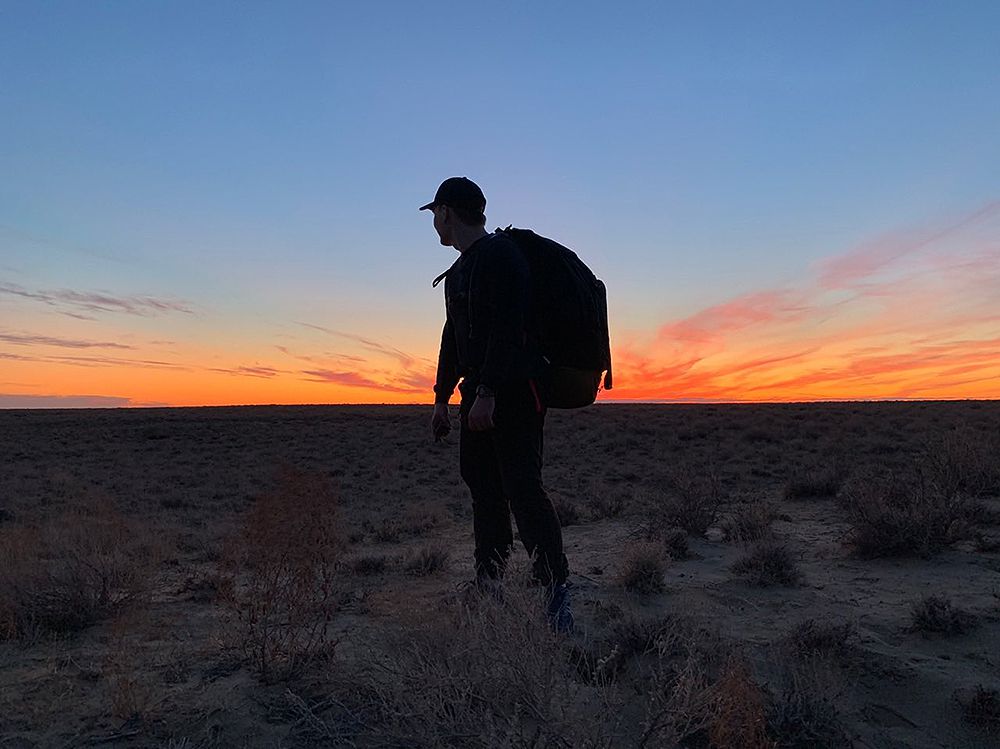
The sun was approaching the horizon, and pink feathers of sunset began to appear in the sky. Almost all the way from the track, we saw quite fresh traces of shoes that went the same direction as us. Suddenly, we heard the growing sound of the engine and noticed the “loaf” (UAZ-452), which at full speed and without headlight rushed towards us. I was not sure whether the police or not and whether the driver saw us. We quickly jumped into the ditch, which went parallel to the left of the road, and lay down. Twenty seconds later, the car whistled with a whistle past us, lifting a cloud of dust behind it. It seems to have done.
The sun was sitting, the darkness quickly covered us. Two hours later, on the 12th kilometer, I realized that I took the water more than enough, and decided to make a laying on the return trip: I hid a couple of bottles behind the stone and put a mark on the map.
At the 19th kilometer, we left the road so as not to bury into the current parts of the cosmodrome, and went along the steppes, bypassing the security posts and corps in operation.
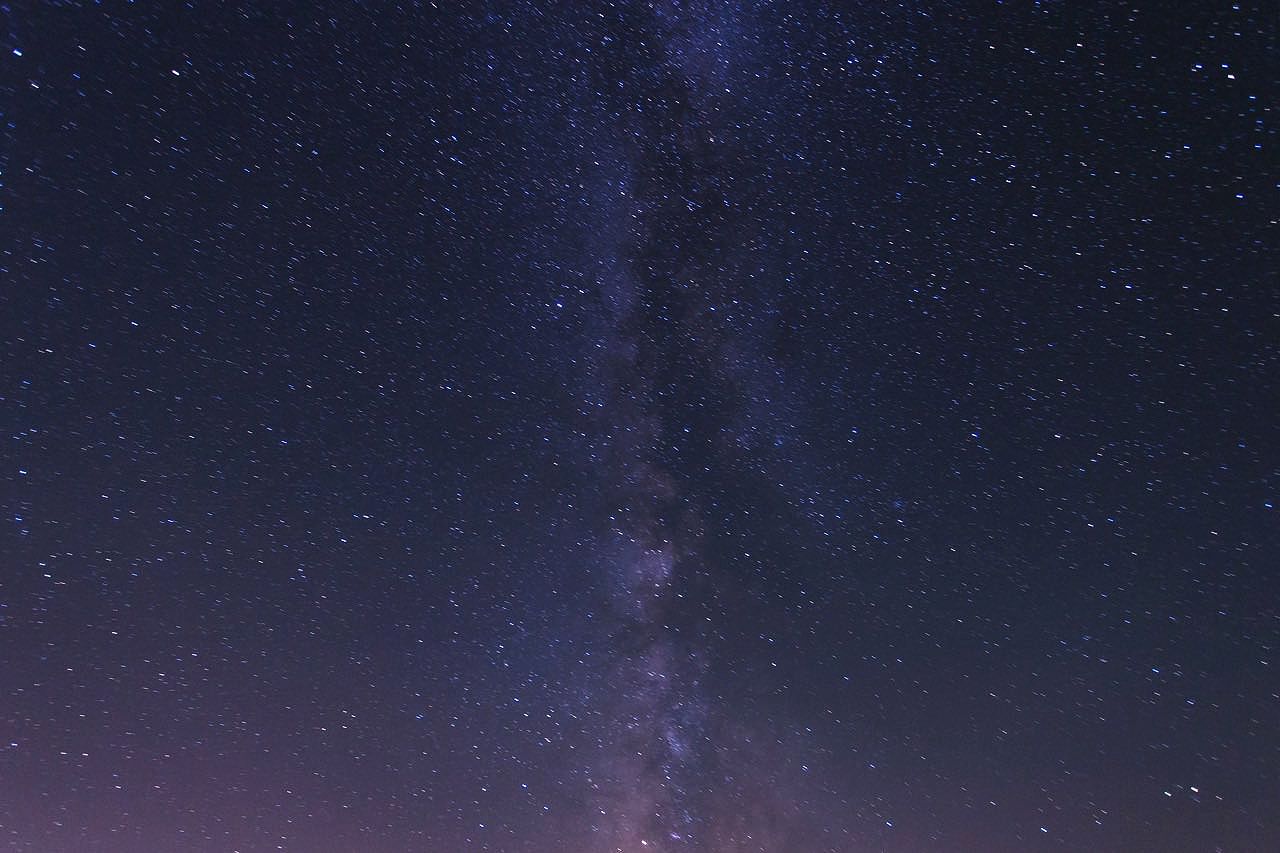
Billions of stars sparkled in the sky - the second time in my life, I so clearly saw the Milky Way. I noticed three falling stars and made the same desire for each: if we would have reached. Previously, stars have never helped me, and I have long stopped believed that it works, but that night I decided that I needed it so.
After a few kilometers along the steppe, we first encountered the infrastructure of the cosmodrome. It was necessary to cross the railway and roads, since they were completely not lit, and we overcame them quite easily.
- Do you hear? - Suddenly Lesha started.
I did not hear anything, like Artyom, but Vanya and Lesha were sure that dogs were barking somewhere.
Having without coming to a consensus, we waited a little and gently moved on.
The most difficult and dangerous section was coming: we approached the launch sites of the cosmodrome at a distance of about a kilometer, around them along a minimum safe radius.
I was a navigator. When the road ended, I began to check with the map on the phone. I have indicated key points where it was necessary to reach and where to turn. I tuned the phone for minimal brightness so as not to shine on the sides, but in the dark it still seemed that it was burning like a torch. I had to put it on the ground so that the light from the screen did not go to the sides, but upstairs, and the guys surrounded me from all sides to cover me. The most difficult thing was to go around the place of the Gagarin start. From here, almost 60 years ago, a man flew into space for the first time. My breath caught a little from the fact that we stood on the threshold of entering the space. It was here that real trips to space began, but we could only stand at the threshold, without crossing it, and look at the starry sky.
From thoughts, Artyom pulled me:
- Guys, we will be accepted. Let's not go back. I am a rubbish on my feet. I’ll get there yet, but there’s definitely not back.
I was delighted: now, to go back in the police car, there was a significant reason.
In 1990, against the backdrop of the political and economic crisis, expensive work under the Energia-Buran program was suspended, and in 1993 the program was finally closed by the decision of the Council of the Chief Designers. In 2002, with a planned repair, the workers brigade overloaded the roof with building materials, it could not stand it and collapsed, burying eight workers and the only Buran flying into space along with ready-made copies of the Energia launch vehicle. The remains of the ship were sawn into parts and sold as scrap metal.
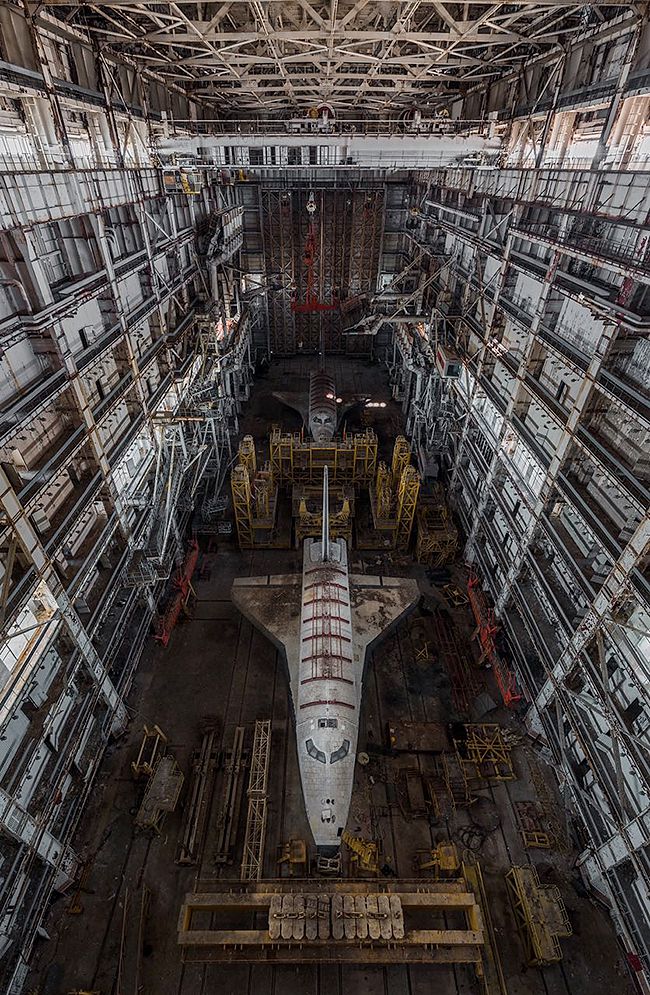
The second ship, with the code name “storm”, was ready by 95 %, but due to the lack of funding, he remained standing in an abandoned MZK building along with a full-scale layout that was used for testing. In the photographs, he cannot be distinguished from a real ship.
In 2002, the only “Buran” flying into space was destroyed during the collapse of the roof of the mounting test building on Baikonur, in which it was stored along with ready-made copies of the Energia launch vehicle. pic.twitter.com/ink3cdhtq0e
- Pavel (@ogrdnkv) October 2, 2019
Installation and reference building (MZK). It is here for almost twenty years that our cosmic babies have been standing. This place is quite popular among Urban Exploration adherents from both the CIS and other countries.
On the approach to the case, we finally meet the first obstacle on the entire 35-kilometer path: two perimeters of barbed wire. Nothing complicated, there are a lot of holes in the fence, the main thing is to figure out how to throw backpacks and not to hook anything in the dark.
Urban Exploration - study of abandoned spaces, abbreviated by WE
MZK
0 kilometers to the target
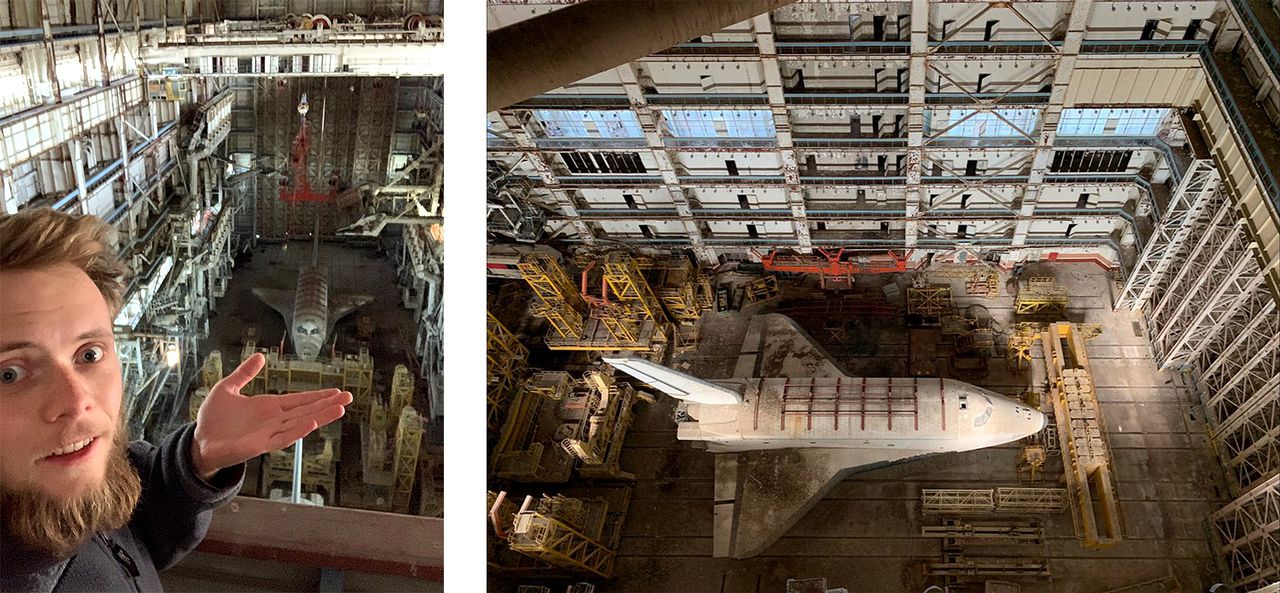
We approach the body. He is huge! 200 meters in length, in height are fifteen floors, and no lighting. The giant building almost merges with the darkness of the night. I hold out my hand and stroke the rough surface. Well, hello, we will be familiar!
All the guys stay on the street, and, having thrown off my backpack, I climb inside through a broken window to check if there is a way to the “Buranes” and look for the place of the night. Having drove a little by the corridors, I go into the hall. In pitch darkness, the eyes are still soaked by huge darker sections. These are they. We have come!
At that moment, something broke inside me and turned over. Another goal has been achieved. I did something very complicated, which I dreamed about for several years. Of course, over time, a wow effect from such impressions is dull. I saw a lot, and it is not so easy to hit me, but it was a special case. Not every day in front of you abandoned spaceships.
For a second, I decide to turn on the flashlight to see them. I turn it on - and immediately turn it off. But this is enough for the impressions of what they saw to become the brightest for the whole campaign.
- Guys, it! Let's go to bed, I found a place.
The place of the night was chosen the top floor of the hangar. Having laid out foam and sleeping bags, I quickly had a bite to eat a chocolate bar and fell into a dream. The back and legs were hung, as if they were filled with lead. One thought was spinning in my head: we got, we did, we were able to. It was small: it remains to remove everything, hide flash drives and take it.
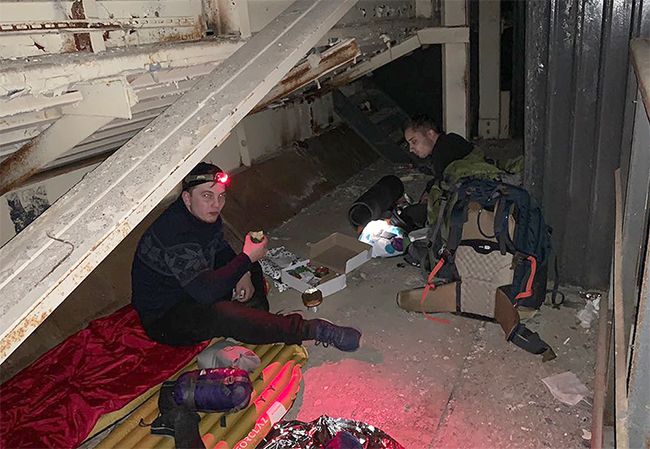
4:30 in the morning. Lesha touches my shoulder:
-Someone is going!
We froze and tried not to make a sound. I see a red lantern between the spans. It’s definitely not cops: they do not use such - this is a purely tourist feature.
Nobody came to us, and we fell asleep, leading the alarm clocks at nine in the morning.
Time 6:30, I wake up. I'm trying to fall asleep further, but nothing happens. The body was tired after a night campaign, but the idea that “Buranes” right under me is driven far and for a long time. I decided to go to shoot. The sun had already risen and began to slowly illuminate the hangar. There were balconies around the perimeter of the case around which it was possible to make a full -fledged circle. Я думал поснимать пару часов сверху, чтобы успеть вернуться на лестницу и спрятаться, когда полицейские пойдут на обход. Про обходы нам рассказывали мои знакомые, которые были тут раньше. Полицейские приезжают сюда, чтобы поймать казахов, которые пилят металл, но иногда ловят и таких туристов, как мы. У полиции нет чёткого расписания, поэтому нужно постоянно следить за дорогой и слушать, не подъезжает ли машина к корпусу.
Я старался не шуметь, но ржавый пол и перила хрустели и скрипели от каждого прикосновения. Всё это время я старался быть начеку и держать приятелей в поле зрения, чтобы в случае чего быстро сообщить им, возвращаться на нашу базу или залечь.
У соседнего ангара уже катался полицейский уазик.
Я обошёл ангар ещё несколько раз по верхним этажам, поднялся на край балки, которая нависла прямо над «Буранами». Мне было очень сложно сдерживать свой восторг. Чуть позже пришли Артём с Лёшей. Они рассказали, что шаги, которые мы слышали ночью, принадлежали двум венграм, которые тоже пробрались на космодром и ночевали на другой лестнице. Они пошли вблизи действующих частей космодрома, их учуяли собаки, и венграм пришлось пролежать на земле какое-то время. Нам пора было возвращаться к рюкзакам, отдыхать и ждать, пока уедет полиция. Мы пригласили венгров присоединиться к нашему лагерю.
***
Вскоре к ангару подъехала машина. Насколько нам было известно, полицейским обычно лень делать полный обход здания до последнего этажа, поэтому мы затаились и стали ждать. Меня беспокоило, что Ваня так и не вернулся, — оставалось надеяться, что он тоже услышал звуки и спрятался.
Я лежал на надувной пенке, затаив дыхание, и вслушивался в зловещую тишину ангара. Вдруг в главном зале раздался крик.
— Ну всё: кажется, нам пиздец, — выдохнул Артём.
Минут через семь мы услышали уверенные шаги по нашей лестнице, которые с каждой ступенькой становились громче и ближе.
— О, привет, ребят. Ну что, собираемся...
Мы начали упаковывать свои пенки, спальники и другие пожитки. Меня переполняли ярость и горесть.
— А это чей рюкзак там за углом? Your?
- No
— А чей же?
Полицейский зашёл за угол и увидел венгров.
— О, а говорите, вас четверо. Ну-ка, собирайтесь тоже!
Пока мы упаковывали рюкзаки и пытались объяснить венграм, что нам пора, в уме я прикидывал, что отпустят нас часам к девяти вечера. Мы спустили вниз рюкзаки, и всех тут же быстро и бегло обыскали. Ничего запрещённого у нас, разумеется, не было. Венгры изрядно переживали, но напрасно: полицейские оказались даже слишком добродушными и весёлыми.
— И не надоело вам ещё сюда ходить? И чего вы все лезете? Всё в интернете есть — вам мало, что ли?
— Ну ведь хочется своими глазами увидеть!
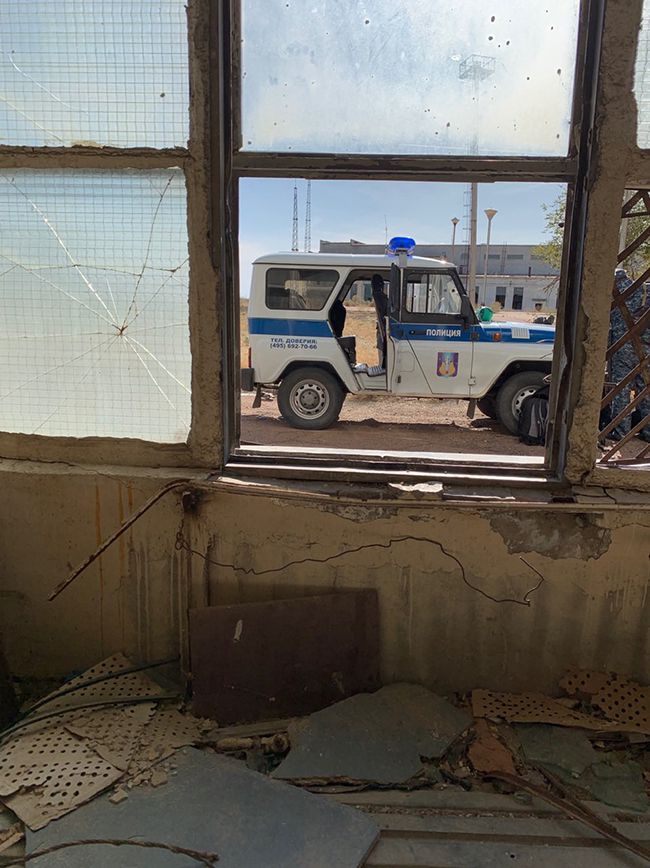
Полицейских было четверо, нас шестеро — мы не помещались в уазик, пришлось вызывать «буханку» из города. Пока мы ждали казахский убер, я решил расспросить их о работе на Байконуре. Один из них оказался потомственным охранником космодрома, его дед и отец служили на Байконуре, теперь пришла и его очередь. Раз уж зашёл такой дружеский разговор, я решил испытать удачу и попросил полицейских дать нам ещё раз взглянуть на «Бураны», пока мы ждём машину:
— Почему нет — пошли. Всё равно пока машину ждём. Посмотрите снизу, только не разбегаться!
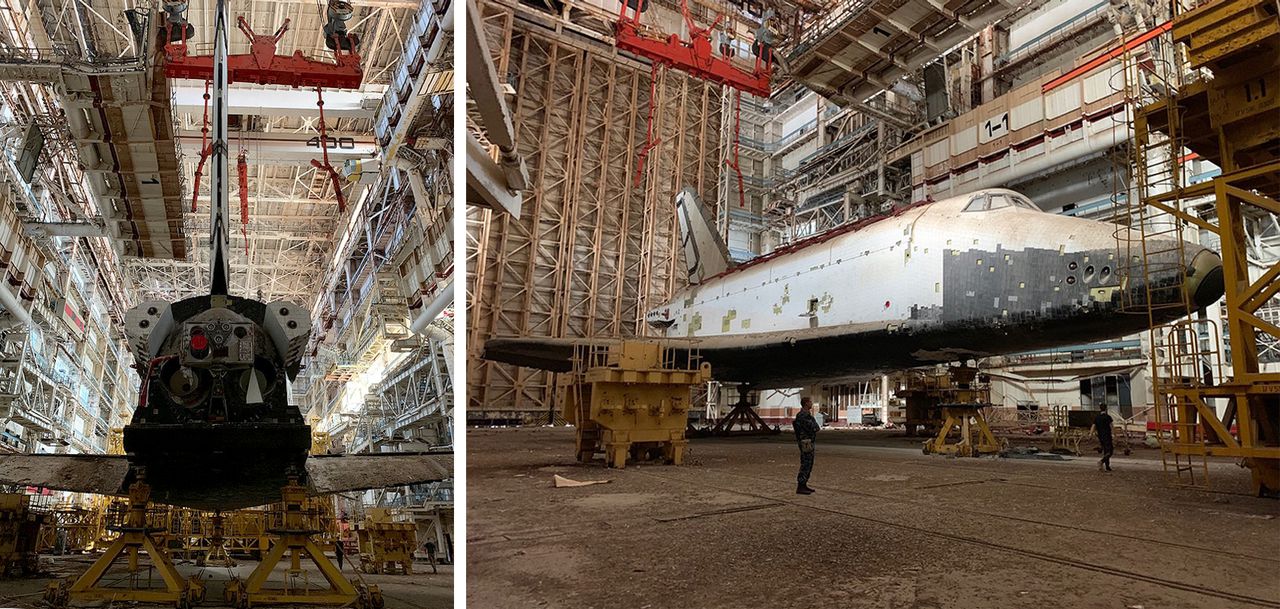
Не поверив своим ушам, я не рискнул брать с собой фотоаппарат, чтобы случайно не разозлить доброго полицейского. У меня перехватывало дыхание от того, что я мог увидеть «Бураны» снова.
Как муравьи, мы шныряли между ними и забирались на какие то конструкции, чтобы снять с лучшего ракурса. Полицейские, как воспитатели в детском саду, приглядывали, чтобы мы никуда не залезли, и рассказывали про казахов, которые приезжают по ночам пилить металл. Казахи приезжают на «крузаках» Toyota Land Cruiser, без фар, с приборами ночного видения, а полиция на своих уазиках не может угнаться за ними по степи. По словам полицейских, обходы совершаются, только чтобы их отогнать или поймать, но иногда попадаются и такие вот кадры, как мы. Последнее время даже чаще, чем казахи. За неделю полицейские поймали четыре группы туристов.
— Ну если вы сами видите, какой поток людей к вам приходит, вы же должны понимать, какой огромный потенциал у этого места?
— Да что нам этот потенциал! Ангар надо восстанавливать, он в аварийном состоянии. Сюда нельзя водить экскурсии. And who is interested? Кто будет заниматься? Where to get the money?
— Ну разве не очевидно, что все деньги, которые будут вложены в восстановление ангара и «Буранов», будут отбиты толпами туристов?
— Русский человек не смотрит в будущее — ему нужна выгода здесь и сейчас, ну или в максимально короткий срок.
После распада Советского Союза Россия была вынуждена арендовать территорию космодрома и его окрестностей. По договору 1994 года страна платит по два доллара и 33 цента за каждый гектар арендованной земли. В 2004 году, несмотря на постоянные обсуждения отказа от аренды со стороны Казахстана, договор между странами продлили до 2050 года. Ежегодно Казахстан получает 115 миллионов долларов за эксплуатацию Байконура Роскосмосом. В 2017 году территория аренды была уменьшена, часть земель Кызылординской области вернулись под юрисдикцию Казахстана.
Вместе с километрами степи Россия отказалась от МЗК и других ненужных ангаров. Казахстану, в свою очередь, тоже не сдалось содержать такое дорогое для них удовольствие. Как нам рассказали полицейские, корпус с «Буранами» и всё, что к нему прилегает, продали какому-то частному инвестору, который вскоре тоже забил на корабли. Получалось, что нам не могли предъявить каких-то обвинений, потому что де-юре мы находились не на территории России, а на землях Казахстана. Но так как казахам безразлично, на МЗК раз в день заглядывают русские, чтобы ловить черметчиков, потому что они могут так сильно распилить всё на металл, что корпус просто рухнет.
— Вот честно, лучше бы у этого ангара побыстрее крыша обвалились, как у соседнего, тогда вас вот таких ловить не будем, — устало сказал один из полицейских.
Baikonur
Через полтора часа приехала наша убер-«буханка», и мы погрузились. До города ехали минут сорок по ухабистому проспекту имени академика Королёва — главной дороге, соединяющей город с космодромом. По ней к стартовым площадкам возят космонавтов, которые вот уже почти 60 лет исправно просят остановиться в степи, чтобы отдать дань традиции Юрия Гагарина и помочиться на колесо автобуса — на удачу.
— Ого, верблюды прямо на территории! — удивился я, проезжая мимо животных, гордо шагающих около стартовых площадок.
— У них, в отличие от вас, есть пропуск, — отшутился один из полицейских.
Нас ждали долгих пять часов на железных стульях ОВД в компании сотрудников правопорядка.
Сначала к нам пришёл сотрудник в гражданском, который посмотрел фотографии на телефонах. Выяснив, кем мы работаем и чем занимаемся в свободное время, сотрудник удалил снимки с телефона и с карты памяти. Я подготовился и снимал на две карточки: на одну — основные кадры, на вторую — дополнительные, для вида. Основную карточку я спрятал в кошелёк, а вторую отдал фээсбэшнику. Фотографии с телефона сохранились в облаке.
Потом нас допросил оперативник. Чтобы не переписывать одну и ту же историю шесть раз, опер с самого начала сделал рыбу, в которой менял только имена тех, кого опрашивал. И всё равно количество разных документов и бумажек, которые надо было заполнить на каждого из нас, было каким-то ненормальным.
Когда опрашивали венгров, Лёша выступил в роли переводчика. Ребята прилетели из Будапешта в Астану, оттуда уже — в Кызылорду, а дальше шли примерно по нашему маршруту. Судя по их инстаграмам, и первый и второй тоже увлекаются urban exploration и лазают по заброшенным местам по всей Европе: пустые замки, фабрики, дворцы. Из разговора после ОВД стало понятно, что мы бывали в местах, в которые они собирались. В 2016-м мы с Лёшей ездили в Болгарию, чтобы залезть в заброшенный коммунистический дворец Бузлуджа, ребята планировали поехать туда после Байконура, и мы проконсультировали их по некоторым вопросам.
Я встречал многих европейских УЭ, их средний возраст — от тридцати до сорока. Это люди, которые уже крепко стоят на ногах в жизни и хотят заниматься чем-то более интересным, чем просто ходить на работу. Ребятам из постсоветских стран обычно от 18 до 30 — самый пик молодости и безбашенности. Нашим попутчикам было 35 и 40. Один из них стёр ноги до крови, когда шёл к МЗК, потому что для похода выбрал модные найковские кроссовки. У себя в Венгрии ребята произвели фурор, когда выложили свои фотографии и видео с Байконура. Их приглашали на радио и телевидение, о них писали газеты.
После допросов на нас оформили протоколы, всех шестерых вместе с огромными рюкзаками погрузили в тесную камеру полицейского уазика и отвезли за город в казахский посёлок, откуда на электричке можно было доехать до Кызылорды.
— Ну, удачи! — сказал нам на прощание полицейский.
- See you! Я же так и не успел посмотреть на ракету из соседнего ангара, так что, может быть, когда-нибудь и вернусь!
Десять часов вечера. Не самого приятного вида казахи облепили нас шестерых с предложениями уехать в любую точку Казахстана. Взяв две машины, мы поехали в Кызылорду. По пути попросили завернуть в то самое кафе, откуда вчера мы начинали свой путь, чтобы наконец-то поесть горячей еды.
***
Мы так устали, что весь следующий день проспали. Ближе к вечеру встретились с венграми и решили пойти в лучший ресторан города — отметить наше с ними знакомство и относительно успешный поход.
— Предлагаю выпить за то, чтобы в мире было как можно больше крутых заброшенных объектов! — говорю я тост, поднимая кружку алматинского пива. — Не важно, что они построят, — важно, что они забросят!