
Translated material
"I did not beat him!"
Mental violence against children leads to psychiatric diagnoses in adulthood. There are deaths
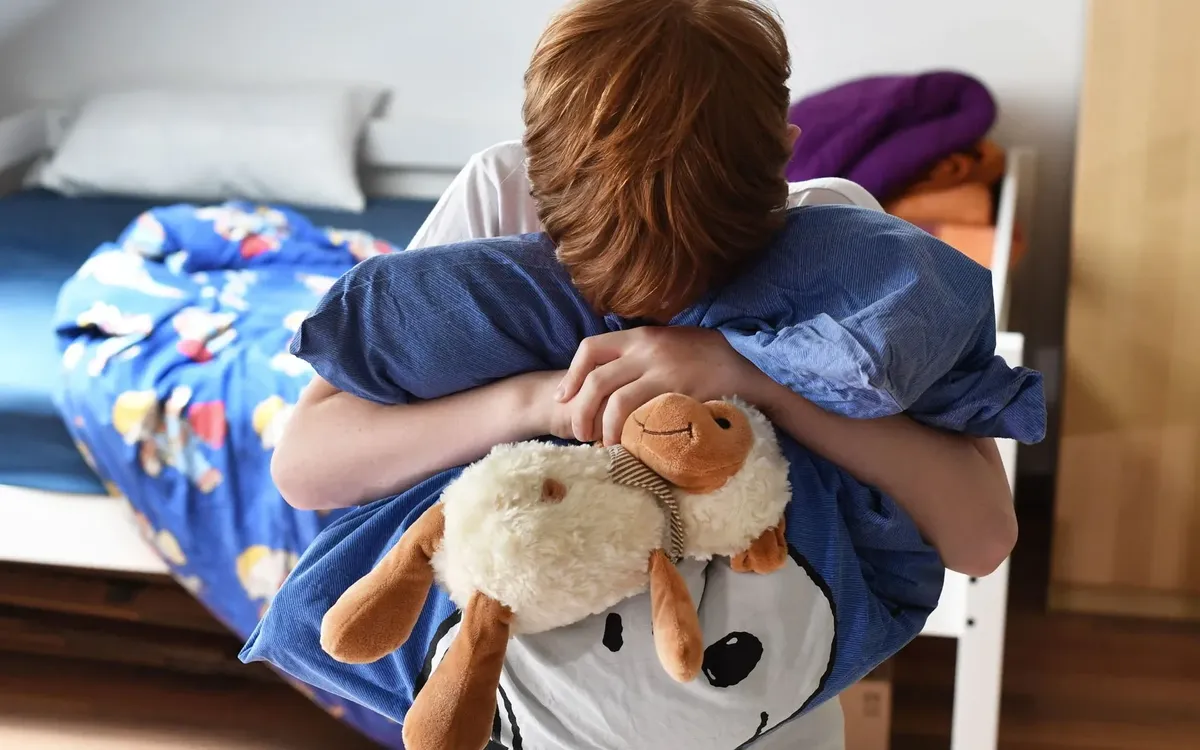
"New" published materials about physical and sexual violence against children. The topic is large, important, necessary. But there is one more, which must also be talked about - mental or emotional violence. When they intimidate, blackmail, constantly criticize, publicly offend, insult, humiliate, isolated, ridicule, manipulate feelings, lie, overly control or do something that shocks the child, or does nothing for him-neglect his needs, ignore it. And, when they make requirements that do not meet age and possibilities, this is also violence. And when obedience is achieved by screams and blows on the table, this is similar to beating by the force of influence. The only difference is that traces of bruises, injury do not remain on the body, but in the soul.
Each of us turned out to be a forced witness to the scenes of psychological or emotional violence, and everyone can tell about the situations that struck him, which have developed in transport, a supermarket and even in the theater - in any public place. My head does not come out of my head in the park: a loudly crying baby for two or three years. Passers -by asked him: “Have you been lost? Do not be afraid, we will find your mother now. ” But he did not hear us, in his eyes there was a panic. And only after one girl shouted out loudly-“Whose child?”, From somewhere from behind a tree a man with a children's self-chatter in his hands and aimed at, very slowly approached the boy. But the baby scared scared about 10 minutes.
- Are you a father? - the girl asked him.
He did not receive her with an answer, but threw it to the baby:
- I told you: “You will roar - I will throw you and leave! So the man does not behave! "
That is, the child who had just survived the horror, his father did not pick up, did not even take his hand, he simply put a scooter on the ground and went forward. Probably a minute passed, and only then the baby went after him.
How will such a “upbringing” affect the psyche?
- If a child is 2-3 years old - enuresis, stuttering may begin, fears may appear. And in adulthood - there is no unambiguous answer - in the best case, a boy will grow, who will consider that one cannot show his weakness and any other manifestations of feelings, it is necessary to portray the steep. He will block feelings. In the worst case, neurosis or depression, ”explains to me a child psychiatrist, psychologist, psychotherapist, candidate of medical sciences Natalya Kirillina .
Recently it became known about the experiment of scientists of the University of Münster (Germany). They have scanning the brain of people with a diagnosis of "severe (deep) depression". In addition, all patients were asked to fill out special profiles with questions that allow us to evaluate the level of mental and physical violence, which they were subjected to childhood, as well as cases of a possible neglect of their parents.
The experiment was attended by 110 people aged 18 to 60 years, and here are the conclusions: psychological injuries received in childhood lead to a change in the structure of the brain. Namely, the size of the islet fraction of the central organ of the nervous system decreased. The islet fraction is responsible for the formation of consciousness and plays an important role in the formation of emotions.
Scientists have found that various psychological injuries obtained in childhood are one of the main causes of depression in adults.
Professor of the University of Münster, Nils Opel, comments this: “Given what influence the islet fraction has on an emotional state, it is likely that changes [the structure of the brain] that we observed, make patients less susceptible to traditional methods of treatment.”
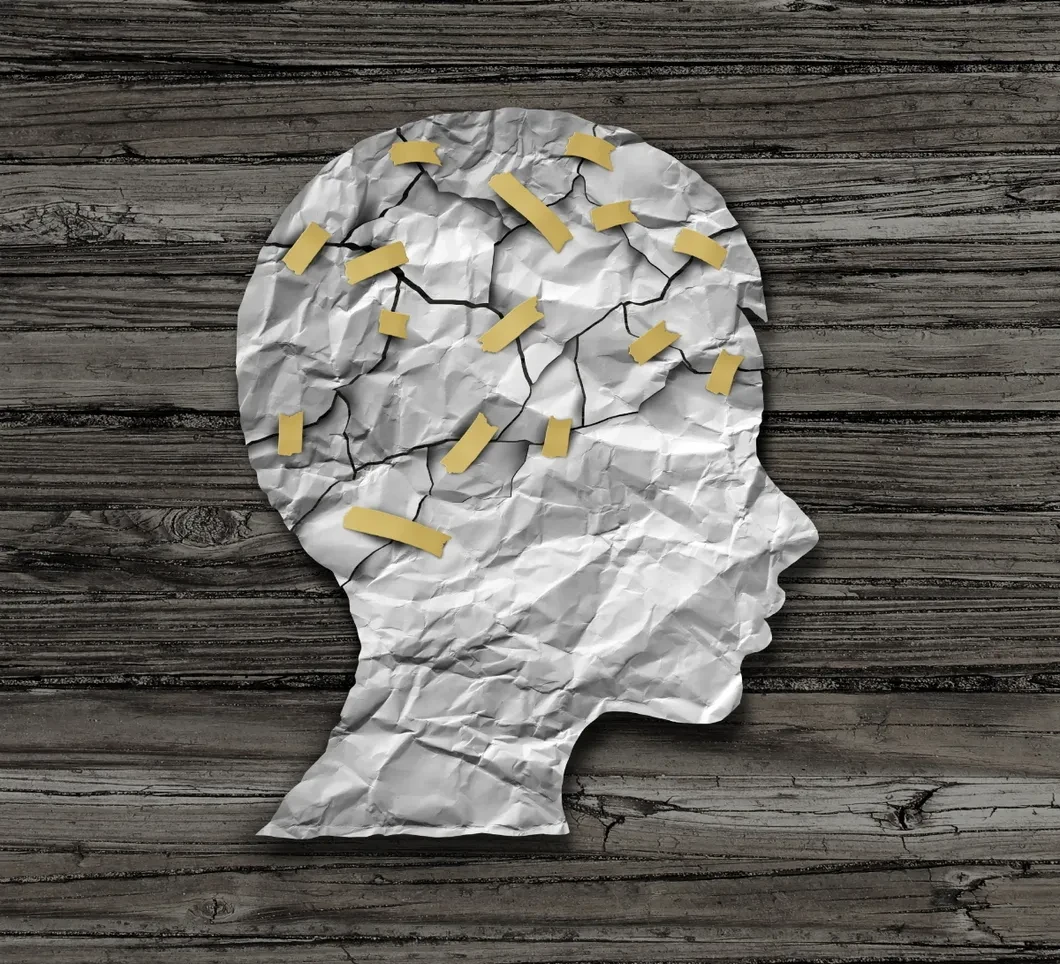
Researchers from the Institute of Psychiatry of the Royal College in London came to the same conclusion. They studied 23,544 cases of depressive disorder and came to the conclusion that "emotional violence against children not only significantly increases the risk of depression during life, but also contributes to its adverse characteristics as a prolonged character, a tendency to relapse and insufficient reaction to antidepressants."
I regret that I did not catch up with the man who believed that the baby could be brought up, hiding behind a tree, so that he thought that dad left him.
It was necessary to talk to him, to explain that at this very moment there is not a moment of education, but maybe the brain of his son decreases.
Another scene: a man is not tall, the child is not yet visible, he pulls his hand behind him. The fact that he pulls the child behind, but, for example, not a cart, I guess according to the expression of a person performed by a “righteous” anger and some anticipation. We go towards each other and when we find ourselves in almost two steps, I hear the crying of a baby about five to six years old, who, choking, shouts: "I do not want, I do not want to go in a corner!" And in this bitterly “I don’t want” you can hear that he may simply not withstand this punishment, that some kind of unbearable situation for this child has been created.
Maybe for him it is simply physically impossible to stand in one place for a long time. Or maybe “in a corner” means some concomitant ritual, such as, for example, to stand on the knees on a pea or something even more terrible. Maybe the angle in a dark, frightening room or basement. I do not know this, I only see a child who is in horror, and I understand that this must be stopped. But how? The first impulse is to say: “Listen, just look at your boy, you can’t scare children like that, he has a tantrum, he is trembling!” Well, what will the answer be? In the best case: "trembles because a coward, I will make a man out of him!" Well, or: "I was also put in a corner in childhood, and nothing has grown, nothing will happen to him." But, most likely, something of a low -custody of the unfamiliar similar, who "climbs out of business, will be heard.
After all, this man, most likely, considers himself to be a complete insignificance, otherwise how to explain these burning eyes from the anticipation of the upcoming “execution”? This is psychological sadism, the desire of absolute power over the weak. Or is it just my interpretation? I don't know. To find out, you need to talk. And I went nearby, saying:
- Here, sometimes they say that today is not my day. And you probably cannot say that.
For a minute he walked as if I were invisible. Then he turned, measured me with a surprised look and asked:
- Why is it?
- Yes, because yesterday, probably, was not your day. And the day before yesterday. And in general almost all his life. And your parents, when you were in every possible way punished, said that they are doing this so that you grew up a worthy person, happy. And you also do with your child, only because you are not very happy, and he is now very unhappy, he is scared.
The kid no longer shouted, but sobbed frantically. The man turned to him and silently looked for some time. Then he began to rummage in a backpack, and at that moment I expected anything, but not what happened - he took out a bottle of water and gave the child to drink.
I told this story to several psychologists, and their general opinion: nothing would have happened if the intervention was denouncing, a censitive, in increased tones. Anyone in any state always appreciates the desire to help him, and the hero of my story felt this.
You can start a conversation from the words: “This is definitely your child, right? Simply, you see, I myself am already scared, can you imagine what he was? "
If his father were completely inadequate, he would not react to words, then it would be worth just to agree with him to postpone the punishment. Do not cancel, but postpone so that he and the child come out of a state of affect. Most likely, there is no skills of education, psychological literacy, he has a difficult life with which he cannot cope. And the anticipating look - it might just seem. But you need to approach and try to stop any violence.
Recently, the reality series “#Japsi” was released about four young people with mental illness. They are all from Russia, but live in Germany. Diagnoses: depression, bulimia, border disorder, post -traumatic syndrome. Every day they shoot a video about themselves for their doctor, and then, somewhere a week, meet him. While 5 episodes came out, but it is already known that two of them were very beaten in childhood. And the father was severely limited in food, explaining the fact that the form needs to be kept, "you should be few." In the morning - a tiny portion of food, at lunch - even less, dinner was not fed. This is her bulimia - whenever the girl eats, she experiences a heavy feeling of guilt and runs to spit out everything. But I want to eat, all the time I want to eat - there are practically no other desires.
My acquaintance of a psychiatrist-psychotherapist has a 28-year-old client who came to him with a request for an understanding: why he did not get a long relationship with girls and there are no close friends. The final diagnosis is a generalized alarm, suicidal inclinations. He was worried about everyone whom he loved, worried, drove himself to exhaustion by the bad forebodings of all kinds of troubles. And he plagued potential friends and girls with his frequent calls. It took time before the specialist realized that in childhood a young man (let's call him Nikolai) was subjected to gross mental and emotional violence.
But Nikolai wasn’t that he was not ready to talk about it, he simply did not understand why. He said that he has kind, loving parents, especially mom. Parents gave him everything in his life: they gave the car when he entered the university, gave the apartment by the time the university was graduated, paid for his studies. Was there a trusting relationship with them? The answer is affirmative. But it seemed to the therapist that the patient had a hypertrophied feeling of guilt, he seemed to be justified all the time in everything-up to the point that he was somehow trying to prove his right at all.
Once the doctor asked about it directly. And the guy suddenly began to remember his childhood. At my request, he told his story and to me, giving permission to publish on the basis of complete anonymity:
“I don’t remember exactly when my mother told me all the first time, but I was still a preschooler.” I remember how in the kindergarten I asked me to regret my mother and not tell her that I hit the boy. I said that my mother should not be upset, she lost almost all of her blood because of me. I was born, and she got sick because of this. And did not become an actress.
And dad then said about me when I was born that let him be cut into pieces, if only my mother was healthy. But my mother did not agree, and now she is very sick.
I remembered how the teacher looked at me.
All the time I understood that something was wrong with me, but I could not make out what. All the time it seemed that I had to be removed from people like a plane that burns in the air so that it would not fall on residential buildings. Not that it was every day, but once every two to three months it happened. I raised my hand in the lesson at school, asked to go out and left. Without a satchel, without outerwear. In elementary grades, he went to bask in the shops, in the elders went to the station, there he met holes, although there the guys died or became disabled. When the mother came a fine for my hook and she found out everything, she began to shout that I was her curse and punishment. That because of me she turned from a slender beauty into ...-I will not say this word. That she had strong bleeding because of me when I was born.
But this time his father was at home, he jumped up, waved his hands, shouted to her that she was crazy, you could not say that to her son, although then I was no longer a baby. I was struck that my father generally stood up for me. Since childhood, I did not utter the words “dad”, I turned to him impersonally, it deeply sunk into my head that he wanted to cut me in pieces. And my mother somehow said that he killed someone in his youth. I barely endured him.
And he loved his mother very much, protected if she was late for at least 5 minutes from work - climbed onto the wall. It seemed to me all the time that she was about to die, something terrible would happen to her. All the time I tried to delight her with something, to hit, to make me be proud of me. And love me. But she ignored all my successes. And to miss reacted with this eternal theme that she became a victim, because I appeared. What fry miserable cheesecakes, instead of shining on stage! I heard: “Don't live! You have no right to do this, you stole my life. ”
Only now I begin to understand that I did not ask her to give birth to me, it was their decision with my father. And she shifted responsibility to me when I was still very small.
I recently talked with my father recently, and it turned out that he had never killed anyone. He just somehow allowed a situation that greatly wounded her female pride. And, pushing me away from my father, she took revenge on him.
In the topic of mental violence, it is difficult with statistics: we can only learn the figures from adults who answered the question of whether they were subjected to brutal treatment in childhood. But these are statistics from past years. The situation of today can be judged only by the statistics of Russian services of emergency psychological assistance to children and adolescents (trust phone numbers). They testify: in 80 % of cases of appeals, we are talking about family violence, and its most common form is mental violence.
Andrey Kamin
President of the Russian Association of Telephone Emergency Psychological Assistance
- More often in everyday life, they are not talking about mental, but about psychological violence. But the adjective indicates the sphere of influence. Violence is emotional, physical, sexy. So psychological violence - it comes out as violence against psychologists, and we mean violence against the children's psyche. - The term itself still causes other disputes. On the one hand, mental influences that cause harm to children accompany both physical and sexual violence. Because you can’t beat or rape, without resorting to intimidation, obsessive control, insults, humiliations, threats. And the consequences for the mental sphere in the case of mental violence are little distinguishable from physical violence - the same chronic anxiety, dissociation, sometimes taking forms of psychosomatic disorders, as well as depression and PTSD (post -traumatic stress disorder).
- Can mental violence lead to mortal danger if it is not accompanied by beatings?
- Recently, in Moscow there was a case when, scolding a child, an angry parent threw his favorite pet into the window from a high floor. And the boy, without hesitation, jumped after him.
That is, here - the parent of the child did not touch his finger, did not beat.
In the zero years, a study was conducted in which Russian children themselves evaluated what type of violence in the family to withstand the hardest thing for them. And they appreciated as the most unbearable mental violence, despite the fact that children who were often beaten took part in the study.
Mental violence is also very dangerous for its inconsistency. If the child in the family is beaten, bruises and abrasions will sooner or later be seen by educators in kindergartens, teachers or neighbors. But if, for example, it is subjected to total control or ignore his state of mind, then adults can find out about the intolerance to the situation for a child only when he causes serious harm to himself. Mental violence, as radiation, is completely imperceptible in its impact in the initial stages.
Help "New"
According to the study of the Faculty of Faculty of Moscow State University, 50 thousand children run out of the house annually in Russia. About a third of them are due to bad relations with parents, especially with stepfather. Another third of the fugitives are children from the families of alcoholics. Running away from study - 18 %. Due to the elementary lack of attention of parents (the effect of the "cold house"), 12 % of children leave families.According to WHO, approximately 20 % of women and 5-10 % of men report that in childhood they were subjected to sexual violence; 25-50 % of all children report that they were subjected to physical violence.