
Translated material
Before the Brexit in London, the collection “Love Letter to Europe” will be released. Joan Rowling wrote a nostalgic story for the book - and Medusa translated it
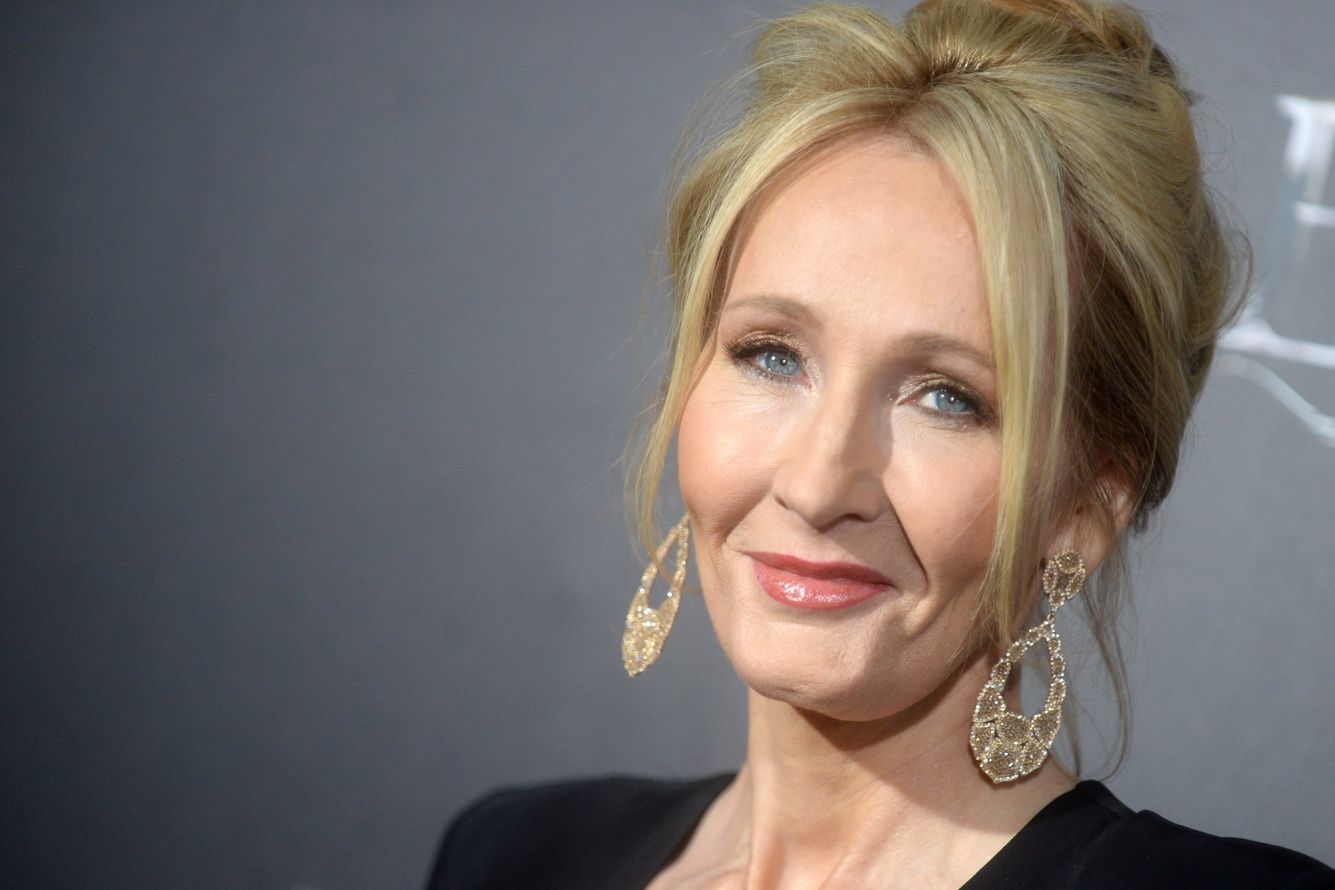
On October 31 - on the day when the Brexit was once again transferred to take place - the London publishing house Coronet Books will release a collection of short stories of famous writers (and not only - the list is the artist Traishi Emin and the leader of The Who Pete Towned) under the general name “love letter to Europe”. Among them are Michelle Feiber , Neil Heyman and other loud names. The Guardian newspaper has published a selection of these letters. Medusa publishes a translation of the nostalgic sketch by Joan Rowling “Letter Home” about the teenage adventures of the writer in continental Europe, whom descendants may lose due to “Brexit”.
The letter was written on thin pale blue paper, with a neat rounded handwriting. My new Hannah's correspondence girlfriend introduced herself in excellent English. Our schools decided that I and Hannah would make each other an excellent company, because we were both, expressed without unnecessary delicacy, cramps. A few months later I will go to visit her family for a week in Stuttgart, and shortly after that - she is to me on the border with Wales. I was 13 years old. All this was terribly exciting.
Her house was warm, impeccably clean and pleasantly different from mine. I remember decorative candles, carpets on the tile floor, elegant designer furniture and a shining piano in the corner, on which Hannah, of course, knew how to play perfectly. When I arrived, Hannah's mother asked me what I want for breakfast. When I hesitated with an answer, she began to list all the foods at their house. Somewhere at the sixth or seventh point, I remembered how the “cake” would be in German, and said: “The cake, please.”
Hannah's mother cooked perfectly. I especially remember the transparent soup with ticks and a sausage with lentils. And every morning of my stay, she treated me to cakes - apparently, because she decided that I was so familiar. It was bliss.
For many years I corresponded with Hannah for many years, and when I was 15, her family in her incredible generosity invited me to make them a company while traveling to Italy a whole month long. So, together with Hannah and her family, I first saw the Mediterranean Sea and first tried mollusks.
From Italy, I returned, decisively tuned to new adventures in Europe. I got another correspondence friend, a Frenchwoman named Adele, in whom I later stayed at home in Brittany. I watched her mother preparing pancakes, the delicacy of this region, on Biliga - a large round frying pan without sides. I didn’t eat anything tastier in my life, even the Italian Omar can not be compared. When there were no adults nearby, I took advantage of the cheapness of the French cigarettes and honed my freshly acquired smoking skill, with all my might, forcing myself to love the smoke of Zhitan. I almost did it.
When I was 16 years old, my best friend and I lit up with the idea of going to Austria with backpacks for a couple of weeks. Now I do not quite understand what our parents thought about when they let us go on this trip-two schoolgirls with the intelligence knowledge of German, who took a bus without any trip and without reserved hotels. We returned without any damage: we accurately coped with schedules in someone else's language, found the night without any problems, bathed in ice mountain lakes under the bright sun and went from the city to the city where our eyes were looking.
Then I matured, and my craving for the intersection of the La Channel, even alone and without money, only grew. At that time, if you had a ticket of the Internet system, no doubt one of the greatest inventions of mankind, you could just take the next train if you could not find a place, or just take a nap at the station until one more comes. I went on a solitary trip to France, which suddenly came to an end when my wallet was stolen.
But I soon returned when I went to Paris to receive a French diploma. My mother, a quiet francophile with a Frenchman-father, joyfully came to visit me. My father also came, although I suspect, and with less pleasure, because my prayers to the waiters make him a Bien Cuit steak, completely without pink meat in the middle, usually remained unanswered.
When my mother died, I was 25 and I finally stopped pretending to be as if I wanted to work in the office. I acted as it seemed to me the most natural: I took the battered manuscript of the children's book, which I had already written for several months, and again crossed the La-Channel. Stunned by grief, I took up one of the three vacancies of the English teacher, offered to me almost by chance. It was in Portugal - in an unknown country with a language in which I did not know a word.
Teaching English abroad is a completely respectable profession, although hardly anyone will deny that it attracts a lot of tramps and renegades. I was both. Nevertheless, I fell in love with the port and still love this city. I was fascinated by the FADA, melancholy folk music, reflecting the spirit of the Portuguese themselves. It seemed to me that among all the Romanesque peoples, they are distinguished by special quiet tenderness. Luxurious bridges to the port, its dizzying embankments, over which ancient buildings, old port warehouses, wide areas hang over: all this took possession of my mind.
We all keep the vivid memories of youth that become even more lively, burdened by the knowledge of what will become with our comrades and what is waiting ahead of ourselves. At that time, we could freely drive around Europe, and these trips formed our character and enriched us while we enjoyed the fruits of the longest continuous world in the history of the continent. Without this, friendship could not be started for life, love novels and weddings would not have happened. The children of many of my friends, and my own eldest daughter, would not be born if it were not for the freedom of movement donated to us by the European Union.
At the time of the release of this letter, I doubt that the next generation will be able to use the same freedoms as us. Those of us who understands what a severe loss it is, mourn by those whom it befall - and anxiety is mixed with this sorrow for a possible breakdown of old connections.
In search of a suitable quote from Voltaire, I again think about a friend from my adolescence of Hannah. She did not give me a descent, so now she would probably have accused me of choosing a quote from a French philosopher purely for the sake of provocation.
But although Hannah was usually in many ways, here she would be mistaken. I remember her precisely because she was my first friend from continental Europe, and because Voltaire’s words, who now mean so much for me, say: lʼamitié est la patrie. Friendship is the homeland. And Hannah, I don't want to lose my homeland.
Translated by Alexey Kovalev