
Translated material
How to charge correctly? Where to throw out? Why are they exploding? What if you swallow? Sundant questions about batteries and batteries
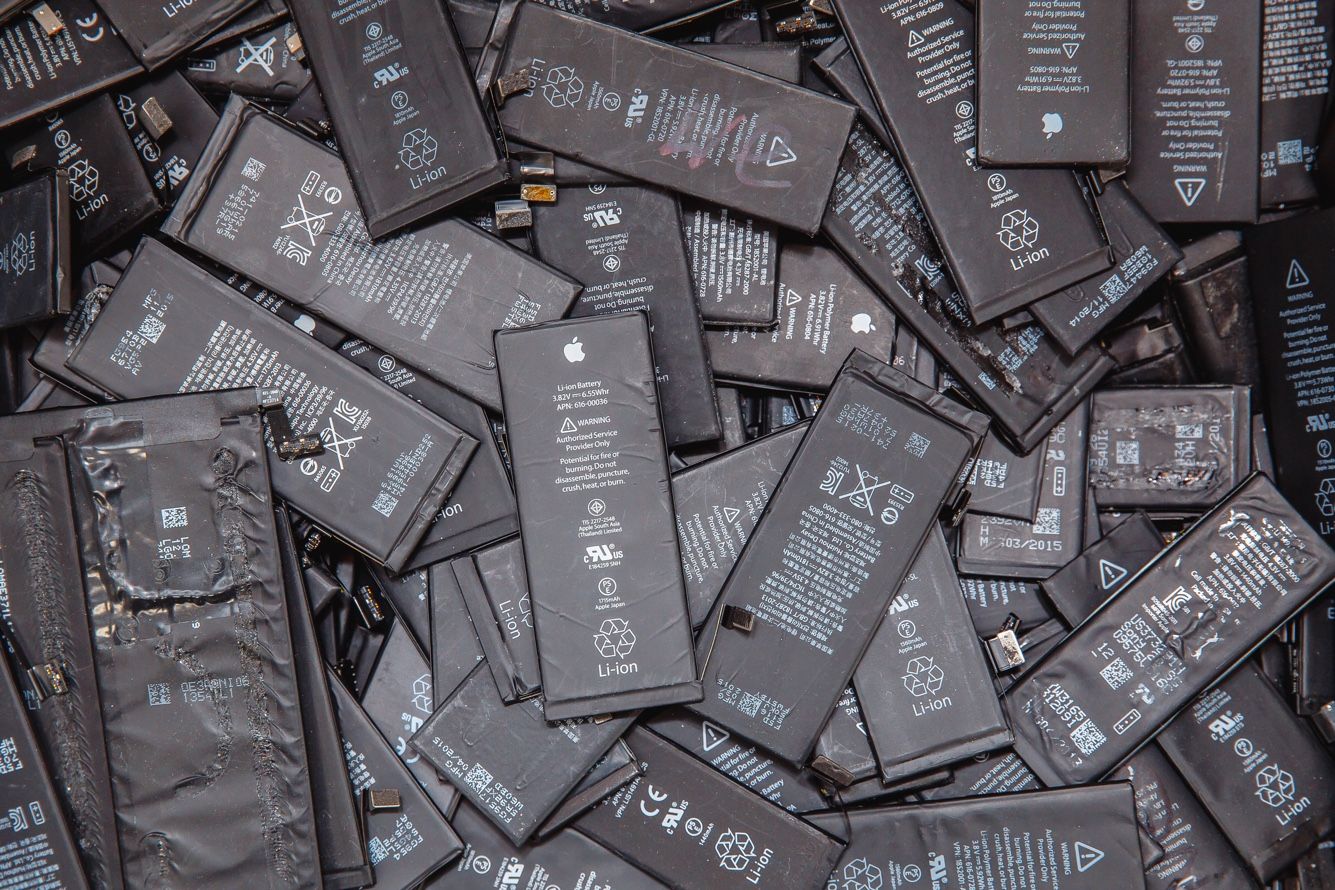
In 2019, the Nobel Prize in the field of chemistry was awarded for the invention of lithium-ion batteries. It is difficult to disagree with the decision of the committee - now the batteries of this type are installed in almost every mobile device and have become part of everyday life. We answer shameful questions about batteries: how to use them correctly, and what you do not need to do with them.
How is it right - a battery or a battery?
Depends on what you want to say. The most common word is “chemical fuel element”. If this thing can be reloaded many times (at least a hundred times for sure), then it can be called a battery. If not, then just a “chemical fuel element”.
Both a renowned and non -reduced current source can be (or not) a battery. It is important that several of any electrical elements (batteries, galvanic, fuel) are connected sequentially or in parallel to increase the voltage or current strength. In everyday speech, single elements are also called batteries - for example, ordinary “fingers” of the AA standard. But this, generally speaking, is not correct.
How to load batteries correctly? Is it true that they must be completely charged, and then discharge?
The idea of the need for complete discharge with subsequent charging up to 100% appeared during the widespread of nickel-cadmium and nickel-metallogid batteries. They possessed a pronounced “memory”, that is, their capacity was significantly reduced if it is not fully charged or battery. Then the batteries began to “swing”, that is, discharge and charge to the limit several times in a row, which slightly increased the container.
In the vast majority of modern mobile devices are lithium-ion batteries. For them, such tricks are irrelevant , since they work only due to the movement of lithium ions between the anode and the cathode without any chemical transformations and phase transitions. Such a current of ions can be directed in a certain direction (when charge and discharge) at any time - this will not lead to changes in the structure of the battery. Nevertheless, enthusiasts constantly make attempts to “swing” and calibrate lithium-ion batteries, but it is not possible to achieve a significant increase in the container.
Moreover, a deep discharge or, conversely, the excess charge can lead to precipitation on the electrodes of a metal lithium, which will worsen the characteristics of the battery and reduce its service life. This process may be accompanied by gas formation due to an electrolyte reaction-then the battery is “swollen”. In order to prevent this from happening, in modern devices, as a rule, a special electronic module monitors.
The danger of the deposition of lithium and gas formation also exists with a quick charge of the cold battery, so before connecting to the current source it is better to warm it to room temperature.
What is Quick Charge? Due to what manages to charge faster?
Quick Charge is a patented technology for a quick charge of lithium-ion batteries developed by Qualcomm. It is based on the use of voltage and current strength above standard and voltage supply through two channels at the same time. At the same time, both the power source and the charged device must support the appropriate version of the technology (the most modern currently Quick Charge 4+). Similar development under different names-TurboPower, Adaptive Fast Changing, Dual-Engine Fast Changing. There are competing technologies such as PUMP Express, Vooc, USB Power Delivery and others.
If a smartphone or tablet does not support any of such technologies, trying to save time using more powerful chargers is not recommended-this will not add “health” to the battery.
Why can't a laptop be charged from a universal external battery? Are there any similar devices for laptops?
The parameters of universal portable batteries correspond to the charge mode of the USB devices. For laptops, completely different characteristics (for example, greater voltage) are needed, and they differ depending on the model and manufacturer. Accordingly, external batteries are also needed by others - more capacious, issuing different voltage values that have adapters for connecting different laptops. They exist, they can be found in many electronics stores.
What batteries are used in Tesla? And in electric scooters? How do they differ from smartphone batteries?
In all modern battery transport, varieties of lithium-ion batteries are used -on the principle of operation the same as in smartphones, only much more capacious and powerful (and therefore voluminous and heavy). Specifically, Tesla cars use about 8 thousand lithium batteries of 18650 format - the same as you can find in modern flashlights or laptop batteries. Their total capacity is about 80 kVV, a specific number can be different depending on the model.
Lithium batteries in electric vehicles usually work paired with a supercondenser (ionistor), which produces great power in a short time (for example, with a sharp acceleration) and effectively recovers the braking energy. The choice of technology in each case depends on a large number of technological, economic and other factors.
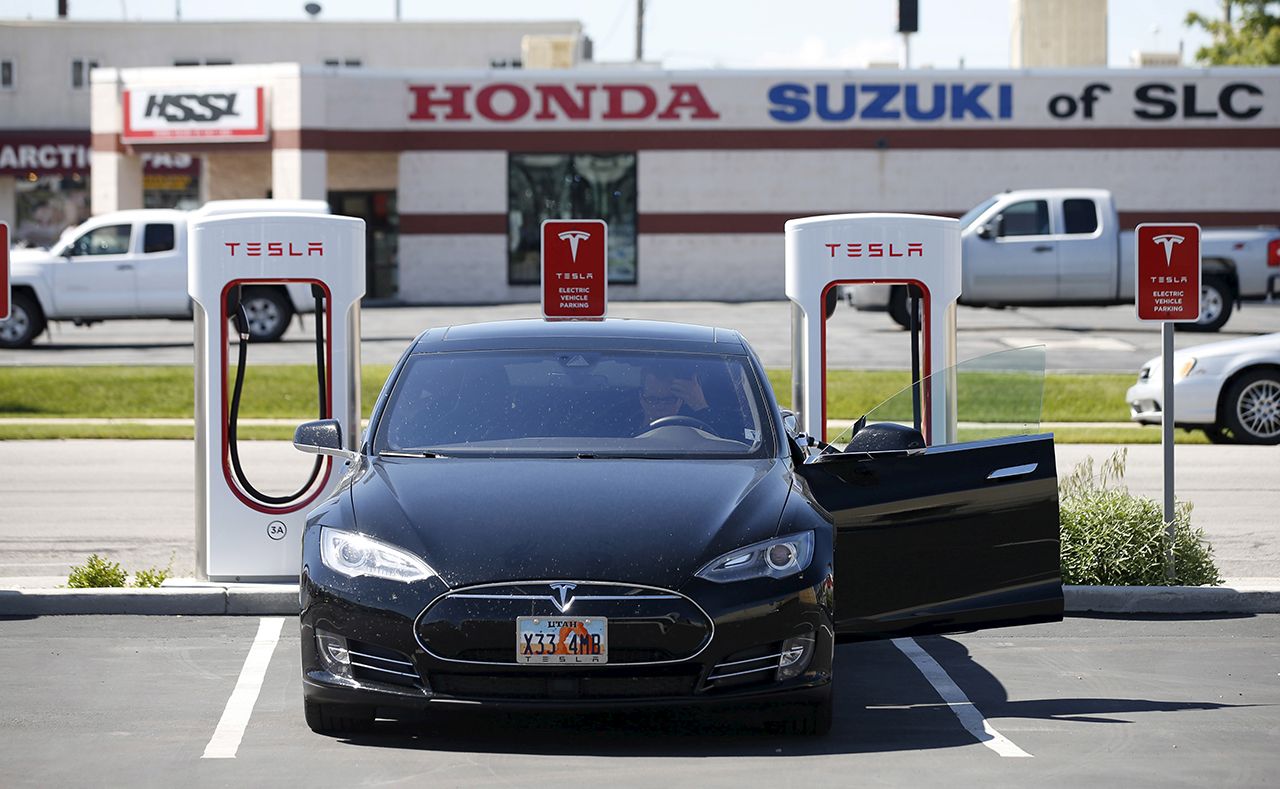
Recently, interest in electric vehicles with hydrogen fuel cells has been growing. Unlike other electrical elements, they require a constant flow of fuel - hydrogen, which, reacting with air oxygen, produces current. The exhaust gas is a pure water vapor. Such power sources have extremely high efficiency (80% is not the limit), but they require special infrastructure for refueling with hydrogen compressed. However, they are already used in some city buses abroad.
I heard that electric cars appeared earlier than cars with an internal combustion engine, why did they forget about them then?
Indeed, at first, the electric motors and internal combustion engines (ICE) occupied approximately equal fractions of the car market. Moreover, it was the electric car that overcame the first mark of 100 kilometers per hour. However, then the oil fell in price, the technologies of its processing became more advanced, which made it possible to obtain more pure fuel, the design of the internal combustion engine constantly improved-as a result, cars with them began to pollute the environment less and overtook fundamentally non-changing electric vehicles with lead-acid batteries in terms of refueling, stocking and dynamic indicators.
With the advent of quite compact, capacious and economically acceptable batteries, interest in hybrid and electric transport began to revive violently, which we are observing now. Government subsidies for new environmentally friendly transport contribute to this.
How is it dangerous to throw away the accumulators into garbage? And where is it better to take them?
Massively used technologies for the disposal of household waste (burning, burial) for safe handling with the recovered batteries are not suitable . Sooner or later, the discarded batteries will destroy and release extremely non -binding filling into the environment: toxic heavy metals (cobalt, lead, nickel, cadmium, mercury), caustic substances (acids, alkalis) and others. Not to mention the fact that damaged nutrition elements, especially in hot weather, can part with their contents at the stages of collecting and transporting garbage.
Unfortunately, there are no federal documents regulating the collection and disposal of batteries in Russia now. There are local legislative initiatives (for example, the program of the Government of the Moscow Region for the processing of lead-acid batteries), but this is clearly not enough.
Now private companies are engaged in the collection and disposal of batteries that carry out periodic promotions, and also install special containers in special reception points of supermarkets, business centers, entrances and yards of residential buildings (cards are usually available on firms). But such containers are far from everywhere, and the possibilities of processing batteries are very limited: in Russia only three plants are engaged in it - in Chelyabinsk, Novosibirsk and Yaroslavl.
What will happen to the batteries passed later? How are they disposed of?
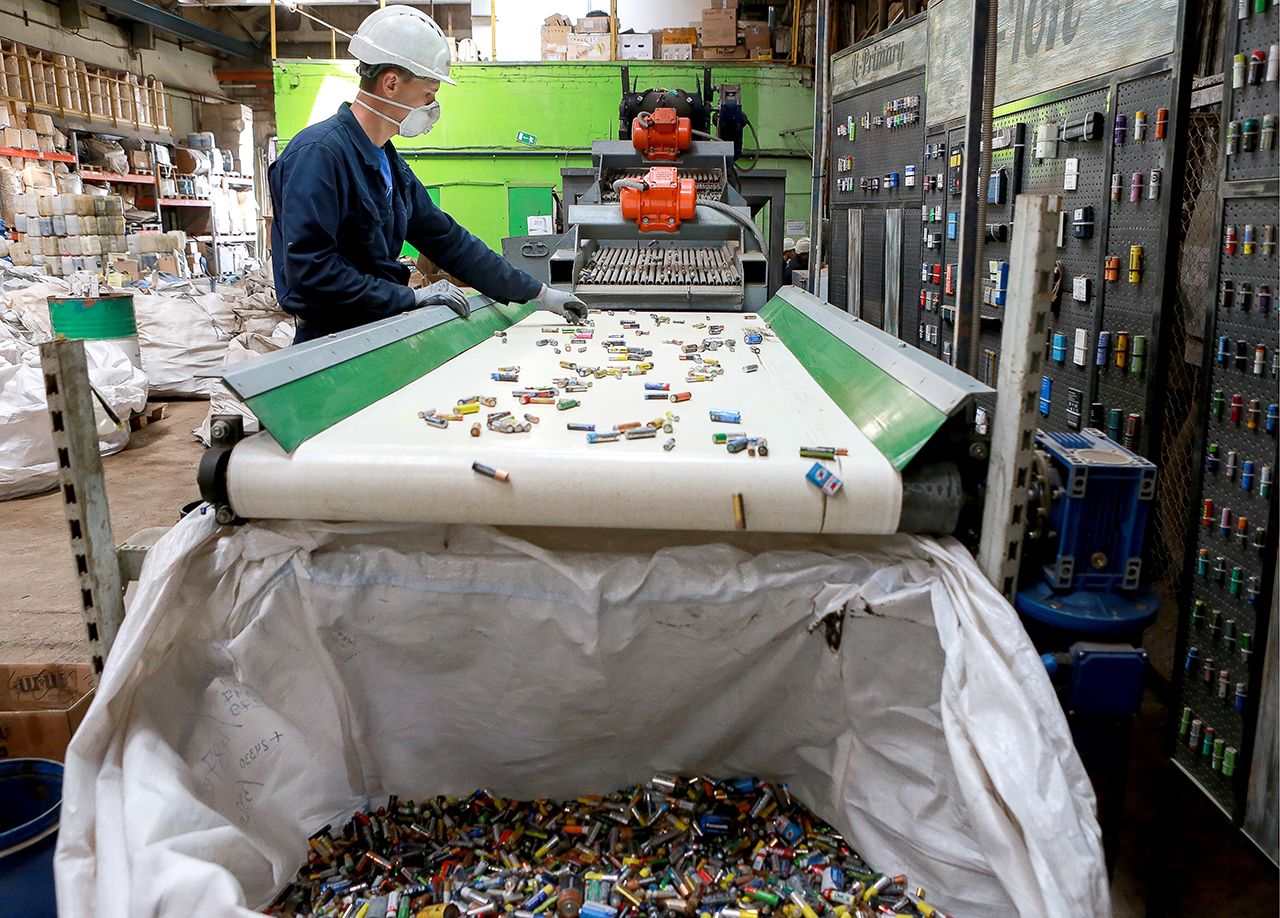
First, the nutrition elements are manually sorted by the chemical composition and sent to the appropriate workshops. They are crushed there, with the help of a magnet, the iron case is separated from the contents, washed from the electrolyte, extracted non -ferrous metals and the graphite is filtered. Metals are returned to production, electrolyte is used to neutralize acids, and graphite goes to the manufacture of antifriction lubricants.
There is a Moore law about transistors - is there any such a thing about batteries? Why are the batteries develop more slowly than other electronics elements?
In the world of batteries, progress is also observed, but its pace is significantly more modest than what we are used to in the world of integrated microcircuits. The specific energy of the best lithium-ion batteries from the moment of their invention and the beginning of industrial production in the 1990s increased 2.5 times, but this, apparently, is almost the limit.
Now in the development there are several new (so-called post-line) batteries-lithium-air, lithium-gray, sodium-ion and others. All this is so far only laboratory samples - each fundamentally new technology requires many additional research for practical implementation. Chemical current sources also have fundamental restrictions that do not depend on their composition: for example, a very capacious battery cannot be very powerful and vice versa. Therefore, for those cases when the high peak power and a large container is required at the same time, new batteries will be supplemented with devices like supercondensers.
Why and when were forbidden to take batteries in baggage?
Immediately make a reservation that such prohibitions concern only lithic -containing electrical elements. Moreover, the International Civil Aviation Organization (ICAO) since 2016 prohibits only commercial transportation of such batteries in the baggage compartments of passenger aircraft. Different countries and airlines may tighten this ban. So, for example, in the USA it is forbidden to take lithium-containing elements not inserted into any device (including external telephone batteries), since random contact of open electrodes with metal can lead to short circuit and ignition. In general, the fears regarding such batteries are associated with their ability in rare cases self -freeing with the release of a large amount of heat. At the same time, fire extinguishing systems in luggage compartments are not approved for use in such fires.
Why did Samsung Galaxy Note 7 burned? There will be no more such problems?
According to the investigation conducted by Samsung, the accumulators spontaneous combustion in this line of smartphones occurred due to production defects in the conditions of hasty preparation of devices for sales. Depending on the specific plant, these were either welding defects or inaccurate correspondence of the size of the battery and phone, which led to the bend of the electrodes and the insufficient barrier between the positive and negative charges. All this created the conditions for overheating, short circuits and, as a result, spontaneous combustion. As defective batteries, the quality control service missed - a separate issue.
As for forecasts, no one is completely safe from production defects and violations during the examination of finished devices. Another thing is that their probability is constantly trying to minimize - the manufacturer himself is very interested in this, since such stories threaten not only reputation losses, but with huge costs for claims, fines and product review. However, as experience shows, sometimes greed and desire to win in the competition are prevailing.
Can a battery explode?
Maybe, moreover, the most dangerous lithium-ion batteries are most dangerous-in the “class” form, they contain unstable compounds: lipf₆ in a mixture of organic carbonates (electrolyte) and lithium cobattate (cathode). With sufficient temperatures and potential differences, these substances can distinguish combustible gases with predictable regret consequences.
Other causes of batteries include structural defects (as in the case of Galaxy Note); Excessively fast charging and discharge; The mechanical effect, the closing cathode and the anode, as well as (in large batteries) insufficient heat discharge from individual cells.
And there are batteries that should not be charged, but pour fuel there - like gasoline or alcohol? Such would be strongly useful in the campaign!
Yes, there are - they are called fuel elements (we talked about them in the question of transport). In many ways, they even surpass the batteries. The main factors that limit their use on campaigns, on hunting, fishing, etc. - this is the need to take special fuel (most often compressed hydrogen) and its very limited accessibility (there are hardly many places where you can buy a portable container of hydrogen with the necessary filling adapter). However, fuel elements are quite promising as a replacement for accumulators in suitable conditions.
Some batteries really work longer? They look all the same ...
Despite the same form factors, the contents, and hence the characteristics, in household nutrition elements are different . The simplest and cheapest are saline, in them the cathode is a manganese dioxide, an anode is zinc, and ammonium chloride is electrolyte. In alkaline elements, the chemical composition of the cathode and anode is the same (although zinc is not all -metal, but powder), and potassium hydroxide is used as an electrolyte.
Compared to salt elements, there is more container, discharge current, storage period and operating temperature range, less self -discharge and voltage drop during operation. However, they are more expensive and harder.
How does wireless charging work? Can she handle any battery?
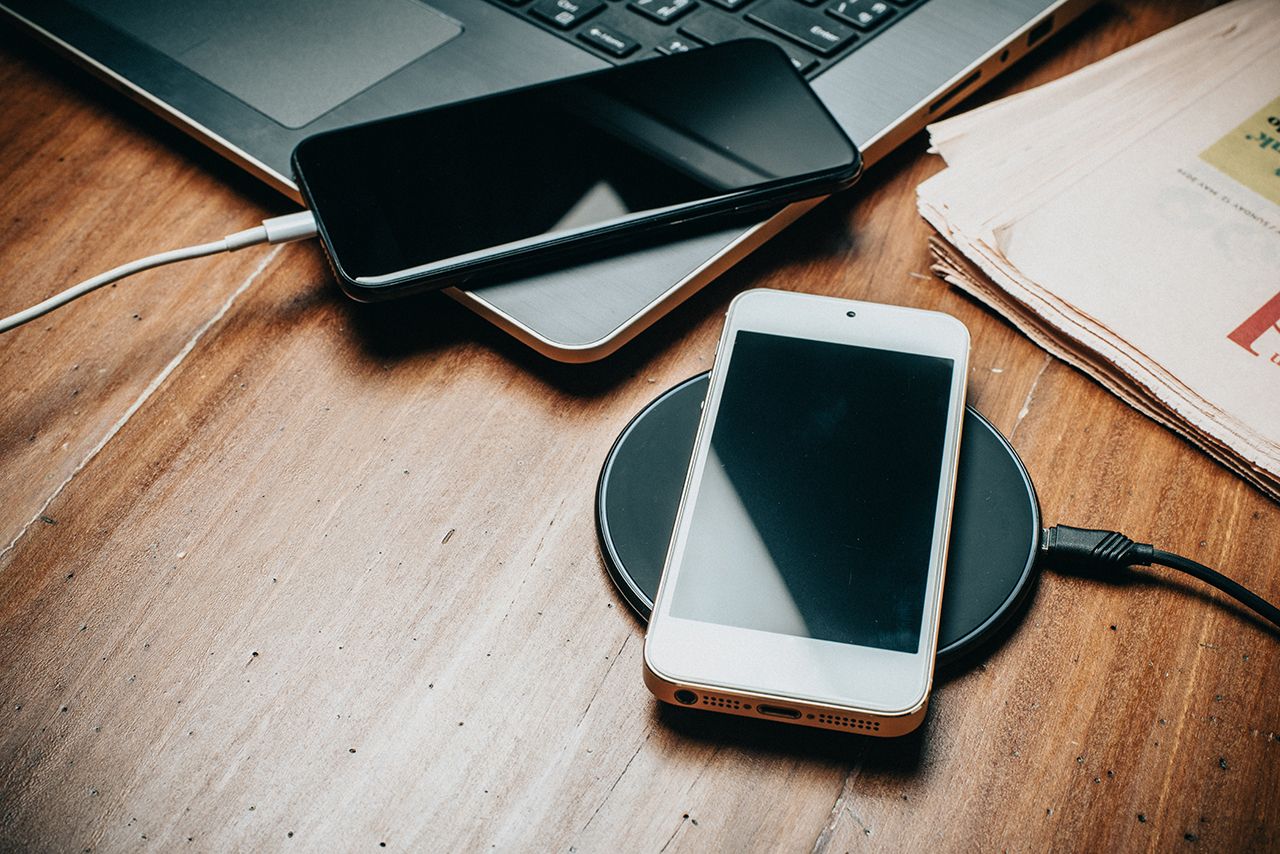
Wireless charging is based on the phenomenon of electromagnetic induction - the production of electricity under the influence of a magnetic field. The charger generates it, and the smartphone or other device is accepted and converted into electricity for the battery. The type of battery does not matter.
What will happen if you swallow the battery?
If the battery is stuck in the esophagus, its charge or a leaked electrolyte can lead to a severe burn. If I “slip through” further, then in most cases it will pass through the entire gastrointestinal tract without consequences. In case of damage to the battery body, the material of the electrodes and the electrolyte that fall into the lumen of the stomach or intestines can cause nausea, vomiting, abdominal pain, increased salivation, darkening of the chair and other symptoms. But even if there are no such manifestations, you must definitely seek medical help.
And how do batteries change if it is about implanted devices?
It is not necessary to open the chest to change the battery in a pacemaker. In modern devices, the power source is sewn under the skin and either charged induction, or replaced once every few years.
Oleg Lishchuk