
Translated material
“Music is acutely political. Any. Always"
Composer Dmitry Courland - about a new album, music reflecting society and a modern listener
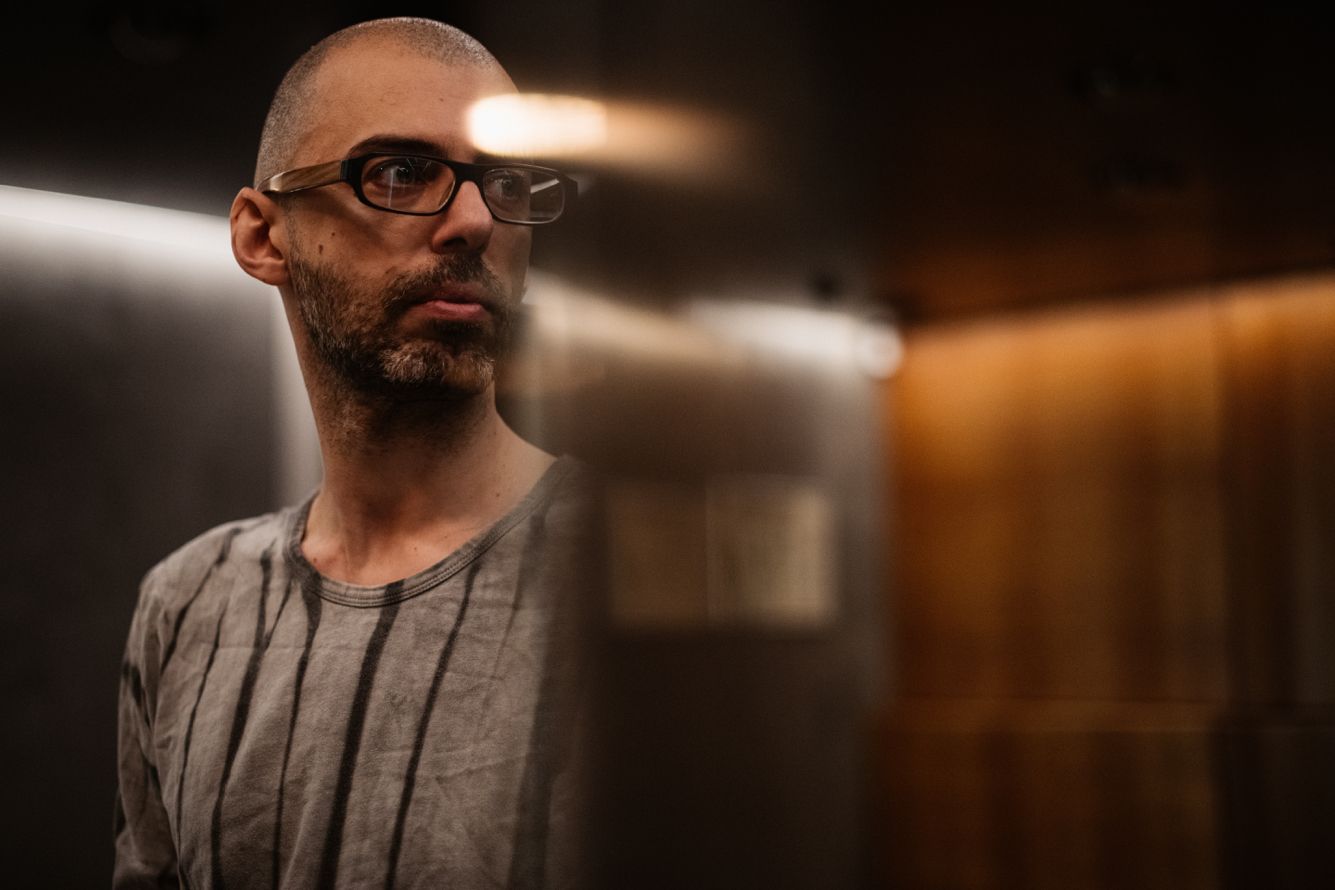
On October 4, on the Kotä label, the Embent Album “Non-Lieux” was released by one of the most successful and demanded Russian composers Dmitry Kurlandsky. His works are marked by prestigious international awards; They are performed by Theodore Krentzis, Philip Chizhevsky, Fedor Lednev and other leading conductors of the world. At the request of Medusa, the music critic Marina Monakhova discussed with Courland, why academic authors work in a popular genre, how politics can affect art and how modern academic music undermines totalitarian systems. The presentation of the Non-Lieux album will be held on November 4 at the Stanislavsky Electr theater .
- Of course, you need to start with the album. How typical and expect such a way out of the academic composer from the territory of music, let's say, serious in the territory of the popular music - such as an emphanty? Or do not need to draw these boundaries at all?
-Yes, “non-lieux” just raises the question of borders that in recent years-actually for almost 20 years, this process began with the zero-began to erode [in the musical environment]. Academic composers actively use the dictionary and models of popular music, and popular music, in turn, is complicated in many examples, and this happens in different genres - from rap to pop. Therefore, in recent years, I have naturally go beyond the limits of the traditional territory of modern music.
This album is not the only such project of mine: a year ago I released a disk of songs on my wife Nastya Rodionova. I would not say that these are popular songs, rather it is a step towards alternative music. In 2013, I made a performance with Theodor Cuorentsis for the orchestra and Electronics "Spring", the soundtrack for it is a kind of dubstep. And for me all this is a serious statement, and the material that I choose for its implementation, that is, directly sounds or some models, is secondary. Everything serves a certain methanarrativ, and to achieve the accuracy of the statement, any material is suitable.
- Why and how does this album sound like that?
- Then several factors played the role. On the one hand, he appeared after my work on the play “Pinocchio”, whose premiere will be held in the “Stanislavsky Electroatater” in November. I used such a virtual musical instrument that we developed together with the sound artist Oleg Makarov, our outstanding musician and experimenter-and this instrument seemed to me very rich in its capabilities.
Having pushed away from what I did for Pinocchio, but attracting the original material, I received a cut of seven tracks approximately equal to the length. An equal length is an interest that I pursued, while the filling of the tracks is quite different. I was occupied as the same period of time in different ways in different material: somewhere it seems that it lasts a very long time, and I would like it to end as soon as possible, and somewhere it sweeps quite unnoticed. Despite the fact that this is all the same step of time and approximately the same degree of saturation of the sound texture.
- What kind of virtual tool? Is this some kind of algorithm?
- The tool works with seeds - that is, pre -designed materials that we feed the program - and it literally chews them: chews them spectrally, spatially, divides the original material into small granules and distributes them in height, space and time in accordance with a certain algorithm, which involves a high degree of accident.
- That is, it turns out that this music is written in artificial intelligence? Or Dmitry Courland and artificial intelligence?
-This music was written by Dmitry Courland and Oleg Makarov, because in this case he acted as an assistant programmer: Oleg technically solved the tasks that I set before him. But when we tested some solution to the problem, it, in turn, began to dictate and open new opportunities for us, change our initial plans and goals-and we liked it, it was interesting what the program offers in response to our request. That is, it turned out to be a very interactive process of exchanging information: we lay something in the program, it gives us a result that is not always predictable and expect. We either accept it and begin to work with it or discard. In this constant dialogue, our human participation in the selection of material and decision -making was, of course, primary.
As for music created by artificial intelligence, it is easy to distinguish it by ear - it is very stupid. She gives the impression that she was written by a person who completely does not understand what he was dealing with. After all, the bottom line is that the music operates not only with sounds and proportions: it operates to a greater extent with contexts, historical references, it is engaged in a dialogue with tradition - more or less sharp, and it does not matter with which genre or with what aesthetics we deal with. I would say that the music of percent by ninety is a reflection on the place of music in history and in culture.
The sounds that can only operate on artificial intelligence is only the tip of the iceberg through which we have a chance to penetrate into the depths. Sounds by and large are secondary content. They are a certain fetish who distracts, takes most of the attention, in fact, not being the most important in music. Therefore, only when artificial intelligence will learn to build philosophical or cultural concepts and constructions, then he will become a composer.
-I roughly imagine the economy of release of albums in pop music, what is it in the field of academic music?
- In this case, the album is primarily the form of the existence of the work, this is not a story at all about money. Academic music in principle does not self -fraud - whether it is the Bolshoi Theater, “Stanislavsky Electro”, Alfred Shnitka or Sergey Nevsky. We, of course, survive, we have a livelihood, there is a fairly developed system of support for modern music and composers - these are orders, scholarships, grants, but there is no talk of any self -sufficiency here.
-In general, since it came to money, can you live only by the composer’s profession today or do you need to do something else-teach, make public lectures?
- It is theoretically possible to survive this profession, it all depends on your requests. If you are alone and if you do not rent an apartment, then you will survive and will, in general, feel free. If you have a family or if you have to rent housing, then you need to add some additional function to the composition. Abroad, this is most often teaching, in Russia, unfortunately, it does not give proper financial return, so there is a reading of public lectures and so on. So yes, you can live: the composer lives at the expense of orders and copyright deductions.
- As I understand it, you have one of the most successful quarries of Russian composers. Your victory at the Gaudeamus contest [in 2003] was something out of the ordinary.
- It was, yes, but this is a competition for young composers, and it happened for a long time, in fact it was a career start.
- Nevertheless, before that, none of the Russian composers had such a career start. So that the composer’s career develops successfully, what should he possess? Is there enough musical talent? Or is it also necessary to get into the conjuncture?
- I would say that everything is much simpler. The composer is a figure dependent primarily on performers. If they do not want to play you, you will not be able to force them. The performer plays what is interesting to him. The composer also does what is interesting to him, what he considers important - most often, regardless of the conjuncture of the conditional market, because getting into it is actually very difficult.
There are a lot of performers, their tastes are constantly changing, but first of all they value, of course, individuality. At the same time, they simultaneously repel from their concert experience, and from the experience of interacting with the audience, concert organizations - with a huge concert machine.
Everyone has their own strategy, and, of course, you can immediately see how much a person wants to diversify his repertoire or, conversely, he sits on three whales and repeats the same works from a decade to a decade. Many performers, just those who are interested in modern music, love to knock out the ground from under themselves. After all, when you play the same thing, you begin to bother creatively. And you may not even notice how you turn into a printer: and no matter how virtuosity and height of permission this printer is - this is a machine. Many performers are afraid of this, so they deliberately often expose their repertoire with something unexpected even for themselves and contradicting, so to speak, their main aesthetics.
And here their choice is not determined by the market conjuncture: here the individuality is shot, the severity of the very dialogue with tradition, with a current context. And then, the performers, in turn, believe or do not believe in you, see or do not see the return - it begins, and the career continues. Indeed, in the halls there are not always just listeners - but also the same performers, director of ensembles, director of festivals, they hear music that seems interesting to them, and make an order to the composer for the next work. And this lump gradually leads to what can be called a career. The composer cannot influence this in any way.
- Probably the most ossested structure is a symphony orchestra - the largest performing composition with a repertoire from works, mainly the nineteenth century. Do modern composers often order symphonic orchestras? And in general, does this composition maintain relevance today or gradually goes into the past with all the huge music written for him?
- Symphonic orders, of course, are, but in Russia these are more exceptions and units. In our country, there is no system of composer orders at all, just as there is no system of support for composer creativity - we differ from the whole world. In the Soviet Union there was such a system - an ideological machine that formed the ideological requests that the music was supposed to correspond. With the collapse of the Union, the order system disappeared, and nothing came in its place. Orders in Russia are now sporadic in nature - they order by friendship, by acquaintance, there is no system.
In Europe and the world, there is a detailed multi -level system of support for composers - it is a state order, municipal order, private funds, festivals; Musical groups specifically lay budgets to order works. Therefore, our demanded composers - those who are afloat - 90% exist at the expense of European, foreign orders. We are a kind of foreign agents, in a certain sense, forced, since, in my opinion, we simply have no other way of existence. As in the USSR “there was no sex”, so in modern Russia there is no modern music.
And in this regard, there is a very large composer outflow. The authors, who thought in Soviet times, so to speak, critically in relation to official ideology, were first in the underground, and then, when the opportunity appeared, everyone left. And if all these names are listed, then the hair becomes on end: this is the story of Russian music-it has emigrated by 85-90% and continues to emigrate for this reason-there is no environment in Russia, there is no system of support for the existence of composers. The same applies, by the way, and ensembles. In one Berlin or in Amsterdam there are several dozen of them - only in one city! We do not have five regular and actively acting [ensembles] throughout the country.
However, orders even happen in Russia. But here you need to understand that the orchestra is primarily a conductor: it is a totalitarian machine, in which, for example, the second violin of the fourth remote control, unfortunately, does not solve anything - this is the specificity of this organism. He decides for everyone the conductor. And very few of them are interested in expanding the repertoire due to new music. These are quite famous conductors: Theodore Krentzis, Vladimir Yurovsky, Fedor Lednev, Philip Chizhevsky or, for example, Dmitry Vasiliev. But these names are, in fact, a few that take the mission to write a history of music, because it is created today and what we wrote is what the next generation will deal with.
This, unfortunately, is not many. Since, in principle, the Philharmonic and concert system, possessing rather large financial resources, understands that it is enough for it to support the main repertoire, conditionally-the three symphonies of Tchaikovsky, the two symphonies of Beethoven-and rotate them for decades, in general, without straining-then the inertia of this machine is beyond. This situation that impedes the development of new music is largely a difficult inheritance of the Soviet era. Totalitarian systems, in particular the USSR, strongly resist complex avant -garde music - because it, like any complex art - makes a person more complicated, makes him think difficultly. Such a person is unlikely to take a clean coin that the official media is broadcast, and this begins to threaten the political system.
At the same time, our composers are very noticeable actors of international, the world scene of modern music. Their names in a good sense and with a capital letter are convertible. I have the feeling that the recognition of our music in the world is generally wider than the recognition of even our modern visual art or cinema. Our composers annually win many international competitions, receive the largest scholarships, bonuses, are constantly executed at the world's largest festivals, receive orders from leading groups and so on, but all this is mostly happening here, not here. And not a single structure is still-even private-for some reason I thought about arranging the possibility of existence in Russia for our composers-but we do not complain. We are observing and leaving.
- I had to read that one of the most important topics for you is communication, in art and in general. And what was not always the case, and this interest manifested after the events in Bolotnaya Square, they say, before that you dealt with the problems of “inside” of music, and after that it became clear that something was changing in the country-and I wanted to communicate, figure out how people interact. How much do events in public life continue to influence you?
- First of all, I will say that music is acutely political. Any. Always. After all, music is the selection and organization of material. The composer creates inside the music of the system, hierarchy, minorities, the majority, the system of submission, resistance, and so on - this terminology is just as applicable to political processes. And, we understand this or not, the composer realizes it or does not realize whether the music and the systems translates the music, in this sense, I even began to say recently that the music is toxic. I understood this, in fact, always, but when the political situation around you is heating up and begins to interact with your everyday life, with your private life-you get additional optics, and you begin to distinguish in your own creativity, in your life and work, some things that you may have not seen before, but they were there. And, having discovered them, you, of course, are interested in and start working with it, just figure out what it is.
This is exactly how it happened somewhere in 2012-2013, which coincided just with that “riot of spring”, my performance, which in a certain sense happened in the footsteps of “swamp” thoughts and experiences. Moreover, we are talking about the revolution, about Stravinsky, because the “sacred spring” Stravinsky produced at one time a revolution in music. And this politics of music is the original, natural, you can’t get anywhere, they don’t teach this, they don’t talk about it, but this is so.
All classics and romantics, as you know, wrote tonal music. Tonality is a system of subordination of periphery to the center. And, if you want it or do not want it, in whatever tonality the work begins, by no matter what other tonalities it walks, in the end it is mainly (there are exceptions, of course, but there are not many of them) come to the same tonality. In other words, this whole system is about the statement of the center. The development of music was amazing in parallel with world political events. Suppose the end of the 18th - 19th century, the great French revolution - at the same time romanticism begins in music, and in this era - resistance to the center. The drama of the sound of romantic music is determined by the fact that the periphery refuses to “return” to the center - and this conflict is aggravated by the sensuality of perception. А в двадцатом веке композиторы отказались от центра вовсе — появилась додекафония, в которой все элементы системы абсолютно равноправны, появились какие-то абстрактные структуры. Интересно, что тоталитарные режимы и диктатуры двадцатого века возвращали в официальный культурный контекст именно тональную музыку — то есть музыку, в которой подчеркивается значение центра. Так что, получается, что кроме прочего композитор в каком-то смысле транслирует политические манифесты.
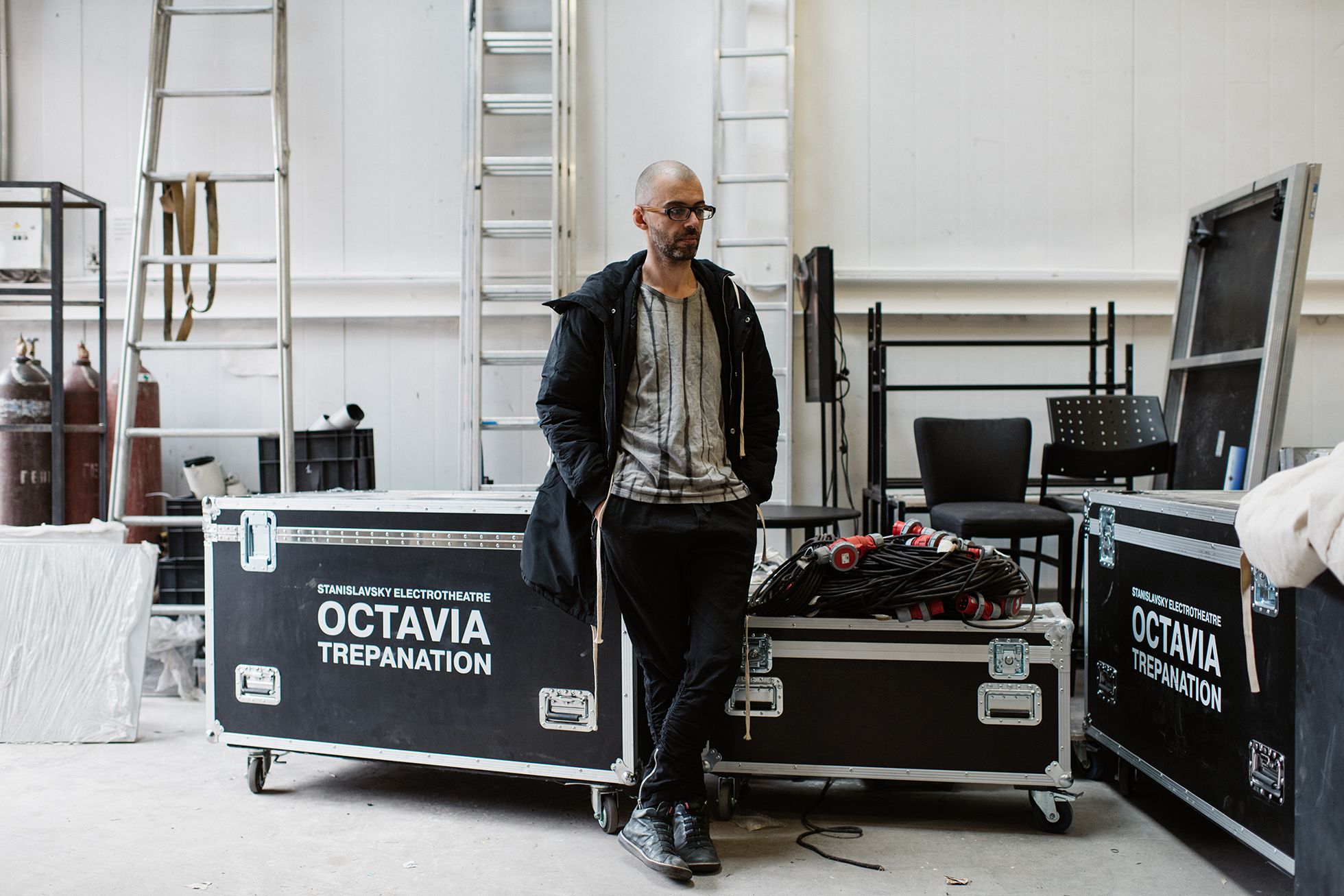
Что касается влияния политических событий конкретно на меня, то первое что приходит в голову — это опера «Октавия. Трепанация», которая была написана три года назад, а российская ее премьера состоялась на прошлой неделе в «Электротеатре Станиславский». В ней мы вместе с [театральным режиссером] Борисом Юханановым рассматриваем механизмы тирании. В основе — текст Сенеки, так вот цитаты из него я постоянно сейчас публикую в фейсбуке, настолько он созвучен сегодня — там и про подчинение, и про власть, и про страх потери власти. И в музыке все эти общественные механизмы я тоже пытался отразить: это очень сложно устроенная партитура, в которой есть и тоталитарный слой, и свободный слой — я имею в виду слои организации материала.
В каком-то смысле и альбом «Non-Lieux» можно рассматривать как отражение общественных процессов, но в другом преломлении. Non-Lieux — это термин, который ввел антрополог Марк Оже, это — «не-места». Его характеризуют по-разному, но, в общем, речь идет о местах, которые не обладают индивидуальными чертами: это сетевые отели, сетевые точки питания, аэропорты и так далее. И вот это стирание, растворение индивидуальных характеристик меня и интересует. Этот альбом, конечно, размышление — но не столько о политике, сколько в принципе о состоянии общества и культуры в целом.
— Слушатель часто, сталкиваясь с сочинениями современных композиторов, пугается, травмируется, не понимает их, отрицает и решает раз и навсегда, что это — «не его». Но вы говорили, что для вас одним из ключевых понятий как раз является восприятие «как активный творческий процесс». Почему оно для вас так важно?
— Система концертного исполнения и слушания — это тоже система определенных подчинений и распределения функций: слушатель — это приемник информации, исполнитель — передатчик информации; слушатель не может шелохнуться, слушатель не может кашлянуть и так далее. Композиторы в двадцатом веке наряду со многими другими вещами стали задумываться и над переформулировкой концертной ситуации: музыка вышла на улицы, на неконцертные территории; сейчас музыка растворилась в интернете, появилась медиа-оперы, оперы в социальных сетях, оперы в общественных пространствах.
При этом очень важно понимать, что слушание в определенном смысле и есть исполнение: мы все слышим по-разному, на наше восприятие оказывает воздействие очень много факторов — наш слуховой опыт, биография, география, настроение, психофизика и так далее. И каждый из нас, сталкиваясь с каким-то произведением, выстраивает собственное отражение, собственную рефлексию этого произведения. И это не пассивный, а активный творческий процесс — когда мы слушаем, мы сочиняем то, что слышим; когда смотрим — сочиняем то, что видим.
При этом какая-то музыка подразумевает активное авторское присутствие, автора-демиурга, который берет слушателя за руку и ведет сквозь нарратив своей музыки, увлекает в какие-то приключения и страсти-переживания. Это, по моему внутреннему ощущению, довольно тоталитарное авторское высказывание, которое ставит слушателя в подчиненную позицию. Я такую ситуацию сравниваю с походом в музей с гидом: он вас ведет, рассказывает про определенные картины, говорит, на что обращать внимание, на что не обращать внимания. И в итоге мы взаимодействуем не просто с музеем, а с музеем с точки зрения этого гида. А мне интереснее ситуации, когда я сам оказываюсь в музее, без гида — это может быть музей одной картины или музей дверных ручек, чего угодно — я открываю его сам и строю собственный музей.
Точно так же и музыкальное произведение — оно может эту руку ведущего разжать и отпустить слушателя в свободное плавание. Да, в этом есть своя опасность, потому что такое свободное плавание в звуковом пространстве, конечно, подразумевает активное слушательское участие. Но мне такая ситуация ближе — здесь выше степень доверия к слушателю, и мне такие ситуации интересно создавать и определенным образом обстраивать — чтобы слушатель мог себя в них обнаружить, начать различать, из чего эта ситуация составлена, и выстраивать свой собственный внутренний нарратив, если он ему, конечно, нужен.
— Как вы вообще считаете — нужно учить человека слушать современную академическую музыку, если он сам пока к этому не пришел? И если нужно, то как?
— Я бы из вашего вопроса вычеркнул словосочетание «современная музыка», тут совершенно не важно, идет ли речь о ней, или о «несовременной» музыке, или о звуках во дворе или в транспорте. Главное во всем этом то, что слушание — это, повторюсь, активный творческий процесс. И если мы этот процесс обнаружим и увлечемся этим процессом, то и современная музыка, и Моцарт с Бахом станут совершенно другими — мы начнем в них различать свое активное творческое присутствие. Учить этому можно и, на мой взгляд, нужно. Уже в детских садах, нам, к сожалению, затыкают уши прямыми образами: «здесь птички поют», «здесь листики шелестят». Ну так вот на самом деле птички — не поют, листики — не шелестят, это очень важно.
Любая музыка, вообще активное слушание начинается с попытки найти свой индивидуальный ответ на такие вопросы, как «что я слышу?», «как я слышу?», «где я слышу?», «откуда я слышу?». Когда-то меня спрашивали, как подготовиться к прослушиванию вашей музыки — это, по-моему, было во времена премьеры «Носферату» еще в Перми. Я предложил такой способ: сесть в комнате, в парке, на улице — где угодно, выключить мобильный телефон на полтора часа и постараться услышать пространство вокруг себя и себя в этом пространстве. Услышать далекие звуки, услышать близкие звуки, услышать звуки собственного организма, постараться слухом пройти некую траекторию — по тем звукам, которые приближаются, удаляются, растворяются, исчезают или наоборот становятся очень близкими. То есть осуществить слуховую прогулку, сочинить ее.
Во второй половине двадцатого века произошла смена парадигмы процесса слушательского внимания. До этого музыка всегда развертывалась будто бы слева направо: мы наблюдаем в ней за последовательностями нот и за следованием разделов формы — и из этого складывается некий нарратив. Где-то с появления конкретной музыки парадигма слушательского внимания изменилась: от слушания — к вслушиванию. Что такое вслушивание? Когда мы приходим, например, в лес, мы не слушаем слева направо, или справа налево, или сверху вниз. Мы слышим, что где-то далеко что-то случилось. Какой-то звук пронесся слева направо, какой-то — справа налево. То есть мы оказываемся в 3D или даже 4D среде. Вот современная музыка и требует такого 4D слуха, да и на самом деле, не только современная музыка.
И альбом «Non-Lieux», кстати, — это по сути как раз этакие environments, среды, в которые я слушателю предлагаю погрузиться. Если в этой музыке ждать, когда появится следующий звук мелодии, то мы его не дождемся. Но если мы попробуем начать вслушиваться в то, что происходит за этими громкими звуками — то обнаружим, что там очень много деталей, что это очень многослойная композиция — и в ней может оказаться настолько интересно, что и десяти минут пребывания может не хватить.
Это не значит, что не нужно понимать, из чего и как это сделано. Of course you need. Но, на мой взгляд, это уже следующий этап — когда ты увлекся, погрузился в звук, погрузился в среду, начал ее различать, начал с интересом в ней пребывать — то уже тогда твой следующий шаг как человека любознательного, интересующегося — разобраться в том, как это работает. Но делать это нужно уже после — потому что, на мой взгляд, есть большая опасность, что это структурное, инструментальное может вытеснить то принципиально важное незнание, с которым мы, например, приходим в этот мир. Точно так же с этим незнанием мы приходим и в новый звук, и в каждое новое произведение искусства, и именно это незнание и оказывается той самой территорией творчества.
Но, конечно, может быть и так, что человеку неинтересно опускаться в эту звуковую стихию, ну, значит ему и не надо туда идти. Достаточно просто понимать, что да, есть современная музыка, она очень разная, ее очень много, каждый говорит что-то свое, так же как и в литературе, и в изобразительном искусстве, и в театре. Есть люди, которые не читают книги или не смотрят фильмы, точно так же есть очень много людей, которые не слушают музыку. Заставлять бы я, конечно, никого не стал, но просто нужно иметь ввиду, что если ты узнаешь о жизни что-то, чего ты до сих пор не знал, то ты становишься больше на это «что-то». И чем из большего ты состоишь, чем более сложносоставным ты являешься, тем более сложны твои взаимодействия и отношения с миром, тем больше ты различаешь в нем сложностей и составляющих.
Marina Monakhova