
Translated material
Timid boy, rapist, terrorist No. 1
The story of the leader of the Islamic State of Abu Bakra al-Baghdadi
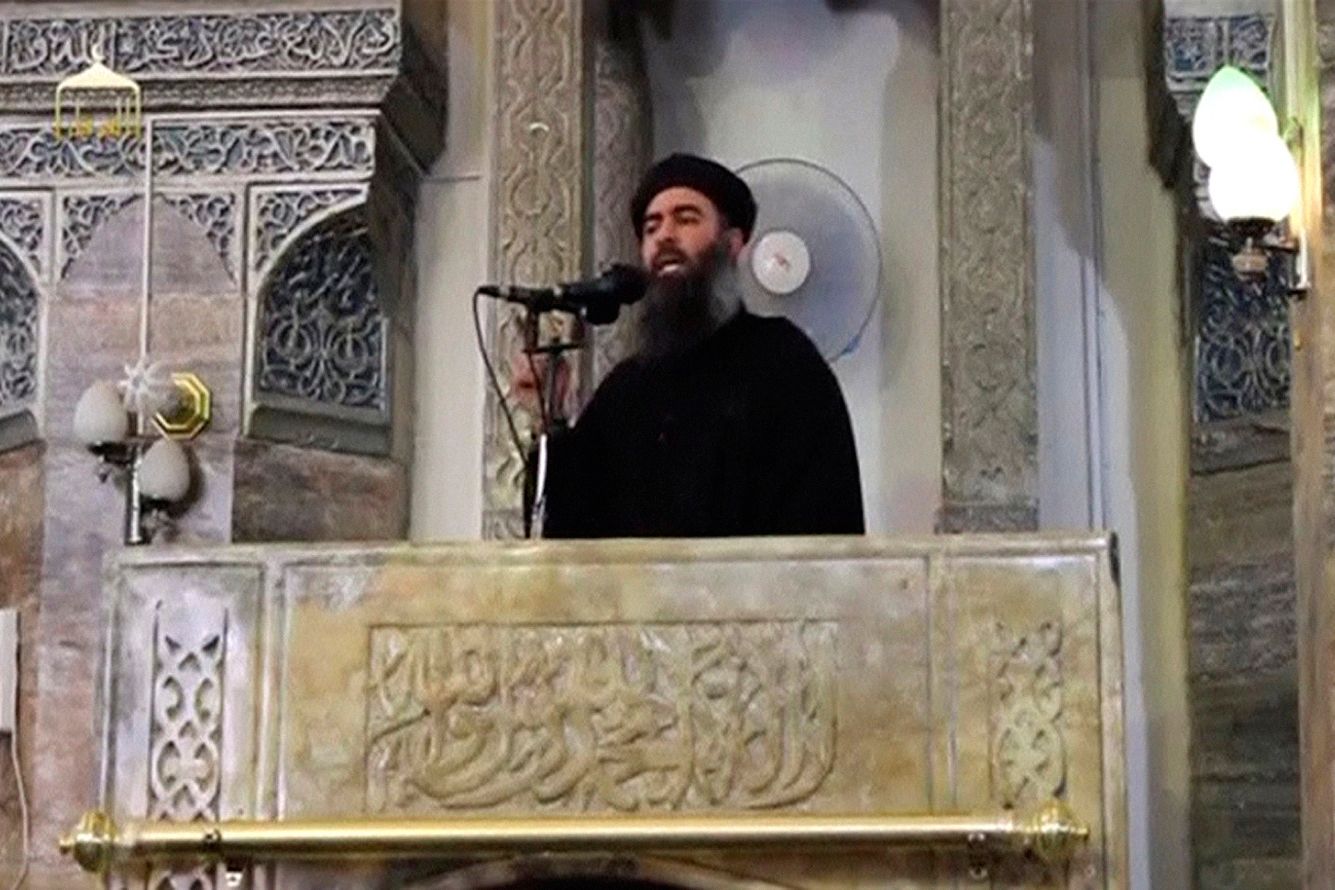
The leader of the Islamic State terrorist group Abu Bakr al-Baghdadi died at the age of 48, exploding the “suicide borrower” during a special operation of the American military, held in Syria on the night of October 27. The most wanted terrorist, according to US President Donald Trump, “died like a dog, trying to hide from the military in the tunnel. The New York Times told the life story of Al-Baghdadi, who has gone from a timid and quiet teenager to the leader of a terrorist organization, attracted tens of thousands of supporters in dozens of countries. We publish a retelling of this material.
Ibrahim Avvad Ibrahim Ali al-Badri, better known as Abu Bakr al-Baghdadi, was born in 1971 in the village of Al-Jallam in Central Iraq. His father is a conservative Muslim- Sunnit , who earned a living by selling sheep. The family raised six children. The neighbors called the ordinary family, and the village in which she lived was ordinary.
But there was one important detail: in those places, mostly representatives of the Al-Badri clan lived, which traces its origin from the Kuraysh clan from which the Prophet Muhammad comes. The leader of the Islamic State used this plot when in 2014 he announced the creation of the World Caliphate.
The future leader of the IS taught in the mosque and promoted Wahhabism on the sports ground
When Ibrahim went to primary school, his family already lived in the neighboring city of Samarra. The New York Times calls him a mediocre student: in high school, he received higher grades only by art (95 out of 100 points), and in other subjects such as Algebra, he scored about 50 points. In childhood, Al-Baghdadi was “timid”, “closed” and “quiet”, his friends, classmates, teachers and neighbors say (in all journalists, 17 people who knew him).
In childhood, his father gave al-Baghdadi to the mosque, where he began to teach the Qur'an by heart. Quickly, he succeeded quickly in these classes: when al-Baghdadi studied in high school, the parishioners asked him to read a prayer instead of imam. At the same time, his conservative approach to faith became noticeable: in particular, he made comments to other students and even his mentor in the mosque when he began to smoke.
At 20, in 1991, he entered the University of Baghdad, and having received a bachelor's degree, he began to study at the University of Saddam , which specializes in the study of Islam. To pay lessons, he taught in a mosque in Baghdad, where the students called him "Sheikh Ibrahim." People who talked with him then described him as a silent and restrained person. Ahmed Rajab, who studied in the mosque in the early 2000s, noted that al-Baghdadi did not gossip and was laconic. On weekends, the future leader of the IG coached a youth football team and distributed brochures to athletes, promoting the ultra -conservative course in Islam - Wahhabism.
In 2004, al-Baghdadi was detained, he became a secret “emir” in prison and was released 11 months later
In 2003, when the United States began an invasion of Iraq, al-Baghdadi told his students in the mosque that he was returning home. In January 2004, the American military grabbed him near the Iraqi city of El Faluj in the house of a relative ( according to The Guardian, in a friend's house). The main goal of the military was a relative of Al-Baghdadi, who was suspected of organizing attacks on Americans. Al-Baghdadi himself was only detained with other suspects. He spent the next 11 months in the American Camp-Bucca camp in Iraq, after which he was released, follows from the notes of the Pentagon to which NYT referred to.
Some experts believe that al-Baghdadi's views were radicalized precisely in conclusion, but, as the people who were with him in prison say, he got into the Camp Bucca, already being a criminal. The NYT source in the Pentagon previously said that by the time Al-Baghdadi was detained, he was a “street sleeper”. One of the former prisoners said that at that time al-Baghdadi was called Abu Dua. According to him, in every tent where prisoners lived, they chose secret “emirs” - and Abu Dua became one of them. With the support of other Sunnis, he expelled the Shiites from his tent, and then began to threaten the Sunnis for smoking, skipping a prayer or wore a short beard. In the camp, he also acted as a judge in disputes between prisoners. He freed himself at the end of 2004, since the American authorities could not prove his involvement in attacks by American officials.
A year after the liberation of Al-Baghdadi joined the "Casting Assembly of the Mujahideen in Iraq", uniting various Sunni groups, and became the leader of the rebels in Central Iraq. In May 2010, he headed the entire rebel movement, taking the name Abu Bakr al-Baghdadi. In the next three years, the Iraqi authorities tried to detain al-Baghdadi at least six times, but he managed to leave.
By mid-2012, terrorists, controlled by al-Baghdadi, moved to Syria. By mid-2013, Iraqi rebel groups united into the Islamic State terrorist organization, and a year later, in June 2014, the terrorists captured Mosul, the second largest city of Iraq, as well as most of the territory on the border with Syria.
The leader of the IG was the most wanted person in the world, 25 million dollars were promised behind his head
Over time, al-Baghdadi became more careful, incredulous and began to take care of security more. It is believed that more than ten years ago he stopped using the phone, preferring to keep in touch with other rebels through messages transmitted personally. The first video, where the face of the leader of the IG was not hidden, appeared in July 2014. On the record, Al-Baghdadi went up to the department of the mosque in Mosul and announced the establishment of a caliphate. He proclaimed himself a caliph, that is, the head of the World State and the Muslim community. The establishment of a caliphate, according to the plan of the supporters of the IG, implied that all Muslims of the world should obey him.
The leader of the “Islamic state” was considered the most wanted person in the world: for his capture they promised a reward of $ 25 million, and intelligence services of many countries were chasing him. Despite this, he not only led, but also took a direct part in the criminal activity of IS.
In particular, notes The New York Times, al-Baghdadi participated in the rape of women who are considered unbelievers. A few weeks after the Caliphate’s announcement, the IS militants abducted women and girls from the village of Yezidov , delivered them to Syrian Racca, where they put up for sale. Al-Baghdadi came first to see the prisoners, one 15-year-old Yezidka said. Then her and other women, who were chosen by al-Baghdadi, were taken from home to the house where the leader of the IG raped them. All women who were in captivity said that he had enjoyed cruelty.
In August 2014, when the 15-year-old girl was taken to al-Baghdadi, she thought she would be raped. Instead, the leader of the terrorists showed her and other captives a video about how the militants executed the American journalist James Foley. “He told us:“ We killed this man today. ” He laughed at our reaction, ”the girl says.
After the declaration of the Caliphate, the Islamic State seized significant territories in Syria and Iraq. At the peak, terrorists controlled the territory comparable in area with the UK, but by March 2019 the military managed to recapture all the captured territories from the terrorists. In 2014-2015, Supporters of the IGcommitted more than 140 terrorist attacks in 29 countries, including in the USA and Europe. In attacks, more than two thousand people died. In 2016-2019, the Islamic State allegedly committed about 1,100 terrorist attacks, the victims of which were about 15 thousand people in the USA, France, Germany, Spain, African countries, Asia and the Middle East.
In recent years, al-Baghdadi again strengthened security measures: even trusted people were brought to meet him with blindfolded eyes, and after his departure, they were not released from the building for several more hours. The official representative of the United Command of the Armed Forces of Iraq Yahya Rasul believes that al-Baghdadi did not trust anyone, fearing betrayal. After US President Donald Trump announced the liquidation of the leader of the IG, Reuters reported that the information where Al-Baghdadi met with the militants was provided by his closest associate Ismail al-Etavi. NYT notes that the arrest and interrogation of one of his wives in the summer of 2019 also helped to go to the leader of the terrorists.
In the past, the media have repeatedly reported that Abu Bakr al-Baghdadi was killed, but this information was not confirmed. The Ministry of Defense of the Russian Federation doubts that the American military really conducted a special operation during which the leader of the IG died. The Islamic State has not yet confirmed the murder of the head of the organization.
Rethered by Alexander Baklanov