
Translated material
Experts predicted the growth of protests throughout Russia
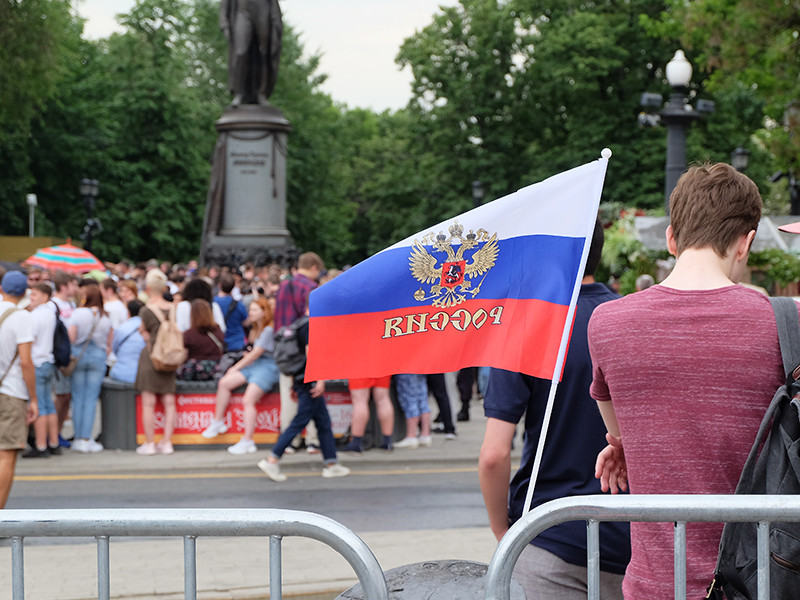
The number of protests in Russia may increase, and social protests will be politicized. This is stated in the report of the Agency for Political and Economic Communications (APEC) "Non -Lithic protest in the regions", the data of which is referred to by "Vedomosti" . In addition, experts note a wider involvement in the protesting of people far from politics.
According to the authors of the report, the overall level of participation in the protests is still low, but their agenda becomes wider than the initially declared and there is an obvious negative cumulative effect from the socio-economic policy of the state as a whole. So, in the first half of this year, the largest actions occurred where environmental risks were added to social problems, as in the case of an action against the garbage training ground in Shiesa: local protests were supported not only in the regions of the North, but also in Moscow and St. Petersburg.
The protest against the construction of the garbage training ground was among the most famous protests of the last time: as a survey conducted by the Levada Center shows, 35% of Russians know or heard about it. According to political scientists, it was the protests in Shiies who forced the country's leadership to talk about the possible change of the governor of the Arkhangelsk region Igor Orlov, whose resignation could occur before the end of the year .
In addition, it is noted that a social protest in the regions can be politicized primarily due to the consolidation of various groups and unification of requirements that are still unsatisfied. The possibility of politicizing protests is high in the conditions of a competitive election campaign, taking place in the context of a conflict of elites, which can bet on protest players. A low rate of economic growth can lead to protests, including in the field of labor relations.
According to political scientist Gleb Kuznetsov, 2019 can be considered the year of protests around the world - from "yellow vests" in France to Latin America, Hong Kong and Barcelona: protests arise unexpectedly, and their main reason is the unresolved socio -economic problems. Although the protests in Russia are weaker than abroad, and many Russians are of little interested in politics, the deterioration of the economic situation cannot but affect the well -being of individual Russians. The protest can be politicized in the event of leaders, and any incident can be the reason for it. “If the people do not begin to get rich, then the protest will increase,” the political scientist added.
At the end of May, the share of respondents who are ready to protest against a fall in the standard of living (27%) for the first time exceeded the share of those who indicate the probability of protests themselves (26% against 41% in July 2018). The minimum of the spring of 2018 has reached the share of those who consider it possible to protests with political requirements (24%), although 22%are ready to join them (last July after the announcement of pension reform, it was 23%, in March of that year - only 6%). Protest activity becomes a painful topic for the authorities: in the summer, a decrease in the level of protest potential was recognized as one of the criteria for evaluating the activities of officials . However, specific protest events are traditionally sensitive to politics than potential readiness for them, and participation in protest is often spontaneous.