
Translated material
Subscribed democracy
Do online patterns work in Russia? Explains the sociologist Grigory Yudin
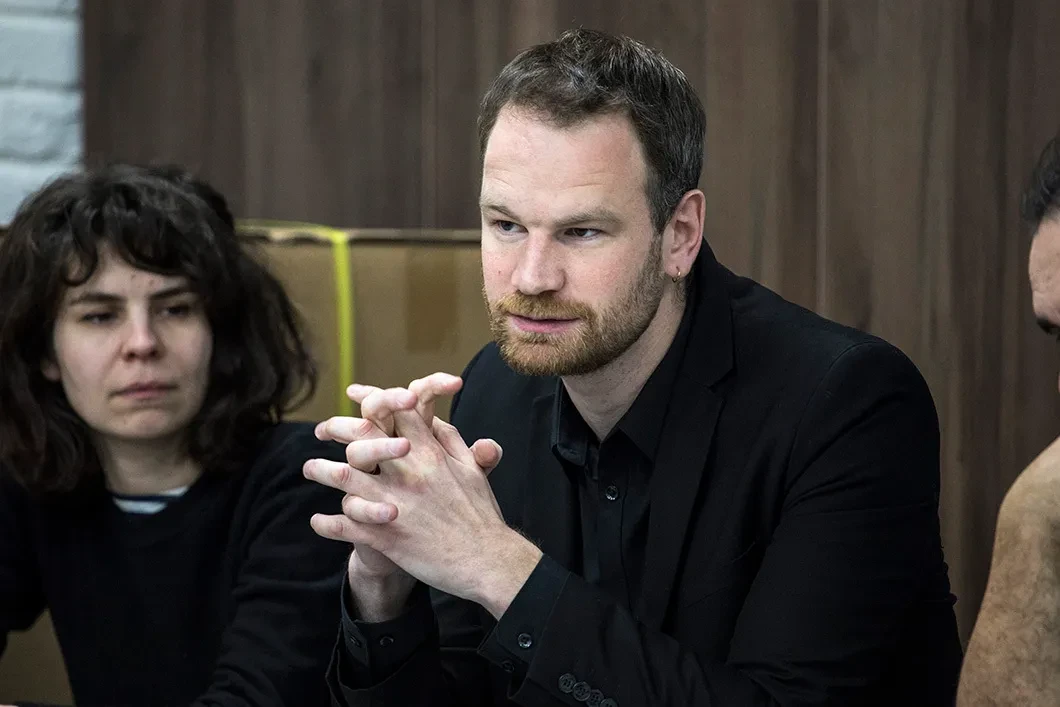
On October 26, the joint festival of Inliberty and Change.org “How to change? Social changes and civil participation. ” In recent months, Russians have become participants in a large number of public campaigns. Was this meaning and how to measure the effectiveness of collective action? These issues at the festival were discussed by sociologists, politicians and civil activists. The New Gazeta publishes the abbreviated version of the lecture of Professor "Shaninka" Grigory Yudin that the shortage of democracy is and whether the petitions help to fight it.
Civil participation and civic activity recently is a big problem in political theory. One of the classical descriptions of democracy was once voiced by Alexis de Tokquille, a French thinker and politician who traveled in America. Toquila was impressed by the readiness of the Americans to unite in groups, to gather and establish associations that allow them to realize their interests. Tokvil himself did not really like democracy, but on the example of America, he quickly realized that there was great energy behind this.
And today, political philosophers who share this understanding of democracy with Tokhlov is very worried about the fall of civil activity around the world.
What is it manifested in? The most obvious is the fall of participation in the elections, absenteism: a low level of turnout, the tendency of people to ignore the elections. This problem is visible all over the world. But I would have emphasized not even in the elections, but on other things, for example, on local self -government, participation in public discussions, campaigns and demonstrations. All these attributes of democratic life also become less noticeable everywhere. This causes serious anxiety among those who are engaged in the political theory of democracy.
Where does the fall in civil activity come from? There are some general structural reasons. We live today not in policies, but in large countries and cities. Our mobility increases, people often do not have time to gain a foothold anywhere. Therefore, the freedom of collective political activity today is much less understood than freedom, for example, commercial activity.
What solution to the problem of democracy deficiency is the first to come to mind? Let's directly solve all issues by vote or at least conduct surveys. The idea that it is necessary to vote more becomes the main project that should restore democracy. But are voting salvation? In fact, they offer a rather specific model of society. This is a society of isolated individuals, each of whom is busy with his own business, locked in his life, in his apartment, in some of its nearest circles. There are no discussions and public conflicts between these individuals, they do not like to talk about politics, because this is a conflict topic. At the same time, one of the most important things, say, in ancient democracy was that a citizen was constantly involved in communication with others, he had to change his position. Now all this is not, our democratic activity is reduced to the expression of a pre -formed opinion.
In practice, voting significantly facilitate the task not for democrats, but for autocrats. When an autocratic regime arranges a plebiscite, you can almost always be confident in the results.
Because the question, as a rule, is formulated from above. When you are asked: “Do you agree that Crimea is Russia?”, It is difficult to imagine the conditions under which this statement will not find support. At the same time, this is a very good way to ensure democratic legitimacy, maintaining the autocratic nature of power. Hence, for example, a large threat associated with electronic voting. Believe me, electronic voting is a great way to reduce any democratic process to pressing one button from home. This turns democracy into a purely administrative task.
Intermediate conclusion from here: votes create a passive citizen. We all know the famous Moscow program “Active Citizen”, which can be installed on your smartphone and make decisions on many issues. In fact, if we are not engaged in branding, but try to explore real political mechanisms, then this, of course, is the passivization of a citizen. But the passivization of it is exactly to the extent to which it allows it at the same time to produce some democratic legitimacy.
Is the signing of a petition activity or passivity? On the one hand, in conditions of universal atomization and fragmentation, this is some collective action, and it occurs from below. It is clear that this technology, in principle, can be hijacked. And we, I suspect, will still see such examples. But often the fact is that the petitions are initiated by ordinary citizens. Another important circumstance is that the petitions are non -anonymous. They make you at least reveal your name, and in this sense it is a minimal public gesture.
In addition, they satisfy the two basic principles of political action in the conditions of atomization. Firstly, this action should be realistic. This should not be a proposal to dramatically change your life and spend it on some kind of good deed, as it sometimes happens with a human rights agenda. Secondly, it should have a clear criterion for effectiveness, we must be able to say when it worked and when not. The combination of these two things is successful because it allows you to cope with the feeling of helplessness.
Finally, petitions can create a mass effect, raise some topics on the agenda, show that they really excite many people. The central channels of television are clogged with content, which is 99 % of the population of Russia, in general, is not particularly interesting. With the help of petitions, you can create a democratic way to raise important questions.
On the other hand, there are several problems with petitions. If you look at how the standard petition at Change.org is arranged - not all, but many of them are addressed to the boss.
You open a petition to limit biometrics, and to whom is it addressed? Head of State. This means that you yourself will reproduce the legitimacy of the boss.
If you are making requirements for power, then you automatically recognize that power is not with you, but to someone else.
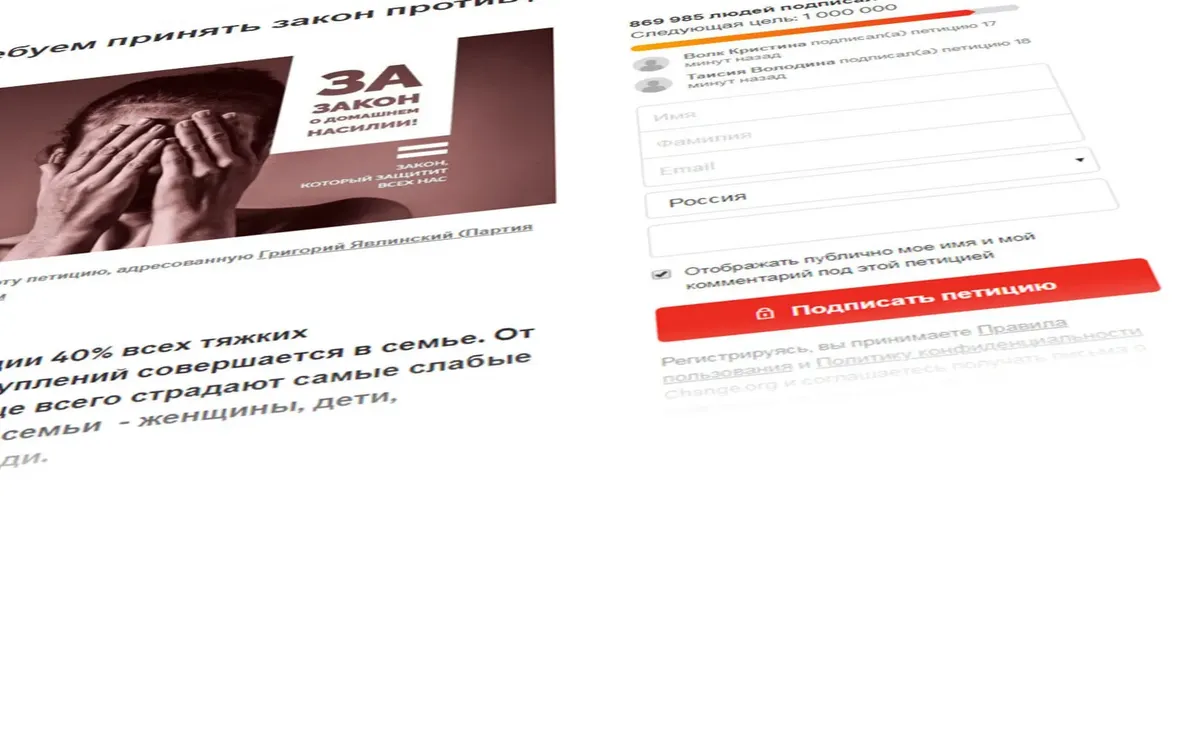
In some cases, it is quite possible to fix the legitimacy of who you are addressing. For example, in a situation with a petition under the legislation that would warn violence in families, it makes no sense to say that the State Duma is illegitimate because they can adopt this law. Another thing is when you turn to a person who will definitely not hear this petition.
The second problem is due to the fact that petitions do not contribute to the restoration of communication. They are more like a vote and rather fix the electoral model. This is a way of involvement in which we click on one button and say: “I vote for everyone to be released”, “I vote for the fires in Siberia to put out.” This entails a further reorganization of society on the atomistic grounds that I described above.
But when the petition becomes an element of some social movement, this is another story. In the case of Pavel Ustinov, for example, when they demanded him to let him go from Bastrykin, we actually saw an attempt to solve the problem with a petition, but a large movement, part of which was this petition. Then a petition may be needed for technical purposes, for example, to keep the issue on the agenda.
If the petition becomes the only tool in order to achieve these political goals, then this automatically means that we refused the task of building movement.
And in this case, it just works to increase the legitimacy of Bastrykin.
How to evaluate the effect of petitions? It is clear that the simplest desire that we have is to see how many of them they really work. This is an important parameter, but I would suggest looking not so much at this as on how petitions affect civic activity. For example, do they have any consequences in the form of collective actions, are they part of the social movement and a long campaign? Is there emotional involvement? We have tools that allow it to measure it. I would not associate with petitions of hope as a universal method of solving all problems. Rather, it is worth looking at whether they work to strengthen activity or at further passivation of citizens.