
Translated material
The failure of healthcare optimization
Why in 55 regions of Russia the number of doctors has catastrophically decreased: explains Evgeny Gontmamer
Black Health Hill
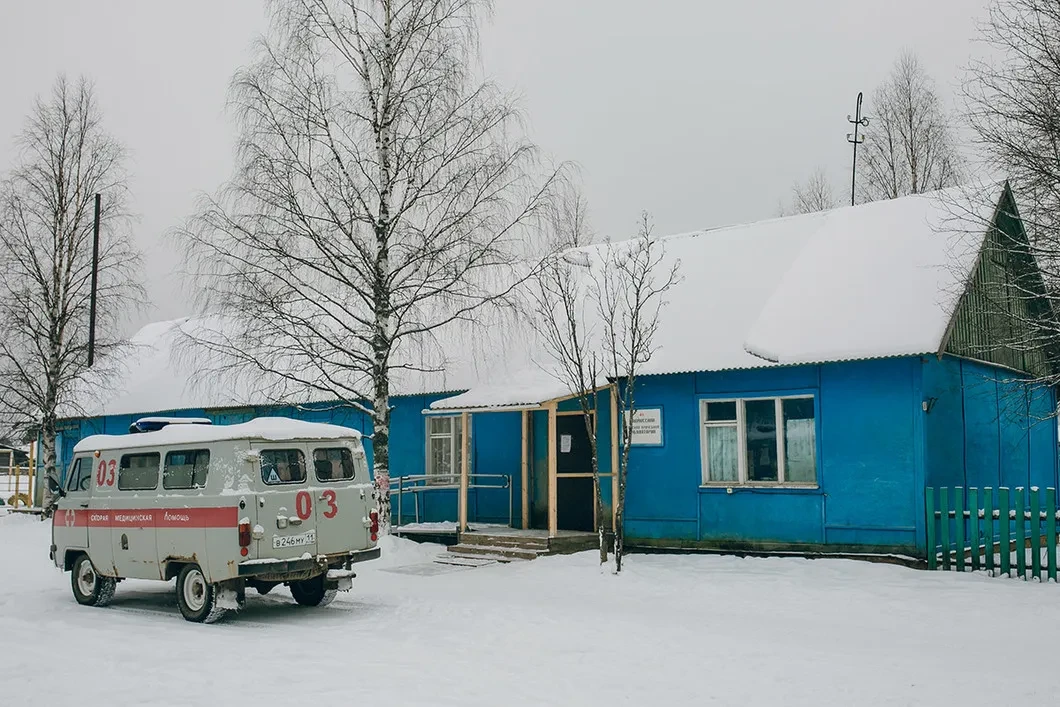
The failure of optimization was finally publicly recognized by the Deputy Prime Minister of the Russian Federation Tatyana Golikova. According to her, “no one has touched the medical infrastructure from the end of the 50s”. The number of hospitals and the clinic as a result of reforms was doubled. And Deputy Prime Minister Anton Siluanov aloud said that many clinics and district hospitals in Russia are "in a bad, if not terrible state." The Ministry of Health has joined the departmental “camming out”, recognizing a reduction in doctors in 55 regions of the country (2018 data). In short, health care is being kept now, especially in the regions, not even on residual resources, but on the professional inertia of doctors.On October 31, Vladimir Putin held in Kaliningrad a meeting of the Presidium of the State Council dedicated to the problems of healthcare. Problems began to obviously go beyond the boundaries of control. It seems that the industry has become one large hole. Healthcare in Russia is a vivid example of how good intentions and a lot of money turn into nothing when “effective managers” take up the matter.
What next? Further money will go again. Primary health care, successfully destroyed by optimization, plan to restore another deoptimization. In total, in the amount of 700 billion in three years.
Natalia Chernova, observer of "New"
Evgeny Gontmamer: "We have a seriously ill society that will have to call an ambulance"
Why Russian healthcare was on the verge of disaster
A unique country
The main problem, paradoxically, is that the authorities do not know the real state of health of our population. In statistics, only the fact of seeking a doctor is recorded. This means that our healthcare system (and this, by the way, was known for a long time) works only for some sick people. And how many of them are in the country in fact, we definitely do not know. Oncology, for example, we are revealed in the same part of cases in the third and fourth stage, once either everything is hopeless, or treatment requires tremendous money.
The second example is cardiovascular disease. The Russian phenomenon is the superiority of middle -aged men (from 40 to 50 years). This is when a man at this flowering age suddenly - a heart attack, a stroke, and so on. Often with death. It is Russia that is unique from the point of view of this mortality compared to countries of the same level and even lower. According to official statistics, a third of men do not live up to 60 years.
The explanation is obvious - mass poverty. According to the Higher School of Economics, we have two -thirds of families in survival mode, the rest - in development mode. It turns out,
Only a third of Russian families, if something emergency happens, will find funds to pay for the course of treatment of the same oncology without waiting for free medical care.
For the most part of our population, it simply does not fall into the sphere of interest and observation of our medicine until a disaster occurs, that is, a serious illness.
And another question about the availability of help. Not everywhere in the country there is a clinic really “at the place of residence”: I got up in an electronic queue, consulted and went further about his business. Even in Moscow, to get to a narrow specialist, you first need to get to the therapist behind the direction. And although the authorities assure the population that we have a high -quality free medicine, there is a huge distrust of a free doctor. Incidentally, we have a share of people who are engaged in self -medication, including among rather wealthy ones. Because a free doctor according to the norm takes 12 minutes. He asks: "What are you complaining about?" And at the same time in the computer fills the history of the disease.
12 minutes and not a second more, because it is fined for non -compliance with the standard.
The real state of health of our population is quite bad. The classification that uses the grades of “Health Groups” is known.
The best is the first when a person is healthy.
The second group includes "persons who have pathophysiological and biochemical changes in the body." They, for example, often suffer from SARS.
The third group: “Chronic course of diseases without exacerbations throughout the year” is added to frequent diseases of ARVI.
In the fourth group, a "chronic leakage with exacerbations."
And finally, disabled people get into the fifth group. And such - about 10% of the population.
By the way, schoolchildren also do not shine with health. Selective studies say that many graduates of schools already have chronic diseases. I would especially highlight my teeth. This is a colossal problem. Where will you find a free dentist? Formally, they are, but you try to get to them.
All this suggests that the volume of the necessary medical care that our population must be provided is much larger than the one that turns out to be now.
Residual principle
Savings on medicine in the country have been stretching since Soviet times. There is official data: in Russia it is spent on healthcare public funds (compulsory medical insurance plus budget) 3.7% of GDP. In the countries of the organization of economic cooperation and development (OECD), this indicator is 6–7%. At the same time, we must keep in mind that GDP per capita in these countries is more than two times higher than ours. But even these 3.7% of GDP are largely spent ineffectively. The government calls on: "First, restore order within these 3.7%, and then we will think about how to increase funding." This is the wrong approach. It is necessary to do both. Because while we restore order, our population will lose the remnants of health.
Meanwhile, the government calls for a technological jerk. My question is: who will work in this new beautiful economy of the future? Who will be taught by the competencies of the 21st century? Through the sick population?
There is a problem of employment of the so -called pre -retirees. Studies show that indeed by the age of 60, many men in Russia cannot physically work, since their health is not very good. In Russia, the age line, when a person considers himself an elderly, is 60 years. And in Europe - 70. This is a huge gap.
We have a seriously ill society that will have to call an ambulance, otherwise there will be no future at all.
Why optimization did not work
I believe that it would be nice to conduct a medical census of our population with the identification of the real state of his health. How to organize it in order to do without imitation and coercion is a difficult question.
But you can massively examine all children. We now begin to education from three years old, and almost all children spend a significant part of the time in educational institutions. Something can be done on the spot, something with an organized departure to the clinic and the diagnostic center. But this needs money that is not, as well as doctors with nurses, which we have in a shortage.
"Optimization" in healthcare began in the 2000s. It seemed that the economy grew then, the state had additional money and it was possible to do a lot of things in healthcare, even a priority national project was invented.
But instead of organizing affordable medicine, they decided to centralize it: to build high-tech centers, to transfer all specialist doctors into large clinics. And let the people go there
And he receives high -quality help. But in Russian realities, the project turned out to be a utopia. Firstly, we have unthinkable distances. Secondly, terrible roads. Thirdly, what to go on? Not everyone has a car. And on public transport, which goes to the district or regional center twice a day, you won’t run ...
“Optimization” led to the fact that the number of employees in healthcare began to decrease. If in 2005 4.1 million people worked in state and municipal medical institutions, then in 2016 there were 3.8 million left of the doctors during the same period decreased from 690 to 681 thousand. But the objective need for medical services did not become less, but rather increased at least due to aging of the population.
I added problems, of course, the May Decree of the President of 2012. It followed that doctors should receive 200% of the average salary in the region, and nurses - 150%. Good decree, socially advanced. But what turned out? They were not given adequate tasks. Therefore, the unfortunate administrators - the main doctors of hospitals and the clinic - began to dismiss people, and the remaining were forced to take an additional load with not such a significant increase in salaries.
They began to massively transfer orderly to cleaners. And in this capacity they do not fall under the presidential decree. So, do not increase their salary.
In addition, in medicine, a huge inequality in salaries within a medical institution is very common. The chief doctors can receive hundreds of thousands of rubles a month, and ordinary doctors - 20 thousand. But when they consider the average salary, the amount comes out quite decent.
What is the result of? A typical doctor processes very much. And not without reason, those who are now protesting in different parts of the country, they say that they have no life at all. A modern doctor should actually work less than eight hours, and then he has time to rest and self-education. He must, by the way, know English in order to get acquainted with modern treatment methods, new drugs. And God forbid our Russian doctor in the evening to get to the bed.
There is a way out, but it is expensive
When a person suffers from oncology, he is unlikely to prescribe vitamins. A radical treatment for treatment is, of course, a forced increase in state health care financing. Of course, it is necessary to restore order in what is, but you also need to add money. And there is money. This is the estimate of the budget and the national welfare fund, and, of course, we should talk about the so -called “budget maneuver” - the redistribution of budget funds in favor of health and education.
But in addition to the money shortage, there is also a systemic mistake - Russian healthcare is arranged institutionally incorrectly. We have its financing mainly through compulsory compulsory medical insurance. Let's see what it is in Russia? With an average salary of 40 thousand rubles, 5.1% of deductions in compulsory medical insurance - this is 2 thousand rubles a month, 24 thousand per year. This is very, very little. Why? Because this amount should provide not only worthy salaries of doctors and medical staff, but also the content of the mattress of medical institutions, equipment depreciation, utilities.
We really have due to the fact that a weak primary link that could treat a person at the very beginning of the disease, people massively go to the hospital immediately in serious condition. And it turns out that 24 thousand rubles accumulated per year can be easily spent in a couple of days in the hospital.
In fact, the compulsory medical insurance system is very distant. It could be effective only when most of the population had high salaries and from their contributions could provide qualified expensive medical care.
The Bloomberg agency regularly calculates the effectiveness of healthcare systems of the most developed countries of the world. Life expectancy, state health care costs in the form of a percentage of GDP per capita, the cost of medical services in terms of per capita is taken into account. So, in 2018 among 56 states
Russia was in 53rd place. Better than us, for example, Colombia, Kazakhstan, Venezuela (!), Algeria ...
The future of the country is under threat.
How to spend money
It is necessary to introduce elements of budgetary medicine. Suppose, at the expense of the budget, pay for help, starting with narrow specialists (the so -called “second link”) and ending with high -tech assistance in hospitals. And let the compulsory medical insurance pay only the primary link and an ambulance. If the insurance payment (5.1% of the salary) will only go for these purposes, then it will be possible to radically improve the material and technical base and without any problems lift to a decent level of the rate (not counting the allowances) of doctors and other medical staff.
The fundamental moment - the primary link should be municipal. In our country, municipal medicine is practically destroyed by the transfer of clinics and hospitals into regional subordination. But if citizens elect their municipal power, which is responsible for the primary link in medicine, then they have the right to ask how the money that goes to it is used.
Everything related to affordable medicine is also a public request. Our people are passively waiting for changes. We have absolutely not developed a system of assessing a doctor by the population.
But people need to be accustomed to the fact that the doctor’s salary depends to some extent on how his patients appreciated his work.
One way or another, speaking of healthcare financing, we rest on the reform of local self -government. Because if we carry out medical reform and even give it more funds, and the reconstruction of a full local government will not occur, we will again profess the allocated money.
Another important direction of the reform is the construction of the patient’s service chain: prevention - primary link - specialists in the clinic (diagnostic center) - a hospital, and in the hospital a separately intense therapy and rehabilitation. Then, at each stage in the provision of medical care, one can achieve, firstly, financial effectiveness and, secondly, the most important-effective treatment.
We have one of the signs of poverty (few people talk about this) - the inability to receive qualified medical care. People do not even have money for a bus ticket to get to the doctor. This is a fundamentally important question.
The health care that we have is one of the factors that breeds poverty,
If we understand it in a broad sense, and not in the sense of a beggarly monetary subsistence minimum. The inaccessibility of public basic good in the form of qualified medicine is a problem that exacerbates all our many difficulties in domestic policy.
Recently, Vladimir Putin has held two health meetings: one on the primary link, the second - on the salaries of doctors, passed an extraordinary State Council dedicated to the problems of healthcare. Numerous instructions to the government have been distributed, but all this is alas! - It is cosmetic.
The situation is repeated about which the president himself, before the mentioned state council, said: “Look, we have what happened in recent years. We several times, at least twice, approached the issue of improving the situation in the primary health department, in healthcare as a whole and in the primary in particular. It was based on the fact that it is necessary to support the regions and municipalities from the federal level. Once they made and, in general, decent money was sent there from the federal budget. Some time passed-it turned out that it was necessary to return to this issue, again from the federal level. They made and supported again. Another five years have passed-it turned out that (they counted on what-in the regions and municipalities the achieved level will be maintained and developed), and again came to a situation in which it is necessary to make additional efforts and pour additional money from the federal level again. This is a systemic problem. "
What scheme for resolving all issues will ultimately be chosen? To make this matter with the next financial injections without changing the system. But with the root of the problem, namely, ineffective relations between society, the healthcare system and the state - no one will understand. Because they are afraid of reforms: suddenly you will do something wrong and call public discontent, as it happened not so long ago in the pension sphere. Therefore, let's leave everything as it is - after all, the people are patient, familiar to everything. In the short term (maybe even until 2024) it is the most winning logic of behavior for the authorities. But, having missed the coming years for long -term reforms, we risk them never to spend. And this is a direct threat to the sustainable development of Russia.