
Translated material
"Living with the text of seven years is a great feeling"
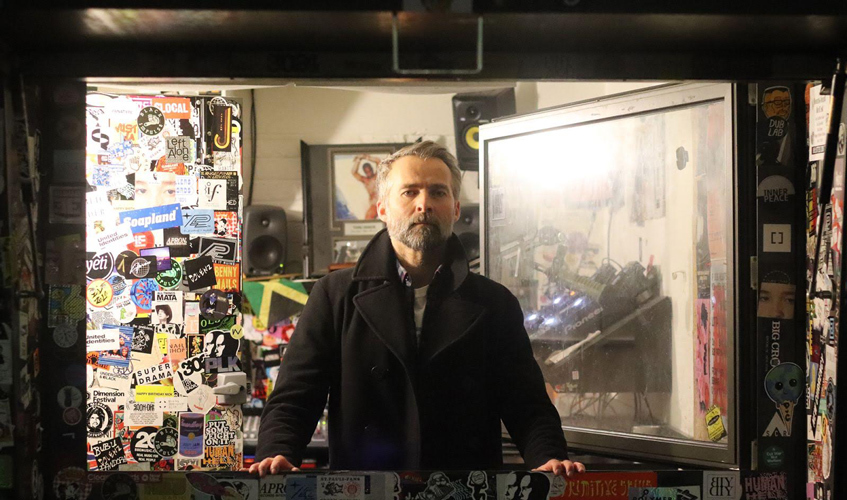
This Friday, November 8, in Moscow, together with Anna Khomler and Forestepe, at the opening of the Dmitry Brusnikin festival, the British composer and poet Rupert Clervo will perform - he played a building ten years ago and helped with a record of Spiritualized, and now released the After Masterpieces album, on which Combined his poetry with music. On the eve of the Klervo visit to Moscow, Artem Makarsky called him and talked about the fear of his own voice, the difference between music and literature and what Dostoevsky looks like the Bible.
- A few years ago, you said in an interview that you prefer to perceive music at the physical level, while you perceive literature intellectual. Your album combines both - if you listened to this album as an album of another person, how would you perceive it?
- When you make music or in general engage in art, you always try to do what you would like to get as an addressee, not the addressee of the message. But in order to answer your question, I would have to become my shadow, someone else, to separate myself from myself. It is almost impossible to imagine yourself as a third -party listener of your own work. I wanted to combine literature and music at the level that seemed to me natural. On one that I had not heard before. Therefore, I hope that if I still ended up in the situation you proposed, I would just think: I found what I had been looking for a long time.
- Is there a lot of space for intuitive solutions in your work process?
- Yes, of course. I think this is exactly what the distinction takes place from which our conversation began, on intellectual and physical, mental and sensual. Music for me is generally intuitive in general. The text is the first, I write it, I live with him for a long time - and then I begin to work on music, holding the idea of the text in my head. The musical process is based on, as it were, to the perception of the text, its sensation. The main idea of the album “AFTER MASTERPIECES” and in general the music that I am doing now is to combine not completely, but partially improvisational music with a thoughtful letter. Poems require time, understanding, constant changes - and with music everything happens very quickly.
- I know that you worked on the album for about seven years and some texts were written before. Have you changed the texts yourself in the process of work?
- The changes were very small, sometimes it was only one word. But at the same time, it was very important for me to live some time with these texts, to understand their rhythm. What I like in how poetry and music work together - when you read poetry from the page, there will be the same space between the stanzas, but there can be six minutes of music in the music between them. This absolutely changes the rhythm, and it is impossible to imagine in the press. At the same time, poems create music in this way.
I think that everyone who has worked with the text with whom he had already spent some time looks at him in a few months and sees that some word seems inappropriate. Or do you find somewhere a great word and think: "Hmm, why have I had not seen him anywhere before?" “And insert it into your text.” Living with the text for seven years is a wonderful feeling, the most difficult thing is to understand when you can finish it and let it go.
- For such a period, you are clearly akin to this project; When did you understand that you no longer need to continue to work on it?
-To some extent, this happened when I agreed to release the “AFTER MASTERPIECES” on the Whits label. When you have a deadline, you no longer think about changes. Just because it all depends not only on you.
-It seems interesting to me that Whits has chosen your album for its first full-format plate: before that, the label released only single and mini-albums. This is a fairly simple metaphor, but “AFTER MASTERPIECES” seemed to me like a trip to some other world.
- In fact, this is what I achieved from the listener! The main idea of the album was to create a new world, different from our everyday life, one that will allow the listener to change something in his thinking. For me this is the power of poetry: in the potential of words, their interpretations, understanding. And music adds strength to them. In this transcendence, there is my constant course of action.
- Do you have your favorite poets, those whose own reading of poems seems ideally working with their texts?
- Yes, in this regard I really like Tilias Moss. She is an amazing reader. I have been trying to contact her for a long time, wrote her publishers, but so far I have not managed to talk to her. In my project under the name CVX, I used one of her readings of my poems. When you listen to her and hear the rhythm that she implies in her poetry ... This impression is like an explosion. It seems to me interesting that it is always easier to talk about dead poets, because poetry seems to work easier when the author is no longer there. But she is alive, and she is an amazing person; She writes precisely about her experience, about her life as a black woman-poet. Through her texts, I get a little idea of her world. And this is a very powerful sensation. Her experience is partially traumatic, terrible, but I see in her desire to tell about this inspiring courage.
- You said that it was difficult for you at first to get used to your own voice in the recording; How did you deal with this?
-At first it seemed to me that my reading was obtained by a kind of acting: I felt nothing but falsehood. I wanted to show that for me it is more than words, that they mean something to me-and therefore I wanted their pronunciation to be natural. But in practice, this did not work out. I remembered all the texts by heart, there were no prints in front of me. I tried to create such an atmosphere in the studio, so that I did not seem to be signing up so that everything would happen spontaneously-I built microphones, turned on the record, walked around the studio and at some point said to myself: now. I wanted to avoid complication, not to reach the moment when I start to think too much about the recording.
I wrote down the words until my own voice seemed boring on me on the recording. And in an amazing way, it was after these takes that everything began to turn out the way I would like. As a result, I managed to avoid a feeling of monotony, boredom; Of course, someone can still count my voice on the album, but you won’t please everyone.
- It seems that you not only wanted to feel your voice, but also prove to yourself that this is your own text, completely appropriate yourself written and make it what has been said.
-Yes, that is why I did not want to read from some source, from printout or screen. Even when you remember something alien by heart, it still becomes a part of you for a while. Yes, perhaps this is how my text becomes real for me.
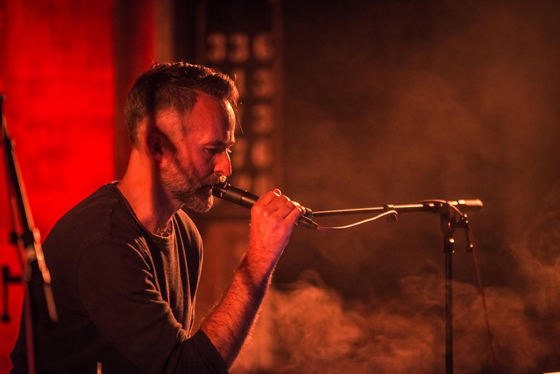 © Rupert Clervaux
- “AFTER MASTERPIES” is your first solo album, but there are quite a lot of other musicians on it. What makes the solo album solo?
- For me, joint work is the most important part of creativity. Alone, I spent a lot of time pondering various ideas - but I think that the album would be much worse if I finished the work on it alone: it would be too far from reality, more abstract. And I was lucky that I worked with amazing people on “AFTER MASTERPIECES” - for example, with Anna Khomler, one of my heroines: such people move you away from a solipsy approach to your work. But at the same time, a solo album comes from my idea - first of all, from my thoughts.
It is very important for me not to be in some established group of people-I went through it for a very long time. I liked to be in the group, write songs, but I realized that for me personally it is not very healthy - to be in one party for a long time. When you work with someone, everything is simpler: everything is very free, there is no division of strength, there are no attitudes about who plays with what. It seems to me that now the musical scene as a whole looks more healthy: people understand that they are not attached to someone specific, and can do what they want.
- Who was your most unexpected collaborator?
- It was definitely Anna Khomler. My friends from the FIRST TERRACE label released her performance with Adrian Nortover and Deive Taker-and I really wanted to see someone on two tracks with the album preparing for the release. Her participation was my dream, but she seemed to me unrealistic - of course, I asked my friends to give me Mail, but I still could not believe that it really was happening! We wrote off with her, and in the end, as you see, it is not only for me on the album, but we also perform together in Russia. I am just happy that all this happened and is happening!
-Do you also work on mastering and post-production with a variety of musicians-this process does not seem to you to some extent joint work?
-To some extent, yes. But in this technical part I just like the fact that I am still surrounded by interesting music, but I am somewhere on the side. Your role is important when recording, but my mastering style is quite polite, I try not to interfere in someone else's view of the music, not to include myself in this music. I try to work only with those whose music is interesting to me, with those who are interesting to me as a person. But at the same time, it is much more important for me to understand what the author achieves in this, how his own fantasy works - and in this I have no place at all.
- When do you hear your compositions in the DJ mixs, what do you feel?
- This, of course, is very pleasant. I still make rather strange music, I do not expect what I do will love a huge number of people. There is something new and joyful in this-that someone listened to my music and used it in another context. I am already 43, and it seems that this sense of novelty will never disappear in me. I will always experience happiness, gratitude and excitement because my music means something for someone.
- Finally, I cannot but ask you about Russian literature - as far as I know, are you primarily interested in the XIX century?
- Yes, it seems to me that this is what formed me in the youth years. One of the songs of my old Sian Alice Group was named “Kiril L OV” in honor of the character “Demons”, and our second album “Trubled, Shaken etc.” Nekrasov’s line gave the name (“outraged, shocked, etc.” from the epigraph to the part “regarding wet snow” “notes from the underground.” - Ed. ). I read Russian literature, even when I was very young, but later I often re -read and tried to follow new translations. Not so long ago, for example, new “Karamazov brothers” came out. It seems to me that so far no one has come close to Dostoevsky in psychology in literature - and this subtle understanding of human feelings attracts me in these books through the years. It is like a Bible-even if you do not agree with what is written, it will always be related to our time.
Subscribe to the COLTA.RU channel in Yandex.Zen to miss nothing