
Translated material
"The drinkers shuddered." Do I need to return the sobering?
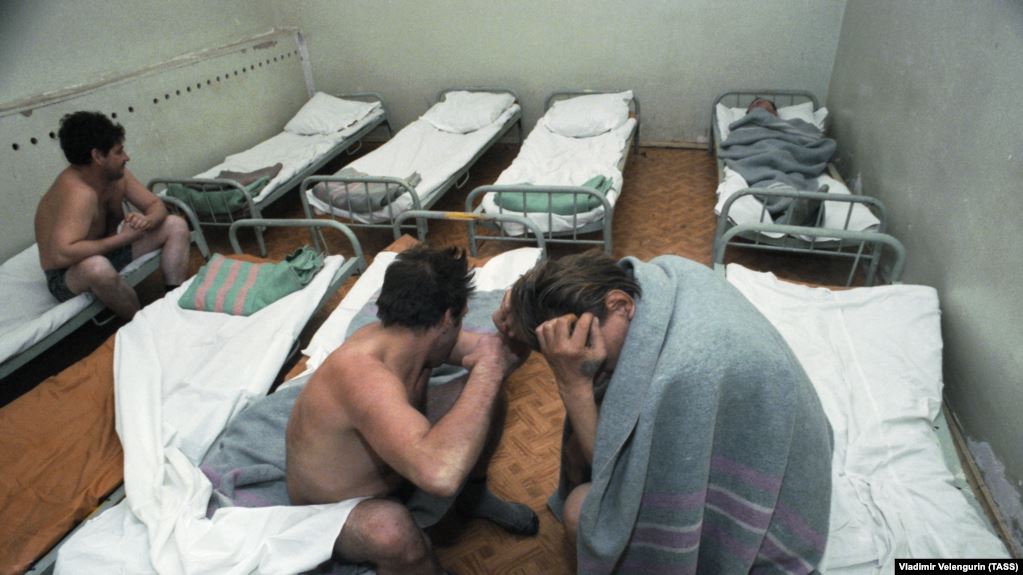
Yesterday, November 5, the first readings of the bills on the revival in Russia of the detachment were held in the State Duma. It is proposed, firstly, to give the regions the right to open such structures themselves. And secondly, it is understood that police officers will be able to deliver tipsy citizens not only to medical, but also to special social institutions.
So far, the document does not have the status of the law. Its discussions and adjustments continue, the final decision will be made in December. If the document is approved, it will begin to operate in January 2020.
From the history of the issue
The first "shelters for the intoxicated" opened in Russia in 1902 and after 10 years they worked in all provincial cities. And in 1917 they were abolished. The system of paramedics in the USSR was restored in 1931, and in 1940 they transferred them to the NKVD. In 1985, when an anti -alcohol campaign began in the country, a new "Regulation on a medical detachment" entered into force. This law has been valid over the next 25 years.
"Special Topchans" and "Special Kresl" were among the equipment of Soviet detoners
The “position” of the detectors, despite the definition of “medical”, are described exclusively as units of the Ministry of Internal Affairs, while law enforcement officers can act quite hard. So, to deliver to the sobering -ups is allowed not only to people who violate the rule of law, but also simply "are in the form that humiliates human dignity." The “clients” of the sobering -ups are required to undress to underwear, and if they refuse to do this, they are forcibly stripped. Their search is also required. In the detectors, according to this regulations, it is allowed to use Special Cresol and Special Topchans - to “fix” those who resist the staff of the institution. At the same time, staying in a sobering -up is paid: those who do not have money with them are given a receipt for which you need to pay. In addition, employees of the detector are obliged to notify the employer of the person who came to them about his "inappropriate behavior."
As noted in the explanatory note to the current bill, which is now being discussed in the State Duma, in Soviet times, from 2.5 to 5 million people were delivered annually.
From January 1, 2010, the order of the then President of the Russian Federation Dmitry Medvedev on the closure of the detectors entered into force. These institutions were liquidated gradually. By 2011, those that the Federation financed were closed, by 2012-working at the expense of regional budgets.
The murder explained the troubles in the family
Exactly two days after this law began to operate, in one of the Tomsk detectors, the journalist Konstantin Popov was received by the injury that are not compatible with life. The police took him from his own apartment with the consent of his wife. In the detachment, Popov was beaten by 26-year-old employee Alexei Mitaev . According to some reports, Popov was raped by a shoulder cutter or curtain. Officially (in any case publicly) these data were not confirmed: it is only reported that Konstantin Popov had ruptures of the bladder and intestines. Everything happened on the night of January 3 to 4. In the morning, Popova took his wife out of the detector, they called an ambulance from the house. On January 20, he died in the hospital. Mitaev explained everything that happened to the "troubles in the family." He was sentenced to 12 years in prison. The case of the murder of Popov had a great public resonance: the Tomsk citizens went to rallies “against police arbitrariness”, including when the trial of Mitaev was already in, and demanded to re -qualify the article on which he was accused (intentional infliction of serious harm to health that entailed the death of the victim), to an article on intentional murder.
Return to the detectors of the "old format" is impossible
Now the "forced detachment" of the drunk citizens, if they do not violate the rule of law, are prohibited.
- Return to the sobering -up in its original form is impossible due to the lack of a legislative framework (it has changed since the time of the USSR). Today, the law allows you to create places of temporary stay of citizens exclusively on voluntary grounds - only with the consent of the citizen, there is no more forced sober. This is the main difference from the format that existed earlier, ”comments Zoya Maslennikov , head of the press service of the Ministry of Health of the Krasnoyarsk Territory.
Why do you want to revive the sobering -ups?
The authors of the initiative refer to statistics: according to their data , in the country in 2018, about a million citizens were in a drunk state in public places, of which about 180 thousand were not able to navigate and move independently. Every year, legislators note, about 50 thousand people die in Russia due to alcohol use. Including up to 10 thousand die from hypothermia in the streets. They also mention the "drunken" crime - according to their data, up to 35% of all crimes in Russia last year were committed intoxicated.
67% of all crimes are committed by drunk people
In an interview with the publication of Siberia. The realities in the press service of the Internal Affairs Directorate in the region were given even more serious figures: 67% of crimes in the region were committed in 2018 with drunk people. And the account of administrative offenses related to alcohol in the region goes for tens of thousands during the year.
By the way, in the Krasnoyarsk Territory, the detectors in the "test mode" worked in the spring of 2019, during the Universiade. In a month 300 people got there.
"Reference request"
The authors of the bill also cite such figures: according to USBRs, 80% of Russia's inhabitants advocate the restoration of the medical system in the country.
- In society, indeed, there is a certain “sobering request”. And, unfortunately, this is a request for a compulsory detachment, without taking into account the desire of the most intoxicated, ”says Evgeny Abakumov , deputy chief physician of the Krasnoyarsk Regional Narcological Dispensary No. 1 for expert work.
The fact that such a "social request" is really high, a lot of evidence. So, in the spring of this year, on the website of the Legislative Assembly of the Krasnoyarsk Territory, a survey was launched "Do the sobering are needed?" - Then some deputies proposed to open them in large cities of the region. Almost 74% of the respondents spoke for the reconstruction of the detachment.
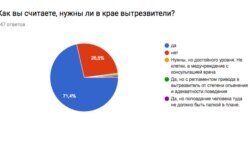
Some Internet users support the initiative.
"The stupid idea was to cancel the paramedics!" - For example, Tatyana Maksimova believes.
“My son works on an ambulance, and he is in the topic. How many citizens he has transferred to the emergency room for his decade, I don’t know. But I know for sure, the medical workers are needed,” Irina Osipova supports it.
“The drinkers shuddered, the nonsense breathed in relief,” writes Alexandra Storozhuk .
“If such institutions work without excesses, they are definitely needed,” Anna Gerasimova, a resident of Chita, is sure. - In our region, drunkenness is the most sick question. And well, people would just get quietly drunk. But most often it turns into crimes, or the death of the booze itself. It is better to deliver them where to wait, while they are slapped someone-well, or someone.
The ambulance is certainly attacked by citizens who are not peacefully sleeping in the corner
- I am not for and not against the revival of the tender. I am a doctor, and, in theory, for me all patients should be equal. And drunken people have the right to the same medical care as sober, - on the terms of anonymity, the Siberia. Real website tells the Krasnoyarsk ambulance service . - But at the same time, everyone knows cases of attacks on doctors who came on call. And they are committed, of course, not patients in a coma. And if they don’t attack, then in order to help such a “patient”, and two adult men will not cope. Here, of course, the presence or absence of detectors has nothing to do with it. Rather, relatives "confuse" who call: us or the police. And you will not always predict how a drunk person will behave in a few minutes. But this is not easier for us. Of course, it is not always necessary to aggression, sometimes it is simply humanly disgusting to take the creature that led itself to the animal state. But if a person did not violate anything, but just like that, excuse me, “ragged”, then his road to the hospital, and not somewhere else.
"Everything works!"
Meanwhile, experts see obvious "gaps" in the text of the bill. The idea of reconstructing the sabers, for example, does not fit in any way with the principle of voluntariness of people in medical institutions, emphasizes the deputy chief physician of the KKD Evgeny Abakumov .
Doctors do not have the right to take a person by force. And law enforcement agencies can detain him only if he violated something. What does the sobering -ups have to do with it?
- In our country, the sovereigns are called institutions where citizens are delivered forcibly. But as soon as these institutions were withdrawn from the system of the Ministry of Internal Affairs, they immediately ceased to be sobering, ”he says. - Doctors do not have the right to take people to a hospital forcibly. Employees of the Ministry of Internal Affairs can hold the drunken person - but not because he is simply drunk, but because he violated the legislation and public order. So it is not entirely clear what they are trying to restore now. What structure - medical, social - will the "revived" sobering -ups? Accordingly, what normative acts will their work regulate? There is no answer yet.
In general, Evgeny Abakumov notes, from the point of view of legislation, this “niche” in the country is now completely closed, the powers between structures are distributed, and everything works quite efficiently. “If this system was flawed, it would have somehow been corrected in 10 years,” he remarks.
A person is clearly not to fall asleep in the "state house"
- If the drunk person is in a state that threatens his life and health, then he needs a doctor. By the way, this does not necessarily mean that he fell into a coma or fell asleep in a snowdrift and received hypothermia - if a person does not orient himself in space, he cannot go purposefully, he already needs medical care. And there are clearly spelled regulations on this score, ”explains Abakumov. - But, when people advocate the revival of the sobering, they usually mean other situations. If a person gets drunk for a thousandth time and absolutely consciously goes outside to "break away" or worries neighbors, then you need to contact the police.
Well, the main point: who will go to the sobering voluntarily? But this principle has not yet been canceled.
“If a person went through and did not go to bed at home, but went“ on tour ”, he clearly does this not to come to the state house and spend the night there,” Abakumov remarks.
"This is definitely not for health"
The bill notes that police officers are obliged to evaluate the health status of drunken people and, in which case, call an ambulance to them. But the police are now obliged to do this - this is particularly emphasized in the Ministry of Health of the Krasnoyarsk Territory and in the KKND.
But if the detectors are not medical, but "police", it is unlikely that anyone will follow the health of people, Krasnoyarsk Nikolai Karagozov is sure (the surname has been changed at his request).
Even the most "heavy" men in the detachment no one has ever approached
- I thundered in Trezvyak in 2008. In my case, the story is similar to a joke. I was returning from the guests, I was drinking, but not up to loss of consciousness. He talked on his cell phone and, almost without looking, “voted”, that is, he tried to stop the taxi. Well, instead of a taxi, a police car picked me up and brought me to a sobered. In general, there was no need for this, ”says Nikolai. - They kept me there for three hours, then released me. My girlfriend, who came running to me to "save", was shown through the cameras of video surveillance, that everything is in order with me. But I do not remember that some medical examinations were conducted there. But next to me in the room lay completely "heavy" men. Nobody once approached them. There was such a case. My friend got into the detachment. And he has something with a cardiovascular system. They kept him until the morning. Several times he became ill, he literally shouted about it, but there was no reaction. In general, these new sobrouses are definitely not created for health.
The fact that excesses are inevitable are written by users of social networks commenting on the news of the bill.
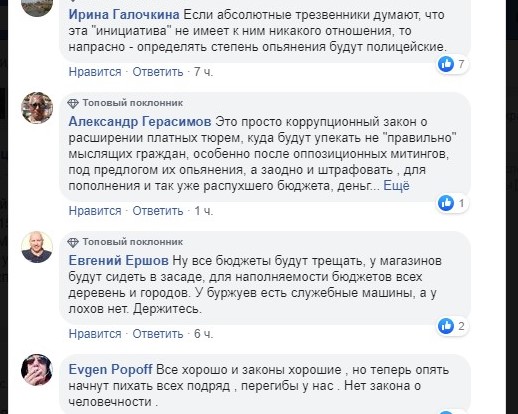
"This is not a law for an entire country"
The new bill does not oblige to revive the detractors - it gives such a right to regions and municipalities. And these institutions will also be financed from regional and municipal budgets. It is allowed to work in contact with business structures. But there will definitely be no costs from the federal budget for the implementation of this law.
Municipalities in the country are poor. And there are no extra money in regional budgets
-I am quite skeptical of this idea and against the fact that people who do not violate anything are delivered somewhere against their will. Yes, in our medical institutions a shortage of places, but these people are no different from other patients, who, for example, just became bad on the street, ”says Alexey Kulesh , the vice speaker of the Legislative Assembly of the Krasnoyarsk Territory. - But, by the way, the internal affairs bodies have a colossal deficit of the premises. We constantly hear about overflowing and specialists, and here it is also proposed to create a new structure. Moreover, since the Ministry of Internal Affairs is a federal structure, and the premises should be in federal property. This issue will not be resolved quickly.

But the main thing, Alexei Kulesh emphasizes that the regions, and even more so municipalities simply do not have the opportunity to embody such ideas. For them, this is an unbearable load.
There are no district police officers, not doctors, but it is proposed to build a separate detector!
- Frankly say: municipalities are poor. Take at least a well -known Sukhobuzim district of the Krasnoyarsk Territory. There are distances between rural settlements - dozens, or even more than a hundred kilometers, ”says Alexey Kulesh. -In many villages and district police officers there are no: they work in the villages, which is larger, and once a month they run into sponsored settlements. Not all villages have feldsher-midwife points: there are neither suitable premises, nor personnel, nor money, nor money, nor necessary according to the current standards of the number of inhabitants. Doctors there are once a week: they come by bus to consult and prescribe medications to them. And here it is proposed to equip the sobering up!
And even the regional budget is unlikely to be able to allocate money for such goals, Kulesh notes. It may have been enough money, but the budget for the next three years has already been formed as a whole, and allocating funds for new expenses means just to pick them up from somewhere.
- But in order to create an infrastructure described by legislators throughout the Krasnoyarsk Territory, billions of rubles are needed. Therefore, I think that in the next decade we will not have it, ”says Alexei Kulesh. - In general, it seems to me, it is better not to accept any law at all than to adopt one that will spread to some people and will not affect others. Another dubious initiative of the State Duma. Cleaned clearly not throughout the country.