
Translated material
The Moscow City Court on the lawsuit of the Ministry of Justice liquidated the Center for Assistance to the indigenous peoples of the North with a 20-year history
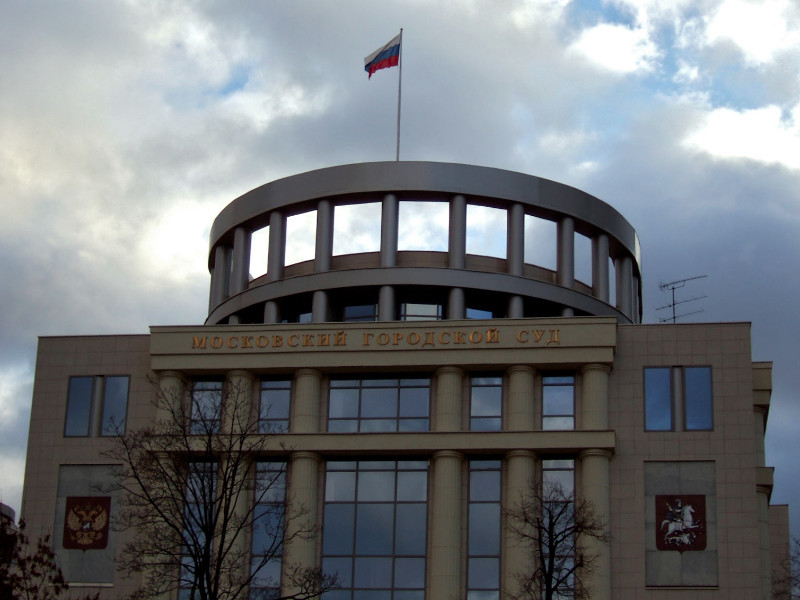
The Moscow City Court decided to liquidate the public organization "Center for assistance to the indigenous peoples of the North", satisfying the corresponding administrative claim of the Ministry of Justice. TASS was reported in court.
According to the "Mediazone" , the lawyers Grigory Weipan and Vladislav Chepelev, who represented the interests of the center, the Ministry of Justice demanded that the organization be eliminated on formal grounds - due to the obsolete provisions of the charter, unexpected reports to the Ministry of Justice and an irrelevant legal address. The center provided documents to eliminate these shortcomings, but the Moscow City Court refused to give time to amend. The very closure of the organization instead of the usual suspension of its activities in such cases looks strange, lawyers note.
Kommersant saw in the closure of the Center for the parallel with a recent liquidation of the human rights movement: the Ministry of Justice found that the organization uses "symbolism", the description of which is not in the charter. The ministry also indicates that, according to the Law on the NPO of the decision within the organization "on the issues of exclusive competence", should be adopted by the qualified majority of the vote of members, while the charter of the Center speaks of the simple majority of votes, and the legal address of the center in the Unified State Register of Legal Entities differs from the addresses on the forms. “Thus, the organization grossly violated the requirements of the law,” the Ministry of Justice concludes.
"Center" was created in 2000 as part of the Canadian-Russian project for "Institutional construction of the indigenous peoples of the North of the Russian Federation". It was created by the Inuetan circumpolar conference (ICC - Canada) and the Association of the indigenous peoples of the North, Siberia and the Far East of the Russian Federation (AKMNS). In 2015, the “Center for Assistance to the Indigenous Little Democents of the North” was included in the list of “foreign agents”, however, after some time they removed from there, as the organization abandoned foreign financing.
The head of the Center Rodion Sulandzig called what is happening "part of the tendency to close the organizations that are objectionable to the authorities." “The Arctic and its resources mean a lot to Russian business and the budget. Therefore, companies look at the indigenous peoples as a barrier for their activities,” he said. “And we have long been protecting the rights of these peoples, we have access to federal and international platforms, where we openly talk about violations. I think that this is a certain revenge for this.”
In 2014, when the director of the center wanted to fly from Sheremetyevo Airport to New York to the World Conference on the Indigenous Peoples, the FSB officers took his passport from him, and then returned the document with a carved empty page . Because of this, the passport was declared invalid, Sulandzig could not participate in the conference.
On November 1, the Supreme Court of Russia eliminated the movement "For Human Rights" on the administrative claim of the Ministry of Justice. The structural units of the organization were also eliminated, the court decided to exclude information about them from the Unified Register of Legal Entities. Lev Ponomarev after that promised that the movement would still continue its activities in Russia.
The reason for claims to human rights activists was the discrepancy between the charter of the movement adopted in 2014, to amendments to the Civil Code adopted shortly before the last change in the charter. "For human rights" offered the Ministry of Justice to wait for the autumn congress of movement, at which it was planned to amend the charter, but did not receive an answer.
Earlier, Leo Ponomarev was fined several times for the fact that on the site “For Human Rights” and on the pages of the human rights activist itself in social networks it is not indicated that they are “foreign agents”. Ponomarev regularly said that the movement does not receive foreign financing precisely because he does not want to get into any registers. For eight years, the organization received presidential grants.