
Translated material
Only through my cereals
A pensioner from the Ryazan village withdrew a new breed of friendly ponies. Officials suggested "growing them for meat"
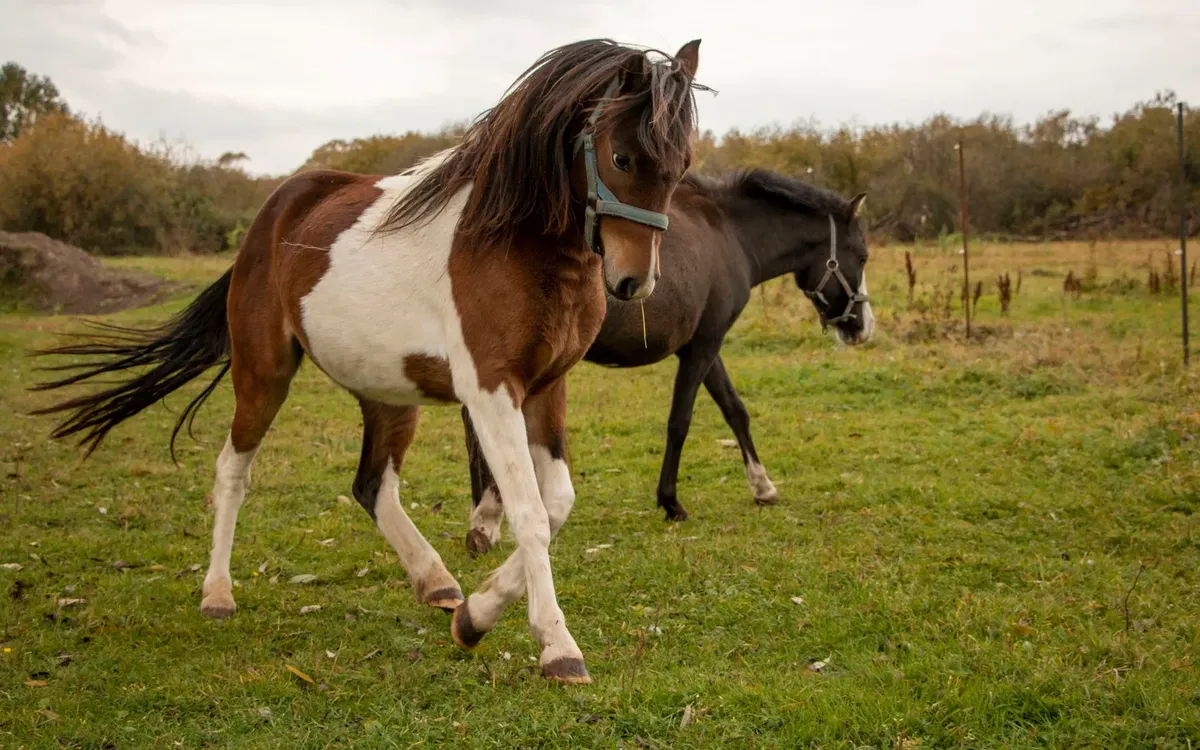
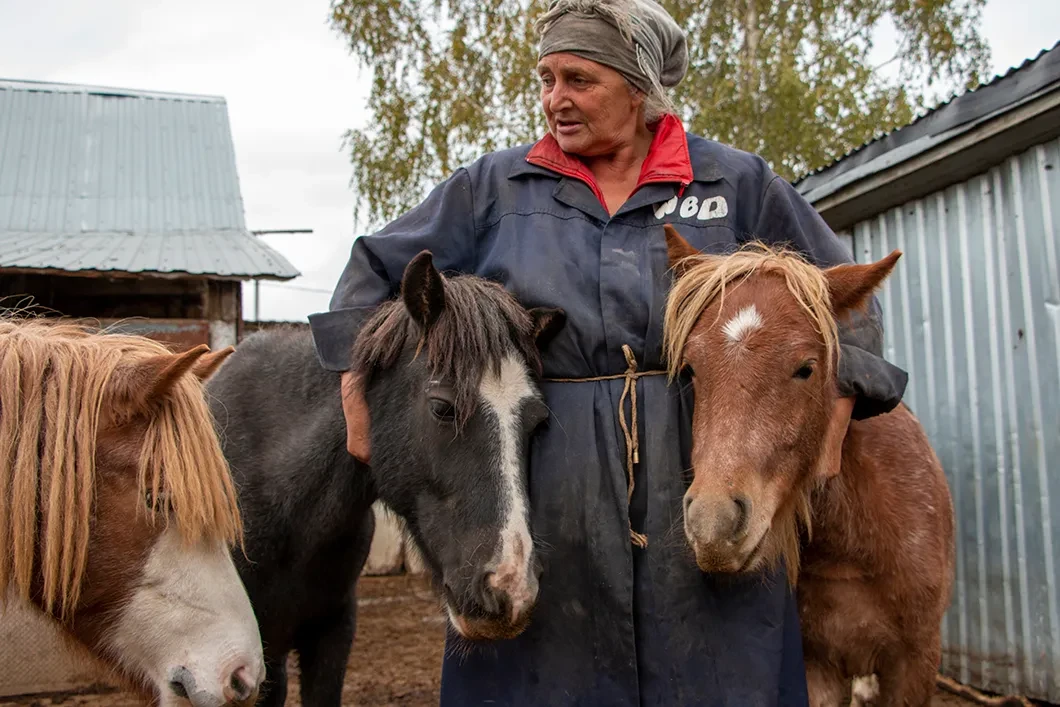
Tatyana Efimkina, a small, brisk 62-year-old woman, meets me at the bus stop in the village of Alezanovo near Ryazan. She quickly walks and quickly says that it is probably characteristic, for many rural residents: a large economy - you need to have a lot, and the days are already short. We approach her yard - an ordinary rural house, in a booth a dog that protects not the entrance to the housing, but the gate to the site. This place is least like a stud farm, where dozens of unique horses are born. I am carefully interested in Tatyana, where is her pony, - replies: "Here they are, where to be."
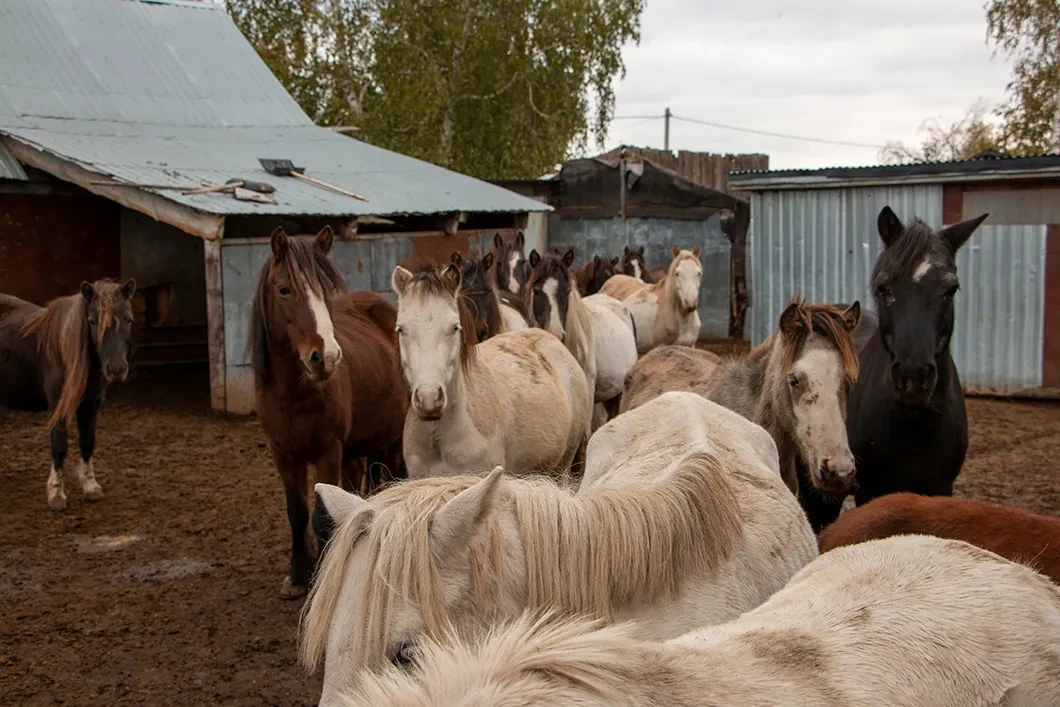
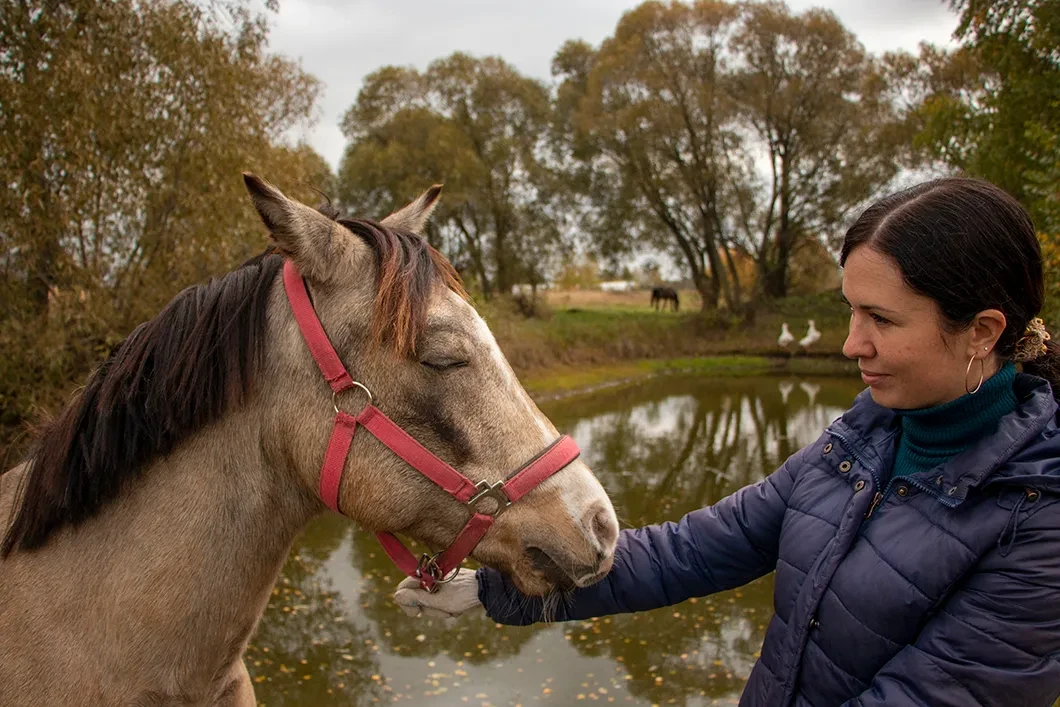
Going into the house, I finally see the ponies through the window: some stand on the pasture right on the site, others look from stables - they are more than classic shhetland ponies, and have long wavy bangs. Tatyana says that horses live side by side with her, and she walks them in the local meadow. She has no workers - she alone cares for everyone and takes birth every spring. Inviting the room, she warns:
“I say everyone, do not be alarmed by my poverty - this is my choice. If I wanted to do something else, I would live differently-in the 90s I had a large herd of sheep, but it was not interesting. ”
Tatyana tells how she connected her life with horses: she studied in the Ryazan agricultural, became a livestock specialist, and as soon as the horses were allowed to keep private individuals, did not wait long: “At 33 years old I scrape money,” she left Ryazan: they waited with a fur coat - and I returned with a horse. ”
For more than half a century, the Ryazan region is the center of scientific horse breeding. In 1960, the All-Russian Research Institute of horse breeding moved to the village of Divovo, and the local horse-farm became an experimental horse factory. In the late 90s, the word “experienced” disappeared from the name of the plant, and from the priorities of the institute, the selection of new rocks left.
Then, in 1993, Tatyana Efimkina decided to buy several horses from the equestrian plant and took up selection. She still did not know that after 26 years of the All -Russian Protection Protection, she would not keep her promise to register a new pony breed and leave it alone with dozens of horses in the courtyard of her own house.
The very first horse from which the breed went was distinguished by an extraordinary mind and kindness - these qualities became the main criteria for further selection. Tatyana sold and left a pony with a “troubled” character and left only the most tender, friendly and safe. And gave them a name - Prioksky ponies. She sees in the horse the main companion and friend of man and compares her with the atom:
- For the war, it is necessary that the atom instantly throws out energy, like a military horse, and the peasant needs it to be smart and slowly worked. As an economic unit, a horse has ceased to matter, and only combat sports horses remained.
“I am not an athlete, I create my breed in the place of that peasant horse - calm, strong and unpretentious, which they ate and destroyed as unnecessary.”
Tatyana says that the one who keeps her pony at home will tell the best about the breed and calls his friend. Anastasia arrives - she has three dogs and three horses, one of them is a Priokskaya pony. She says that the character is really amazing:
-Sports horses are unpredictable-one somehow pressed me and squeezed my chest, and aunt Tanins Pony-even if they run around, they will never come on the leg, unlike shtelends, which can walk through a fallen child. And also her ponies devoted, like dogs, are tied to the owner and, if he does not appear for a long time, they are sad and refuse to eat.
Tatyana adds that it is very easy to control her ponies, even when they are hooligan:
- Two horses are fighting among themselves, and I should win - they perceive me as a dominant mare. I show them Dryn and raise my voice - they feel my anger and immediately calm down. The locals here for me five whips, but I did not use them.
Tatyana is striking in the power of the spirit - in a calm, but convincing tone, she manages not only to negotiate with horses, but also with potential robbers. Since the widowers, you have to protect the economy itself:
- There were people in the village who climbed into other people's yards. I immediately announced them: I am a woman, a terrible coward, you will climb - I will not scream, but immediately with fear to kill, I will drive another twice. They believed and took it - no one climbed to me.
“Mom said to me:“ You are killed, but you scream and do not resist, ”so I don’t have this barrier.”
Herself, with a pitchfork, slowly
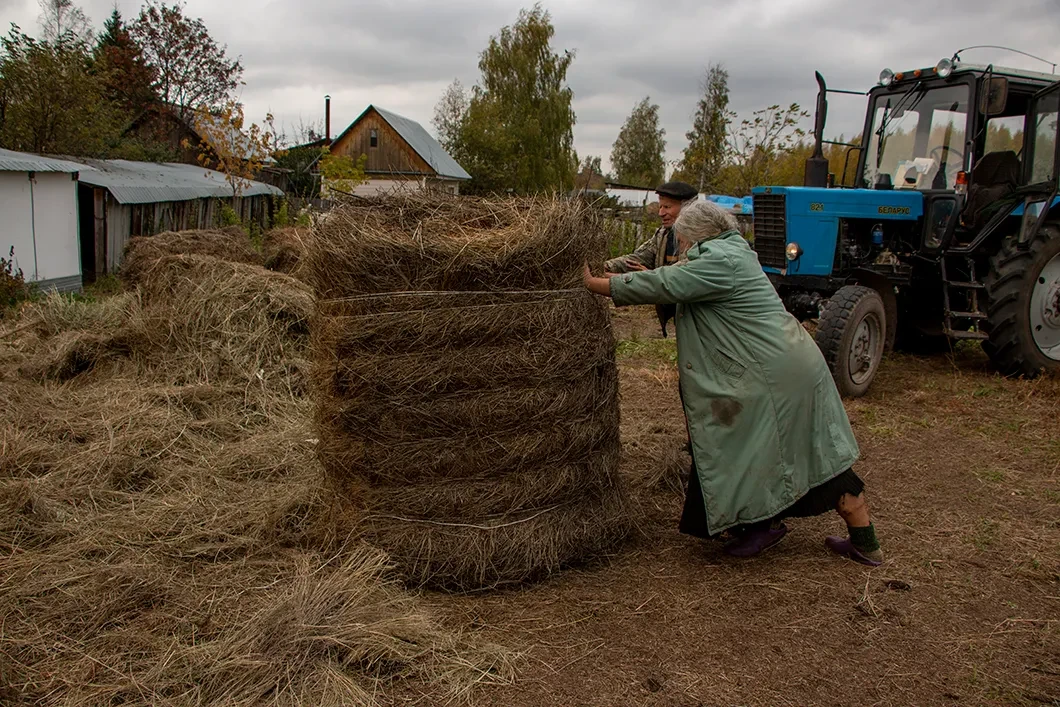
After the death of her husband, Tatyana remained to live with her 86-year-old mother and takes out all the physical work on her own shoulders-the children come for the weekend, and they need to feed the horses and clean them every day. It is recognized - hard, health is decaying. At that moment, they call her and reports that they brought hay - Tatyana breaks up to meet the tractor. Two tons of hay are dumped right near the house. Tatyana is barely visible behind huge rolls with a height of almost her full height. I ask who will transfer all this hay in the stable, she is surprised at the question and answers - herself, by pitchfork, slowly. I am interested in the cost of ponies:
A ton of hay costs 4.5 thousand rubles, a ton of grain costs 9-10 thousand, a month of Tatyanino the livestock eats 8 tons of hay and 3 tons of grain.
It used to be feasible expenses:
- Two years ago I had 50 goals - I sold stallions, it was simpler. And then mares began to be born - it was those to which I was going. According to their physical characteristics, they are similar to the Wales, and they brought them out for three hundred years. These are former mail horses, which were competently resettled. If in the West they take it, they are very serious. A veterinarian comes to me from the institute every year - they keep records from the very first horse. And in 2018, VNII himself proposed - build up to the required 80 goals, draw up the breed. In total, there are 16 ponies in the world, and the Prioksky should become the 17th.
Over the year, Tatyana increased the number of individuals from 50 to 80 individuals, and she was informed from the institute that they could not allocate funds for the design of the breed - they say, there are not enough subsidies from the state. And they invited her to conduct all the tests and research at her own expense.
- They said that the breed already exists, which means that the signs are stable and inherited - I did it. And now you need to find every horse sold, and for all the years there are more than 200 years in the country, to describe all its physical parameters. Only I know the marker on which there was a selection, but I do not have the opportunity to ride and look. I have no resentment at the institute - there is now a new director who does not care at all, the money is allocated to them, but they are distributed incorrectly. The old director Kalashnikov would have burst out, and all the new care for this, he has other priorities.
Tatyana says that subsidies should stand out for each breed - for everyone who is engaged in tribal farm, and to knock out these subsidies, you need to run and knock on all doors. The institute invites her to do everything herself, but Tatyana cannot abandon her economy. She says that if the institute had not made empty promises, she would not be in a hurry to increase such a large number of number in just a year.
The senior researcher at the Highway of Horse Breeding, the main registrar of Ponom and the Terek breed of horses, Nadezhda Kuptsov answered the question “New”, why the breed has not yet been registered:
“A very small population of these ponies and unstable heredity, which is still impossible to lead to a common denominator. It is necessary for 100 heads of uterus or at least 80, and Tatyana, according to our data, is 60. I don’t know what she told you. But she should be engaged in registration as an author, an original. We can only collect data in one pile. The All -Russian Research Institute of Horse Breeding was not obliged to register or feed her ponies. ”
Horses are healers
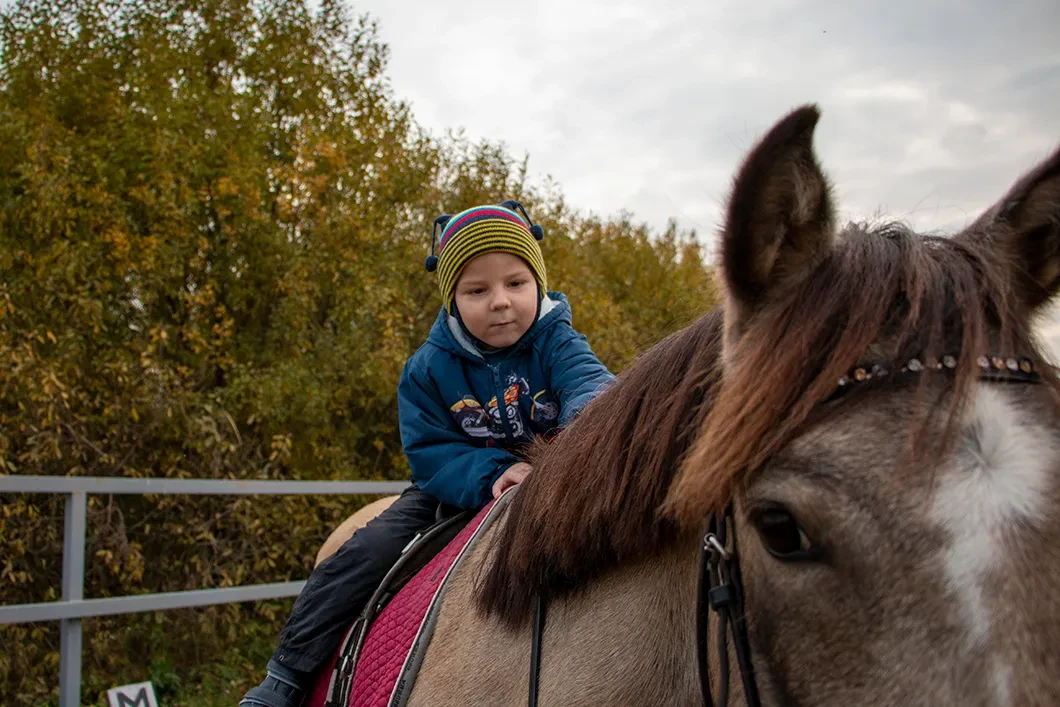
She still achieved one goal that Tatyana set in front of her. A stubborn woman brought out good ponies, best friends, as Tatyana herself says and everyone who has ever contacted her horses, who can introduce children to living nature and give a sense of unconditional acceptance.
-If the child is different, he feels oppressed in society, he needs to take care of someone, communicate with someone. Suicide are common among such children-because of loneliness and dissimilarity. The most painful question for me is how to save these children! They are drawn to animals, they are leaded to contact zoos, and there the selection of animals and the conditions of their maintenance are completely wrong. Wild should watch on TV, and contact with tamed, and a sheep and a horse are best suited for this.
Tatyana notes that to purchase a pony for her child, not under the means of an ordinary parent, but you can organize children's centers where children can communicate with a pony, ride on them and care. One of these centers was organized by her student - the children's horse center "Sun", where the Prioksky ponies work "in their vocation."
The center is located right there, in the village of Alekanovo, just a kilometer from Tatyana's house. Its founder and director Ekaterina Tsareva from the age of 14 watched and looked after the Prioksky ponies. She got married, bought a dilapidated house, two plots of land. Artem built the first stables from old advertising shields, soon they grew into a full -fledged horse complex, where both adults and children are engaged. In the Levada there are a couple of large horse and those very Prioksky ponies that Tatyana grows - I immediately recognize them by wavy bangs.
Catherine says that the center specializes in hippotherapy, which is held on Pony: “Tatyana horses are good in that they are small. Small children cannot perceive the horse horse as a whole, unlike ponies. The character of the Prioksky ponies is also special - they are kind and calm, which makes them safe, unlike the riding. You can not be afraid to leave the child with the horse - it will never hit and hurt him, although we still, of course, control the process. ”
Catherine offers to look at the pony “in all its glory”, introduces the main “stars” of the center - the dancer and memory - they are favorites of “special” children, the most friendly, curious and cheerful. The ponies are suitable, interested in the camera - they poke their noses in it, ask them to stroke them, just like dogs. Catherine claps her hands - and now they are already jumping in the meadow, cutting circles. The thought arises - whether they will come on their feet, but the pony twenty times swept with a neat whirlwind, without hitting either me or the camera. On the command of Catherine, they calm down and obediently go with us back to Levada.
In 2018, Catherine submitted an application and won the presidential grant in the amount of half a million to hold a course of hippotherapy "School of Special Horsemen":
- Grant was enough only to fill the site, the work of one instructor and the rent of one horse - a dancer, whom I later bought at my own expense. Organized 10 free individual classes for each of 12 children. Psychologists recorded improvements in a state - progress was noticeable for everyone. When the grant was exhausted, we left two special children - they are engaged for free, only for gasoline they give 200 rubles each.
I remain to see how classes with children go - just a married couple with a small child comes. The baby strokes the ponies on the legs, buried with his hands in thick wool, carefully draws a brush along it. The instructor Valery Fedorova is suitable - I ask her about the features of the Prioksky pony:
- This breed is selected for playing with children and for hippotherapy, is distinguished by a calm disposition, beautiful and light movements. Such was the idea of our breeder Tatyana - to bring the horse for the soul. I call Ponya the “vast people” - this means that they feel a little horseman, make contact, listen to teams, focus not on their needs, but on human requests. You can approach the ponies from behind, hugged by the legs, flutter by the ears - a rare horse allows this, it is impossible to imagine with the riding sports. Are we saddled?
Valeria puts the boy on ponies, and he blooms with joy. Accompanied by his mother and instructor, he rides, then proudly steps, then lays down, clinging to his cheeks to hot thick wool. The instructor notes that the broad back of the pony allows you to lie down on it and turn over not only to young children, but also to adolescents. And it is also convenient for them to play balls and other items, directly sitting on a horse.
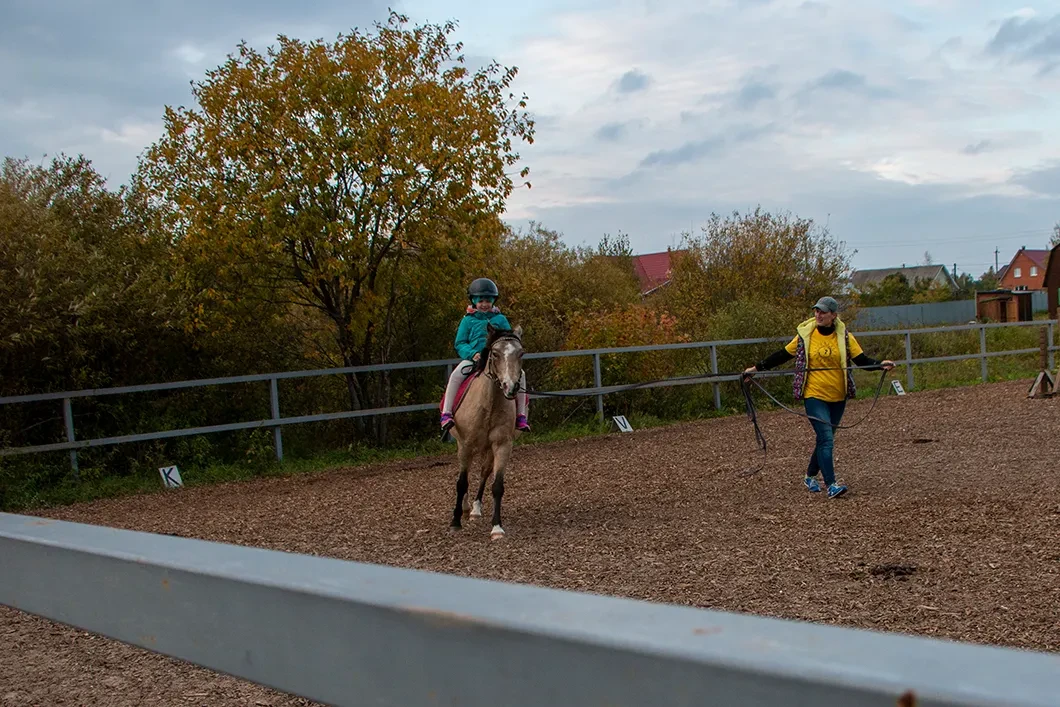
The lesson is coming to an end - a new student Irina and her mother Galina come. Her daughter has a paresis of the right side of the body and cognitive impairment, but she holds on a pony confidently-on the command of the instructor she replaces a step to a gait, passes through logs-revenge. Galina talks about progress, which was helped to achieve classes with ponies:
- The daughter could neither ride a bicycle, nor swim - with coordination, everything was very bad, the right side of the body refused. She really liked the pony, we studied first for free, within the framework of a grant, and now there is a 4th month-Ira swims, rides a bicycle.
“And he rides a gallop,” adds Catherine, “which is surprising, because the gallop is accompanied by deep fluctuations that Ira learned to withstand and control the horse.” Lera, show the gallop!
The instructor hears us and gives the command to change the gait to the gallop - Ira confidently jumps on the pony on the arena, like a professional horseman. Galina says that one healing pony replaces several simulators at once. She is a pity that the center cannot afford to conduct free classes for all sick children, Catherine supports her:
- Of course, we are proud of our homeland, but nothing stands out for social needs. We have long wanted hippotherapy to enter into a spectrum of social services so that children do not engage in general with athletes of the arena, as in other places, and not in riding horses, but in specialized ponies. All over the world, this is a recognized effective method of rehabilitation and development of children, and not just pokatushki. I will never forget, as I positively came to the head of the administration of the Ryazan district, said that we will have a center, and she looks and says: “Who are you at all?” And I don't even know what to answer. I have horses, I have specialists, I want to help, but for her I am nobody. Many laugh, they say, why do you need these disabled people ...
Catherine dreams of building an indoor arena so that it is comfortable at any time of the year - the project is called "The School of a Special Horseman: Together Forever." She asks her to take her a piece of land where the wasteland is now, and build the walls, the rest - soil, ammunition, instructors - she will take on. She is told that the issue with this land has not yet been resolved. In October 2019, she again applied for a grant, but this time she was refused.
"Grow for meat"
Tatyana Efimkina, to whom I return after visiting the children's center, is also disappointed with the total indifference of local authorities and hints that she grows horses not for what is needed:
“They told me many times:“ Grow for meat - you will be the first to give a grant. ” And as you can, the horse is our longtime friend! And we are still indignant that Koreans eat dogs. Even a pig is sorry to kill, if you grow it for a long time, and the horse has intelligence and feelings, it is attached to a person. But in order to hear her feelings, you need to have these feelings yourself.
The horse-breeder compares the horse with the heroine of the story of the Forty-Vorovka Herzen, where the serf actress was sent to study, and then she realized her disability and regretted that she was revealed and developed the soul.
She asks a rhetorical question - why reveal the soul of a horse, then to give to meat or mock.
Tatyana admits that she will not sell her horses in unverified hands for any money:
- If I sold them more often, I would not get into such a trash. No, I refuse many people who wish - for example, to the gypsies who are asked for a camp, or pokatushniki who will carry ponies around the city. Selling a horse for me is the same as marrying, because I will grow each myself. It is not always possible to track fate, I throw a cry in “horse” groups in social networks to search for my ponies.
Domestic horses are not popular - perhaps this is the main reason for the indifference of the state to select new breeds. Even the neighbors often say Tatyana: “Come on, who needs a pony - they will bring themselves from Europe,” and she sadly notes that there is logic in this. The horse, according to her, has become a means of communication among the rich, a symbol of involvement in the highest society. In such an environment, the oldest European breeds are appreciated-who does not want to, having money, to purchase Fell-Poni, on which the British queen herself travels? And the more expensive the horse, the “cooler” its genealogy, the higher the authority of the owner, this brings him closer to the “elite”. Tatyana says that in all European countries they appreciate and develop their small breeds of horses - this is not only in Russia:
— Купит человек за большие деньги или подарят ему элитных пони — от них не получится ни одного жеребенка. Из путинской конюшни арабских дареных лошадей периодически куда-то передаривают — они же там все бесплодные.
С грустью в голосе она рассказывает про успехи других отечественных селекционеров, которым повезло заручиться поддержкой у вышестоящих организаций:
— В новосибирском институте точно так же за 40 лет вывели домашних лис. Завидую создателю породы профессору Дмитрию Беляеву только в том, что сам клетки не чистил. А тут все на мне одной, старой бабке, и это обидно. Да еще соседи жалуются и звонят в различные инстанции — мол, у меня мухи навозные по дому летают.
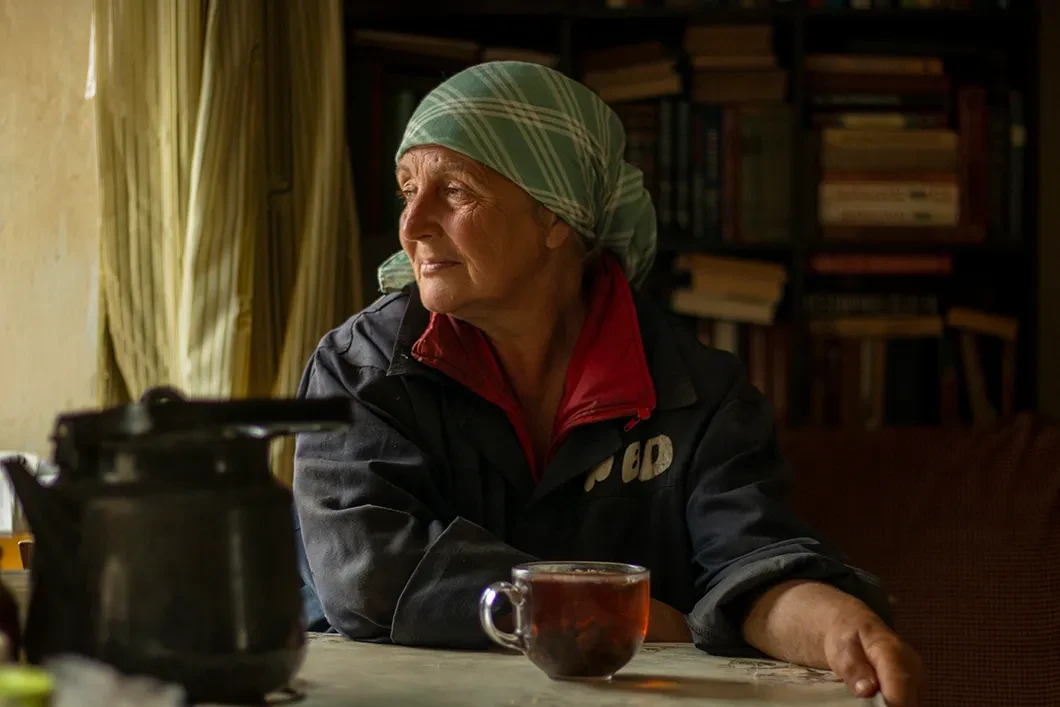
Сидя за чистым столом в бедном, но прибранном доме, где из живности только две кошки, удивляюсь, откуда взяться недоброжелателям. Но Татьяна не хочет продолжать негативную тему и переключается на книги, в которых она находит и отдохновение, и ответы на все вопросы. Говорим об истории цивилизаций, биологии, социологии — Татьяна печалится, что среди соседей-ровесников не находит понимания:
— Я когда овдовела, меня только спрашивали — замуж вышла или нет, я говорю, что мне и так хорошо, а им это дико. Потом спрашивали, выкопала картошку или нет, а больше у моего поколения тут нет никаких интересов.
Важнейшими книгами Татьяна считает произведения Урсулы Ле Гуин и романы Ивана Ефремова «Час быка» и «Лезвие бритвы» — говорит, что в них все наше общество, лишенное сострадания и переживания, и глухая к нуждам населения власть. Она возмущается лицемерием губернатора — утверждает, что поддерживает сельское хозяйство, а сам вместо праздников в Новый год лучше бы подарил всем по 2–3 мешка навоза, которым цена триста рублей:
— И тогда мы, 3,5 тысячи таких же сельских старух, как я, будем его электорат, но ему же плевать, как и областному министру сельского хозяйства. Пусть не думают, что обиженный народ так и будет терпеть. Росгвардия молодежь разгонит, а если бабки выйдут — ни у одного рука на нас не поднимется, а за нами и молодые подтянутся и снесут власть к… матери.
Провожая до остановки автобуса, Татьяна говорит, что очень переживает за дальнейшую судьбу приокских пони — передать некому, помощь получать неоткуда, а возраст ее «уже очень сильно жмет». Тихо, словно по секрету, она признается, что при постоянных нагрузках может сломаться, и все еще очень надеется на поддержку от ВНИИ коневодства и неравнодушных людей.
ДЛЯ СВЯЗИ
Татьяна Ефимкина будет благодарна за любое внимание к ее пони и к ней. Она очень нуждается в помощи волонтеров и просто неравнодушных людей — связаться с ней можно по телефону +7 (960) 565-50-59 или в соцсети «ВКонтакте».
Арден Аркман, специально для «Новой»