
Translated material
Pakhmutova code
Kim Smirnov. From a personal diary
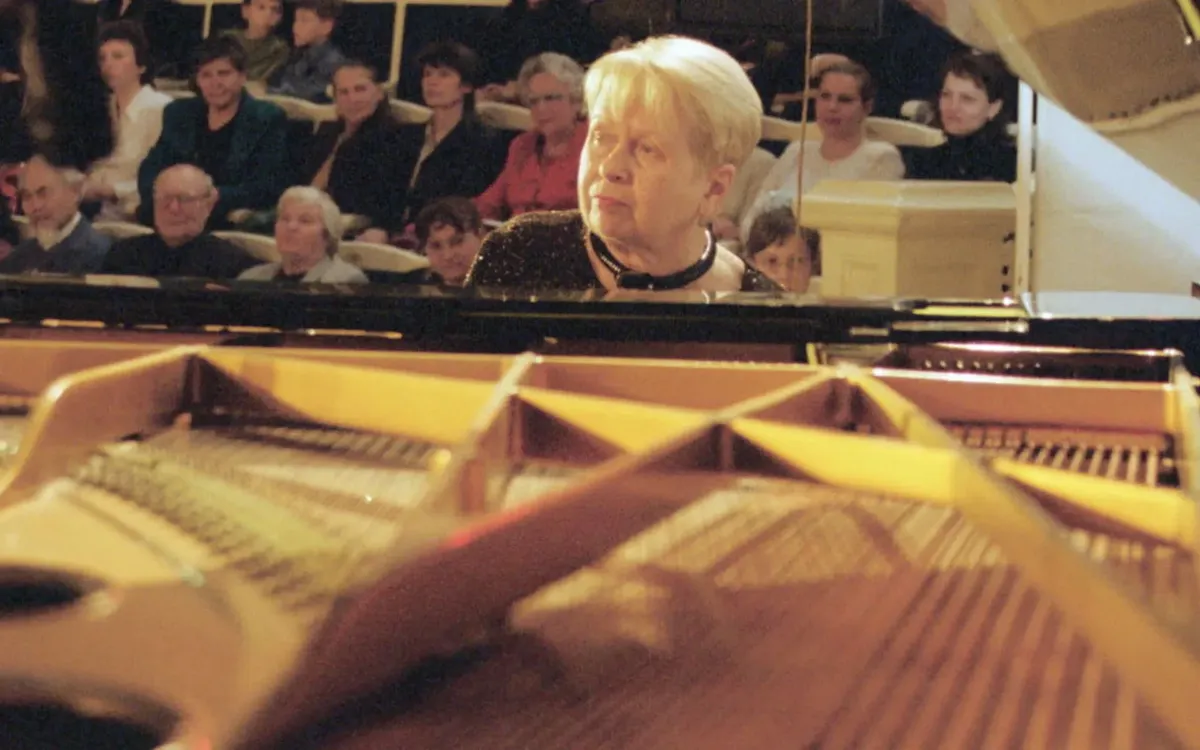
November 3, 2013 Sunday.
Message from the media: A businessman from Israel asks Pakhmutova and Dobronravov consent to use the mobile phone in their famous “Hope” in the mobile phone. The fact is not a single one. Knowing all statistics suddenly discovered that 10 (or even more) percent of the owners of mobile phones still choose Pakhmutova’s songs for their “call sign”. But, it would seem, they are a brand of another, who has already gone into the history of the era! If the poet is slightly rephrasing: the mountains settled - the songs remain?
Where did her, marked by all possible signs of state and public recognition both in the past union and in the Russian Federation that replaced him from the People's Artist of the USSR and the Honorary Citizen of the Hero of Volgograd to the International Prize of the First-Called “For Faith and Fidelity” and the title “Living Legend”, from the star of the Hero of social labor to the Order of Merit before the Fatherland, well, and, well, and Naturally, as usual in such cases, the “owners” of the personal small planet No. 1990, somewhere between Mars and Jupiter-where did she get this, the highest recognition: the popularity of her music is an enduring decade now?
In a solution, in the decryption of the peculiar code of Alexandra Pakhmutova, all of our, referred to the advertising and conjuncture of the “brands” and “hits”, will help little. For they are not really hits and not brands, her old and new songs about the main thing. They are real. And in order to try to unravel their code, you will have to switch from often the currently repeated Pushkinsky: “... but you can sell the manuscript” to the previous line: “Inspiration is not for sale”.
Girl and Stalingrad
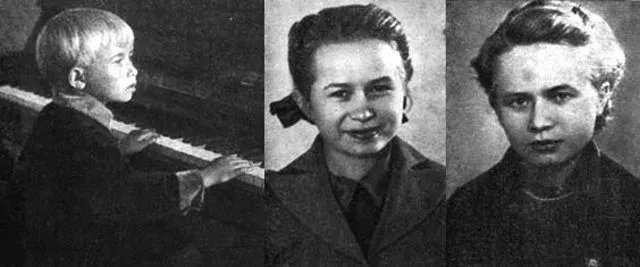
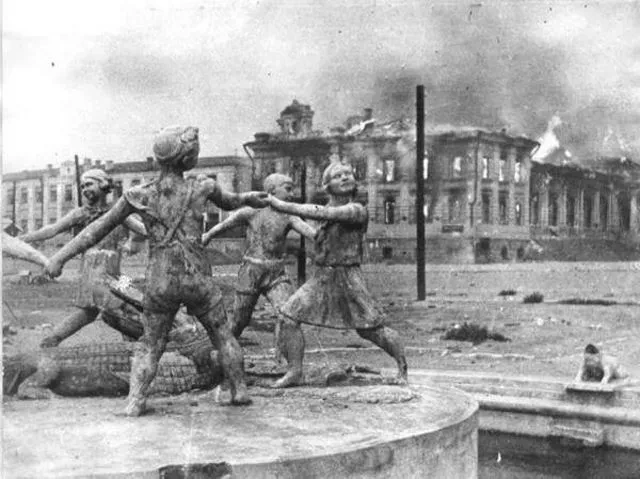
This Sunday, she participated in the Olympics of children's amateur performances. She performed her waltz (they say that she composed her first melody with another three -year -old girl). And then the man went on stage and said that the war had begun. This happened in Stalingrad, June 22, 1941.
Pakhmutova’s songs about the Great War (and among them are the Stalingrad “hot snow”, “somewhere under Beketovka”, “Mamaev Kurgan Silence”) is rightfully included in the golden fund where the “Holy War” and “Dugs”, “Nightingale” and “Enemies burned their native hut ...”, “The song of the tenth landing” and “We immediately saw this business, like two companies, like two companies, like two companies like companies. They rose from the ground ... ”,“ They do not put crosses on the mass graves ... ”and“ Black pea jackets ”...
But she has one song, which is in this row, and - outside the row. "The latter." To the words of Vladimir Kostrov. About her generation. On behalf of generation:
We are the last centuries, we are
We are sick with great hope.
We are snowdrops, we are from under the snow,
Crazy snow of war.
So we hug - our path is not long -
In front of fate and country.
We are snowdrops, we are from under the Christmas tree,
We are the last tenderness of the war.
One by one, generations are leaving with which the living memory of the Great Patriotic War is leaving. The last generation, which can still be its carrier, are children of the war.
Further - history. Film and photographers, audio recordings, pages of documents and memories. Will they be able to wake up, revive those who will be after us, the feelings and thoughts of generations, who, until the last breath, remembered that war? Will this new, tomorrow Russians will also holy holy her victims, her meaning, her victory? After all, they will already have others, their wars, their own memory and their songs about them. The question is alarming and even tragic, if you recall that it is not somewhere, but in Russia other young mankurts are already swearing in the prejudice that 74 years ago valiant American generals defeated the coalition of Hitler and Stalin.
This is about this anxiety - the song "The Last."
I know many amazing children's certificates of World War II. But the two most piercing of them personally for me are the memories of the playwright Alexander Gelman about childhood in hell of the fascist ghetto and the book of Lyudmila Ovchinnikova “Street among the trenches”. She lived the whole Stalingrad battle with a girl at the foot of Mamaev Kurgan, in a dugout in a draw, shot from the German and on our part. And I saw all the worst with my own eyes. I saw that, according to all the laws of all civilizations, it was not supposed to see the child, from which they tried to protect him for all centuries. I saw, for example, how Mamaev Kurgan, whose slopes before the war in the spring were scarlet from tulips, became black. The black color slowly crawled up until finally reached the top of the mound. This marine infantry was going on a frontal assault, and the mound gained the color of the pea jackets of the dead sailors.
Now the evidence of another girl from Stalingrad has been added to these memories in my mind. Certificate of songs.
Alya Pakhmutova did not see the height of this very great and worst battle of the 20th century with her own eyes, although she had a chance to see a lot then. Having met a war in Stalingrad, she left the city in August of the 42nd, returned to it in the spring of the 43rd and, in the same autumn, left for the capital-to study at the Central Music School at the Moscow Conservatory. But such is fate (or cross?) True talent: to see the pain and truth of modern being. Pakhmutov - all from there, from military childhood.
Symphonietta
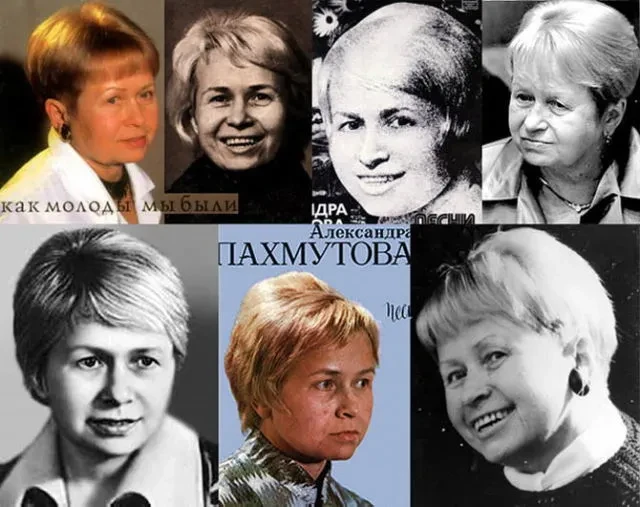
At the Central Music School with her classmates, she played all Beethoven's symphony in four hands. What, of course, was not utilitarian necessity. They studied in the same building with a large hall of the Moscow Conservatory, where they could always listen to these symphonies performed by the best orchestras. But - so their teachers, and above all, the director of the school, and then the teacher Pakhmutova in the conservatory Vissarion Yakovlevich Shebalin, introduced them into the “workshop” where they comprehended both the inaccessibility of the celestials, and the responsibility for dealing with them in one business.
In childhood, having watched the film “One hundred men and one girl”, Aly Pakhmutova, by her admission, was so shocked by an orchestra under the control of Leopold Stokovsky that she even had a temperature.
Years will pass, and Stokovsky, puffly putting her hand on her shoulder, call her Symphonietta, a small symphony. It was a handshake in great music. Maybe he did not know her songs. But he heard the symphonic music written by her, then still a young composer.
It is a sin to complain about the performing constellation Pakhmutov. In it, Anna German, and Yuri Gulyaev, and Lyudmila Gurchenko, and Lyudmila Zykina, and Joseph Kobzon, Maya Kristalinskaya, Sergey Lemeshev, Lev Leshchenko, Muslim Magomaev, Eduard Hil, and the newly tanned stars from beautiful children's choirs. But the most famous masters of the classic music workshop love and love to work with her (however, among these singers there are people from this workshop).
Her concerts, suits, ballet “insight”, set up by a large theater in his star times, are known for the people less than her songs. But among experts they are appreciated high. The great Evgeny Svetlanov invited her to conduct the performance of her symphonic works. Mikhail Pletnev took a composition from her songs for the Russian National Symphony Orchestra and ... turned it into a cycle of the finished symphony. What brilliantly succeeded. For the true, original gift of high symphonism and melodism, programmed in it by nature and revealed by the teachers, splashes out by the prooferens in its songs.
More precisely, songs are springs breaking to the surface from artesian underground horizons of the Great Patriotic and Universal Culture. Is this the most important sign in Pakhmutova's code? ..
She believes that in the world of modern stage, a breakthrough awaits us in the near future, that “the talent should appear”, which will pave new ways for her. But even if you agree with this forecast, rather bold and controversial against the backdrop of the current starry and “kitchens”, the revolution in a modern pop song can only occur if its creators and leaders will be able to draw strength and inspiration from the same deep horizons from which Pakhmutov herself draws them.
Oath on the hangar
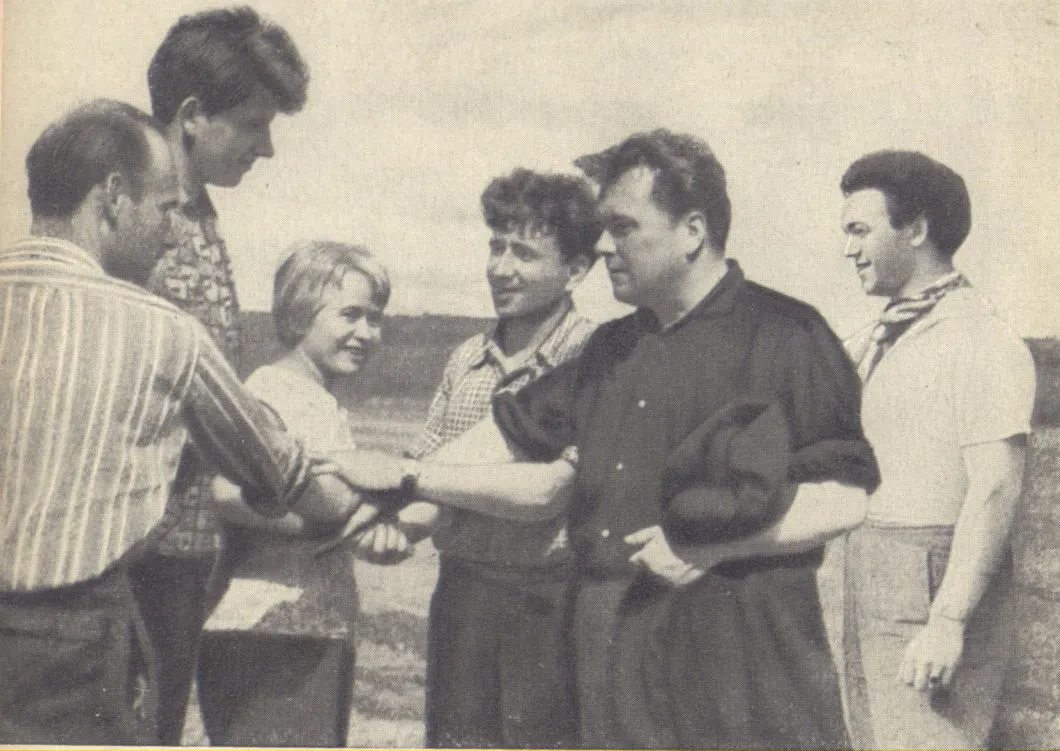
There is such a historical picture where, putting his hand on the hand, the poets of N. Dobronravov and S. Grebennikov, the singers I. Kobzon and V. Kokhn, the composer A. Pakhmutov and the chief manager of the construction of the Ust-Ilim hydroelectric power station, the oath of the fidelity of Siberia gives the allegiance. It was in 1963 at Ust-Ilim, at the alignor of the future dam.
How many events occurred with that old oath! How many oath -facility happened in the country and in the world. And even an excuse for this was invented: the world changes, and we must change.
Meanwhile, in all of our inevitable changes and floods, there should be some invariant constants, otherwise everything will go to dust. I remember when the famous Kataevsky magazine was born with the emblem of Stasis Krasauskas, Ethel Lilian Voinich wrote on his pages in tune with the name: “Do not change the ideals of his youth!”.
But the most simple things can be a constant: fidelity to a loved one, fidelity to friends. Pakhmutov and Dobronravov have been together for many years. And it means that they are all right with family life, since they still give us wonderful songs. God grant their health! And the rest that is from God and from people: talent and our love are all with them.
And with the ideals of youth, Pakhmutova and Dobronravov is all right. And with friends. As they were friends with submariners and astronauts, with the family of Yuri Gagarin, with commanders and soldiers, with the counselors of "eagle" and athletes, with geologists and hydraulic builders, and are friends. They were asked: why did they write a song to the opening of the Burey hydroelectric power station today ? For commercial reasons? Answer: Commerce has nothing to do with it, simply - our friends began to build this hydroelectric power station.
Having written a lot of songs for the glory of Lenin and the Lenin Komsomol, Pakhmutov and Dobronravov never joined the party.
Alexandra Nikolaevna herself in an interview said very clearly about this: “In the communist ideology, some threw themselves for ideas into the fire, courageously transferred torture, rebuilt the country for free, others hid behind them and erected luxurious cottages with strangers. Just those people who were extremely cynical to communist ideology and dragged me to the party. I perfectly understood that, having received a statement from me, these pseudo -communists would sit in the black “Volga” and go into their country mansions, and from that moment I will be obliged to work for them, to sink in new problems. I would not write anything by joining the party, since primitive gray bureaucrats would have stuck me to death with their instructions.
Yes, we wrote songs about the Komsomol members. But our heroes were those holy people, many of whom today are forced to collect bottles and rummage in garbage dumps. It's a shame, for example, that they are not talking other than a psychopath about Zoe Cosmodemyanskaya. ”
The state never stared before the first persons. These are the Secretary Generals, and then the presidents were looking for friendship with her.
The Russian President Vladimir Putin coming to her with a cake and a bouquet recalled 300 of her songs with a cake and a bouquet. Pakhmutova corrected his mistake: 400.
History often changes the meaning of established phrases, but unable to change the original words of old songs, which is why sometimes the leaders are uncomfortable: then the “samurai” has to change the “three tankers” at the “enemy”. Then from the "Artillery Marsh" to withdraw the name of yesterday's "Leader and Teacher."
What associations can now cause the words “Belovezhskaya Pushcha”, except with the “secret evening” for three, which authorized the death of the Union? And the famous Belarusian ensemble goes on stage and sings the Song of the same name Pakhmutova. And no one about this, by no means the Holy Trinity will remember. A completely different mood is born. Nostalgia? May be. But also hope.
When we, not knowing the ford, stepped into the “Society of Equal Opportunities” and, like mushrooms after rain, began to grow from nothing millionth states of units and impoverishment of millions; When the nouveau riche went to work out for the ocean and the British Islands, and their wives - to give birth to first -class clinics in Europe, Pakhmutov creates the song “I stay with a deceived people”. So not only about the Siberian girls dancing on the deck of the Friedrich Engels ship running along the hangar, and about the affectionate Olympic Misha her songs.
They say: there was a time of Pakhmutova’s songs, then the time came to Galich. Then Grebenshchikova. Or Shnurova ...
Stop. Pakhmutov and Galich - they are from one time. And Okudzhava, and Vizbor, and Vysotsky, and Gorodnitsky - from him. Such different, often polarly oppositely directed, their songs express one, tragically contrasting both on their sunny peaks, and in the "dark abysses of the Earth". It has long been waiting for its integral understanding. And we all rush about with our individual, corporate, party lanterns, tearing out of the darkness their narrow rays first spiritual and artistic values, then, with a change in historical circumstances and scenery, others opposite.
But with the inevitable future of the expansion of the light circle in it, without singing to each other at all, rather even arguing with each other, Pakhmutov, Okudzhava, and Galich, and Vysotsky will appear. And each of them, and all of them will be provided with them ahead - by right of talent, depths, culture - for a long time in art than chitic one -day one -day such as “I am cool” or “I no longer want to fall in love, I can no longer break.” Precisely because the general, regardless of our today's political passions, the picture of the time will eventually form from the very different colors of strokes and smalt cubes of mosaic for centuries.
And this may be the third key to the Pakhmutova code. Or to the code of Vysotsky, the cod of Okudzhava ...
But back to that old oath on the hangar. Many years later, Fred Yusfin, who offered her, was still with his old opinion:
“Here are all looking for a national idea. As if she had fallen from the shelf, it fell under the sofa somewhere and she needs to be found there. I think the national idea is in Pakhmutova’s songs. To accept them with a heart is a national idea. ”
The maximalist, as always, the “fraternal” generation, is said? After all, we are now soberly, with documents in our hands, they explain that the Bratsk hydroelectric power station is not only the songs of Pakhmutova, Grebennikov and Dobronravov performed by Kobzon. Not only the poem Yevtushenko. Not only Komsomol enthusiasm. But, as this was reported at one time in the announcement of the film from the cycle "Soviet Empire", an energy facility intended "for the completely secret production of Plutonium." And the order on the construction of this facility is still classified. And besides, “Valentin Rasputin was the first to raise the alarm about the death of Russian villages in their“ farewell to Matera ”, but the account of flooded villages and forests is still going on.”
Everything is so. Moreover, it is quite possible that someday humanity will learn how to concentrate the power of the fraternal, Krasnoyarsk, Ust-Ilim hydroelectric power station in miniature generators or finally curb the thermal unit. And the need for giant dams will disappear. They will then become historical attractions, something like Egyptian pyramids. Unless descendants dismantle them to free the natural course of the Yenisei and Angara.
But no truth of history, no scientific and technological progress is no longer able to cross out either “farewell to the fraternal”, or “letters to Ust-Ilym”, or “LEP-500”. For in the music of Pakhmutova such a densely concentrated vital energy is encoded, without which no our national ideas and projects can be carried out. Not a fraternal hydroelectric station. Not a flight to Mars. No - which is much more difficult - the revival of Russia. We de -energize this spiritual energy (which we have been engaged in the last 20 years not without success) - we will finally stay at zero. Complete. Round. Do we want this?
November 8, 2019 Friday.
Personal. On the eve of tomorrow, anniversary birthday of Alexandra Pakhmutova, I recall one long -standing meeting with her song. When I was in the Komsomolskaya Pravda, I once returned from a business trip, from the island of Wrangel, having passed the tundra of the academy “on dogs”, spending several nights with local hunters and reindeer herders in a tent among the halves and Zastraugs of the Arctic Ocean, experiencing frosts, turning bread and oil into stones - they had to cut with an ax, in rare gleanses between the enlightenment between Having enjoyed the fantastic snowstorms, there are no more like that anywhere! - Symphony and symphonette of polar radiance.
In that march on dog teams, a curious case occurred with me through the whole island. The Chukchi has a belief: a person, dying, goes to the "upper people." Even in Anadyr, they told me a more severe legend. If a person falls out of the sledges, it is supposedly not customary to return: then he was called to his “upper people”. So I just flew out of the sledges on one of the steep island bumps. I’m lying in the snow, Kosh, my eyes to the neighboring twigs of polar moss on the earthen slaves, which were weathered in the snow and with longing for a quick -moving harness. She was the last - there was no one behind her.
This story ended well. It turned out that Vasya Rultirgin who drove me at first simply did not notice my absence. And when he looked around, he immediately turned back - almost from the horizon itself, leaving me in a long thought over the dilemma: either the legend turned out to be an angry joke of my Anadyr friends (even on student virgin lands), or Vasya simply did not believe in the “upper people”.
А потом в тесной халупе при местном аэродроме несколько суток вместе с завывавшей за окнами пургой мы ждали борта на материк. В Анадыре, Иультине, заливе Креста материк — это большая Россия. А на острове Врангеля — в прямом смысле — соседний, через пролив Лонга, мыс Шмидта.
Читали по кругу книгу Олега Куваева «Зажги огни в океане». Под опустошаемые поллитровки с такими же зелеными этикетками, как у «Московской», только с надписью «Питьевой спирт» (хотя и считалось, что здесь, на острове, сухой закон), с чифиром «для прицепу», бывалые люди травили байки.
Пурга не прекращалась. Ждать можно было еще и неделю, месяц, полгода. Но в наш разноцветный человеческий конгломерат затесался какой-то государственно важный товарищ, которого предписывалось незамедлительно доставить на материк. И за ним прислали военный борт.
Когда самолет поднялся, дни нашего общего ожидания, нетерпения выдохнулись вдруг в песню. Компания в брюхо транспортного самолета набилась пестрая. И юнцы нового комсомольского замеса, и молотые-перемолотые жизнью вчерашние зеки. Пели все. На едином дыхании. Что пели? «Главное, ребята, сердцем не стареть».
Не могу сказать, что это моя любимая песня у Пахмутовой. Мне, положим, ближе «Команда молодости нашей» в исполнении Людмилы Гурченко — о спорте, однако и, как всегда у них с Добронравовым, больше, чем о спорте. О жизни, более длительной, чем одна песня, одна команда, одна жизнь. Но как мы тогда пели, запомнилось навсегда.
В моей дневниковой тогдашней записи, хотя сама песня и не упоминалась, остался ее след:
На острове, где по полгода
Царит разлучница-пурга,
Стоит нелетная погода.
И «верхним людям», как богам,
Доверив запредельно души,
Шаманы, штурманы, врачи
Спирт питьевой безбожно глушат
В святой рождественской ночи.
Но как они рванутся к Богу,
Когда отпустит повода
Стихия и отдаст дорогу
Им Вифлеемская звезда,
Что здесь Полярною зовется,
Как содрогнется самолет,
По начертаньям звездных лоций
В заштатный уходя полет!
К Богу-то, к небу мы тогда рванулись с песней Пахмутовой! Все было правдой, кроме, разве что отпустившей повода стихии — военные летчики подняли самолет сквозь неутихающую пургу, и никакой Полярной звезды за нею, конечно, не было видно.