
Translated material
Sort out "Golden Passports"
The European Union inspects the facts of European citizenship purchases: famous Russians will suffer
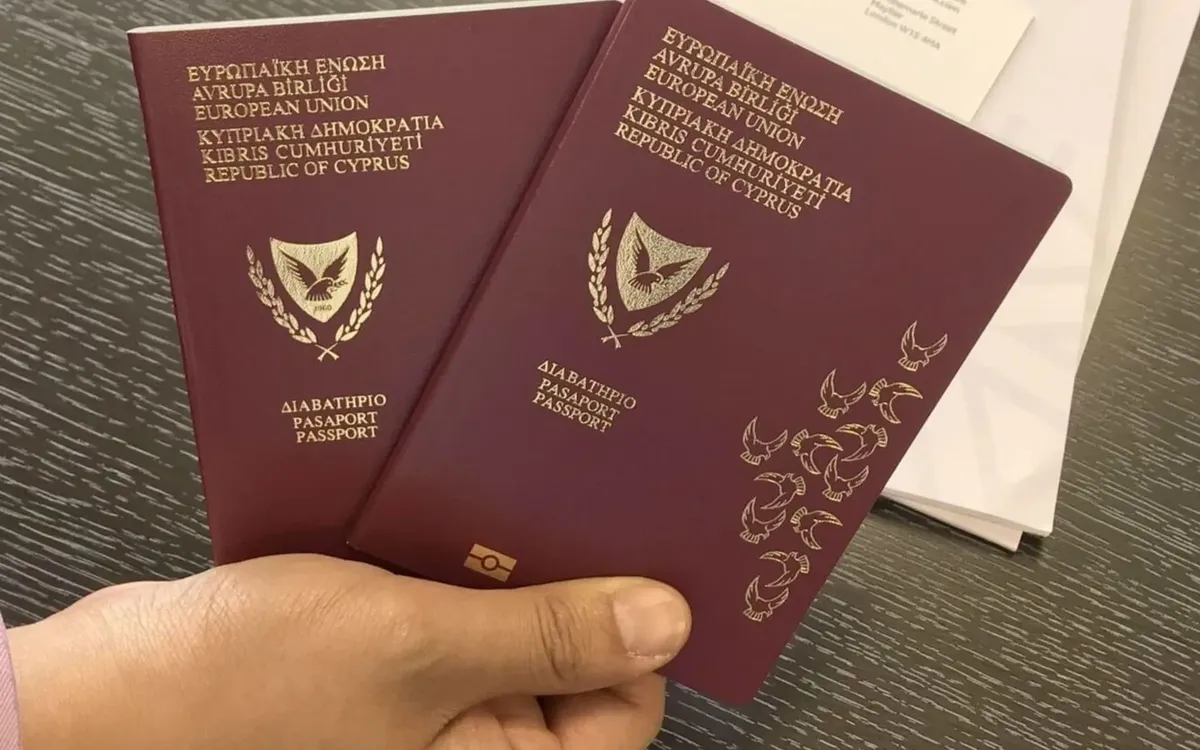
Cyprus, a member of the European Union, announced last Wednesday about the beginning of the process of deprivation of citizenship 26 people who bought it according to the “Passport for Investments” scheme. President Nicos Anastasiades admitted that, perhaps, when issuing such “golden passports” earlier, under less strict rules, errors were made.
“Today, the Council of Ministers has confirmed the will of the government to strict observance of the conditions of the investment program in Cyprus,” the Minister of the Interior Konstantino Petrides after the meeting told reporters.
The press, referring to Cypriot sources, reports that in the list of citizenship, - nine Russians, eight Cambodians, five PRC citizens, two Kenyns, one Malaysian and one Iranian.
Cyprus attracts Russian investors since the 90s with its favorable Mediterranean climate and convenient financial legislation. Since he joined the EU in 2004, Cyprus citizens can easily move around 28 countries, live and work in any state of the Union without bureaucratic obstacles that visitors from countries that are not part of the EU are faced.
Among the wealthy Russians, who, according to reports, submitted applications for a Cyprus passport, Oleg Deripaska is mentioned. According to his representatives, Citizenship of Cyprus will help Mr. Deripaska in a wide range of business interests that require constant trips around the world. Just for convenience, which does not give a passport of the Russian Federation.
However, Minister Petrides did not disclose the identities of those who were facing the deprivation of Cypriot citizenship, but hinted that their names are mentioned in the media.
The deprivation of the citizenship provided is a very unusual procedure, and in this case it became a continuation of the scandals in the press.
The most loud erupted in October - it is associated with the publication of the investigation ( English ), which was held by Pulitzer laureates, British journalists Claire Baldwin and Andrew Marshall.
They talked about the dubious decisions of the Cyprus government to sell passports for investments to representatives of the Cambodian elite, close to Prime Minister Hun Senu, who runs the country with an iron hand since 1985. Including citizenship was received by his niece with two adult children and her husband - the odious chief of the police, as well as the Minister of Finance. Among the recipients of citizenship and representatives of the corrupt elite of Cambodia, whom the international organization Global Witness accuses of unbridled destruction of tropical forests and the movement of residents. In Europe, they bathe in luxury, while Cambodia is one of the poorest countries in the world.
How does the Cyprus government intend to “correct errors” made in the issuance of “gold passports”? The Minister of the Interior announced the verification of all cases of naturalization.
11 categories of applicants with "high degree of risk" are introduced. One of them is “politically significant faces”. That is, state officials who, due to their influence, represent a corruption risk.
Also now excluded from the scheme anyone who:
previously convicted or is under investigation in his country;
who is associated with the illegal organization;
who is under international sanctions.
According to the minister, about 2,000 already issued Cyprus passports are held the current audit. The largest groups of applicants are Russians and Chinese.
In Cyprus, since 2013, a program for obtaining citizenship in exchange for investments has been operating. It is enough to invest at least two million euros in the country's economy, and you are a citizen of the European Union. ( Since February 2019, the investor should additionally introduce another 150 thousand euros to two Cypriot funds - ed. ).
Over the five years of the scheme until 2018, the Cyprus government approved 1864 applications for citizenship, having earned more than six billion euros. Together with family members, the number of new citizens today is approaching 4000.
The “Passport for Investments” schemes operate in two more countries of the European Union: in Malta and in Bulgaria. There passports are even cheaper than in Cyprus: investors should invest from 800,000 euros.
These three EU countries for money give citizenship on conditions, much less strict than ordinary naturalization regimes. There are no obligations for the actual residence of an individual in the country, no other evidence of a “genuine connection” with it is required until citizenship is obtained.
Bulgaria hastened to tell Brussels that she would refuse such a scheme. But there is a problem of corruption of government officials who gave passports simply for bribes of tens of thousands of foreigners.
In addition to the Golden Passport, the “Golden Visa” scheme is widespread in the European Union - when the investor receives not citizenship for his money, but only a residence permit in the EU. He gives a foreigner the right to live in the EU country and move freely through the Schengen space. In the future, residency after several years opens the way to acquire citizenship according to a simplified procedure.
Investing schemes in residency are very different, especially in relation to the nature and volume of investments. Amounts can vary from 13,500 to more than 5 million euros in the form of investment, real estate investments or government bonds, donations for public charity or one -time contributions to the state budget. These schemes are used by Bulgaria, Great Britain, Greece, Ireland, Spain, Italy, Cyprus, Latvia, Lithuania, Luxembourg, Malta, Netherlands, Poland, Portugal, Romania, Slovakia, France, Croatia, Czech Republic and Estonia.
According to last year’s joint report of the international non-governmental organizations, Transparency International and Global Witness, several EU member countries using the Golden Passports and Golden Visa schemes, about six thousand people and residence permit issued-one hundred thousand, having received about 25 billion euros for this. Most of all - Spain, Cyprus, Portugal and Great Britain.
The sad attraction of the Maltese capital of Valetta was an impromptu memorial, on which always fresh flowers and burning candles. The most tiny EU country was shocked by the death of journalist Daphne Karuana Galicia. In the fall of 2017, it was blown up in the car. The murder has not yet been disclosed. It is known that Karuana was investigating several corruption affairs in high echelons of power, including those related to the program “Passport for Investments”.
In the European Union, the issues of providing citizenship and leaving citizenship, the provision of residence permit are a sovereign competence of member countries. But, by establishing the rules, each country must comply with the framework of the EU legislation, which the European court is following. Schemes of “gold passports” and “gold visas” are the subject of the general interest of the EU. After all, the decision of one member state to provide citizenship to a foreigner in exchange for investment automatically gives him rights to other member states. In particular, free movement and access to the EU domestic market for economic activity, the right to vote and be elected to the European Parliament and local government.
In Brussels on January 23, at a press conference in the European Commission, the EU Commissar on Justice, Vera Yurov first presented a report on citizenship trade and residence permits.
The European Union urged its members to take measures against the irresponsible distribution of “gold visas” and passports to foreign investors, warning that such a practice can lead to corruption and laundering of money.
The report reveals risks associated with security, corruption and tax evasion. It contains fears about the transparency of the schemes and the integrity of control of them.
Brussels warned that he would “take the necessary measures” if the EU countries do not comply with European legislation regarding border control, money laundering and tax evasion. A group of experts has been created that will try to make paid schemes for providing citizenship and residency more transparent and safe. The goal is to develop a list of requirements by the end of 2019.
The end of the year comes, and the ministers of the economy and finance at the December Council of the EU will draw conclusions.
Brussels