
Translated material
Transit and love
Will Gazprom be able to make peace with Ukraine by the end of the year? The expert answers
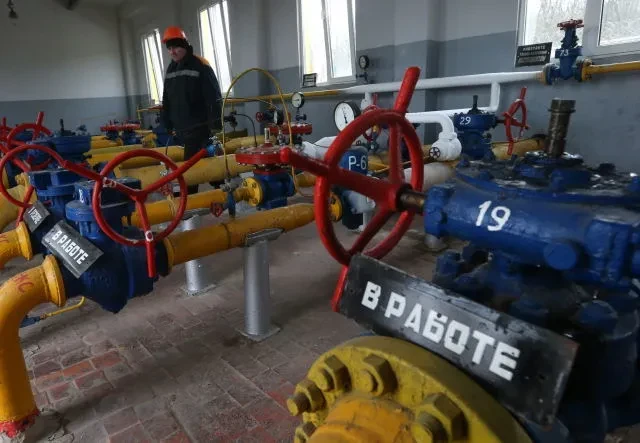
Some time ago, I happened to participate in the Simulation game. Experts from Russia and Germany in a closed mode staged Russian-Ukrainian negotiations on gas transit in the direction of Europe. This was far from the first meeting of the international group of analysts trying to develop recommendations to bring the positions of Moscow and the European Union by developing cooperation in energy projects.
I must say right away that the role -playing game not only revealed critical points in the approach of the parties to the use of the Ukrainian route for transporting gas from Russia. Participants “Ponaroshka, but seriously” even agreed on how to solve the most controversial technical issues. It was not possible to come to the final mutual acceptable decision in one day, but we showed that you can agree - there would be a desire.
If we were talking about the relations of two business entities whose motivation was not closed by any political considerations outside the civilized business, based on maximizing profit and minimizing losses, it would be easy to sign a normal transit agreement. Let's see what each of the parties is interested in and what is guided by.
Super or pay
Ukrainians do not just need to receive a transit fee, which was an average of about $ 2-3 billion a year. Their gas transportation system, capable of annually deliver more than 160 billion cubic meters of gas from Russia to Western and southern directions, requires loading, and the volume of this load directly affects the size of the pumping tariff.
There will be little gas through pipes - maintaining a powerful network in a working state for the sake of 10-15 billion cubic meters a year will eat all transit income, and the rates will have to be increased.
It is possible to reduce the size of the transportation fee only if the annual volume of pumped gas is 40-60 billion cubic meters.
And yet - the content and maintenance of the system with the replacement of old pipes and compressors involves a support for a more or less long -long transit contract. These two values (the guaranteed volume of pumping and the term of the contract) are the main items of negotiations with Gazprom for Kyiv. No policy here smells.
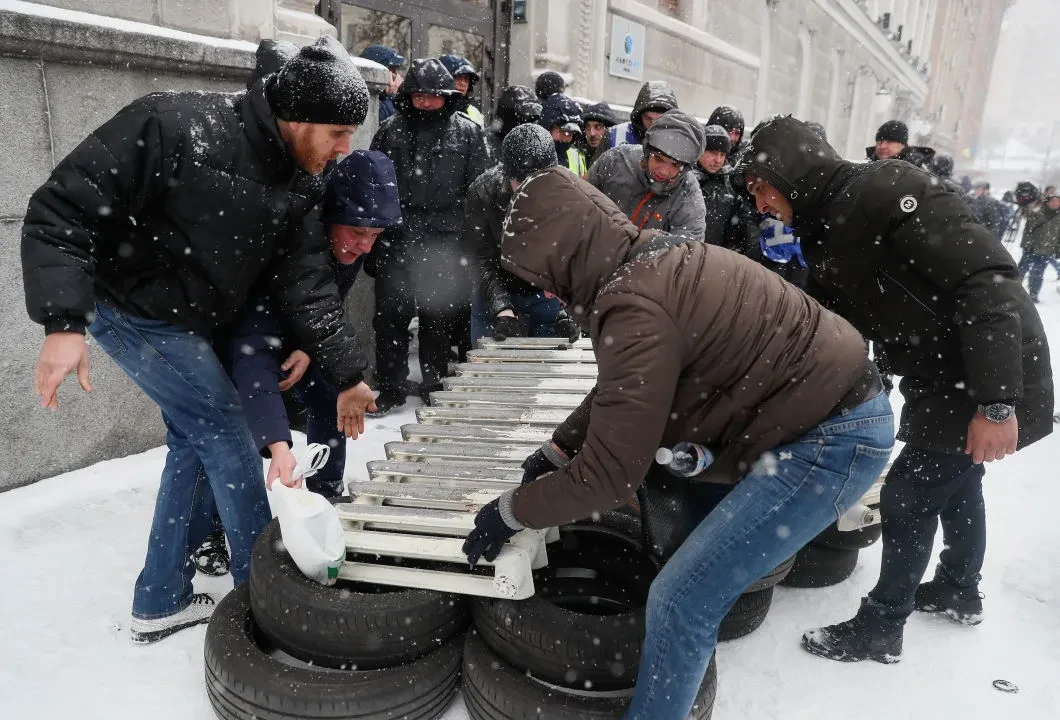
In addition, Ukrainians expect Gazprom to fulfill it in 2009 by the obligations to unconditionally follow the decision of the Stockholm Commercial Chamber of the Commercial Chamber in resolving disputes and paying money due to Naftogazi - approximately $ 2.6 billion.
Having learned about the verdict of the arbitrators, Gazprom laid out the required amount in its budget, but it cannot pay it without the permission of the Kremlin, and there they insist on the “zero” version, that is, on the forgiveness of this debt without any negotiations on the transit contract. In the meantime, the penalty for this amount has already been brought to almost three billion dollars, and the Ukrainians began to threaten the arrest of Gazprom's property abroad in order to compensate at least part of the money legally due to them.
The unwillingness to pay has become the main obstacle to any agreements on transit, although disagreements are also preserved in the approach to the interests of the Ukrainian side mentioned above. The promises of Russian negotiators to reduce the price of gas for Ukraine by almost 25% in case of refusal to receive the awarded amount do not cause interest in Kyiv:
Gas prices that Ukrainians buy from European traders are steadily low.
“Streams” will not be enough
The Gazprom suggests that in the foreseeable perspective - in two years or even five years, according to some forecasts - Ukrainian transit will no longer be needed by Russian supplies in the western direction, and therefore are not ready to sign a long -term contract. During this period, European consumers, according to Gazprom, will have to switch from the Ukrainian route to four northern streams in the Baltic and the Turkish stream south.
Moreover, in 2016, the Russian gas giant announced a plan for the decommissioning of almost all pipelines leading to the Ukrainian border and began to implement this plan. According to the head of Gazprom, Alexei Miller, by 2020, 4300 kilometers of pipes will be liquidated in this gas transport corridor, and by 2030 - 10,700 kilometers, as well as dozens of compressor stations.
According to this plan, the Ukrainian transit route will receive only 10-15 billion cubic meters per year from Russia, which does not justify Kyiv’s expenses for the maintenance of the gas transport network.
Ukrainians have two exits: either significantly increase the pumping tariff, or even put a cross on the transportation of Russian gas.
And this, in turn, is fraught with troubles for Gazprom, which cannot ensure the flexibility of supplies without contacting Ukrainian underground gas storages. Only they can quickly respond to seasonal and even daily fluctuations in demand among European consumers. “Streams” with their permanently maintained pressure in pipes for such flexibility are not designed.
It is not in favor of Gazprom's plans that his relations with the regulators of the energy market in the European Union are also formed. They do not allow the use of the German Opal and Eugal German gas pipelines, designed to receive gas from the Northern Stream - 1 and Northern Stream - 2, since the monopoly position of the Russian supplier in this transport scheme violates the EU norms. As a result, it may turn out that Gazprom will not be able to load both flows by 100%, and the Ukrainian route will have more gas than calculate in Moscow. “Gazprom” will have to slow down the elimination of old pipelines and look for agreements with Kiev for additional volumes of pumping.
From a clean sheet
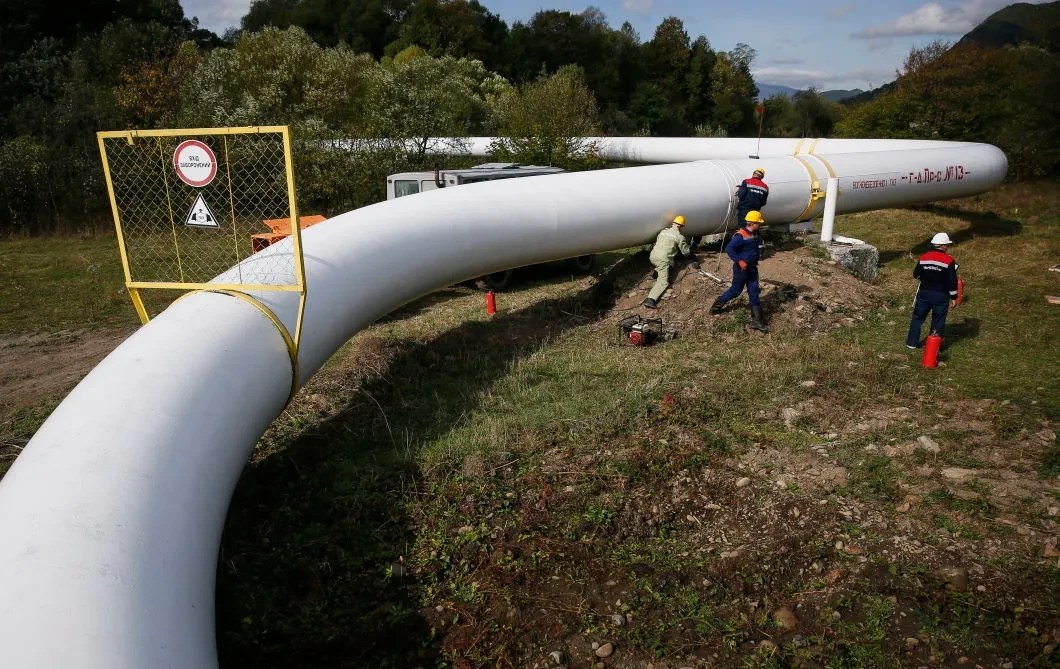
Ukrainians, meanwhile, eliminated the last formal barrier on the path of a new transit contract. From January 1, an independent operator will begin to own and manage their gas transport network, which will not depend on Naftogaz (which complies with the antimonopoly norms of the European Union). Gazprom to this operator has to negotiate. So the statements of Moscow officials that the term of the contract was extended beyond the borders of 2019 could not make sense, since on January 1, 2020, one of the parties to the old contract - the company Naftogaz Ukraine - will no longer be the owner and operator of the network. Negotiations now need to be held with a new business entity.
Apart from Moscow’s refusal to pay the amounts awarded by arbitrators, negotiations are still rested on different ideas of the parties about the terms of the contract and the guaranteed volumes of pumping. It can be assumed that the agreements cannot be achieved by the time of the expiration of the old agreement between Gazprom and Naftogaz.
In this case, for example, it is possible, an option that was previously tested in gas supplies to Armenia without a transit contract with Georgia: “Booking” (Booking) of certain capacities of the gas transport network of Ukraine to pump certain gas volumes in certain time frames. So far, supplies to the West will go in such organizational form, Gazprom and the new Ukrainian operator will be able to hope, go to mutual concessions and develop a solution to a transit problem that would suit both both companies and European market regulators.