
Translated material
"So you can lose the country!"
Mosgordum discussed the purity of her native language
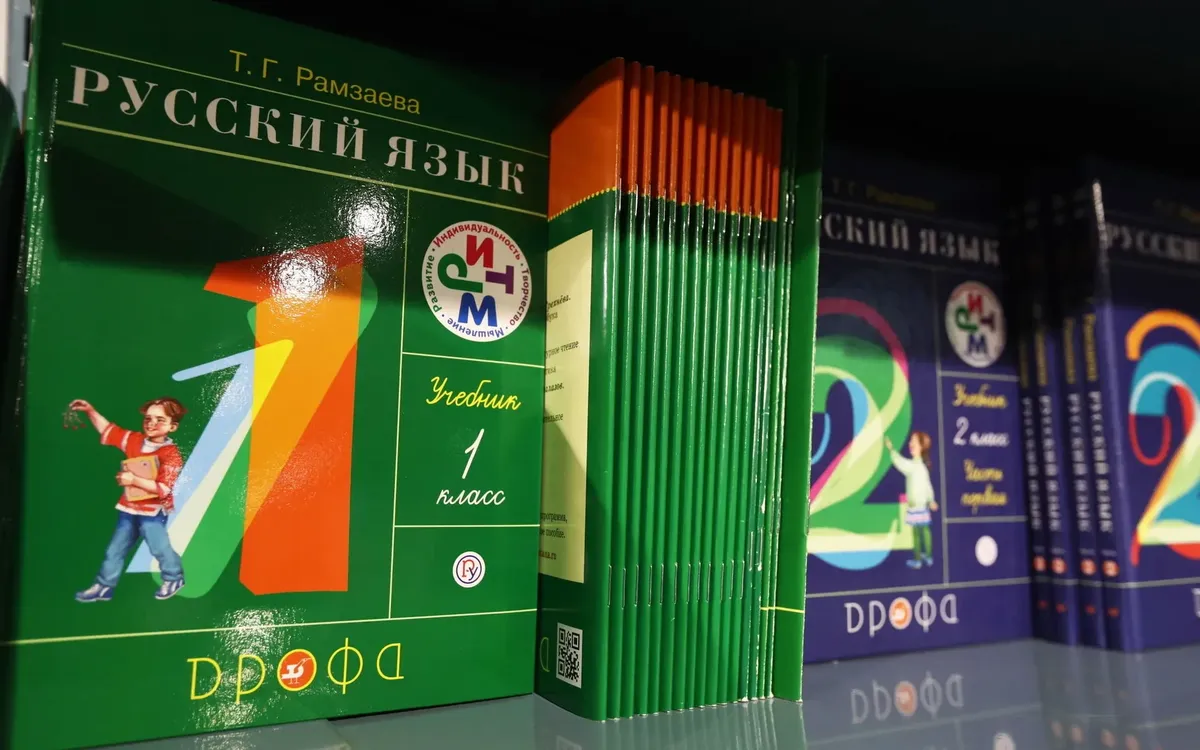
On Monday, a meeting of the Commission on Culture and Mass Communications regarding the compliance with the legislation on the Russian language was held in the Moscow City Duma. At the meeting, the deputies discussed the problems of the language in the media, the abolition of points above the letter "E" and the obscene vocabulary.
The use of borrowings in the Russian language caused a special discussion. The deputy chairman of the Moscow City Duma Nikolai Gubenko even proposed to introduce fines for violating modern literary norms and the use of foreign words that have Russian analogues (they included “quest”, “startup” and “content”). According to Gubenko, "the use of vocabulary second-hand reinforces the colonial subordinate level of the Russian language in the mind, as if the language is ashamed of itself."
Despite the fact that in the Moscow City Duma, colleagues Gubenko did not support radical changes, the questions of the language caused a serious discussion. For the last week, this is far from the first time. On November five, President Vladimir Putin instructed to create a single corps of dictionaries of the Russian language for officials and journalists. According to the president, a single set of norms should be created due to attempts "artificially, rudely, sometimes absolutely unceremoniously reduce the space of the Russian language in the world, and displace it on the periphery."
The New Gazeta remembered when this year the state of the Russian language bothered politicians, and figured out whether interest in this topic had really changed.
In November, Vyacheslav Volodin criticized advertising signs in Saratov
During a visit to Saratov, the State Duma speaker Vyacheslav Volodin condemned the use of tracing from English on the city’s advertising signs. According to the official, banners should be made in the same style that would reflect the history of Saratov to preserve “self -identity”. The text of the advertising should be written in Russian.
“So the country can be lost. Ay-yay-yai, get rich here, but they want to be English and meet the morning in a pub. Here, you see - Chicken Maknaggets. You’ll break your tongue! ”, Volodin said.
The mayor of the city Mikhail Isaev agreed with him, who proposed to use the phrase “cutlet in bread” instead of the word “burger”.
In October, Dmitry Medvedev urged ministers to avoid borrowing
On October 17, the head of the Russian government Dmitry Medvedev opposed the use of Englishisms in the Russian language. The reason was the use of the word “proactive” in the meaning of “preliminary” at a government meeting.
“The term, of course, is not very good, we very often love foreign terms in the form of tracing paper to borrow: Proactive actually-just a“ preliminary ”format. Let's not clog the Russian language with unnecessary words, ”said Dmitry Medvedev.
In August, Senator Alexei Pushkov called the abundance of Englishisms in the Russian language "linguistic" horror "
In early August, the chairman of the Commission of the Council of Information Policy, Alexei Pushkov, published a tweet with an example of Englishisms, which, in his opinion, turn the Russian language into a “ugly mutant”. Among them, “Validation”, “Validation” and “Timbulting”. As the senator noted, the “Horror” “linguistic“ Horror ”” is worth making a horror film.
This is not the first indignation of Pushkov regarding the abundance of borrowings in modern Russian. At the end of January, the politician posted another list of popular foreign words, which, in his opinion, should be abandoned. It included such words as “hype”, “trend”, “case” and “recruiting”.
In March, deputy Vladimir Petrov proposed to introduce fines for the use of feminity to the Ministry of Culture
At the end of March, the deputy of the Legislative Assembly of the Leningrad Region, Vladimir Petrov, invited the Ministry of Culture to introduce fines for “deliberate distortion of the Russian language and the promotion of illiteracy” on social networks and the media. In particular, feminity caused the indignation of the politician.
“Dear publications resort to such forms of words as“ author ”,“ president ”,“ editor ”,“ doctor ”,“ ministe ”and so on. Meanwhile, the women of the world have fought for many years not to distort their native languages with dubious letters, but for the sake of recognizing their business, creative and professional qualities, despite the gender, ”said the deputy in appeal to the Minister of Culture Vladimir Medinsky.
According to Petrov, feminity only emphasize and exacerbate the differences between the sexes. In addition, the deputy believes that the Ministry of Culture should officially clarify the possibility of “using this novel in the official media and other sites of public communication and dialogue”.
Irina Levontina
Leading researcher at the Russian Language Institute named after Vinogradov RAS RAS
- The Russian language has always aroused interest. Everyone believes that they understand it, because they are carriers. Including officials. Each of them thinks that it is simple to improve the language and he knows how to do it. I do not think that the latest discussions of the language are some specifics of the current situation.
Much attention has been removed from the eighteenth century borrowings. The discussion goes constantly and not only in Russian. The opinion that the threat to the language comes from borrowing, that they spoil the language, deprive it of its originality and independence, quite ordinary. We remember this discussion with A.S. Pushkin in Eugene Onegin.
Meanwhile, borrowing for language is a completely natural process. It is also natural that they meet some resistance from the conservatives, because there are archaists and innovators in the language.
Archaists do not like borrowing, but there is always a compromise in their struggle with innovators.
It is impossible to say that the Russian language is not updated and it is impossible to deteriorate. Any update is always damage, because it is a deviation from the rules. Then the norm changes, and damage becomes the norm.
The threat to the language arises when they stop talking and writing on it. In this sense, nothing threatens the Russian language, because it has a large number of native speakers. There is no threat that he will be supplanted in some other language in different fields, too, is not yet. Even in the field of science, where English is used actively, so far a lot of publications in Russian. Borrowings and slang are a threat that does not really threaten the language itself and its structure. The situation can be discussed not about language, but about cultural speech. It falls if the language is poorly taught. This, of course, is a serious problem that needs to be discussed.