
Translated material
Following the "world"
Whether Europe refuses Visa and Mastercard: Explanes the expert
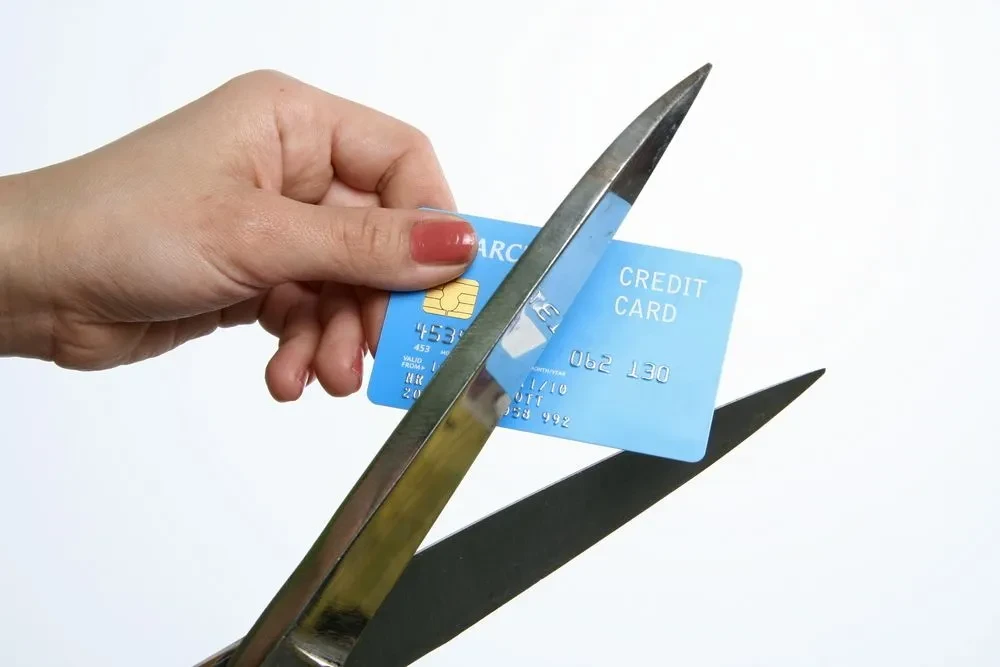
The other day it became known that European banks are developing an alternative to international payment systems (MPS) MasterCard and Visa - this time at the level of all of Europe. The logic of the solution is quite understandable: the trade war with the United States concerns not only China, but also the European Union, and some of the duties were already introduced in 2018. But even if such a system turns out to be effective, it will require several years of investment and development, and with the current rates of commissions, it can be quite costly for banks.
Why is it Europeans
In addition to issues of trade war, why did the Europeans decide to engage in their payment system? This is a matter of the unity of the financial space of Europe and the sovereignty of payments, in the framework of the code, under the code name PSD2 - at least it has been submitted.
If you look at the world financial system, it can be seen that both the Ministry of Railways and the SWIFT international payments system (with the headquarters in Brussels), and the involvement of financing is very much falling under the influence of the United States. This is not critical for Europe, but it can create a sense of addiction.
In the central banks of the world, reserves in dollars are on average more than 60%; And although the euro is used in almost the same percentage of international payments through SWIFT as the dollar, its significance for the international financial system is noticeably lower. As another example: attracting financing by countries and companies outside the United States is many times more connected with the dollar than with the euro. It got to the point that the Europeans created their own analogue of Swift - called Instex.
It should be noted that the current rates for card payments in Europe are extremely low. After the regulation of the maximum bets of interbank commissions (MK) became a reality in 2015, all parties were forced to obey. The decision was to reduce MK to 0.2% on debit cards, and on credit - up to 0.3%.
In a sense, it turned out to be a risky decision. If resources are taken from part of the system and technically transmitted by another part, then the equilibrium should be consequences.
In Europe, it turned out that international payment systems (MPS) lost part of the income, but this did not return to consumers, since retail chains did not reduce prices for the same amounts, and loyalty programs were significantly reduced.
The quotes are nothing
The Russian National Payment Card System is already processing intra -Russian calculations, including MPS. This made it possible to save quite a lot of information in the country and try new technological ideas, including the Mir card and new products for it. The information seems to have turned out to be quite useful for the NSPK, and perhaps this would also help Europe if the internal payment system has saved information on the choice of people, the places of calculations and the products they need.
How useful will it be? In Europe, they have not yet understood to the end, which led to a change in MK - a full -fledged report of the European Commission will be published only in 2020. But, since there is a PSD2 strategic initiative, there is an understanding where you want to go - probably the costs will not be interested in the European Commission. The desire to obtain independence and sovereignty of payments may turn out to be a step towards greater competition - which means that the quality of services, if the new payment system does not receive competitive advantages, and the Ministry of Railways will not be banned. But this can be a step towards the complication of the interaction of payment systems among themselves, and a conditional prohibition of the work of American companies - which means to increase the costs of the final consumer.
An announcement of a new life in Europe, with its calculation system, from afar seems to affect the business of both large MPS. But did he really affect?
If you look at Visa and MasterCard's profitability, both companies fell slightly in price over the past week, by about 1-2%. At the same time, the general S&P500 market has grown a little, the financial sector also strengthened. So, both companies have objectively became cheaper than expectations.
But it must be understood that the daily volatility of the shares of the American market is about 2%, and the weekly - about 4.5%. Therefore, such a decrease does not look big.
As for long -term effects, the issue of reduction of profit is not yet on the horizon. If you look at MasterCard, the company's shares have significantly ahead of the general market of American shares and grew 2.3 times; Visa results are similar - growth is 3.2 times. A small price decrease does not look like a problem.
Repeat the success of the euro
Were there already examples when Europe managed to replace something international, its internal? Possible Instex instead of Swift; The euro itself, which is very successfully used for intra -European transactions, but not so necessary for calculations with other countries; Or direct payments in the euro between 36 countries, SEPA - “Unified zone of European payments”.
However, companies still prefer to be quite careful in using some tools. Say, Instex is already accused of working with Iran, which may be fatal for her future - the United States is very negatively perceived by any attempt to bypass sanctions.
Attracting capital is also concentrated in dollars, although even the Russian Ministry of Finance occupied in 2018 in euros due to lower rates.
The question of the competitor of the Ministry of Railways will also be difficult: unlike the newly created system, MasterCard and Visa have a clear success story and many products for different niches. Of course, you can study (“borrow”) with a strange example, but how quickly and successfully everything will work? Especially taking into account the fact that the MPS is constantly developing.
Therefore, while the decision of European banks does not look like a ready -made alternative to the MPS. Significant efforts and investments will be required to bring prototypes to a working model, and the consumer does not necessarily win from a politically motivated solution, as the European history of work with payments shows.