
Translated material
Municipal engineering
Interview of the General Director of the Kominvest-AkMT group Alexander Khaletsky.
The founder of the group, Alexander Borisovich, said that the work that began in 2003, with a small company called the commercial house of the Kommash association, which includes all the main plants of communal engineering. One of the largest dealers of Zila and KamAZ (at that time) in 2002 lost several shareholders, which led to the formation of a new team that successfully supplied Russian equipment to customers from road, oil and energy industries.
Five years later, the company expanded to 30 people in the state. Purposefulness, hard work and constant investment led to the dynamic growth of the company.
Thinking about the automated control system, autonomy, multifunctionality of Russian industrial machines, in 2005 the company went on a European tour of technology.
The founder of the vacuum cleaning machines "Johnston Svups" skeptically reacted to the proposal to sell not ready -made cars, but only equipment, and offered to buy equipment without drawings and technical support, which was not comparable with the purpose of the company - to get dealer exclusive rights in Russia.
Intellectual developments and technical competencies gave the first fruits - the car on the Belarusian chassis “MAZ” was half -eyed by 40% cheaper than foreign cars. Exclusive dealerships for a year were obtained.
The first manufacturer to whom we went was Johnston Svupers (England) - the ancestor of vacuum cleaning machines. Our goal was simple: to get dealer exclusive rights in Russia. But we asked to sell not ready -made cars, but only equipment. We had plans to significantly reduce the cost of the machine by installing equipment on the Belorussian MAZ chassis, which at that time was very popular with Russian road workers. The British was skeptical of such an idea, suggested that we buy equipment without drawings and technical support.
It is good that we had the experience of employees at the Sevdermash production enterprise, and we took the chief designer to our team, already realizing that the greatest value is intellectual developments and technical competencies. As a result, we purchased attaching equipment, then in a rented garage with an area of 300 sq. M. We made the first installation, setup - and invited the British to show their work. The cost of the finished car amounted to about 5 million rubles. At that time, it was still very expensive for Russian customers, but 40% cheaper than the same car on an import chassis. The British appreciated our healthy adventurism and gave us exclusive dealerships for a year.
In the first year, we sold 6 such machines - it was a success, since it was not easy to pay a customer in 2005 for a new technology in 2005. Then another 20 cars were sold, and in the end they sold from 50 or more cars a year, receiving the status of the best dealer.
The market of modern high-quality machines was actively developing, and by 2008, taking advantage of the reputation of the best dealer “Johnston Svup”, we began to sell the products “Farid Industiz” (Italy), “Epca” (Denmark), “Villy” (Finland), “Sviden Broad” (Sweden), “Moro” (Italy), began to develop the direction of aerodrome and technical support And became dealers of many European and American eminent companies in this industry.
In many of these areas, we were pioneers in our country, but by 2011 all world manufacturers came to Russia, directly or through dealers. And competition is the main motivator for deepening into production. Even then, we understood that the coarse assembly in the form in which it was in, did not exist long, since it was required to improve the economy by localizing the production of certain types of attachments in Russia, the sales of which reached an economically efficient production volume.
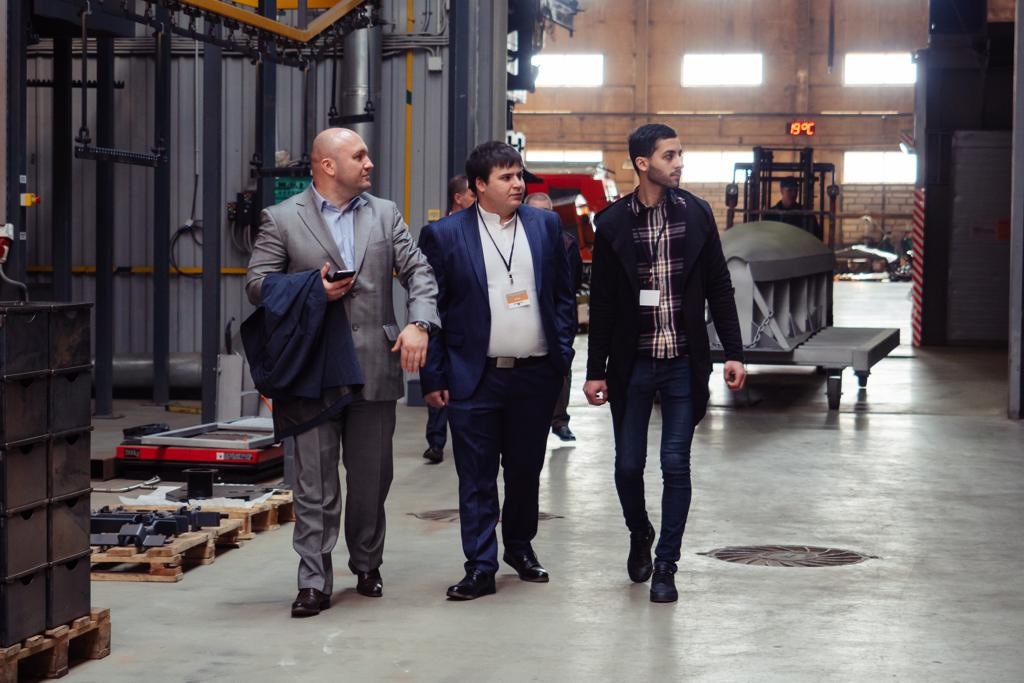
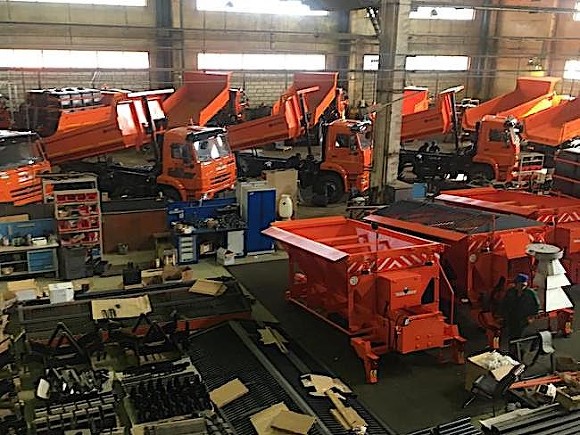
From this moment, we began to look for a production site for the implementation of our projects. In 2011, it became JSC “Tosnensky Mechanical Plant” (1980 of construction, 60,000 sq. M., with a production of about 30,000 sq. M.)
- The press has many references to the fact that the Tosnensky factory has undergone serious modernization. Why was it necessary to invest in a working enterprise?
- When you buy an enterprise, you first of all evaluate its potential for the production of modern quality products. But the specifics of the Soviet periods are such that since 1980, as a rule, large -scale updates, installations of modern equipment have not occurred on them, while in Western countries such updates have occurred earlier every 10 years, and now even more often.
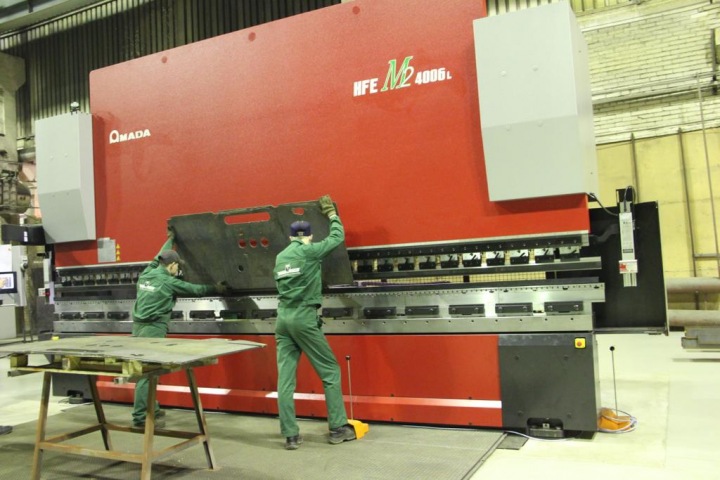
I always give an example that we have invested 10 million euros only in the modernization of the production process - this is about 3.5 times more than the cost of the enterprise itself. Modernization were subjected to welding, machining, bending, metal preparation, cutting, hydraulic cylinders and hydraulics, painting and assemblies. Of course, we did a technical project, defended it. We received an investment loan at Sberbank for 5 years with the participation of 30% of our own funds and eventually started sales in 2014.
- In your opinion, why are production funds not so often updated in Russia?
- First of all, in any project there should be economic feasibility, which means that we must recoup investments in at least 5 years. To do this, there must be a confirmed permanent sales market, which does not always correspond to realities: in the regions of the purchase of road and communal equipment, 44 and 223 Federal Laws are very fragmented and occur mainly, and budgets reach the III -IV quarter. It turns out that the enterprise does not have an uniform load of production.
Another problem is expensive loans. We get them under 12% per annum and higher, while for Western colleagues it is 2-3% per annum. Very high requirements for the collateral, banks are extremely low to evaluate the pledges and consider them risky those that are accepted all over the world.
- How did you decide under such conditions on this investment project, what was your motivation?
- You know, if you are the founder of the company, and your work over time turns into a life and at the same time hobby, then economic indicators fad in to the background. But at the same time, we understood that we needed new modern products.
Of course, in Russia there should be a strongly diversified product line to load the enterprise all year round, not dependent on the distribution of state budgets to the regions and departments. And we simultaneously solved this problem with the modernization of the plant. Over the years, we have created the best team of engineers of more than 40 engineers in Russia, which allows us to design products of any complexity in a short time.
We tried to create an ideal plant, moderately universal, not inferior to the famous European analogues, with whom we worked since 2005 and were familiar with their production.
- You also related to the Finnish enterprise Amomatic. Tell us about this experience.
- In 2012, we were dealers of this enterprise, its main profile - asphalt plants with a capacity of 120 to 360 tons per hour. By the way, this year Amomatic celebrates 100 years from the date of its founding. That is, new competencies and a quality product created several generations.
Before the sanctions, we adopted a development strategy through the entry into the capital of medium and small family enterprises in order to obtain the necessary, critical technologies for the Russian engineering industry. We received an offer from the previous shareholder of Amomatic, which at that time retired. We agreed on a good installment price for 3 years - and now we believe that this is one of our best decisions in the history of our development.
- What did you participate in the Finnish enterprise?
- Much of what we could not even suggest. Understanding the European mentality, methods of managing the company, promoting the product and interaction with the state gave us invaluable experience in Europe. We can sell there quality products made in Russia through established dealerships under a European famous name. We have mastered a new production area.
In fact, this knowledge and competencies open up many new directions for us in other industries. After all, paragraph is a complex technical product. There are many processes - from the receipt of inert materials to the release of the finished asphalt mixture - the mechanisms of which can be used by analogy in different industries for the production of concrete, sorting and processing of garbage. We greatly strengthened our competencies.
We learned that in Russia, labor is almost 4 times less, which gives us the opportunity to produce some metal structures cheaper. At the same time, loans are more profitable in Finland (2-3% per annum). In addition, there is a great responsibility of the board of directors for the activities of the enterprise - this makes it possible to make deliberate collegial decisions.
We already have experience when we, together with the Finnish colleagues, created a new container type MABU 80 container type, which is the world know-how. Each node is a container size, and the plant consists of 18 modules that are easily assembled, move in dimensions on special vehicles. The cost of its operation is 50% cheaper than that of competitors. We received subsidies of R&D of the Ministry of Industry and Trade to create such a plant in Russia, made it in 2 years. Of course, without the participation of an enterprise with centenary experience in such a record time, we would not have been met.
This for us was a confirmation of the correctness of the chosen strategy in the state. Not a single company has done this over the past 30 years in our country.
-And where can I see this know-how?
- We installed the first plant in the Moscow region in Dubna, this season we debugged all mechanisms and options, software. And now we can say with confidence that the plant showed itself 100%, reached the given power of uninterrupted operation.
- One of your shareholders is the subsidiary of Sberbank. How did you become partners?
- This is a very instructive story ... In order to develop at such a pace, as our group of companies did from a zero reference point, it was necessary to constantly attract credit resources. After all, the path that Europeans go in 30 years, we, in fact, went in 10.
We took loans in Promsvyazbank and Sberbank totaling about 3 billion rubles. At that time, in 2014, Promsvyazbank was private. When the Central Bank raised the discount rate to 18% per annum, Promsvyazbank increased the rate for our company from 16% per annum to ... 32%, and Sberbank from 13% to 16%. Considering that 1.8 of the three billion were in Promsvyazbank, you can imagine what a serious credit load for the engineering business. At the same time, the devaluation of the ruble began, the volumes of state order for mechanical engineering products decreased by more than 50%, and in 2015 the Decree of the Government No. 656 “On the ban on the procurement of imported equipment for state and municipal needs” was also adopted.
At that time, most of our warehouse consisted of imports, we were only on the path of modernization of the plant and did not finish the manufacture of Russian analogues of communal equipment. So we got into the financial trap. But we held on the whole of 2015 ...
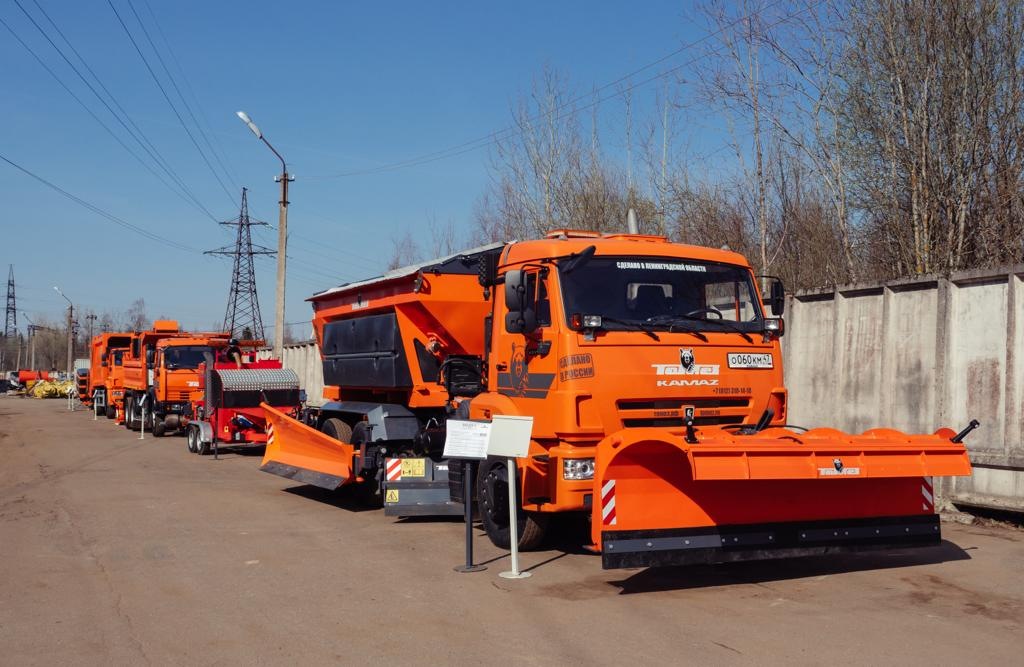
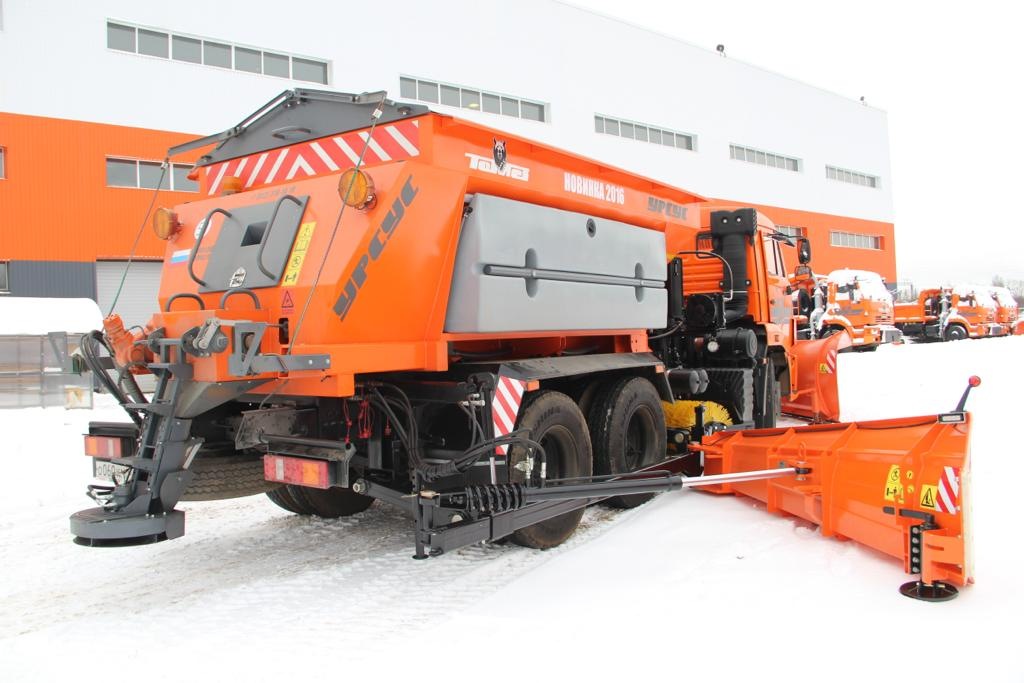
In 2016, negotiations with both banks on debt restructuring had to begin. The banks conducted an audit of the company, convinced that all issued funds were spent as intended. We prepared a development strategy together with the PWC, we approved it. The negotiations took almost a year, and in the end we received a decision that I do not know similar in the engineering industry: one bank decided to redeem our debt from another and to enter the company's capital by 51%. We are very grateful to Sberbank for giving us a second chance for development - and we try to justify trust. Indeed, during this time we completed the modernization that had begun, made new techniques that are not inferior to European analogues, vacuum harvesting machines, mechanical cleaning machines, a new line of combined road machines, a line of garbage trucks and repair equipment. Plus a Russian asphalt plant, which has no analogues in the world.
“You said that you received Subsid subsidies.” Tell us more about the support of the state - is it sufficient in your industry?
“It's a sin to complain.” Now we are conducting three Niora of the Ministry of Industry and Trade by Decree No. 1312. For example, this is our garbage truck on the diesel-electrical chassis, serial sales have already begun ... Mobile asphalt installation with production of up to 100 tons per hour-we go to mass production. In the process of manufacturing - a road airfield harvesting complex. The state entrusted to us three niora, but we try not to let us down.
We are also grateful to the KAMAZ plant - we have very close cooperation, we make the most difficult attachments on the KAMAZ chassis, and when high technical competence is required, we are often called on for collaboration.
Now everyone expects when they earn measures to support the leasing of road equipment. Perhaps the limitation of the service life of special equipment will also stimulate demand. In some contracting organizations, the wear of the equipment is already more than 50%, but there is no mechanism for writing off from the balance and the ability to buy a new one, including due to a lack of funding.
We hope that the national project “Safe quality roads” will serve to develop all related industries. We are ready to satisfy all the demand for quality products.
- How do you assess the competitive environment in our country?
-You know, differently ... There are respected competitors, the same factories that have passed the modernization processes, improve their products, improve quality-with such working relations. And there are enterprises that are masked for the production of a full cycle without owning machines, not owning engineering and design documentation, which is the main requirement of the manufacturer. They pretend to be manufacturers of products, which in fact is assembled from imported components.
Since 2016, our state has established a schedule for compliance with technological operations, according to which 10 out of 11 operations must be performed in 2019, including the installation of engine, bridges, cabs, welding of the frame, attachments, etc. Those companies that were seriously prepared for the implementation of 719 decisions, actively invested in technological equipment, expanded production space, expanded engineering design potential. But there are “pseudo -producers” who ignore the decision, find “holes” in the legislation - and this allows them to freely participate with their products of 44 and 223 Federal Laws ...
- How do you fight with such "competitors"?
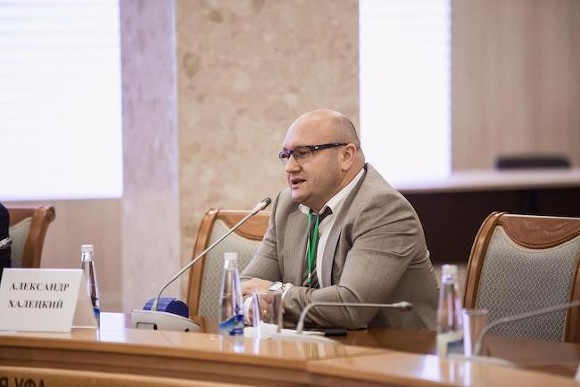
- I openly explain my position on industry events in the State Duma, the CCI of the Russian Federation, the Ministry of Industry and Trade, at expert councils and exhibition events. Moreover, in our opinion, it is necessary to finalize a number of industry processes.
For example, upon receipt of the acts of the examination and Article 1, there must be responsibility for issuing a document not only the applicant, but also the signator. In fact, fabricated documents are often provided that meet the requirements only by formal signs, and experts in regional CCIs sometimes have no competence to recognize this. Often, for the purchase of components, in order to turn them into Russian, suppliers - intermediarys are used, and the whole story on them can be easily seen in customs statistics.
In fact, the used schemes allow you to supply exclusive products of Western suppliers under the name of Russian manufacturers, and then win the tenders of 44 and 223 Federal Laws with a minimum decrease. The price of such products is not reduced. The Russian budget loses hundreds of millions, and the state order in the complete confidence that since the official body of the CCI has issued the relevant document, there is no reason to doubt.
It turns out an interesting situation: the supplier is a hero who creates exclusive expensive products, misleads the customer, and factories that have real competence and capacities to create such products do not create analogues, since the market is conquered by “pseudo -producers”. To break into it, you need time and money to create a prototype and testing. But even the Ministry of Industry and Trade believes that this niche of mechanical engineering has already been mastered, and does not support the alternative. Thus, technological independence and security of the country is undermined.
- And how to recognize the "pseudo -producers"?
- They are easy to calculate by the lack of technological equipment on the balance sheet, insufficient staff of production employees. Often, such enterprises rent an area of Western companies, they import their equipment, their production personnel and, in fact, control the entire assembly process.
— Когда вы открыто заявляете о таких проблемах, как на это реагируют участники рынка?
— Реальные производители все поддерживают и тоже выступают, просят Минпромторг ужесточить контроль выдачи СТ 1 или привести в соответствие Перечень предприятий по 719 постановлению и перечень Торгово-промышленной палаты.
К сожалению, именно у псевдопроизводителей находится ресурс, они не жалеют денег на маркетинг, дорогие презентации и выставки, присваивают себе покупные звания и награды, лишь бы казаться настоящими. И объяснить это очень просто: чтобы продать импортное изделие, собранное из крупных узлов, не нужно иметь большие запасы компонентов, содержать более 500 человек — ведь их поддерживают западные производители своими дешевыми кредитами. Им не надо создавать ничего нового, производить испытания. Мы же прошли этот этап еще в 2011 году.
Есть те, кто поддержку западных производителей оправдывает отсутствием в России технологий и современных мощностей. Но часто за этим кроется коммерческая заинтересованность в тех или иных поставщиках. При долгосрочном контракте на 2-3 года можно создать любое производство, разработку, рабочие места, платить налоги и получить российский образец. Такие контракты, например, практикуются сейчас в Министерстве обороны, и мы видим эффективность этих разработок. У нашей компании тоже есть такой опыт с военным ведомством России.
— Расскажите об этом поподробней.
— Мы поставляем военным аэродромные вакуумные уборочные машины. Еще в 2009 году мы получили согласие научно-исследовательских институтов Минобороны на применение импортных компонентов, провели испытания и получили литеру О1. А с 2016 года у нас был согласован график поэтапного замещения всех импортных компонентов. Так вот, с гордостью могу сказать, что в этом году мы поставим полностью российские машины.
Этим отличается работа с Минобороны: каждый платеж согласовывается с казначейством, так что ни одна деталь из-за рубежа не попадет в машину, даже если очень захотеть. А все машины проходят военную приемку на каждой стадии изготовления. Такой порядок нас очень дисциплинирует и стимулирует импортозамещение.
— Насколько я знаю, вы активный участник отраслевых объединений. Для чего вы тратите время на эту деятельность?
— Да, я один из основателей СРО «Спецавтопром» — первого в России СРО машиностроения. Правда, сейчас я поддерживаю его в основном своими выступлениями и участием в отраслевых мероприятиях.
Главная цель — это консолидация интересов отрасли, отстаивание в институтах государственной власти. Нам повезло, что сейчас наше правление СРО возглавил Ректор МАДИ Геннадий Кустарев, и теперь у нас — тесная связка науки и производства. Так что планируем активно использовать полигон МАДИ для испытания новой техники.
Также важная роль этой организации — выработка стандартов поведения в отрасли, разбор конфликтных ситуаций.
— А вы лично сталкивались с конфликтами или «неспортивным поведением»?
— Раньше не сталкивался, но в последнее время ощущаю на себе «укусы» информационной атаки, так называемого «черного пиара», когда берутся факты из бизнес-деятельности, происходит подмена понятий, переворачивается суть — и ты из порядочного поставщика, борющегося в честной конкурентной борьбе, «превращаешься» в «антигероя». Те, кто меня знает, шутят, что это хороший бесплатный пиар от «конкурентов»…
— Каковы, по вашему мнению, причины этой атаки — и как собираетесь реагировать?
— Я рассказал уже, что активно борюсь с «псевдопроизводителями», вот и получаю противодействие. Это нормальная реакция, видимо, последний жест отчаяния — ведь ничего умнее «конкуренты» не смогли сделать. Если бы они потратили время и средства на производство, согласно требованиям закона, и создание своей нормальной техники, так и бороться бы с ними не пришлось…
А реагировать я никак не буду. Мы уже всем доказали, что являемся добросовестными производителями полного цикла конкурентной продукции в разных сегментах. Есть хорошая пословица на этот счет: «Собака лает — караван идет».
Постепенно компания стала продавать от 50 машин в год и получила статус лучшего диллера. На основании репутации лучшего дилера «Джонстон Свиперс» началось развитие аэродромно-технического обеспечения.
В 2011 году АО «Тосненский механический завод» стал производственной площадкой для реализации новых планов.
Модернизация производственного процесса потребовала 10 млн евро, что в несколько раз превышает стоимость самого предприятия, но это привело к реализации проекта в 2014 году. Девальвация рубля, уменьшение объемов госзаказа на продукцию машиностроения и постановление «о запрете закупок импортной техники для государственных и муниципальных нужд» - ничего не помешало развитию компании, мотивируясь тем, что работа со временем превратится в дело жизни.
И все же, даже информационные атаки и "черный пиар" не мешают компании успешно развивать машиностроение коммунальной и дорожной техники в нашей стране.