Date
Author
Вячеслав Половинко, Дарья Козлова, Мария Ефимова, Сергей Гогин
Source

Preserved copy
Translated material
Game for knocking out
Russians continue to get into loans. Microfinance organizations and collectors are ready to return their money with blood

The 26-year-old resident of Perm Andrei Sidorov loved his family. Four years of living together in marriage with the beauty Lily brought the desired son, and in December another child was supposed to be born. And although the family has recently moved from place to place, and Andrei himself was increasingly nervous and even sharply changed the SIM card on the phone, the future seemed fair enough. Until November 3, when Andrei Sidorov was found on the threshold of a burning house in the village of Kodmovisch in a bloodied T -shirt, and in the room there were dead spouse and son nearby.
According to investigators, Sidorov stabbed his relatives, and then tried to commit suicide. So he decided to “protect” himself and loved ones from collectors requiring him to pay debt. According to acquaintances, Sidorov intercepted several thousand in a microfinance organization before the salary, but he should remain several times more - and the collectors, apparently, was so pressed that the guy’s psyche could not stand it.
The tragedy in the feeder immediately illustrates two abstracts of the consumer economy of Russia: the level of the country's castle is threatening, and collectors cease to be shy about their work to knock out debts.
"There is a passport - so I received a loan"
At the end of October, a conference on lending issues was held in Moscow, at which the head of the Department of Financial Stability of the Central Bank, Elizaveta Danilova, said that the debt load of Russians had reached the maximum over the past seven years.
Right now, about 40 million people are “hanging” on loans, more than half of the entire working population of the country. About 18 million Russians took their loans no later than two years ago.
Moreover, most of the loans are not a mortgage, but one -time consumer loans. Most often, people do not go to the bank for a loan, but to a microfinance organization - and immediately get into percentage bondage.
“People are simply nowhere to go, especially against the backdrop of tightening requirements for borrowers by bank credit organizations [from October 1, 2019]. There are no miracles, people have to live on something. Microfinance organizations do not have such strict requirements. [For large credit organizations], 2-NDFL certificates are needed, a certain level of confirmed income. Banks need time for consideration of loans. The percentage of microfinance organizations is much larger, but the procedure is simpler: there is a passport - here it received a loan, ”explains Igor Nikolaev, director of a strategic analysis of the FBK company.
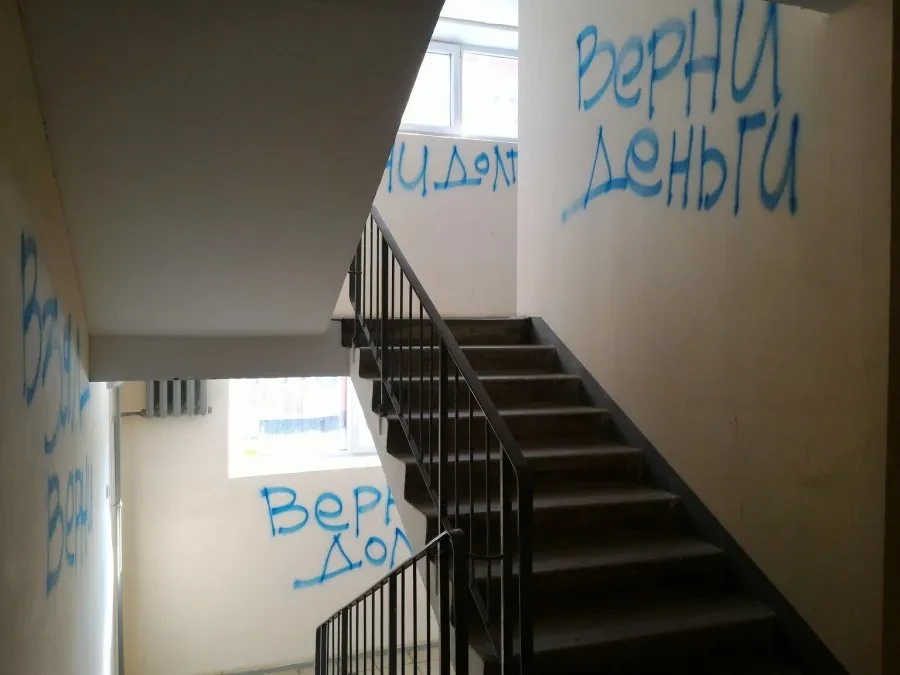
Since the services of the MFIs, due to the lightness of the process of the process, are running primarily by guards, social workers and nurses (representatives of the most instant professions, according to the National Bureau of credit stories), the delay and accumulation of giant interest are practically inevitable: state employees give up to repay debts up to a third of their salary - but this is not enough. According to the new rules of the Central Bank, from July 1, the daily rate on loans in the MFI cannot exceed 1%, but Russians do not have money to pay such amounts. Together with an expired loan, a penalty rains, and although its size is legally limited by 20% per annum, with a loan of 15 thousand rubles, in a month, delay, along with penalties and daily interest, will run an additional almost 5 thousand rubles. Formally, the amount of accumulated debt cannot exceed the four -fold loan size, but the MFIs are not actually observed.
The scheme of collecting delays from loans and allows MFIs to simplify the system of issuing money - up to the point
They do not care whose passport is given by the borrower.
Muscovite Maria Prokopenkova was surprised to find out that in her name a loan was taken in the amount of 6,000 rubles, and now she should already 13 thousand because of the laid out delays. “On credit history, it turns out that the loan was taken on May 22, 2018, and the collectors with which the MFI sold the debt began to call, probably a year later,” Prokopenkov “New” tells. - A month ago, I wrote a statement to the police for a microfinance organization, because they are already threatening me with a court. The application has been accepted, but no answer has yet been received. ”
Annah was more fortunate than another Muscovite named: she sued and won, after she found out that on her behalf, someone took a loan to the Turbosim MFIs in the amount of 11 thousand rubles, and the company over time sold this debt to the collectors from the Idi Collective company, counting about 450% per annum at a rate. The company ultimately made an official apology and announced the preparation of a statement to the police "on the fact of fraudulent actions of an unidentified person." Anna herself considers this situation strange: the debt no longer belongs to the MFI, but belongs to the collectors, but at the same time it allows the “turbosaim”.
All terms for payments are burning
This is just not surprising. One of the experts in the service of financial authorities explains that MFIs often do not report information about borrowers in the National Bureau of credit stories (although they are obliged to do this), which allows them to deal with the debtors in the future. “Good” debts, that is, those who have good return prospects, give collectors from the official association of collectors, but at best 40%will be gained, the source estimates. The rest of the debts are “bad”, they must be knocked out, both MFIs and collectors resort to different ways to achieve their own. “A collector that seems officially cannot“ knock out ”a bad duty, because he does not have [legal] tools for this,” the expert explains.
“Therefore, he either outsourcing gives a debt to real bandits (there are such adhesions between collectors and crime), or he himself depicts a bandit.”
“When they talk about the collector, for some reason it is believed that this is a person who has arrived and stands next to the debtor with a club, a bat, iron or soldering iron,” Elman Mehtiev, president of the National Association of Collection Agencies (Napka), ironizes in response. -Firstly, even illegal collectors do not go with an iron or a soldering iron, and secondly, visiting collector activity is a single percentage of what the collectors are in principle. If they call me now and say: “You owe it,” it will also be collector activity, it is already subordinate to the law. ”

In other words, the collectors themselves are good, they throw a shadow of single “renegade”. “The crimes committed by collectors have practically disappeared, because the collection business today is very much busy with its members are conscientious,” said Sergey Krylov, General Director of the League of Defense League of Defense of Debtors. - In the framework of collector agencies, crime was reduced to zero. And those people who knock out debts, violating the law, cannot be called collectors cannot be called. ”
But this is cunning. The blow to the actions of the collectors was dealt after a loud story in Ulyanovsk. On the night of January 27, 2016, 45-year-old financial collector Dmitry Ermilov threw a burning bottle of gasoline at the window of a private house of the Huseynov family. The bottle fell into a children's bed, where two -year -old Ruslan was sleeping. The child received burns of his face and hands, his grandfather Ismail Huseynov, who extinguished the boy, suffered. In such a cruel way, the former police officer Ermilov, previously convicted of theft and abuse of powers, knocked out of Huseynov Sr. duty: he took 4,000 rubles in the company Rosdengi (trademark of LLC Fastfinance), gave 11,000 and calculated that he paid. Ermilov did not think so and extorted 48,000 rubles from him, threatening to burn the house. The criminal was convicted of 8 years in a colony for attempting to kill and destroy someone else's property.
The attack provoked a shaft of statements and complaints of the unlawful actions of collectors in the region (for the first quarter of 2016 there were 57 of them in Ulyanovsk) and led to the legislative tightening of the activities of collectors. Now, according to the founder of the Center for the Protection of the Rights of Borriers, the lawyer Dmitry Bodrov, the number of complaints about the boorish actions of the collectors in the same Ulyanovsk went to the decline and fell almost to zero (the same is said in the press service of the prosecutor's office and the Ministry of Internal Affairs of the region). The law on the protection of the rights of borrowers, adopted in July 2016, helped. It requires state registration of collection agencies, which allows you to look after them, in case of violations, to exclude from the State Register and largely fine those collectors who conduct their activities without registration.
However, more than three years have passed since the adoption of the law, and the collectors have learned to bypass it: there are fewer arson and direct attacks (although they did not disappear at all - see the selection below ), but there are significantly more methods of psychological impact on the debtor. “They talk non -car, but psychologically crushing in their tone:“ Maria Anatolyevna, when will you pay? You must pay. ” They say this is that goosebumps are running on the skin, ”Muscovite Prokopenkov describes his feelings. It is almost impossible to prove that such pressure is criminal, even if we are talking about open psychological attacks, as in the case of the Moscow pensioner Nina Zotova, which unknown collectors intimidated to death for her daughter’s loan, who occupied 10 thousand rubles per medicine for her mother.
Is it possible in this case to say that the state does not cope with the protection of borrowers? Can.
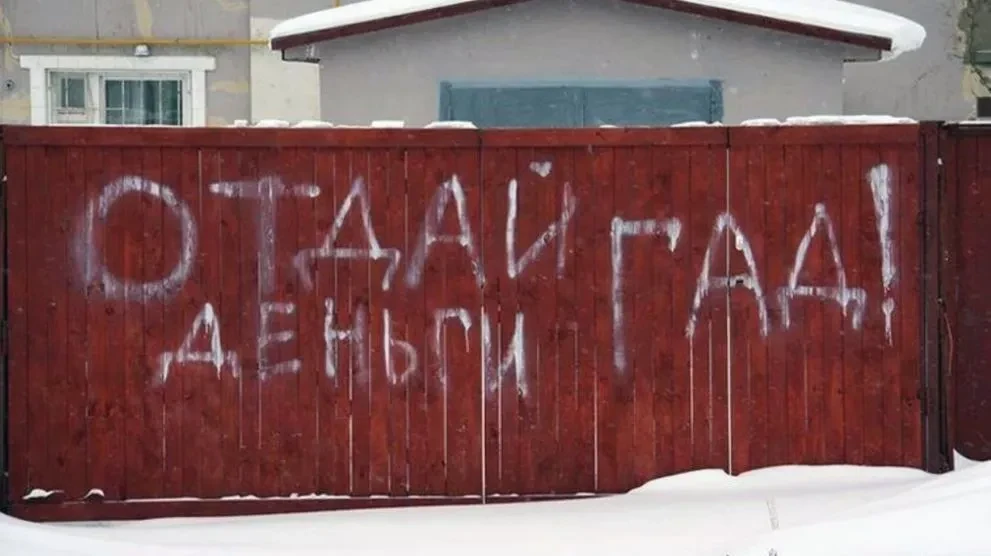
The initiative of the Ministry of Economic Council that banks need to sell the debts of borrowers to himself (and not collectors) with a discount was sharply criticized by both the market and human rights activists, and as a result, nothing is heard about it from the beginning of autumn. The law on collection activities is well written, but “absolutely Pharisee” and far from reality, experts say unanimously.
The law on the bankruptcy of individuals was called to change the situation: from October 2015 to May 2019, according to the website of the company “Dolgs.net”, a little more than 130 thousand people took advantage of this right. However, physical bankruptcy makes sense only if the amount of the debt is at least half a million rubles, in other cases it is simply unprofitable for the person himself. “This is recognized by the government. The head of the Ministry of Economic Council Maxim Oreshkin already three years ago, it was precisely promised simple bankruptcy for small borrowers, ”says the expert under the financial authorized person. “He thinks that you can come up with a slight cheap bankruptcy method through the court, although the financial ombudsmen bankrupt in the entire civilized world without any court and in fifteen minutes.”
Russia has its own special way: small debtors who are not ready to bankrupt and not even knowing about such a procedure remain with their creditors one on one. And faced with severe forms of pressure on the psyche, those who first took loans, then in a fit of despair they can take up arms. And then it can be equally bad to everyone - both their own and strangers.
Selection
Burn children, rape borrowers, do not take prisoners
The war of collectors and debtors does not spare anyone
In Perm, collectors beat a taxi driver who took a thousand rubles in a microfinance organization and did not give it away. The collectors beaten up for a man who stood up for a man to death. Both attackers were sentenced to 10 and 13 years in a maximum security colony.
In the Rostov region, the collector, due to the debt of the borrower, threatened to blow up the kindergarten in which his wife worked. Almost 200 people were evacuated from the building (including 151 children). The collector received 10 months of a colony-settlement and 25 thousand rubles of a fine.
In Ulyanovsk, the collectors demanded from the borrower Ismail Huseynov to pay 48 thousand rubles in addition after he, having occupied four thousand, gave 25 thousand as a payment of debt. After the refusal to pay, the collectors threw Huseynov’s house with bottles of incendiary mixture, as a result of which his two -year grandson received serious burns. The collector-ex-police Dmitry Ermilov-received eight years in prison.
In the city of Iskitim, the Novosibirsk Region, an attack on the borrower’s house was made, the debt of which, after taking five thousand rubles on credit, increased to 240 thousand rubles. The victim said that the collectors raped her, but later it turned out that it was a staging: the attacks were organized by familiar families, deciding to hurry them in this way with the sale of the house.
In Krasnoyarsk, several dozen people attacked the office of the collectors and beat them because they did not want to give a car of one of the borrowers.
In Kabardino-Balkaria, a collector, in order to force a bank debtor to return the money, created several accounts in social networks on behalf of his 18-year-old daughter, through which he offered her intimate services.
In Dagestan Kaspiysk, a 45-year-old borrower shot a 36-year-old collector in his house when he came to demand the payment of debt.
In Perm, the collector mistakenly beat the opera singer Victoria Lebedev, confusing her with a borrower named Svetlana. He demanded that her present a passport, said that he would come every day, and after Lebedeva began to shoot everything on the video, he attacked her.
In Kazan, the management company sent collectors to the 91-year-old veteran Yuri Velichko, since he did not pay utility bills for 10 years. The collectors promised to “stick the soldering iron in the ass” Velichko if he does not pay for debts. After a major scandal in the press, the collectors had a criminal case, the director of the management company was dismissed, and the head of the aircraft manufacturing region of Kazan personally paid the entire debt for a pensioner.
In Moscow, a collector was detained, who for several weeks threatened the reprisals of schools No. 1285 due to the fact that the parent of one of the students owed money on a loan.
In Moscow, collectors set fire to the apartment of the Saigutin family, which owed 36 thousand rubles: as a result of burns and poisoning with carbon monoxide, mother and two children received. Five months later, an armed attack was committed on the head of the family: he received multiple stab wounds.
In Vologda, a 31-year-old man, being drunk, scored to death the callista where he took his house, as he took him as a collector. In September, the court condemned him to five years in prison in a general regime colony.
In Khabarovsk, a collector, in order to quickly knock out a debt of 197 thousand rubles from the borrower (for the speed of the collector, a prize was promised), made a porno Collage with the image of his young child.
In Tver, collectors due to the debt of a local resident Sergei Kaptov of 1200 rubles began to threaten to rape his wife and chop off the leg of his five-year-old son. After the police detained the collectors, other collectors began to threaten Kapturov’s mother. According to local media, the police promised to provide the family of capturov state protection.
In the Tura River near the village of Yar in the suburbs of Tyumen, the body of 23-year-old Stanislav Maksimyuk was found. A month before, he disappeared from the house, and the friends of the deceased guy said that he was regularly threatened by collectors due to a debt of 55 thousand rubles.
In Moscow, collectors began to regularly call the pensioner threats, whose daughter Elena Zotova took 10 thousand rubles of a loan for medicines. And although she returned them, the collectors continued to call and try to get into her apartment. After several psychological attacks, the pensioner could not stand it and died. Immediately after that, the message came to her daughter’s phone: “Accept our congratulations about the death of your mother.”
Sergey Gogin, Maria Efimova, Daria Kozlova, Vyacheslav Polovinko, New Gazeta