
Translated material
Tsivilev promised a ban on licenses to coal miners with a sanitary zone less than 2 km
The authorities of the Kemerovo region invited the federal government to ban the issuance of coal mining licenses if less than 2 km from the border of the site to the nearest house. Even without changes in the legislation, the authorities will not agree on such draft, promised by Governor Sergei Tsivilev.
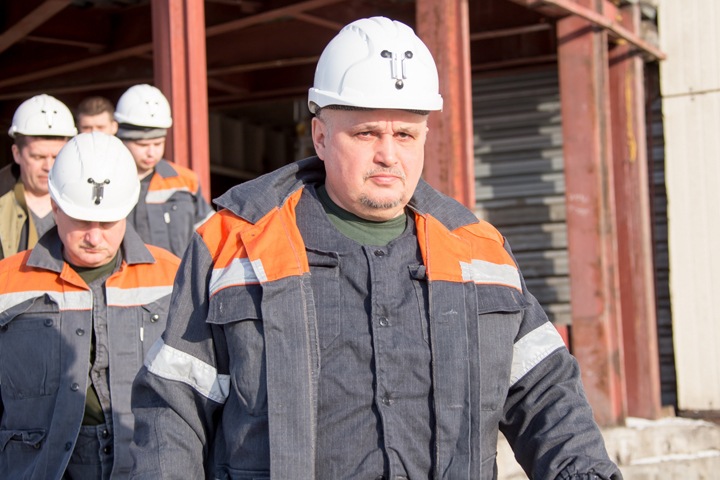
“We turned to the Government of the Russian Federation with a proposal that for those mountain licenses that will be issued for open mining work, there should be a two -kilometer zone, at least. So far, there is no decision in the government, but we are very actively working with Rosneders, ”Tsivilev told reporters on November 14.
Now the “recommended” sanitary protection zone is 1 km. But, according to Tsivivov, its execution is not necessary: “Many companies used this gap in the legislation, and officially proved [right] and reduced the sanitary protection zone to 800-700 meters, and some craftsmen up to 300 meters.”
The governor promised that the regional authorities would not “agree” to the license if the sanitary zone on it is less than 2 km.
“This is our princess approach, despite the fact that there is no such legislative norm. And the Ministry of Natural Resources [Russia] supports us in this matter, and we agree with them, ”said Tsivilev. “Therefore, there will be no less than two kilometers with a zone of new licenses.”
In addition, the regional authorities want to “bring” existing licenses to the kilometer zone.
Rural protests against coal incisions in the south of Kuzbass in 2017 grew into large rallies in Novokuznetsk. Taiga.info spoke in detail about the reasons for the dissatisfaction of the inhabitants. They demanded to suspend coal mining in an open way to complex environmental and prosecutorial inspections. One of the latest actions raised about 300 people in the village of Atamanovo, Novokuznetsk district.
In addition, residents of Kiselevsk began to protest, on the territory of which there are nine coal sections and five enrichment factories.