
Translated material
Forward, to self -setting
Referendums about self -intension, this, of course, is a step forward. They are logical in line with the new state policy, according to which the people are new oil.
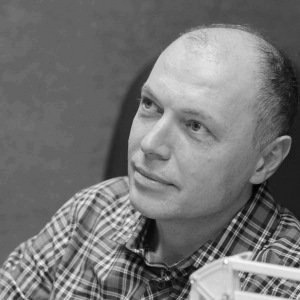
Alexey Mazur
In Tatarstan, referendums about the self -intensity of residents with additional fees were held. The head of the analytical department of Taiga.info Alexei Mazur comments on this breakthrough.
On November 17, two local referendum on the self -taxation of citizens took place in Tatarstan. Residents of the two rural settlements completely voluntarily came to the polling stations and voted to pass the state at 400 and 1000 rubles from each voter, regardless of gender, age and participation in the referendum. (One, however, was recognized as failed due to a turnout of less than 50%).
The news of this attracted the attention of the editorial office of Taiga.info, located far from Tatarstan Novosibirsk. Such referendums can become a prototype of our happy future, in which we ourselves will tax ourselves with additional taxes, not asking the question, but where are the taxes that the state has previously covered us.
Tatarstan is a very interesting region. It has a stably high turnout in the elections and a stable high vote for United Russia. On a single voting day in September 2019, Tatarstan gave 1.5 million ballots for EP of 3.3 million received in the elections of 12 regional parliaments. For comparison, in the Volgograd region “EP” received 365 thousand votes, and in the Khabarovsk Territory - only 43 thousand.
Evil languages say that both the turnout and the percentage of the “EP” in Tatarstan very much depends on whether the independent observer in the precinct commission on the voting day was. The study of the results on the weekends shows that the higher the appearance on the polling station, the higher the result for the "EP". If on weekends with a low explicit “EP” it gains 30-40%, then with a high turnout - all 70–80%.
142384
This makes you suspect that half of the votes for the "EP" in Tatarstan is drawn. Considering that this republic gives the same number of votes for United Russia as five large Russian regions, we can say that it is one of the pillars of “political stability” and the votes of the votes for “EP”.
But at the same time, both Tatarstan himself and his capital - Kazan - demonstrate the desire for innovations in management and, in many practices, other regions are far ahead of. And referendums on self -taxation are not at all the result of the electoral khanate. Since 2013, a law has been in force in the republic, according to which four budgets have been given by four for each ruble received from self -investment.
Money is collected not just like that, but for specific goals.
In principle, local self -government should be built: people gathered, decided what they are taking off, and threw themselves away. But in Russia, local self -government was formed not from below, but from above, as a continuation of the vertical of power - in Soviet times, party authorities, and now - simply power.
In form, we ourselves elect ourselves the deputies, and they establish taxes on our behalf and accept budget expenditures. In fact, we do not know anything about taxes or expenses. More precisely, we know only about those taxes that take us directly, and this is a small fraction.
Referendums about self -intension, this, of course, is a step forward. They are logical in line with the new state policy, according to which the people are new oil. But they are also very useful for changing the point of view of the Russian layman, who today believes that the state gives him something from the leap shoulder, and we can only ask or demand. The referendum on self -union forces forces to listen to the phrase of Margaret Thatcher: “There are no state money, there is only taxpayers' money.”
In the Novosibirsk region today it is impossible to imagine a referendum on self -union. The turnout of 50% without frauds looks unattainable, and the regional and local authorities are so frightened by possible protests that they will not even act with such initiatives.
But if the current trends of state policy continue, soon we can see the simplification of the decision -making procedure. For example, by simple voting of deputies. And these trends will remain.