
Translated material
The Wi-Fi operator in the Moscow metro will supply servers for the city's facial recognition system
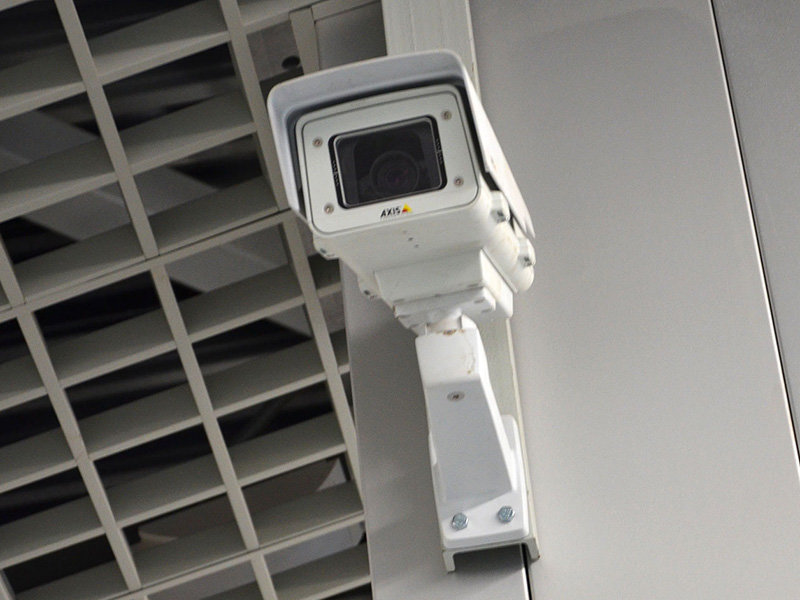
The Moscow City Hall has purchased servers for the computing resources of the facial recognition system being created in the capital based on images from video cameras. The contract for 1.15 billion rubles was won by MaximaTelecom, which is a Wi-Fi operator in the Moscow and St. Petersburg metro, writes Kommersant .
As the publication clarifies, in early November JSC Electronic Moscow announced a tender for the supply of servers, data processing devices and computers equipped with graphics accelerators from the American manufacturer Nvidia. The maximum contract price was 1.2 billion rubles. It follows from the terms of reference that the capacity of the purchased equipment will be about 9 petabytes. In addition to MaximaTelecom, the system integrator Tegrus (part of the Merlion group) and the developer of data storage systems NPO Baum took part in the competition. These companies offered to fulfill the contract for 1.17 and 1.16 billion rubles, respectively.
“Participation in a major project for the digitalization of urban space is a logical step in the development of our business,” said MaximaTelecom CEO Boris Volpe. In turn, the general director of the TMT Consulting agency, Konstantin Ankilov, noted that entering the promising video surveillance market will give the company the opportunity to find new sources of income and diversify its business.
Let us recall that Moscow Mayor Sergei Sobyanin promised back in May to hold a large-scale competition to install up to 200 thousand cameras with facial recognition in Moscow. This technology has been tested in the capital since 2017, and the experiment with 1.5 thousand cameras was considered successful: the Ministry of Internal Affairs managed to detain 200 criminals with their help. In September, the Moscow Department of Information Technology (DIT) signed a contract with Sitronics to organize video surveillance with facial recognition at mass rallies.
In the capital's budget for 2019, 7.5 billion rubles were allocated for the city video surveillance system, and another 6 billion rubles were allocated for citywide data processing centers (DPCs). The equipment purchased from MaximaTelecom will be located in such a data center, the DIT clarified.
According to Nikolai Knyazev, head of the machine learning group at Jet Infosystems, building a high-precision video surveillance system in Moscow will not be easy, despite serious investments. “Recognizing one person who is directly looking at a nearby camera is quite simple, and here the quality of all systems is far beyond 99%. However, in the crowd there are a large number of people whose faces are hidden, their eyes are closed, and long hair is blocking their faces,” Knyazev explained.