
Translated material
"" Saigon "is a place free from the hypocrisy, from Soviet hypocrisy"
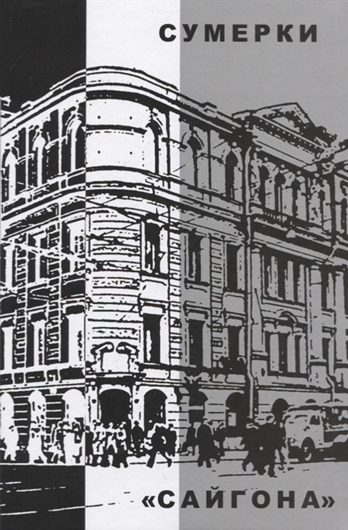
The second edition of the book “Saigon” was published in St. Petersburg, dedicated to the history of one of the cult places of the Leningrad counterculture (it first published in 2009). Evgeny Kogan spoke with her compiler Julia Valieva.
- This year, it turned ten years old, which has already become a bibliographic rarity of the book “Twilight of Saigon”. ” Let's remember how it all began. How did you come up with the idea of creating this book?
- In the spring of 2007, we sat in the diner on the Petrograd side, not far from the hearty market, drank not coffee and discussed in a close circle the book “Time and Word” about the literary studio of the Leningrad Palace of Pioneers - a studio, which (such a paradox) became the “incubator” of the poetic “second culture”. This book opened the series of the “Creative Associations of Leningrad” I conceived; The idea was to collect and publish sources for the study of literary and historical and cultural phenomena of the 50s-80s, including the memories of eyewitnesses of events, texts preserved in the memory of a generation, photographs. All books of this series have a logo invented by a musician and artist Dmitry Kakhovsky - Pushkin on an armored car.
In 2007, there was no longer a pioneer organization, the city was no longer called Leningrad, but, reflecting on the departed realities of the Soviet era, I suddenly realized that the space of St. Petersburg, which we had tea in the early eighties, leaving Nevsky Prospekt from the Palace of Pioneers and pushing each other to reckless acts, is not at all the space in which we find. Something is wrong. I thought: "Nevsky is now too bright light." And there is no "saigon"! There is no electrified atmosphere of conversations, dive, exchange of intellectual booty, courage. Our circle is too narrow, and the conversation does not happen outside a cup of coffee.
- What was the most difficult for you? How did you choose the authors?
- To make a book about Saigon seemed almost impossible: it was so powerful, complex and disordered. “Saigon”, after all, existed 25 (from 1964 to 1989)-both are different eras and visitors. And no one left a note about his visit. The place is open and closed at the same time. On the one hand - Nevsky Prospekt, a "passage court", whom he just does not bring here. On the other hand, not knowing where Saigon, you won’t get into it (I remind you, I have no official name): someone must show the path, bring, initiate. Therefore, the question was not how to “take away the authors”, but where to find “eyewitnesses”, who they are - the regulars of the cafeteria on the corner of Nevsky and Vladimir, in which worlds of Leningrad they lived, that for them Genius Loci “Saigon” ...
 © Zamizdat
- And you yourself from the generation of Saigon?
- For me, “Saigon” is the beginning of the eighties, familiar from the Literary Club “Daring”, Lito Victor Sosnora; Poetry of Latin America, Buddhist treatises, absurdity literature, Antonioni films in the Spartak cinema, home exhibitions, hitchhiking. Starting the work on the book, I could not imagine where I entered the Saigon, how diverse was in the late sixties and in the seventies landscape of the Leningrad underground: the second culture included not only literature, but also the theater, painting, journalism and even academic science.
Despite the fact that almost twenty years have passed since the closure of the cafeteria, not everyone agreed to talk about Saigon. Most of my respondents were sure that this institution was monitored by the relevant authorities. Among the regulars were those who were engaged in Samizdat in Saigon times (both literary and political). This place was considered to be their “warlocks”, that is, books of books in the Black Market. It is also significant that art circles were adjacent to semi -criminal. But there were “Saigonauts”, who happily shared his memories, believing that “Saigon” is a place free from the hypocrisy, from Soviet hypocrisy, that it was here that they gained themselves. Especially for this book, fifty authors wrote memoirs. No less interviewed it.
Now the circumstances accompanying conversations themselves have already become a sign of time. Our meetings took place not only in a home environment. Many figures of the Leningrad "Second Culture" then continued to work "stoopers", operators of gas boiler houses, serving a variety of establishments - from theaters to city baths. So, in the brutal atmosphere of the boiler room of the round baths, two of our conversations took place with the poet Alexander Mironov. I recall a leisurely walk along the Broadway (Nevsky Prospekt) with the Saygoner from the poor fraternity, accompanied by the state Volga creeping nearby; The story of my interlocutor about the criminal world and the circle of mystics was interrupted now and then by children of different ages, who, trying to say bass, were interested in: “Where is the Slavic cabinet for sale?”, “Where can I buy a wig?”
- In terms of? Was he an agent under cover?
- No. I think the police became interested in the subject of our long conversation. Maybe they decided that one of the foreigners collects material about the life of the poor. But it is possible that it was a purely Saigon game: after all, before the “work” on the porch my interlocutor was a filmmaker.
- Are there people whom you could not get for the book? And why do you think they refused?
- Yes, several people refused, because they either at all bypassed this place, or did not consider the Saigon experience for themselves valuable. Someone, as I said, was afraid to talk about Saigon ... I note that several memories were not included in the book: for example, one “regulars” who pretended himself for a friend of the poets, but in fact, as it was known, carried out “observation”.
After the book was released, the Saigoners who were engaged in the farts called me and asked me to write a book about them, but I did not know this circle well and did not undertake such a topic.
- Why did you decide to reprint this book?
- At the numerous requests of readers who did not get the book. Yes, we ourselves have long been anywhere to get it anywhere. In addition, young researchers appeared, passionate about the theme of the Leningrad art underground, and the book will help them in their research. Retribution - the memory of the authors and heroes of this book and the health of all the inhabitants of the country of Saigonia over the years.
- What kind of publisher is the “Twilight of Saigon” ”?
- The reprint was released under the bookstone Zamizdat , which we created with Dmitry Kakhovsky in 2009 to publish this book.
- And most importantly: is the new book different from published ten years ago?
- The second edition of Stereotypic: all 792 pages of text and interesting photos are waiting for the reader. The bibliophiles will also find some differences (albeit minor): an attribution of a number of photographs is clarified, separate corrections have been made, a table of contents, bibliography has been renewed .