
Translated material
Les Mascarones
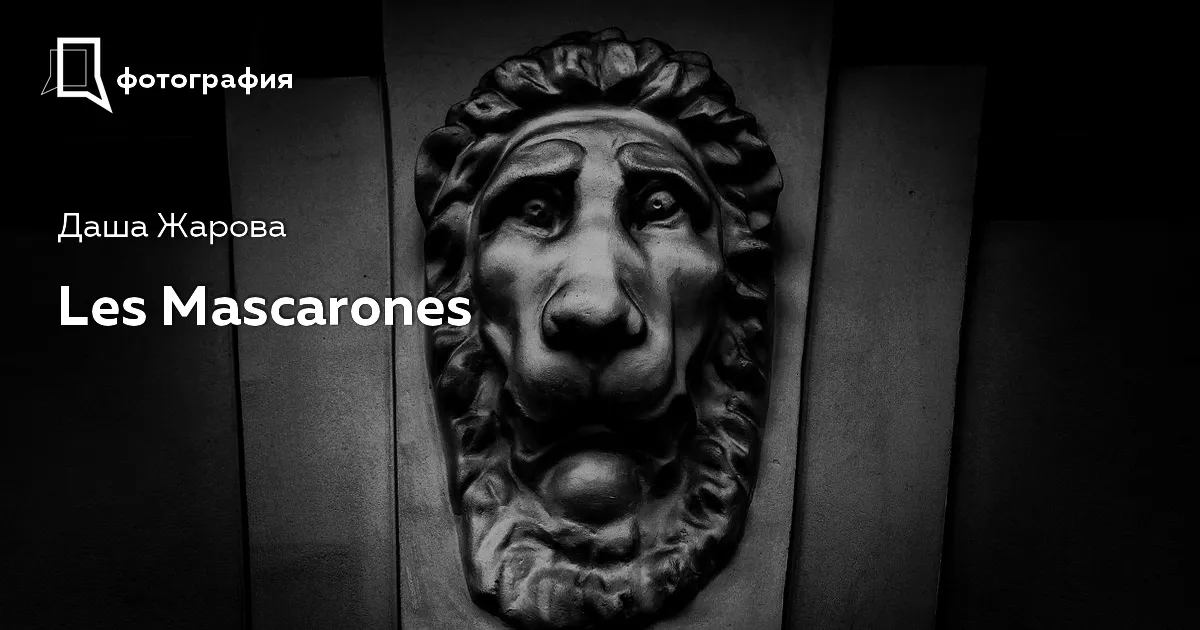
Do you pay attention to the details of the buildings that you pass by? "Les Mascarones" - project Jeweler Inga Makaron and photographer Dasha Zharova, dedicated to masquearons - jewelry on the facades of buildings in the form of a person or animal head. Inspired by these masks, Inga creates jewelry, and Dasha-black and white pictures that allow you to consider all the details of the stucco moldings close. The authors of the project strive to show a fragile heritage, which, due to the city fuss, often remains unnoticed. In Russia, stucco jewelry appeared in the XVIII century along with Baroque fashion. Initially, they were decorated only by church structures, but from the second half of the century, stucco molding appeared on secular buildings.
Mascarons gained particular popularity in the era of modernity: at the end of the XIX - early XX centuries, they began to actively build profitable houses, and their owners decorated the facades to attract potential residents. Among the Mascarons there are lions, satires, ancient gods and heroes, angels and endless variations of female and male faces. Today in Moscow many masquerones have been preserved, but they are destroyed, so the authors consider it important to capture them at least in photographs.
This picture shows a lion mask - one of the most popular decor motifs for almost two centuries - the XVIII and XIX centuries. The image of the king of animals is an eternal symbol of power and strength. This masqueron is placed in a number of identical stylized lions with a well -staged mane reminiscent of court wigs of the XVIII century. Reliefs adorn the facades of all buildings of the house of A.K. Razumovsky (English club). Like many classic buildings in Moscow, the ensemble was built for several decades. Extensions were built, buildings were restored after the fire of 1812, some elements, on the contrary, were cleaned. Today in this building is the "State Central Museum of Modern History of Russia".