
Translated material
"Continuing the case of the ancestors." The artist from Karelia turned Kalevala into a comic book
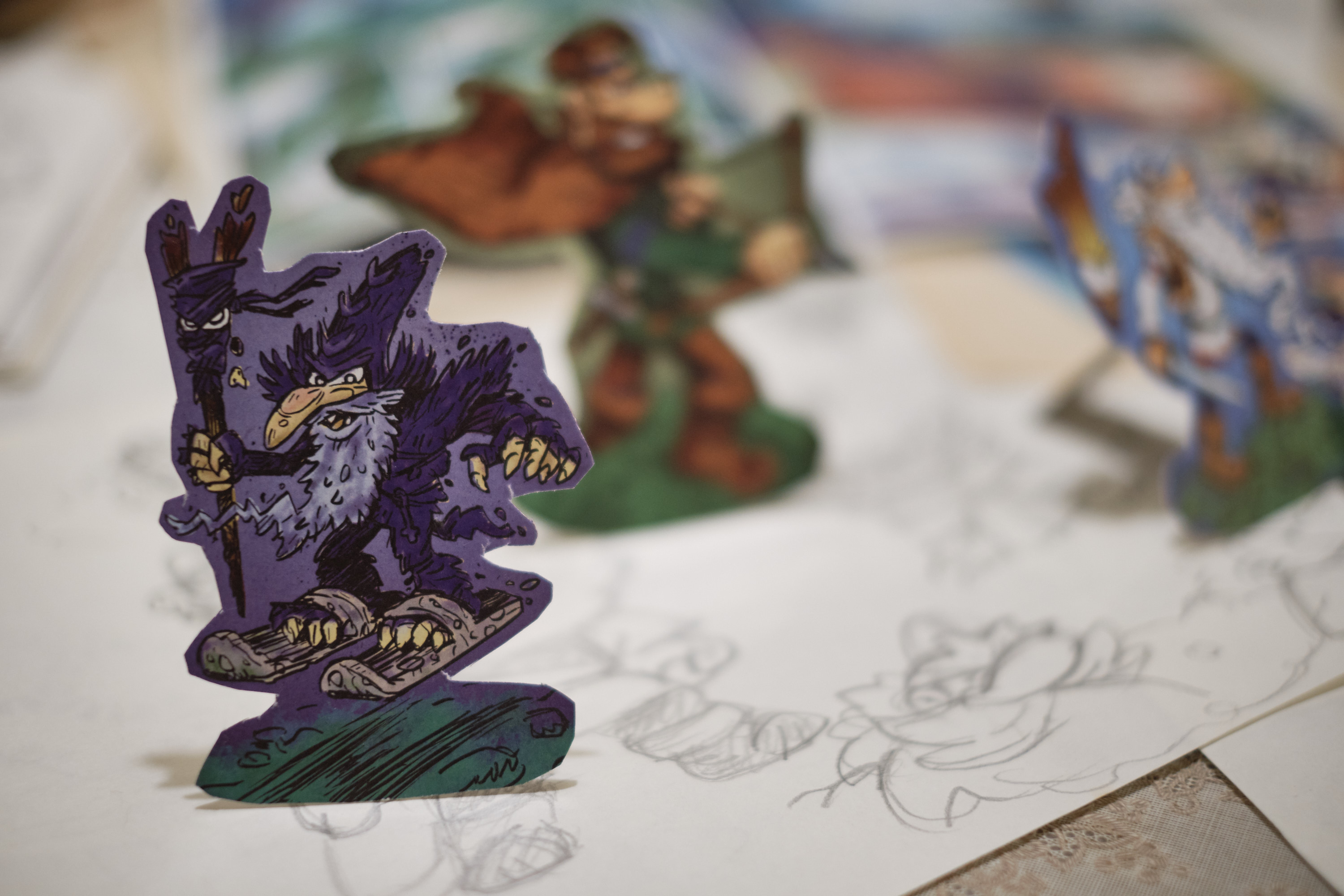
Roman Kirillov is a graphist from Petrozavodsk. A few years ago, he decided to create a comic book, the main characters of which will be the animated northern heroes from the Karelian epic "Kalevala". The heroes of the comic book "Elias and the heroes of the glorious Kalevala", according to the artist, should compete with popular superheroes from America.
History "with the same guys"
An alternative to the famous Superman, Batman and Captain America was invented by Karelian artist Roman Kirillov. In his opinion, the promoted overseas characters unfairly "pushed" the colorful local heroes of the Karelian-Finnish epic "Kalevala" Vyainemuinen, Ilmarinen and Lemminkyinen. Kirillov is not against the stars of Western comics scattered by multimillion -dollar circulations. He simply decided to remind the fans of the genre, which heroes began to first perform the affairs of epic power.
“Knowledge of our folk heroes is a little erased, but in fact they were the first,” says Roman Kirillov , explaining why he turned the complex material of Kalevala into a comic book.

The epic "Kalevala" consists of 50 runes ( songs, chapters. - SR ), for the first time it was published in 1835. It was composed by the Finnish linguist Elias Lennrot: he collected folk epic songs, processed the material received and tied it into a single plot, telling about the events in the country of Kaleval, populated by folk heroes.
The heroes of the northern epic - Vyainemuinen, Ilmarinen and Lemminkyainen - eventually became the main characters of the comic book created by Kirillov, who wanted to come up with his story "with the same guys." At the same time, he abandoned the literal shift of the text of the epic to the comic book language, wrote his plot and painted illustrations to him. The author’s copyrights was the new hero of Kalevala: he included among the characters of the comic book the direct compiler of the historical epic, folklorist Elias Lenrota. In the comic book, he is a child who goes in search of adventure along with epic heroes.
- When I came up with that these bearded men would travel along the epos, I remembered that there is a practice when a child is introduced into history so that the story was closer. At first we thought, thought: well, some boy, what a boy. And then it became clear who this boy should be ... - explains Roman.
Kirillov decided to experiment, and as a result, the comic found the author’s identity. The artist sees himself as a new runop, who is now obliged to continue the case of his ancestors.
- In Kalevale, I read the message to the mannopians of the future: "Guys, continue to sing and praise!" So you can sing and praise, it turns out! - says Roman.
According to Kirillov, the heroes of the epic "Kalevala" lived among the people long before Elias Lennrot gathered stories about them and united in one work. Therefore, nothing prevents them from entering the people again in the modern genre of the comic book.
Ancient superheroes
In the first issue of the comic book, the villain Youokahainen abducts the hammer at the blacksmith Ilmarinen, after which he breaks the Sampo mill - the Kalevalsky symbol of happiness. Behind the lost fragments of the mill, the company of ancient superheroes sets off, accompanied by young Lennrot.
After the first issue of Elias and the Heroes of the Glorious Kalevala, Kirillov is preparing to publish a series. According to him, in order to reveal the entire universe of the new comic book, it will take about 16 or 17 numbers. In each of them, the Kalevalians will get acquainted with the heroes of epics of other peoples.
“They will go from“ Kalevala ”to other epics to return the fragments of sampo, which they defeated,” says Kirillov. - I am now at a crossroads between Kazakhstan and Kyrgyzstan. With Kyrgyzstan - because I have a father from there. When I was small, I went there for the summer ... Here I heard about "Kalevale", there - about "Manas" ( the Kyrgyz epos. - SR ). We have a very peaceful epic, we have no wars. And there - of course, war. The Chinese came there, the Kyrgyz were kicked out of their territory. Then the hero Manas appeared and drove off the Chinese. So I think how to do it all. "
“The essence is most likely in the unification of the peoples,” the author explains the idea of his work. In confirmation of these words, at the very beginning of the first release of the Karelian comic book, the author placed the following lines: "The mutual study of national epics will bring the indigenous peoples of neighboring republics into one country. It will reunite people, having made a friendship between us, and will remind of the unbearable, goodwill of the same population in a huge and diverse world. The reconciliation of each one will overwhelm the score of millions."
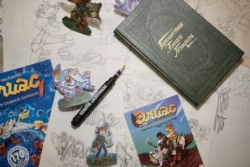
Kirillov published his comic book with friends and folk donations. Work on the release coincided with financial problems in the affairs of the artist himself: he lost his job, but did not leave the idea to publish his work.
“The year passed, as I lost my job. In general, I ended up in a complete pit. I have been sitting almost in it for now and now. There was nothing to do, and now I was densely engaged in a comic book. From this work I haven’t come out already, everything is,” he says.
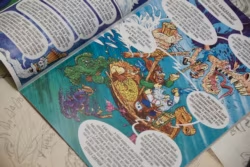
Comic - the beginning of acquaintance with the epic
The novel hopes that the comic will be interesting to children, therefore, he turned on the game: in each new release, readers will “get” a fragment of a broken mill of sampo. As a result, along with the release of the final number, all the fragments collected will be made up with the reader and turn into a playground for a board game.
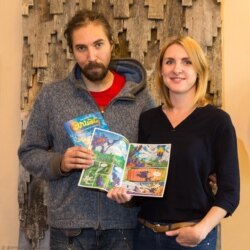
Tatyana Berdasheva, a specialist in the study of Karel-Finnish poetic epic, the head of the exhibition of the Kizhi Museum-Reserve, believes that the comic book based on Kalevala can be the beginning of acquaintance with the full text of the legendary epic, which is usually difficult to unprepared reader.
- It’s hard to read Kalevala. This requires motivation, initial knowledge, fascinating presentation. In my opinion, comics based on Kalevalas will be able to arouse interest in the topic from the younger generation. This is the path that can in the future lead to reading and understanding the epic poem of Elias Lennrot, ”Berdashev hopes.
According to her, the books of comics based on Kalevalas were published before, and they were popular in the world. In 1998, in Finland, Kalevala’s comics book were published, which completely reflected the plot of the epic, illustrating all 50 runes. To date, the epic in the graphic performance of Christian Guitula is considered the best -selling Finnish comic. The comic book is available in Russian and English, but it is not designed for children, since it is a shift in the "adult" plot of the northern epic.
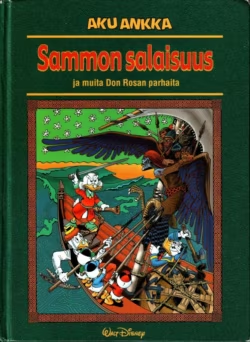
In 1999, based on Elias Lennrot’s epic poem, Denmark was published in Denmark about Uncle Scruju The Quest for Kalevala, painted and written by Don Ros. According to the plot, Scrooge and his nephews go to Finland in search of a sampo mill - a symbol of abundance and wealth. The first American publication of history took place in 2004. The source of inspiration for this comic was the Finnish children's book called Koirien Kalevala ("Dog Kalevala"), created by the Finnish writer and artist Mauri Kunnas. He, in turn, was starting from the original work. In total, the comic was published in 16 countries, but not in Russia.
According to Berdasheva, comics and a graphic novel was also released in Karelia, the basis of which was a storyline with a character from Kalevala Kullervo. Moreover, it is believed that the tragic story of Slave Cullervo, told in an epic poem, inspired the world famous writer and linguist John Tolkien. According to available information, the plot from Kalevala influenced the creation of the author of the Rings of the Rings trilogy.