
Translated material
Or you, Elijah
After a quarrel with the Russian Orthodox Church, unprecedented scandals occurred in the Georgian Church. It came to the accusations of the 86-year-old Patriarch of "Sodies"
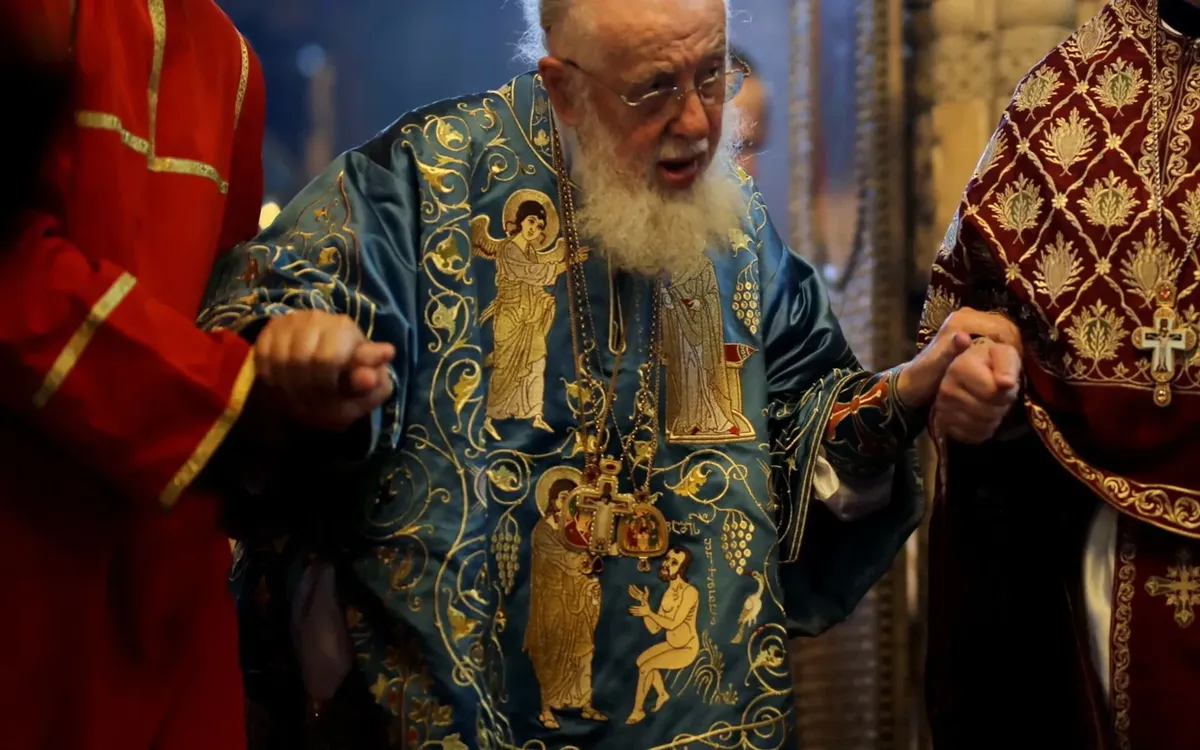
The next (73rd) birthday was solemnly celebrated in Moscow on November 20 Patriarch Kirill. Not all the principles of the local Orthodox churches of the world sent him congratulations this time. With several (Constantinople, it is also the Ecumenical, Alexandria and Elladskaya (Greek)) Russian Orthodox Church tore canonical communication, with several more it can break in the very near future. Among the candidates for the gap - and the Georgian Church, who until recently, was considered the closest ally of the Russian Orthodox Church, its closest neighbor.
Dissatisfaction instead of congratulations
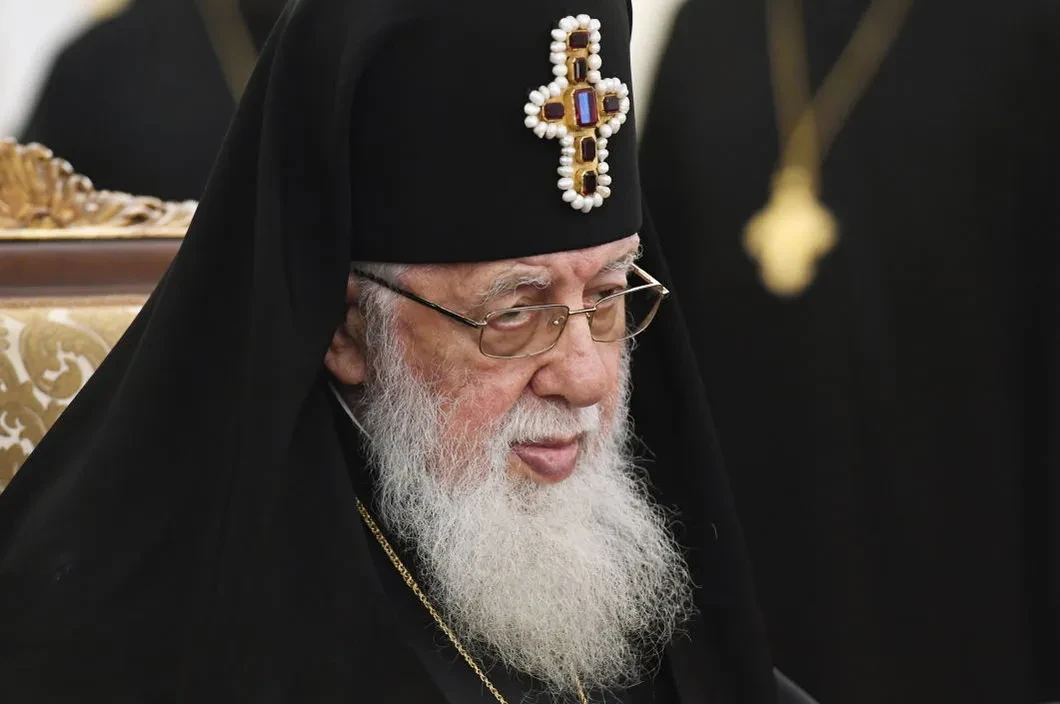
Instead of congratulations, the Catholicos-Patriarch of All Georgia Elijah II sent an angry protest to Moscow in connection with an attempt to invade the Russian Orthodox Church to the “canonical territory” of the Georgian church.
“You want to send graduates of theological schools to help army commanders to Russian military units, located in Abkhazia, the Tskhinvalsky region,” writes Elijah II Kirill. “The Russian Church has always recognized and recognizes the jurisdiction of the Georgian Church both in Abkhazia and in the Tskhinvalsky region, so we do not understand such statements, and they put us all in a difficult situation.”
We are talking about a letter sent in the first half of November at the dioceses of the Russian Orthodox Church by the chairman of its study committee about. Maxim Kozlov. In the best Soviet traditions, he proposes to agitate graduates to serve after the ordination of a year or two in “hot spots”, so that later it is guaranteed to get a place in Moscow or St. Petersburg. “Such a situation causes fair great discontent and protest in our society,” the II sums up Elijah, only 5 months ago, who persuaded the Georgian opposition, not to smash the Russian embassy after the provocative actions in Tbilisi State Duma, communist Sergei Gavrilov.
"CONSPIRACY"
The loud echo of those events is again heard on Tbilisi streets. The opposition action is gaining momentum from the country's parliament, dissatisfied with the fact that the ruling party “Georgian Dream” did not fulfill its promise given by the protesting in June on November 14 - to switch to a proportional system of elections to parliament. On Rustaveli Avenue, a tent town is deployed, tires and materials for the construction of barricades are demolished to the walls of the parliament. The main object of folk anger was the main Georgian oligarch - Bidzina Ivanishvili, who, like the Ukrainian colleague Igor Kolomoisky, is suspected of “working in the Kremlin” in the interests of his own business.
Read in detail
"They will even have to go to the toilet with special forces." The Georgian opposition adopted the tactics of peaceful exhausting of the nerves of power
However, in the "architecture" of Georgian protest there is a significant difference from Ukraine. And it consists in the special role of the Church, or rather, in the use of the factor of the struggle for the patriarchal throne by the warring political forces.
Elijah II has been heading the autocephalous Georgian church since 1977, he is already 86 years old. In Brezhnev times, it was impossible to lead the church in the USSR without the sanction of the KGB. And the KGB did not like to appoint people to such posts on whom he did not have compromising evidence.
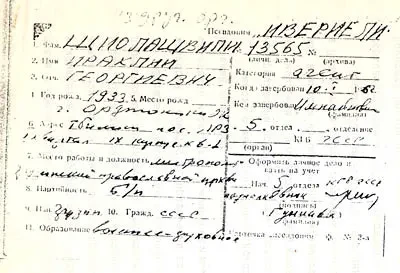
Even under Shevardnadze in Georgia, II II accounts were published, from which it followed that he is an agent under the pseudonym “Iverel”.
However, against the backdrop of a low rating of state institutions and political parties, the elder-patriarch remains for most Georgians the main national-spiritual symbol and enjoys rather great trust.
On October 26, “The Battle of Patriarchate” passed into the open phase, when the influential Metropolitan of Bodbi Jacob (Jacobashvili) gave a sensational interview to the Pirveli television channel. He said that a couple of years ago he participated in a secret meeting in the office of the former Prime Minister George Kvikashvili (whether the prime minister himself was present is unknown). Other participants in the meeting were the current Prime Minister Georgy Gakharia and the Minister of Internal Affairs Vakhtang Gomelauri. It allegedly discussed the draft displacement of Elijah II. And the meeting itself was arranged close to Ivanishvili by the entrepreneur Vano Chkhartishvili. Two days after the interview, Jacob was dismissed from the post of head of the financial commission of the Georgian Patriarchate.
According to the hierarch, the church participated in the "conspiracy"
Metropolitan Chkondid Peter (Tsaava) and Archpriest George Mamaladze, who is now sitting in prison and cannot answer for himself. In 2017, he was convicted of the “Case of Cyanide”, the reason for which was the detention of Archpriest at the Tbilisi airport with cyanide in baggage. He flew to Berlin, where at that time the treatment of Elijah II was undergoing
And, according to the initial version of the investigation, he was going to poison the patriarch himself.
Later, the prosecutions were softened, condemning the Archpriest for the intention to poison the permanent secretary of Elijah II Shoren Tetruashvili. The convict himself and his lawyers claimed that Cyanide Fr. George was thrown away, and now the Synod of the Georgian Patriarchate is petitioning for his pardon.
"Respondation"
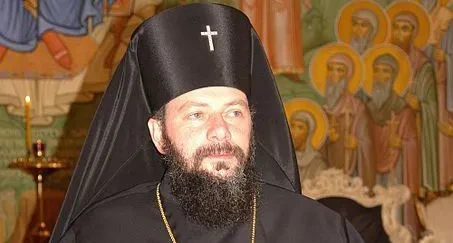
Mamaladze cannot answer Jacob, but another “accused” answered him - Metropolitan Peter (Tsaava), and very impressive, with a fight at an extraordinary meeting of the Synod in Tbilisi on October 31. It is noteworthy that, unlike his opponent, Peter has a reputation as a pro -Western and Pronfestinopol hierarch. At the meeting, he stated that in the synod there is an influential “blue lobby”, covered by Eliya II, whom Peter also called the “Solder”. Moreover, according to other participants in the meeting,
He tried to attach to the elder, so other bishops had to restrain the temperamental metropolitan and force him to take him out of the synod.
Immediately, Peter was freed from the Diocese and exiled to repent to the monastery.
There he was found by the Mtavari television company, which the unclenched hierarch spoke a lot of "compromising". According to Peter, Elijah II - not only the “Solder”, but also the connoisseur of pornographic products, which the convicted Archpriest Mamaladze supposedly supplied him. The metropolitan expressed political accusations - that "Elijah the second unconditionally submits to the Russian Patriarch Kirill," together with whom he is part of the students of the late Metropolitan Nicodemus (Rotova), and collaborates with the "democratic movement - united Georgia" Nino Burjanadze. Metropolitan Peter rejected the suspicions that he himself was working for Bidzina Ivanishvili and was trying to drown out the statements of Metropolitan Jacob with his loud revelations.
This scandal instantly flowed into big politics. The leader of the opposition faction of the National Movement in parliament Roman Gotsiridze demanded that the authorities investigate the charges of a conspiracy against the patriarch. And when the authorities refused to create an investigative commission, he concluded:
“This is a direct confirmation that [the ruling party]“ Georgian Dream ”prepared an unprecedented coup to overthrow the patriarch.”
On the second attempt, in mid -November, the Georgian parliament nevertheless began the formation of a special investigative commission on this case.
In turn, the Georgian Ombudsman Nino Lomjaria called for an investigation into the investigation of the sexual crimes of Georgian hierarchs, which, according to her, "could be committed against minors." She called on injured citizens without fear of applying to law enforcement agencies with appropriate complaints.
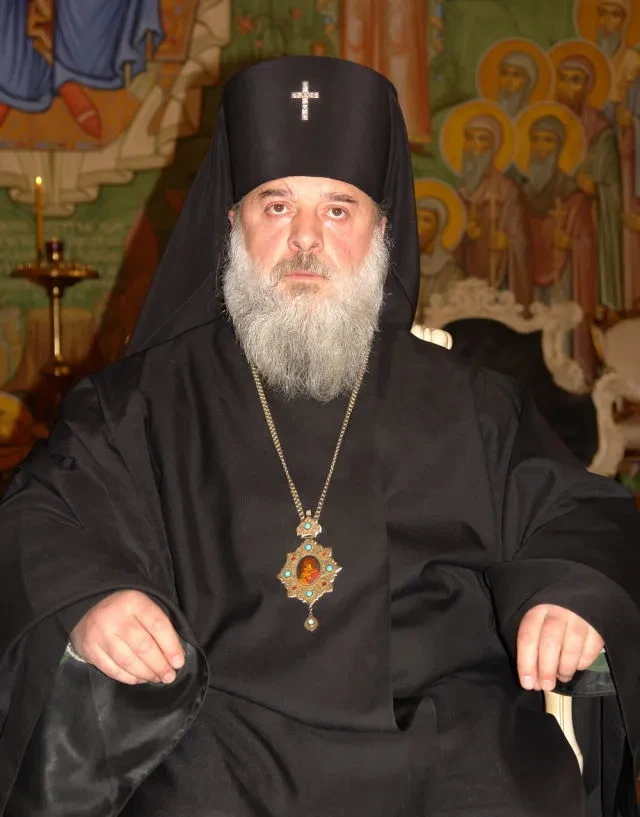
This call and previous events raised the media wave. Priest Georgy Skhiladze accused of harassment to the seminarians of Metropolitan of Tsilkan Zosimu (Shioshvili), who, in the past, since the Soviet era, was the rector of the Mtskhat Theological Seminary and a close associate of Elijah II. O. George allegedly appealed to the church court, where he was ready to present witnesses, but Elijah II blocked the trial.
Against the backdrop of a growing scandal, on the morning of November 7, in a Tbilisi apartment, Bishop Jason (Tsamalaidze), the son of the Bishop of Christopher, was hanged by Bishop Jason (Tsamalaidze), a hanged man. Like Peter, Bishop of Christopher also denounced other hierarchs “in soudy”, for which he was excommunicated back in 1995. The fact is that Christopher is a key link in the chain of evidence from the prosecution against Metropolitan Zosima, as it has written testimony of the victim seminarist.
In connection with the mysterious death of the bishop, the case was opened under the article “Bringing to suicide”, and Christopher is still silent.
What does Ukraine have to do with it?
The ordinary clergy of Georgia in a large part sympathizes with Metropolitan Peter. The hegumen of the Chkondid Monastery Andrei in an interview with the Mtarava television channel said that the cult of the personality of the Patriarch is very poorly affected, whose criticism is harshly suppressed, including state authorities. And the human rights “Movement for equality” categorically opposed the use of the topic of homosexuality in the political struggle, including the church: “Let's not forget that we live in a secular state where homosexuality is not a crime, not to mention sin.”
But there really are a lot of politicians in this matter.
The fact is that right now the Georgian Church decides on the recognition of autocephaly of the Orthodox Church of Ukraine (PCU). The irreconcilable position of Moscow, insisting that the Ukrainian Church should be part of the Moscow Patriarchate, and does not recognize autocephaly, provided by PC, Constantinople on January 6 of this year, has already split the “world Orthodoxy”. The Georgian Church has in some ways similar to the Ukrainian experience of forcible subordination of the Russian Church after the entry of Georgia into the empire and Moscow non-recognition of autocephaly restored in 1917. The aspirations of the Ukrainian Orthodox people are understandable in Georgia, and the fresh wounds of wars with the post -imperial neighbor, which led to the rejection of significant territories from states, and completely makes Georgia and Ukraine geopolitical twins. At the same time, the old generation of the Georgian episcopate and the clergy, who studied back in Soviet spiritual schools, “thinks in Russian” and tries to pull time without supporting the all-law trend for the recognition of PEC.
As for the “moral accusations”, here the Georgian Church is not very different from its sisters in “world Orthodoxy”. But we must pay tribute to her hierarchs who are ready to honestly set these problems and look for their solutions in alliance with civil society.