
Translated material
Mom, grandmother and I am a burnt family
According to sociological surveys , most Russians regularly delay at work, many work on vacation, and not everyone is waiting for additional rewards for this. Modern labor ethics, in principle, encourages work on wear, but in Russia this culture is superimposed on a long survival history in any circumstances. Often, people do not even notice how they get to complete burnout, because in their families it has never been customary to complain and rest. At the request of Samizdat, Irina Shcherbakova studied the story of one family, in which the Russian traditions of workaholism were passed down from generation to generation, until a person appeared who dared to simply take and lie down.
Mom pounds the door. OR stands on the entire landing. Katya gets up from the sofa, almost folds in half in pain and drags to open. A hail of accusations falls on it, in which only fragments of phrases can be distinguished: “Why are you not washing”, “What are you doing with you” - and, finally, the usual and familiar “parasite”. She hears this for the past ten years, if not more. When mom is not nearby, the voice in Katya’s head monotonously taps this word: “A parasite. Parasite. Parasite ". The voice is also vaguely like mom.
Mom screams and screams, but Katya does not answer anything - there is no strength. Recently, there are only enough of them for sorties in the refrigerator, toilet and sessions of hatred for themselves. Katya is nineteen, and she feels ninety. The body, as if deciding to finish Katya, fails over and over again: an otitis media replaces angina, although Katya does not even leave the house. Later, a terrible carving in the abdomen will be added. After each meeting with her mother, it becomes worse, and Katya calls an ambulance again, and doctors stubbornly find nothing and advise eating soup in time.
Six months later, Katya will be on the operating table with an advanced appendicitis, which he will find out at the last moment. The appendix will burst right in the hand of the surgeon, it was worth only cutting off. After the operation, Katya will wake up with one thought itching in her head: she no longer wants to live like that. A year later, for the first time he will go to the office to the psychiatrist. She will speak for a long time and confused, and the psychiatrist will silently listen to her and say that she may have wanted to hear her whole life: “This is not laziness, you are not a parasite and not the only one. It just happens. "

Fighting, exhaustion, asthenia, a nervous breakdown - all this is also “not laziness”, but none of these words describes the entire problem. It is not known how many Russians have recently burned out at work or study - they prefer not to talk about such things in open. However, according to VTsIOM studies , four out of five Russians will not abandon work, even if it ceases to be their only means to exist. Rosstat reports that on average, every citizen is working on 1737 hours a year, and this figure is constantly growing. The Public Opinion Foundation reports that 41 percent of Russians over the past few years delayed in the office overtime or went to work on the weekend. At the same time, 66 percent are satisfied with the level of workload, and only 27 percent complain of too much work. About 90 % of Russians are ready to work overtime, and 80 % - to take on functions not prescribed in the employment contract. The World Health Organization in 2019 introduced emotional burnout syndrome in the international classification of diseases.
Trudogolism is passed down from generation to generation: parents whose youth came to perestroika, grandparents, vaguely remembering who the post -war years, a criminal punishment for parasitism. “Work until you fall”-with this idea in Russia they are born, grow up, go to receive the or higher education that they wanted, score freelancies all their free time, sit in the office honest eight to nine hours, even if they do not need it, live not their lives and, finally, come to a therapist, complaining of impotence. Katya is one of those to whom this idea has almost destroyed life.
Syndrome of emotional burnout is the result of chronic stress at work that was not successfully overcome. In 2019, the World Health Organization included burnout in the international classification of diseases.
About 90 % of Russians are ready to work overtimeKatya is emotional, but in moderation. Flirty, but also in moderation. It seems to be a lot, but again, to the best, to the extent in which “a lot” is perceived as pleasant liveliness. At a meeting in the Zelenograd pizzeria, dropping a bag and a package of whipped food on the sofa, she vigorously orders tea and continues to speak, almost without pauses. Now Katya is twenty-seven, she is at the academy, brings up a three-year-old daughter and lives with her husband in a rather happy marriage. Holds cats, makes repairs in the apartment. She has a neat light square, ruddy cheeks, pearl gray, almost a white jacket, a striped dress made of soft knitwear. And yet, it is Katya who tells how between laughter he suddenly pronounces the words “mental trauma” everybody, it is felt: stability was given to her with great difficulty. In the words “it is amazing how you survived all this” she shakes her head negatively. “My psyche,” says Katya, “then did not survive: she was adjusted to circumstances. She experienced this recently - and then I think that I am still in the process. I can’t say that what was with me no longer leaves traces of my life. I think this will never happen. ”
Her story sooner or later, but always returns to the figure of her mother. Until five years, Katya does not remember himself, because it was "normal." “And then,” she says, “Bam!” - and began to remember. Because everything began to crumble. " To tell about herself, she begins to reconstruct someone else's story - her mother. The daughter of the teacher and chairman of the collective farm of the Adyghe village, in the seventies, she went to Moscow to enter the physical faculty of Moscow State University. It was difficult to live on one scholarship during the Brezhnevsky stagnation, but Katya saved her mother could be sent to relatives once a month: after all, they must somehow help them, how they are without her. After the institute, the mother, together with her husband, also a graduate of the physical faculty, got a job at a large research institute, where she studied microelectronics. It seems that it became easier, calmer: the house is his own, and not the room in the university dormitory, there were enough salaries, the husband was constantly sent on foreign business trips, from where he brought gifts to the family. But all this time, one thought did not leave her mother: you have to work, "otherwise suddenly." After the Research Institute, she ran to do household chores: in the garden, then cook and clean. And she scolded my homes for the rest: why is it needed, if at this time you can make so many useful things, and not necessarily the easiest way. For example, wash all your linen with your hands with a completely working washing machine. Sometimes it seemed as if mom still lives in the village, where civilization has not yet reached, or is preparing in advance by the end of the world, where, on the contrary, the civilization has already ended.
The second shift is the so -called unpaid work, to which a woman devotes time after the main job. These are mainly household duties, care for children and elderly relatives.
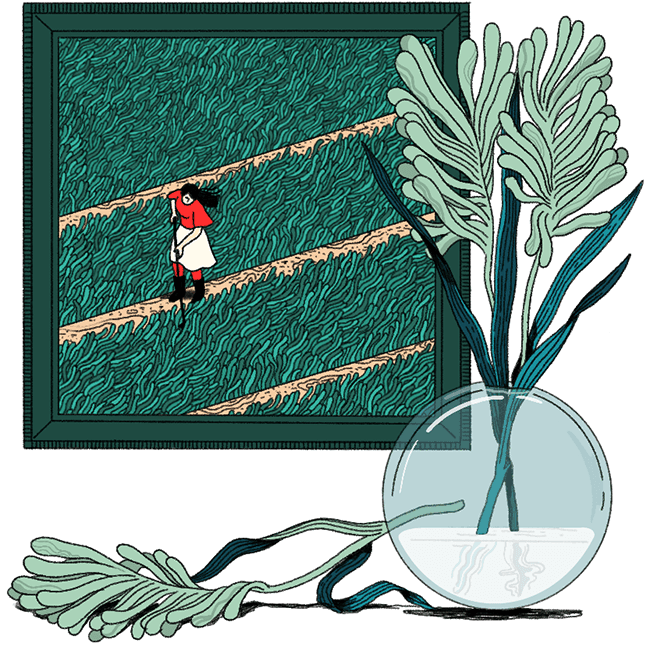
When perestroika and deficiency broke out, the second happened. In addition, Katya was born: the daughter had to be fed, and there was not enough salaries in the research institute. First after work, the mother simply traded in the market. Then she left science - classmates called to do business together. So Katya's mother became a co -owner of a small enterprise in wholesale trade in ice cream meat. This work completely absorbed her life.
The business went hand in hand with bandits and constant threats; At home, in the meantime, a divorce was brewing. When Katya was five years old, she was sent to her grandmother, to the Adygea village, which her mother had once left. Grandma could not be sitting idle. Katya went out of grass, dug potatoes, rolled canned food and fed chickens. Having finished, she went to help her uncle's family - that farm had even more. At that time, Katya saw her mother exactly nine days a year: for the New Year, for her birthday and on the first of September. I was waiting for her, but short visits did not please. “She came,” Katya recalls, “and became disgusting, terrible. Not because she was bad, but because I lacked her. And at the moment when she appeared, I realized it very sharply. Once I went on a bicycle, fell on a bend and hit my head on the steps, so much that I wanted to sleep, but at that moment I only thought that I could skip my mother’s arrival. She had to appear from a minute for a minute, and I had to see her. I was not worried about my condition. It was absolutely all the same. The main thing is mom. "
Katya lived with her grandmother for another four years; During this time, parents managed to divorce, but she did not find out about this right away. The mother hid the problems with all her might - as if she could not admit not only to her daughter, but also to herself. “When I called up with my mother,” Katya explains, “she said that dad was on a business trip. I could not tell me that they divorced. Then I arrived, but there is no dad. They didn’t explain anything to me, I guessed everything myself. But she began to understand this even when she lived with her grandmother. I felt a lie well well, when I heard the words “on a business trip”, I already guessed that it was not true. But I never asked direct questions - my mother is not at all a fan of answering them, especially to difficult. ”
Takashi Murakami: how the philosophy of labor saves Ayur Sandanov how the Soviet culture of labor and modern Japanese artist are connected We must work, "And then suddenly what" In nine Katya and grandmother moved to Moscow. And then the mother suddenly suddenly became “a lot”, despite the fact that she sometimes went to work at six in the morning, and returned at two nights. The mother was firmly intended to grow the best version of herself from Katya: a music school, English, beadwork, sports section. On the weekend, Katya took Katya with her to work: help, shift the pieces of paper. This has never been discussed - Katya perceived such trips as inevitable. Once a week it was imperative to do a complete cleaning of the apartment: wash the entire bathroom, wipe dust, water flowers in tubs. For a poorly done cleaning, the mother could wake Katya in the middle of the night - she did not beat, but screamed for a long time. From time to time she said: "I will arrange you an excursion to the homeless under the bridge, you will see how they live." She seemed to mean - "And you will finish so if you do not work."
Around the same time, the mother saw the future of science in her daughter. “It turned out,” says Katya, “that she has some huge hopes on me. Yes, I loved to disassemble all kinds of equipment, rummage on the computer, tried to hack it, consulting with a teacher of computer science, but for my mother it was all a manifestation of my genius. She is still amazed to the core that I could make out the wristwatch and collect them. She perceived it as something supernatural. And therefore, immediately began to slip emeuscous tasks for students for students. And I ... Yes, I loved mathematics, she always gave me easily, but in fact I wanted to eat more ice cream with my mother. ”
Contrary to the dreams of her mother, Katya did not receive either the Nobel or Field Prize - and lives the life that the word “normal” characterizes. “That all this is abnormal, I realized only when I had my own child,” she says thoughtfully. - Previously, when I heard such stories about my parents, I always thought: how do people live like that?! And then I realized that actually she herself lived like that. ”
How I worked as a janitor Maria Blinova , Marysia Morrison, Samizdat publishes a reader’s diary, who worked as a janitor for a month and completely revised her attitude to the housing and communal services sector and her representativesBy adolescence, Katya began the first serious mental problems. “I had a very difficult conflict between“ I want ”and“ necessary, ”she recalls. - In one period, I gave all my strength to live correctly. Remove the apartment to shine, study well, go to dances, cook, make lessons, call mom in time, look carefully. When this resource ended on the “necessary”, the next period began: I did nothing at all, lay down and lay. Mom fell into panic from this. Once I completely lost my temper and sent her obscenities, I spoke some terrible things. She called paid psychiatric care. Paid so that this is not entered into the card. They caught me at the exit, and by that time I had already calmed down, I went away. Doctors explained to mom that I was an ordinary teenager. Did not work. In those moments, when I was lying, I restored my strength and actually hated myself because I couldn’t get up, my mother appeared and said: “You look at yourself, lazy person, a parasite.”
Everything that Katya did was obliged to match her mother’s expectations: if you work, then constantly and not allowing yourself to rest, if you study, then only at the physical faculty of Moscow State University, according to the traces of parents. Humanitarian professions in the family were not taken seriously - therefore, it was worth only Katya to think that she wanted to become a radio journalist, she was quickly returned to the real world: "I need a good voice, the throat is strong, and where are you?"
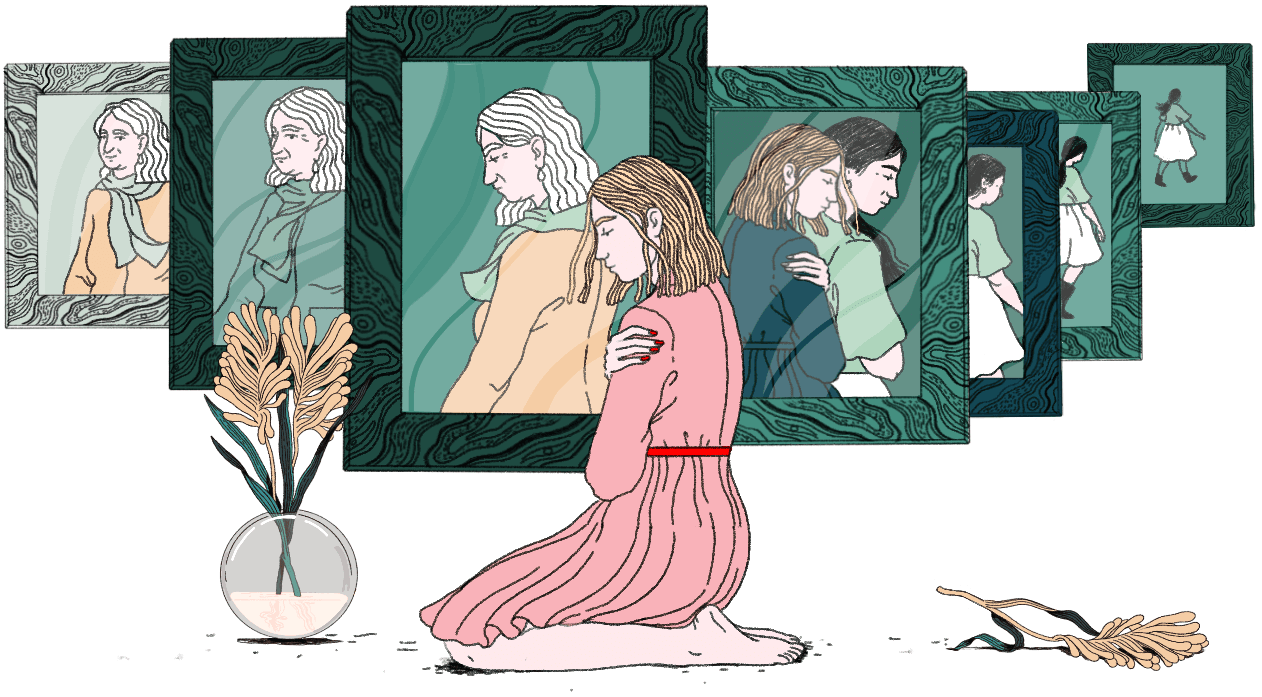
Katya was preparing for admission through force. “I went to a physical faculty with my mother’s acquaintance who agreed to deal with me. Although I would not call it preparation. He explained the things that I already knew. And I went only because it was adequate, kind to me. After each meeting with him, I returned home calmly - it was just important to talk with an emotionally stable person. In May I turned 18, I went to the Olympics on the eve of my birthday. I saw all the tasks and understood that I knew how to solve them, but I could not concentrate. Nothing comes out. And then I realized that I was overwhelming. I remember how I went to the stop after that and sobbed. For some reason, one thought was spinning in my head: here I am tomorrow 18, and I am nobody, and even the Olympics, which I was preparing, could not write. It was very difficult, I thought that I would come, I will tell my mother that by. And I will see her upset look. Mom loved me to remind me that people at my age were already taking medals at the Olympics. ”
During the exams, Katya did not sleep well, often quarreled with friends and almost did not go to school. She was not allowed to the exam in physics, but then it did not worry. “At that time,” Katya explains, “I did everything only for the gear so that they would not run into me.” After the exams, she exhaled and, without saying anything to anyone, left with her friend in Kyiv - "it seems, Valentina Strykalo at the concert."
here I am tomorrow 18, and I am nobody, and I could not even write the OlympicsNevertheless, Katya still got to the physical factory. “Having returned from Kyiv, I found out: my mother agreed by some macar that I would take physics into the second wave. Lime certificates presented. At first I was so angry that I got down again. I don’t remember how I passed the exam, but I passed it well and passed - again, my mother agreed to be taken on a paid one. I remember how we went to the newcomer - I felt like amoeba. ”
At Moscow State University, Katya for the first time in a long time felt that she was starting to come to life. She rented an apartment with her friend, without even telling her mother where she lives. I found new friends at the faculty: "They were normal, adequate guys, and it was not what I saw in the family." Studying, too, turned out to be unexpectedly interesting. It seemed that now some new life would begin-another, adult, much more exciting and at the same time emotionally stable.
Katya was enough for two months.
“At some point, I found myself in bed again. In December, I called my mother and said that I would no longer return to the physical factory. Then there was some kind of screech, but I no longer listened to it. There was no strength for anything. And hell began. - She pauses. - When I say that I got down, I literally mean this: I got up only to the kitchen and reach the toilet. Wash once a week. And my mother by that time tracked down where I live. She burst there, knocking on the door. I let go, because I felt sorry for her - and she began to yell. And according to my inner feelings, my body then gave up at all. I did not have immunity, I was constantly sick. I turned into a mummy, but my mother did not understand this. Once my stomach fell ill with my stomach that I called my mother and asked her to come. But she found some other things. But my grandmother arrived. At some point, the pain became so strong that I just could not breathe-and my grandmother called an ambulance. It seems that this she saved my life - they urgently appointed the operation. Then I finally felt that I want to live and live normally. I realized: either now I’m dying, or I live the way I want. ”
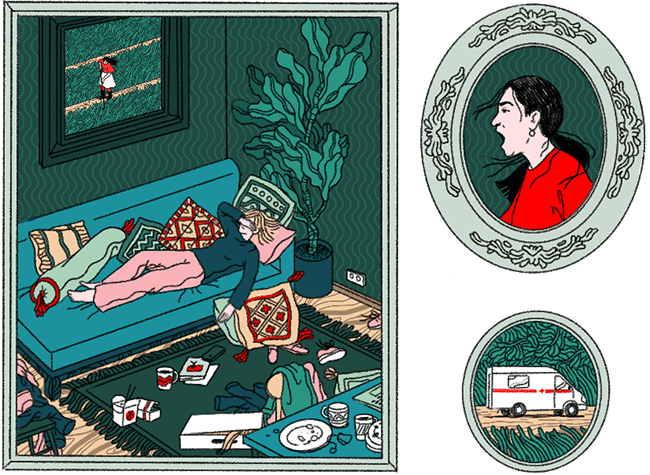
The next fall, Katya was in the office of a psychiatrist - she went, overcoming fear, with difficulty began to tell. “The psychiatrist listened to me, looking into my eyes. This was not enough for me all my life, and as soon as I saw this feature at the beginning of the conversation, I almost immediately stopped being afraid. I was in terrible condition then. I don’t remember exactly where I started talking - it seems like there was a phrase that I don’t know what was happening to me at all, and it seems to me that this is not normal. She asked some questions to clarify, helped to formulate my feelings with words. It was difficult, I cried a lot. The psychiatrist gave me time to calm down. And I saw that they understand me and do not condemn me. With this attitude to my situation, I came across for the first time. I left that clinic with a bunch of directions for examinations and tests. And - for the first time in a long time - with hope. "
Врач, к которому обратилась Катя, не взяла за приём денег. К тому моменту она уже работала на административном посту в клинике и больше не принимала пациентов, но для Кати сделала исключение. На каждый приём Катя, как сама говорит, «мчалась» — «вставала пораньше, только бы успеть». «Я могла ждать три часа, — рассказывает она. — Меня это совершенно не напрягало. Я знала: это единственное, что делает мою жизнь хоть чуточку лучше».
Всё это время Катю поддерживала бабушка. Её история — первая в цепочке, с неё и началась семейная традиция жизни в режиме подвига и в вечном страхе «а то вдруг чего». Когда же бабушка внезапно заявила, что больше так жить не хочет, и стала собирать вещи, семья была к этому не готова.
Бабушка родилась за несколько лет до войны и была старшей из пятерых детей в сельской семье. Детям поблажки в работе было делать не принято. Полоть огороды, доить коров, ухаживать за свиньями и курами, шить одежду и ткать самой — всё это считалось нормой. Более того — условием, необходимым для выживания.
Когда у самой бабушки появился муж — председатель колхоза и дети, в быту изменилось немногое, а работы лишь прибавилось. Дети, среди которых была будущая мать Кати, работали наравне с родителями: после школы — в коровник и на огород. Вскоре стало ещё сложнее: муж отправил бабушку в город — получать высшее образование, но незадолго до этого тяжело заболел. Уход за ним — и всё хозяйство заодно — пришлось оставить на детей. Вскоре муж умер, и бабушка, вернувшись в деревню с дипломом, стала работать за двоих. Через несколько лет такой жизни бабушкино здоровье впервые дало сбой: месяцы ей пришлось проводить то в больницах, то в очереди на приём, то на восстановлении после операций.
Как ни странно, бабушка, человек, от которого все в семье унаследовали трудоголизм, не думала, что все беды Кати — от её лени. «К тому моменту у неё уже не было тяги пыхтеть, работать, зарабатывать. Она несколько по-другому относилась к жизни».
В один момент просто сказала: «Я больше не пойду работать»Первые серьёзные изменения в жизни бабушки случились ещё в девяностые — тогда она ушла из школы, где проработала несколько десятилетий, чтобы больше заниматься внучкой. Впрочем, и после этого бабушка помогала матери Кати с продажами: вела документы, ездила по городу с мелкими поручениями — «встретить человека, передать ключи». «Она всё равно тратила на это силы, — рассказывает Катя. — Поэтому в один момент просто сказала: „Я больше не пойду работать“. Я смотрела на неё с гордостью. Все понимали, что сказать это было тяжело, потому что мама её практически заставляла. Давила на чувство вины — «как же я потяну без твоей помощи, я же одна».
Бабушке 82 года, и она, по словам Кати, гораздо счастливее, чем раньше. «Когда она объявила, что возвращается в Адыгею, все мои родные были в шоке. „Как же так? Ты одна, ты там упадёшь — и никто не узнает, что ты упала“. На что бабушка им сказала: „Да если я и тут упаду, никто об этом не узнает: вы всё равно на работе“. А когда она уехала в Адыгею, у неё и здоровье улучшилось, она себя теперь чувствует прекрасно. В общем, бабушка тот человек, который меня поддерживает и понимает».
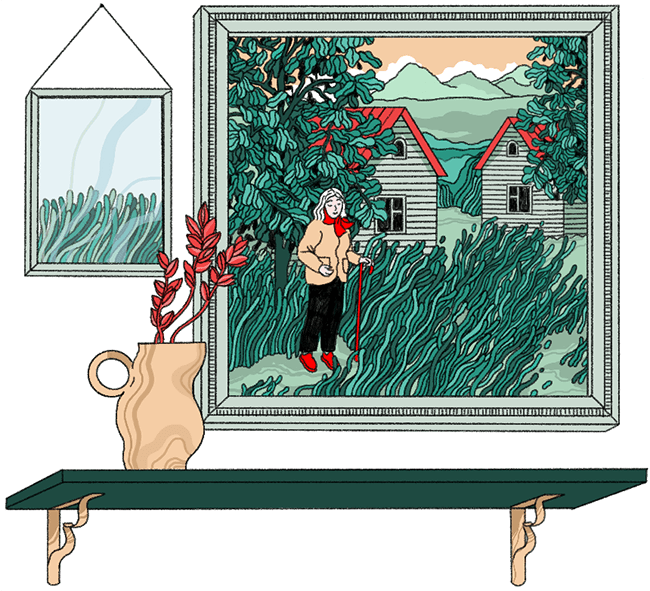
Через полгода приёмов у психиатра Катя впервые отправилась на консультацию к психотерапевту, где встретилась лицом к лицу с мыслью, которая преследовала её все эти годы. Когда она пробует сформулировать эту мысль, получается: «Мне казалось, я вообще не должна была выжить». Дальше Катя объясняет: «Я верю в природу. В детстве я много болела. У меня были проблемы с желудком, лимфоузлами. Потом проблемы в школе, потом на физфаке — и так далее. Я думала, что не должна жить и меня всё время тащит не в ту сторону. И как-то мне так привычна стала мысль о том, что я не подхожу для этой жизни. Не прошла естественный отбор. Другие участвуют в гонке, а меня к ней даже не допустили».
На одном из сеансов психотерапевт попросила Катю рассказать своими словами, что это такое — естественный отбор. «И вдруг, — вспоминает Катя, — я поняла, что вообще-то я все эти сложные этапы пережила. Не должна была справиться, но справилась. А значит, я именно тот, кого отобрали. Я не из слабых, а из сильных. Из выживших. Мы тогда закончили наш сеанс раньше, я сидела с открытым ртом. Терапевт сказала мне, что с этой мыслью надо свыкнуться. Я месяц, наверное, свыкалась. После этого прогресс стал гораздо заметнее. Дальше мы начали работать над моими ограничивающими установками. Я поняла: можно не испытывать чувство вины, если не хочешь что-то делать. Со временем периоды затяжной депрессии начали происходить всё реже. Да, я всё равно видела, что мне надо больше времени на отдых, чем другим людям. Но теперь я просто даю себе на это время. Я лучше полежу полчаса, вместо того чтобы довести себя и полежать месяцок или полгода. Я приняла то, что у меня есть необходимость полежать. После того как ты понимаешь, что ты такой, ты находишь к себе подход».
Я не из слабых, а из сильных. Из выживших«Мы не должны родителям ничего», «не хотеть что-то делать нормально» — вещи, которые психотерапевт обычно проговаривает на самых первых сеансах. Однако понимание — не значит принятие: чтобы свыкнуться с этими мыслями, Кате потребовалось время. Она читала книги по психологии, искала в интернете истории, похожие на свою, перебирала в памяти всё, что с ней произошло, — пока не поняла, что готова прямо говорить, что ей нужно, а что нет. В тот момент Катя, как и бабушка, помогала матери по работе — во многом из чувства вины. «Я озвучила маме, что не хочу заниматься её бизнесом всю жизнь и мне не нравится, когда она говорит, что делала это для и ради нас и мы не можем от этого просто взять и отказаться. Естественно, эту фразу она не поняла совершенно. Ведь по её мнению я была должна. Я ответила, что она это делала без моего согласия: я тогда была ещё совсем малышом. Соответственно, никаких обязательств у меня перед её делом нет, я не выбирала эту работу, и меня никогда не спрашивали, а нужно ли мне это вообще. После этого мама перестала давить. И более того — с аргументами моими согласилась полностью. It was very important for me. И примерно с того времени границы стали очерчиваться».
Катя закончила психотерапию в 2014 году и до 2017-го к ней не возвращалась. «Меня отпустили с тем, что работа ещё не закончена, но в тот момент работать было не с чем. Я уже была очень счастливой. Я не принимала лекарства около полугода, потому что нашла свой путь. Осенью 2014 года я решила снова сдать ЕГЭ. Нашла место, где мне было комфортно заниматься, где были прекрасные преподаватели. Очень хорошо сдала экзамены. На один просто не пошла, потому что почувствовала, что не хочу. И не испытала чувства вины за это. Я не ругала себя. После я всё-таки решила, что хочу подавать документы на поступление. Но поскольку в тот момент у меня уже был любимый молодой человек, остальное казалось не таким важным. Я поступила на экономический факультет. Была там, естественно, самой старшей, а остальным — по 17–18. Мне сначала очень нравилось, но когда я начала учиться, мы планировали свадьбу, потом я забеременела. Первую сессию я сдавала уже беременная. Зная, что не буду продолжать учёбу и оставлять младенца непонятно кому. Сессию я сдала на отлично и тут же ушла в академ. В феврале 2020 года мой академ заканчивается, но я не выйду. Сейчас я понимаю, что мне это не важно. Возможно, приму решение тогда, когда мне это будет нужно».
Катя признаёт: «Мама, конечно, в ужасе от такой жизни. Её любимая тема — поговорить о будущем. У меня от этой фразы уже нервный тик. Но эти разговоры больше ни к чему не приводят. Мой путь — это решать всё по мере поступления проблем».

У неё самой нет никаких ожиданий от дочери. Almost. «Я надеюсь, — говорит Катя, — что мой ребёнок будет чувствовать себя счастливым. А остальное — образование, карьера, семейная жизнь — уже его выбор. Я буду рядом всегда при любых обстоятельствах, даже если с этим выбором не согласна. Моя задача — научить ребёнка выбирать с самого раннего возраста. С мелочей: какую причёску сделать, какой цвет взять при рисовании, что и как вообще рисовать. Давать делать свой выбор — я сама учусь этому с нуля, и некоторые ситуации даются мне очень непросто. Я стараюсь их проработать: осмыслить логически, задать себе вопросы, зачем так делаю и почему. После этого снова легко. Теперь я вижу, что этот вариант воспитания подходит и мне, и ребёнку, поэтому сомнений не осталось никаких. Особенно когда дочь научилась сообщать о том, что ей жарко или холодно, с полутора лет, хотя почти все вокруг — особенно старшее поколение — были уверены, что это невозможно».
Катя признаёт: «Да, мой опыт сыграл огромную роль в том, как я выбрала вести себя с ребёнком! Может быть, даже самую большую. Есть вещи, которые я принципиально делала наоборот, а потом уже размышляла, почему так. Но мне повезло в том, что последствия своего воспитания я осознала, когда Лизе было буквально пару месяцев. Да и с самого её рождения — даже раньше, в период беременности — я делала многое иначе, просто потому, что инстинкт велел делать именно так, и я не могла и не хотела этому сопротивляться».

В книжках о том, как правильно воспитывать детей, любят писать: в первую очередь родителям самим нужно быть в ресурсе. То есть прежде чем дать ребёнку любовь, научитесь любить себя, прежде чем дать ему безопасность — создайте это чувство в своей голове, прежде чем растить эмоционально стабильного человека, позаботьтесь о своей психике. Эту мысль, которую в России, где родительство часто связывают с самопожертвованием, принять трудно: ради детей принято отказываться от комфорта, спокойствия, времени на себя. Катя считает, что это так не работает. «Думаю, очень непросто, а скорее даже невозможно было бы воспитывать дочь именно так — с моим багажом и в других ситуациях. В ситуациях, когда я была бы чуть более уставшей. Чуть хуже себя чувствовала физически или морально. Сейчас, спустя три года материнства, я вижу: каждый раз, когда мой ресурс истощён или близок к истощению, включается режим автопилота — как у мамы. Я очень стараюсь этого не допускать. Но, увы, получается далеко не всегда».
И только когда разговор подходит к концу, Катя вдруг вспоминает ещё одну деталь. Тут она задумывается. Произносит: «Знаете, базовое чувство безопасности, того, что тебя любят, — оно возникает в первый год жизни ребёнка. А ведь время, когда я только родилась, — единственные полтора года, когда мама не работала. Тогда была перестройка, и ей сократили ставку в НИИ, а потом как молодой матери и вовсе разрешили на работу не ходить. Наверное, именно тогда у меня сложилось вот это ощущение, что я всё равно нужна, что всё со мной будет хорошо, что мама любит меня, какой бы она ни была и какой бы ни была я. И даже когда было совсем плохо, это ощущение всё равно помогало хоть как-то держаться на плаву. Так что можно сказать, мне повезло родиться именно в то время. Девяностые меня спасли».
As I blind, became the rocker and programmer Anna Alekseeva , Yegor Mostovshchikov , Valentin Tkach reader samizdat blinded at 21, took up network marketing, made a “defective” rock band with a one-armed guitarist and makes his own game