
Translated material
Epiphance testing
Three years before Salisbury she was tested in Bulgaria?
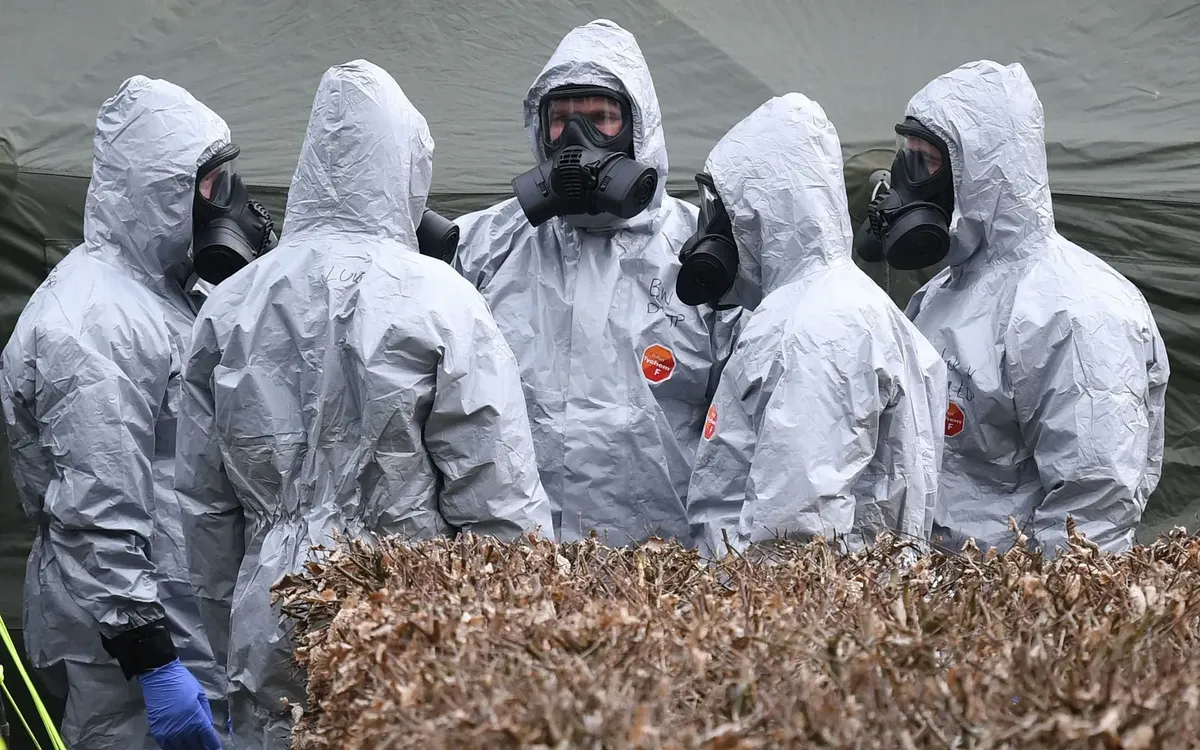
On March 4, 2018, the “Novice”, who arrived in the English Salisbury, it seems, was not such an inexperienced creature. Three years before applying him to the Skripals family, the “newcomer” was trained in the territory of sunny Bulgaria. This conclusion was reached by journalists from the investigative communities Bellingcat and The Insider. Acting in cooperation with the German magazine Der Spiegel, they managed to establish the individuals of eight GRU officers and tie their movements in those three months that preceded the poisoning of the Bulgarian entrepreneur Emilian Goebrev in April 2015.

Goebrev got to the hospital on April 24, falling unconscious at the reception, which arranged in the Sofia office of his weapons company Emko. The son of Goebrev and one of the top managers of the company felt badly. All three were hospitalized with symptoms of severe poisoning. The Laboratory of the University of Helsinki, specializing in chemical weapons, was able to establish traces of two organophosphates-military poisonous substances of neuro-paralytic action. The substance was subsequently assigned to the same group of phosphoruscorganic formations that the Skripals tried to eliminate.
The investigators calculated the brigade of the "cleaners" using the Salisbury technique.
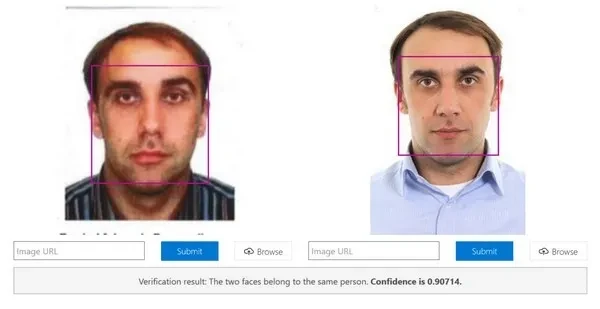
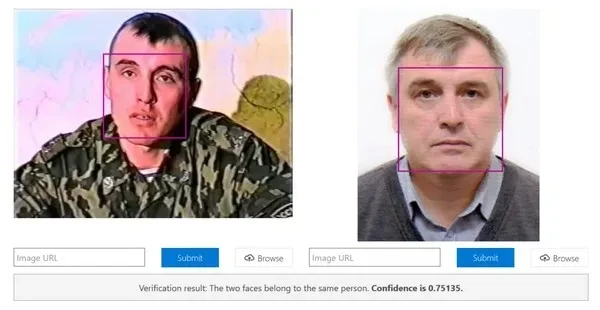
In this case, as then, computers noticed passports of the same series with Russian surnames. The high quality of the photographs necessary for the Schengen visa also helped - they were merged with a certain database.
But the surnames of the team members, however, turned out to be fictitious. Major General Denis Sergeyev, who, as previously reported, could participate in the poisoning of Sergei and Julia Skripaley, became Sergey Fedotov for a while. In addition to him, Sergey Lytenko (“Sergey Pavlov”) and Peter Borisov (“George Gorshkov”) participated in the preparation for poisoning. They were in Bulgaria from February 15 to 22. Then they were replaced by Ivan Terentyev (“Ivan Lebedev”), Nikolai Yezhov (“Nikolai Kononikhin”) and Alexei Kalinin (“Alexey Nikitin”), who were in the country from February 26 to March 8. From March 6 to March 11, Vladimir Moiseev (“Vladimir Popov”) was in Bulgaria, whom the investigators consider to be involved in the attempt of a coup in Montenegro in the fall of 2016.
At the time of Goebrev’s poisoning in April, Lyutenko and Borisov were in Bulgaria, and the investigation shows. Directly on the day of the incident from Moscow to the Black Sea Bulgarian city of Burgas, Sergeyev flew. He had a return ticket for April 30, but already in the evening of the 28th he appeared in Istanbul and urgently took a ticket to Moscow.
In addition, Sergeyev and another GRU employee Danil Kaporlov (“Danil Stepanov”) flew to the country in May, when (presumably) a second attempt to assume Goebrev took place. It is interesting (if this word is appropriate here) that in May Sergeyev returned to Bulgaria for three days and again went to Moscow with an unrequited flight, but through Serbia. However, the shift method of poisoning in the end did not justify itself. The victim survived.
What caused such a consistent desire to erase Goebrev from the face of the earth for certain. He himself, I must say, is another character. He began to trade weapons at the end of the last century, selling it to Ethiopia, Eritrey, Pakistan. In 2001, the cargo of his company - 30 million rounds for Nicaragua - intercepted the American customs, but he managed to return it. There was a scandal with arms deliveries to Macedonia in 2006. According to the Vesti.bg Bulgarian portal, in 2012 Goebrev appeared in the black lists of Moscow, as he sold weapons in Georgia. In 2017, the company's license was frozen by the Bulgarian authorities due to suspicions of laundering money. Recently, our hero (the gray -haired gentleman with his face is cunning) is more hinting at the intraspecific struggle against competing business entities.
In Bulgaria, they remember well the far ancestor of the “newcomer” - ricin, a powerful poison of plant origin.
In September 1978, the Bulgarian dissident who lived in London, writer Georgy Markov died as a result of an injection in the leg, but managed to tell about what had happened. The nameless agent of the Bulgarian KGB received this weapon, according to the former KGB General Oleg Kalugin, from the Soviet residency in Sofia, and it was manufactured in Moscow. The operation approved the operation, the then undivided owner of Bulgaria, Todor Zhivkov. That was the first case in post -war Europe to use such means of destroying political opponents, as well as renegades from intelligence by the leaders of the social camp and subsequently their successors.
The background of this history today also has to be sought on political meridians. “The Kremlin wants to destroy the Bulgarian military industry,” the former Minister of Defense of Bulgaria Boyko Noev said on the air of the BTV. This is a “splinter in the eyes of the Kremlin,” since Bulgaria is included in the top 10 countries in export of military products. “There is a draft (bilateral) agreement demanding that Bulgaria stop military production and could not export weapons without the consent of Russia,” he said. - Russia does not need to use force against Bulgaria, because in Bulgaria there are enough subjects and organizations conducting Russian interests. I’m talking not only about the aunts and uncles of my age, gathering for the Koprinka reservoir (the place of annual meetings of activists of the Bulgarian Rusophiles Association. - G. G.) in T -shirts with the inscription “USSR”, a portrait of Putin and Russian flags, but also about political entities in Bulgaria participating in the government, ”Noev explained. “The interests of Russia are behind Goebrev’s poisoning,” he said in a separate interview. “The authorities are trying to hide this matter, and I urge citizens not to believe what they say.”
Another prominent Bulgarian politician in the past - Ivan Kostov, who headed the government of the country at a fracture of the centuries, said that Moscow was conducting “against Bulgaria and not only” a hybrid war. “This is a great remedy: neither planes nor tanks are needed ... A hybrid war caused us serious damage, although this did not immediately become clear.”
Even higher raised the degree of rhetoric Eurodepupus from Bulgaria Alexander Yordanov. “Putin,” he said, referring to Serbia, “creates a second Russian power in the Balkans a hundred kilometers from the border of Bulgaria. And the Bulgarian authorities have to react to this. ”
What they do. At the end of October, the Bulgarian prosecutor's office reported that since September 2018, for one year, a Russian citizen has carried out intelligence activities, conducting regular conspiratorial meetings with Bulgarian citizens, including the leading composition of state organizations that have access to the secret information of Bulgaria, the EU and NATO. The purpose of the meetings was to obtain information representing a state secret, including for money. It was established that a Russian citizen is accredited in Bulgaria as the first secretary of the Russian Embassy in Sofia.
The citizen was given time to gather and leave. “Due to reliable facts, Russia did not respond to the expulsion of her diplomat,” Vice Prime Minister and Minister of Foreign Affairs of Bulgaria Ekaterina Zakharieva said a month later on the air of Nova TV.