
Translated material
The Government of Ukraine imposed sanctions against archaeologists-search engines and journalists of Crimea
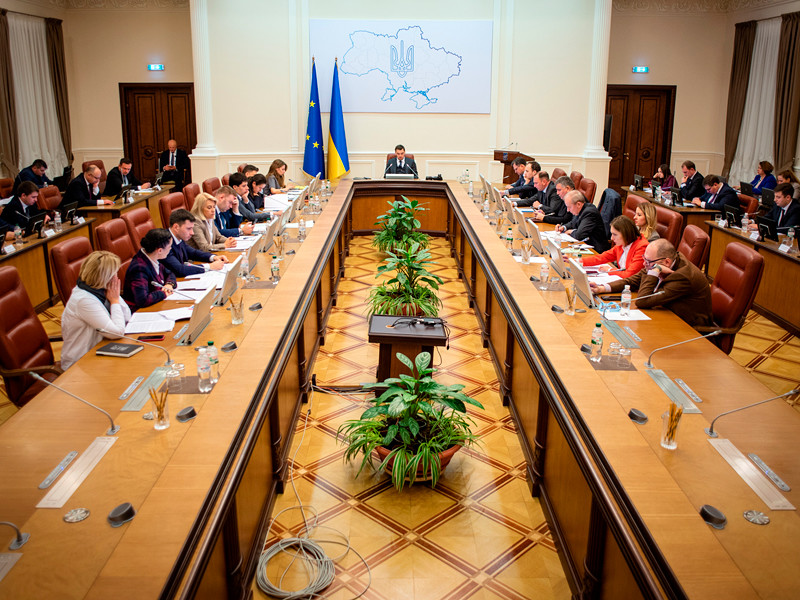
The Cabinet of Ministers of Ukraine imposed sanctions against persons who allegedly destroy cultural heritage objects in Crimea, carry out television and radio broadcasting there, and also supply materials for the military-industrial complex of the Russian Federation. This was reported on Wednesday by the press service of the Ministry, which is dealing with issues of Donbass not controlled by Kyiv.
“During the government’s meeting, it was accepted by the proposal of the Ministry of Veterans to apply sanctions to legal entities ensuring the illegal activities of the occupation administration of the Russian Federation and legal entities involved in illegal search work at archaeological heritage, the destruction or damage of cultural heritage objects. In particular, it is 39 legal entities registered in the Russian Federation and 22 legal entities, and 22 legal entities. registered in the territory of the Crimea and the city of Sevastopol under Russian law, ”it was said in the message quoted by TASS.
Sanctions are also provided for legal entities, which, according to Kyiv, "illegally broadcast on captured radio frequencies in the territory of Crimea and the city of Sevastopol." Among them are 19 legal entities registered in the territory of the Russian Federation and 15 legal entities registered in the territory of Crimea and Sevastopol.
Specific firms and companies and the nature of sanctions are not named in the message.
Since 2015, Ukraine has repeatedly imposed sanctions against individuals and legal entities in Russia, which, according to Kyiv, are damaged by its interests. As a rule, they imply a ban on entry into the country, as well as blocking assets and suspension of economic and financial obligations: a ban on loans, loans, financial assistance, guarantees, and the purchase of securities. These actions are associated with many years of legal uncertainty around the Crimean territories: in Moscow they are considered Russian, in Kyiv - "temporarily occupied" Ukrainian, and in the international community - "annexed" Russia through aggression.
Recall that Crimea’s accession to Russia was preceded by a political crisis in Ukraine. At the end of 2013 and early 2014, mass protests began in Kyiv after the authorities slowed down the process of European integration. A multi -month mass protest resulted in clashes with law enforcement officials. After the shares participants managed to seize a number of administrative buildings, and it was not possible to suppress the protest even with the use of firearms, President Viktor Yanukovych fled outside Ukraine at the end of February and found refuge in Russia.
Already in March 2014, with the participation of the Russian military, the authorities were replaced in the Ukrainian Crimea, and then a referendum was held on joining Russia. “Thanks to the high moral and volitional qualities, good preparation and endurance of officers and soldiers, in a peaceful and calm atmosphere, a referendum. The population of the Crimea, assessing the correctness and high professional training of the personnel of the armed forces, gratefully called the Russian troops“ polite people, ”the Russian Federation said, which Vladimir Putin heard at the end of 2014.
The referendum was attended by more than 80% of those who had the right to vote. 96.7% and 95.6% of residents of Crimea and Sevastopol voted for reunification with Russia, respectively. On March 18, 2014, Russian President Vladimir Putin signed an agreement on the adoption of the Republic of Crimea and Sevastopol in the Russian Federation, and on March 21 it was ratified by the Federal Assembly.
The UN General Assembly by the overwhelming majority of votes did not recognize the Russian affiliation of Crimea. The position of Russia was supported only by Armenia, Belarus, Bolivia, Cuba, DPRK, Nicaragua, Sudan, Syria, Venezuela and Zimbabwe.
In connection with the territorial dispute around the Crimea Ukraine, the USA, the European Union and other countries have introduced a number of sanctions against Russia, Russian businessmen and politicians who visited the Crimea of public figures and leading businesses on the company's peninsula, both from Russia and other countries. The fear of new sanctions turned out to be so great that even giants of Russian business, closely related to the state (for example, Sberbank), refuse to work in Crimea and 5 years after its rejection). However, Moscow believes that the issue of belonging to Crimea is closed once and for all. "The question is closed forever; a referendum was held there," said Russian Prime Minister Dmitry Medvedev.