
Translated material
Keepers of the Russian Forest
A miracle that in a country where horror and fear have been planted for decades, there are so many fearless and active people
In 1916, the last pre-revolutionary year, dozens of parties operated in Russia. All colors and shades of political views were reflected. There was a large batch of the center, the cadets, there were left -wing Socialist -Revolutionaries and right Octobrists. Large capital, who planned to unite intellectuals around him, created a party of progressives, supporters of the equal rights of the parliament and the monarch united in the party of peaceful renewal, who denied the terror of the left united in the Party of People's Socialists, and those who considered themselves representatives of the working people called themselves as workers. But this is just a brief and very incomplete outline of the party system in Russia, where one and a half dozen right -wing parties, a dozen left -wing and a couple more dowels of national ones, including Ukrainian, Belarusian, several Finnish, several Polish, Jewish, Muslim ones, operated.
In the same 1916, the pre-revolutionary year, hundreds of public organizations of a very different type and sense worked in Russia. Zemstvo acted in 43 provinces. Zemgor - the union of the Union of Zemstvo and the Union of Cities - practically replaced state bodies that were unable to supply the army during the war. There was Vikzhel - the Executive Committee of the Railway Trade Union. There was the All -Russian Union of Teachers. There were trade unions of metallists, printers, guards, pharmacists and even tailors.
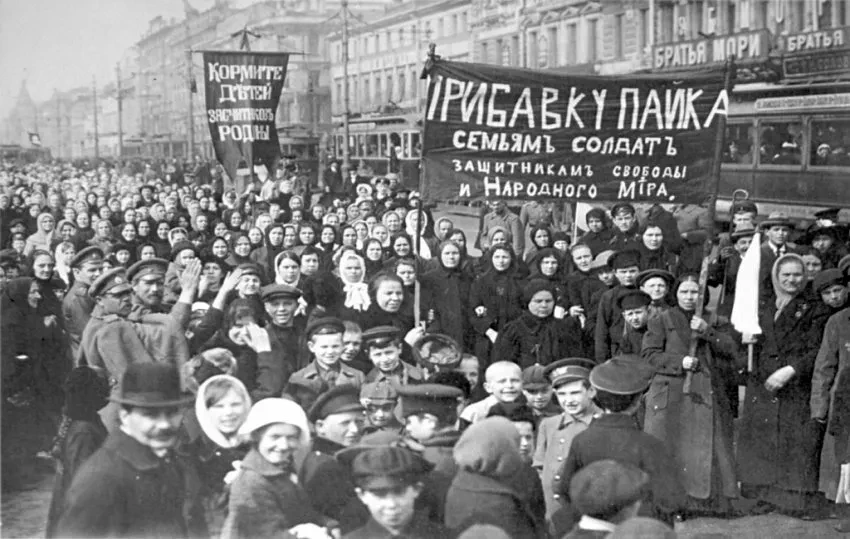
All this variety of political and public associations existed not by the will of power, but contrary to it. Many were persecuted: Cadet, professor Sergei Muromtsev, was deprived of the right to engage in political activities, one of the organizers of the Union of Teachers Stepan Anikin was banned from working as a teacher.
The Bolsheviks, having come to power, began the cleansing. On November 28, 1917, the Decree on the arrest of leaders of the Civil War against the revolution was signed. With this decree, the cadets were put out of the law, their leaders were subject to arrest. Two of them, Kokoshkin and Shingarev, were killed in a prison hospital in January 1918. Vikzhel was abolished in January 1918. The Socialist -Revolutionary Party was convicted at the 1922 process and was liquidated. The trade unions are closed. Even the society of former convicts and exile religists, that is, the society of honored figures of the victorious revolution, was liquidated in 1936.
Not only parties, trade unions and other forms of social life were cleaned. People were cleaned.
The last chairman of the Society of the former hard labor, the former Socialist -Revolutionary, a former militant, an honored participant in expropriations and uprisings, Alexander Andreev, replaced royal prisons to Soviet and after 1938 disappeared into them. Its end is unknown.
The revolutionary, poet and Socialist-Revolutionaries Vladimir Richter, who was sitting in prison three times in the royal regime, was continuously in Soviet prisons and camps from 1923 to 1931, when he died of typhoid.
Cadet Dmitry Shchepkin, who worked before the revolution in the State Duma and Zemgor, was repeatedly arrested after 1917 and was shot in the Butovo training ground in 1937.
Trudovik Fedot Onipko, a participant in the 1906 Kronstadt uprising, was shot in 1938.
So the Soviet desert was created.
The Soviet Union was a country without parties and trade unions - a social desert.
There were 200 million people, and no forms of social life.
Some dummies.
The state simulated social life and, for this purpose, placed a cardboard figure painted through a stencil everywhere.
There were no parties, although there was a CPSU, there were no trade unions, although there was an All -Union Central Council of Trade Unions - a trade union who, in its entire history, did not organize a single strike.
There was a peace protection committee, but he did not say a word against the Afghan war.
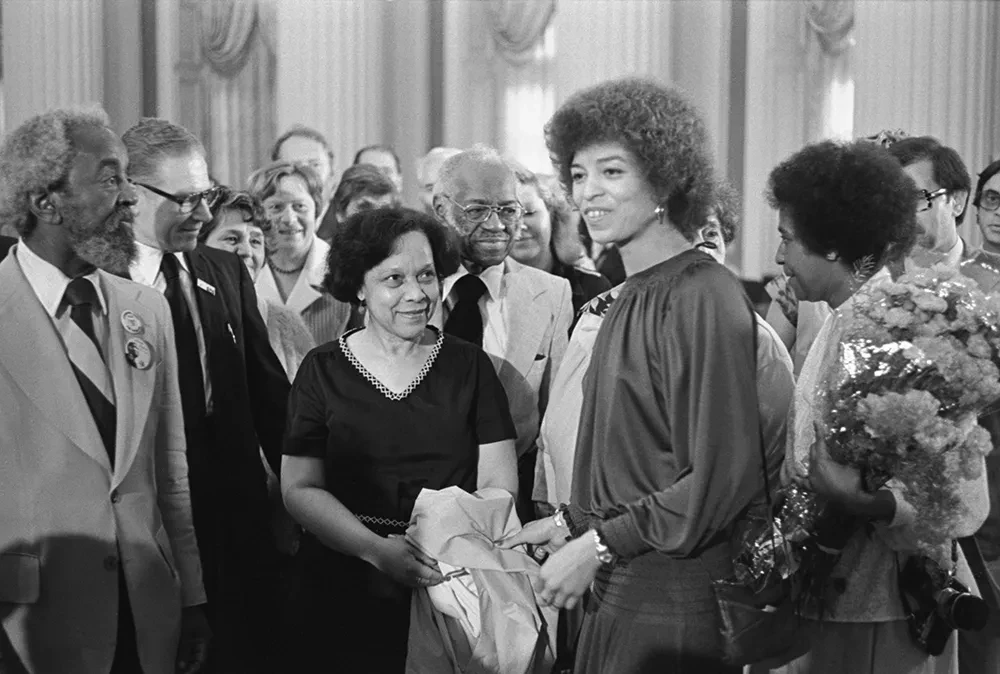
There was a campaign in defense of Angela Davis, and there was no campaign in defense of Anatoly Marchenko.
If people tried at their own peril and the risk of creating at least some oasis of social life in the desert, then these attempts were brutally suppressed, and the seedlings that they managed to land were uprooted.
When in the sixties the poets came up with poetry to read poetry by the monument to Mayakovsky, they were dispersed with the audience and arrested.
When the rock groups in the seventies gave concerts in the halls of the recreation center, the police appeared there.
When several writers and poets started to publish the Metropol almanac with a circulation of 12 typewritten specimens, they were studied, branded, punished, excluded.
And even when people were just engaged in karate, taught Hebrew or gathered in a circle to study the teachings of the eastern mystics together - the secret police still came behind them and thoroughly destroyed all living things.
The desert should be dead.
With different, and sometimes with the same cruelty, different, and sometimes the same methods, different people destroyed social initiative at different times. They sat in different chairs and were called differently-either the chief prosecutor of the Synod, then a member of the Politburo of the Central Committee, then the chief of the gendarmes, then the Commissioner of the NKVD-but there was only one thing: to kill a living life.
Why?
Because alive and associated with other living people, a person is naughty and uncontrolled. He acts and encourages others to act. He shows solidarity and encourages others to solidarity. How do you throw a clamp around your neck and how do you start it in a stall to stand quietly? Therefore, it is necessary to decompose and atomize society so that it consists not of the initiatives of individuals and free human associations, but from disparate, divorced from each other, crushed by fear and the need of loners who are unknown to mutual assistance and solidarity.
Mutual assistance and solidarity, natural for the human soul, have been expanding from people and society for more than a hundred years, because they are deadly for the state of violence and deception.
The All -Russian Committee for Assistance to the Hungry, which included Academician Fersman and writer Zaitsev, former member of the Executive Committee of Narodnaya Volya, Vera Figner and former chairman of the State Duma Fedor Golovin, daughter of Leo Tolstoy Alexander and director Stanislavsky, was destroyed in 1921 at the direction of Lenin, and not only destroyed, but subjected to scatter and ridicule.
You cannot allow people to help each other, the state from this danger and harm.
Also, today they are reproached and are marked by the stigma of a foreign agent of organizations of people who want to help other people who are in trouble.
The committee against torture is a foreign agent.
The movement "For human rights" is a foreign agent.
The Corruption Foundation is a foreign agent.
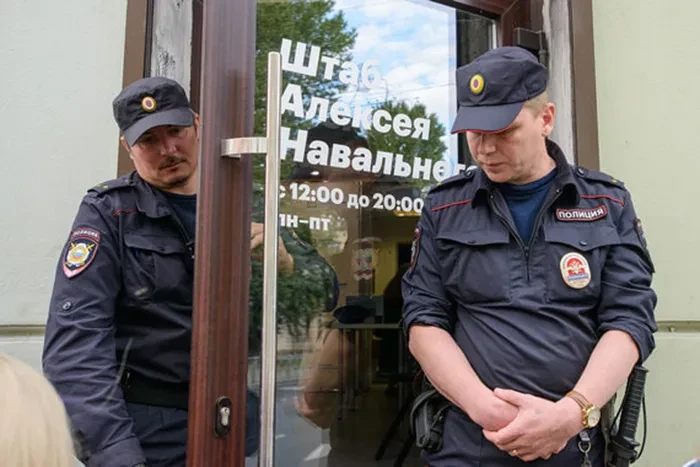
Charity Fund for Assistance to the prisoners "Sitting Rus'" - a foreign agent.
This is a way to mock those who show social initiative.
Sit in the corner and be silent in a rag, and then nothing will happen to you.
The sane state supports civil society.
The insane tramples him.
In the Kremlin wardrobe, Stalin's boots are still standing.
But it is not possible to trample. They try, forbid every day, they made a ban on their only activities - but it does not succeed. Then they double and triple efforts, send the Russian Guard to the concerts of rappers, send policemen to schools to scare children,
They prohibit cheese and software, word and deed - but it does not manage to tumble the country so that neither a tubercle nor the twig sticks out.
In Russia, fascinated and robbed, hobbled with a salary of 20 thousand rubles in a pocket, flooded by fillets from the ED center and swirls from the Lubyanka, almost crazy with the incessant waves of lies, are still located again, and there are again living souls, which are not indifferent.
Vladimir Akimenkov, a prisoner of the “Swamp business”, who was sitting in a cage in the Mosgorsud hall in 2012, now collects money for a year after year to help political prisoners and their families. At each large rally, it can be seen with a cardboard box.
Archnadzor beats for the ancient walls in which our life and our history remains.
Sergei Mitrokhin, how many illegal fences, he demolished his shoulder, how many barbaric construction projects stopped and how he fights for Moscow.
Anna Uspenskaya and Konstantin Ponomarev talk little about herself, a lot about her business. They created a Moscow foodshering - a movement that saves hundreds of tons of food from the destruction of.
ATS-Info, organization with two hundred volunteers, a rescue service of protest, monitor arrests and searches, sends lawyers to the courts and 24 hours a day for seven days a week supports a “hot line” for everyone who was persecuted.
And there is also a girl of Ksenia Sukhoruki, who once with the Russian flag, a glued mouth and a sign “I am dying” chained herself to the Lenin monument in Novosibirsk - she is also a Russian civil society.
This existence of civil society in the country, bloodless by repression and robbery, is a miracle.
The miracle is that in a country where horror and fear has been planted for decades (and is now being planted), there are so many fearless and active people.
Different people are engaged in a variety of things, and they have only one common thing - they grow a forest in the desert.
There are many of them.