
Translated material
Profile: Goer Vartanyan is a Soviet scout who prevented the attempt on Stalin, Churchill and Roosevelt
For many years of underground service, hand in hand with her faithful spouse.
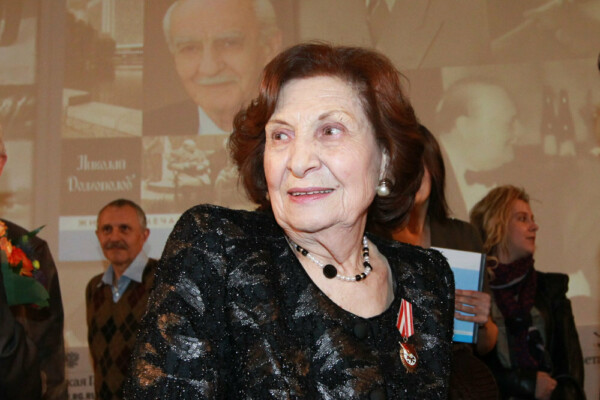
On November 25, in Moscow, in the 94th year of her life, the Soviet and Russian intelligence-lirogal Goar Vartanyan died . She is the legend of domestic foreign intelligence. As part of the reconnaissance group, it ensured the security of the Soviet leadership during the 1943 Tehran Conference. The next 30 years, Vartanyan worked as a scout in the European countries of the NATO bloc during the Cold War.
"European" Tehran or Bicycle Intelligence
Vartanyan was born in Leninakan (now Gyumri) in the family of Armenian communists. Soon her parents left Soviet Armenia and moved to Iran, where they took up business. The family was afraid of the possible persecution by Joseph Stalin: the parents of Vartanyan were not ideological opponents of the USSR, but did not adopt a new Stalinist policy of collectivization and industrialization.
In Iran, Vartanyan lived and studied in the Armenian diaspora of Tehran. In an interview with the newspaper Noah's Ark, the intelligence officer claimed that it was Farsi, and not Armenian, who became for her a “native language”, and Tehran “native city of childhood”. She studied at the Iranian school, as the Armenian was closed, and the French "was crowded."
Tehran was then quite a European city, in the treasures (a light female bedspread - approx. TJ) did not go. On the contrary, the shah then tore these veils. They were not allowed to go to the bus in them, to sit down in a trolleybus. And then again all of them put them on. I have the best memories of both Iran and the Iranians, they were very respectful to us, Armenians, in general to people of any other nationalities.
Goer Vartanyan
At the age of 13, Gohar met her future husband - Gevorc Bartanyan. At first they were just friends. But, according to the scout, at the age of 16, “some kind of romance began to arise. Birthdays, New Year, other holidays, we gathered our entire company at home, sang, danced. ” Goer, like Gevork, already in her young years became a member of the anti -fascist intelligence group.
Gevork Vartanyan first came to serve in Soviet intelligence at 16. He organized a group of peers from Dagestan and Armenia, as well as Assyrians to combat Nazism. The young men were united by love for the motherland and the community of fate: their parents were sent from the USSR during the Stalinist terror.
The reconnaissance group was called the "light cavalry", as the members of the underground organization moved around Tehran on bicycles. Thus, the detachment organized external observation. Bicycles helped young scouts get away from hiking.
One of the scouts in Iran was the KGB agent Ivan Agayants. In 1940, Vartanyan and Agayants met and discussed the goals and objectives of the group of young intelligence officers. “He was [Agayants] strict man and at the same time kind, warm. For a long time I worked with him, until the end of the war, and he made me a scout, ” recalled Vartanyan.
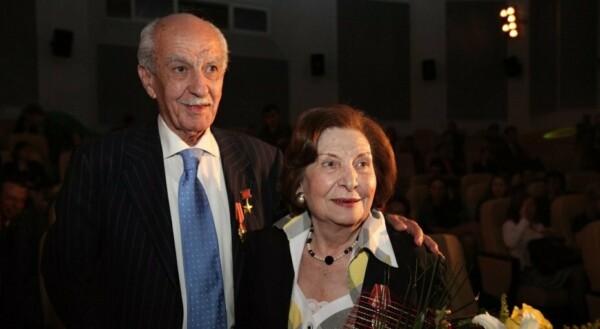
Goer Vartanyan also worked under the leadership of Agayanz. Due to acquaintance with her future husband Gevorc, she, under the control of the KGB, tried herself as a scout. Thanks to work in the spy group, Vartanyans got their first experience in foreign intelligence.
According to her own statements, Vartanyan did not survive. The scout was “easier” to make “installations”. “Installations are when you have to find out where the object lives, what and when he does, with whom it communicates. You install his daily routine, habits ... You do it through your neighbors, acquaintances, ” recalled Vartanyan.
Tehran Conference
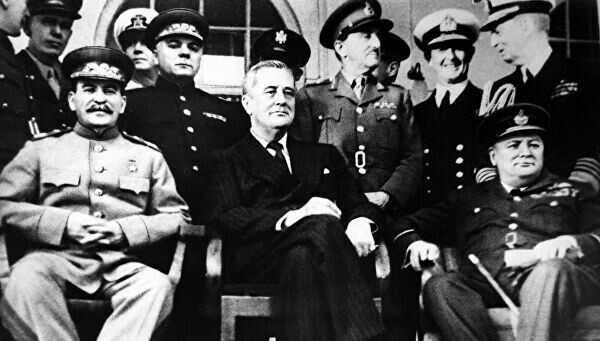
In 1943, the Tehran Conference was held in Iran. It was attended by the leaders of the allied countries in the anti-Hitler coalition. Stalin, Churchill and Roosevelt developed a plan for the final defeat of German troops in Europe. However, even before the conference, Soviet intelligence had information on the preparation of attempt on the leaders of the powers.
According to Soviet spies, the Germans showed interest in Iran back in 1937. The ideologists of Nazi Germany developed programs to attract Iranian youth to their side. Moreover, from declassified materials it is known that in 1938, "the number of Germans who passed special training courses and settled in Tehran increased significantly in order to excite anxiety."
According to the Foreign Intelligence Service (SVR), "people from Berlin even reached the unquenchable reza-shahi [leader of Iran] distant tribes", "demonstrating the worship of the Iranian ally, German agents did not shy with them." Moreover, "Iran by the efforts of the Germans turned into a bridgehead for conducting any hostile actions against Berlin against the USSR."
Many Iranian subjects worked in the interests of Hitler Germany. It followed from the same archives that the recruited Iranian spies “on the instructions of German intelligence” were monitoring Soviet party leaders. However, all this was well known to the foreign intelligence service.
In 1943, German intelligence developed an operation “Long Jump” in order to kill the leaders of the “Big Three” countries: Stalin, Churchill and Roosevelt. It was headed by the head of the Security Service of Nazi Germany Ernst Caltenbrunner. In October of the same year, the Germans deciphered the American naval code, which contained the exact date and place of the conference.
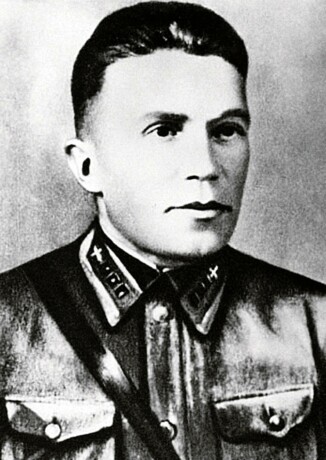
Soviet intelligence first intercepted information about the upcoming German operation. Agent of the State Security Committee Nikolai Kuznetsov, issuing himself at the Nazi chief lieutenant Paul Zibert, received information from the SS SS Hans Hans Ulrich von Ortel.
The Vartanyan reconnaissance group received a special assignment - to ensure confidational security of the conference and prevent attempt. The members of the group were not even twenty years old. However, teenagers-reconnaissance were calculated from more than four hundred agents-Iranians of enemy spies who worked for Germany and prevented the attempt.
British intelligence was in constant contact with the Soviet colleagues. The Vartanyan reconnaissance group discovered six German radio operators in Iran and organized surveillance behind them. It was possible to establish that German agents in Tehran kept constant communication with Berlin. After the exchange of data with the British, the scouts of both countries intercepted Nazi agents and prevented the development of surgery.
Post -war career
After the Second World War, Goar and Gevorc Vartanyans remained in Iran for six years, serving in foreign intelligence. In 1951, scouts were allowed to return to the USSR, giving an opportunity to get a higher education.
Vartanyan entered the Faculty of Foreign Languages of the University of Yerevan, which she successfully graduated. She studied with her husband Gevorc. Immediately after graduation, a new life stage of scouts followed.
I entered French, George into English, but then I switched to English, because we met so little: he studied in the morning, and I was in the afternoon. And I wanted to be together. We gradually graduated from the institute, Zhora was the first student, was at the trade union committee of the institute, he was very respected. And everywhere and everywhere it was ...
Goer Vartanyan
In Moscow, Vartanyan underwent small training in foreign intelligence. “In general, we were already finished specialists, so the CVR courses were short,” recalled the scout. Foreign intelligence agents were prepared to work in the Cold War in the countries of Europe and North America. The SVR cooked shots to declassify the positions of the military bases of the USA, Great Britain and France in Europe.
Goer, along with Gevork, was sent to the west, to the countries of the NATO military bloc. “They worked in different countries, changed citizenship several times, participated in so many operations - but time to talk about it has not yet come,” said Vartanyan.
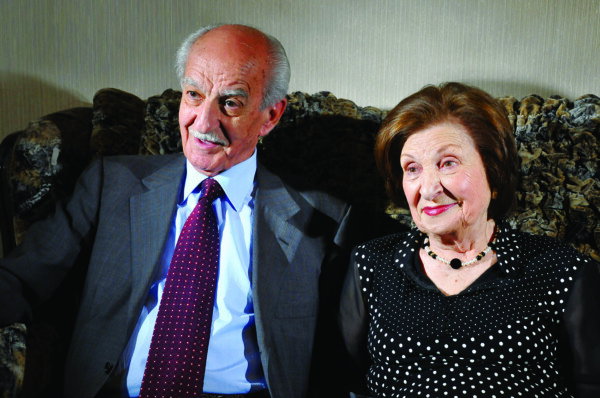
In the 1970-1980s, the Vartanyan spouses worked through foreign intelligence in Italy. It was there that Soviet agents declassified the majority of NATO bases. Friendly relations with the commander of the 6th Fleet of the United States Admiral Stenfield Turner, who later became the director of the CIA, the scouts used in favor of the USSR. Through it, Soviet agents received information about the NATO armed forces in Europe.
The more ordinary life you live, the better work goes. You just have to live calmly and have normal people, friends, have a good environment around you. When your environment is strong, then you can continue to go, and big people will already accept you. And you will go to where you want, come into contact with those with whom you need.
Goer Vartanyan
It is still completely unknown in which countries Vartanyans worked. From the book of the documentary writer Nikolai Dolgopolov “Vartanyan” it follows that the work of intelligence was conducted in the states of Western and Southern Europe. The main task of the scouts was to identify a military threat in relation to the Soviet Union and the Warsaw bloc (USSR, GDR, Czechoslovakia, Romania, Albania, Bulgaria, Poland, Hungary).
Gohar and Gevork Vartanyan spent abroad under various names, surnames and posts for more than 30 years. Their service came to an end only by the mid-1980s. It was then that they returned to the USSR.
In 1984, by decree of the Presidium of the Supreme Soviet of the USSR, Goar Vartanyan was awarded the Order of the Battle Red Banner. The decree on the award contained a note - "without the right to publish." However, this was a formality, since the award was written out to a fictional person. In Europe, Vartanyan did not work under her own name or even on a fake passport.
Return to the USSR
In the fall of 1986, Vartanyan and her husband returned to the USSR. Almost no one knew anything about them, since the details of their work were kept secret. The circle of communication of Vartanyanov mainly consisted of close friends and colleagues in foreign intelligence. Soon after the return, the wife retired.
Vartanians painfully perceived the collapse of the Soviet Union. “It was an unexpected blow for everyone,” said Gooar Vartanyan. None of the employees expected such events. In those days, the family was resting outside the city, but after the first information about what was happening in the country, Gevork urgently “went to work”.
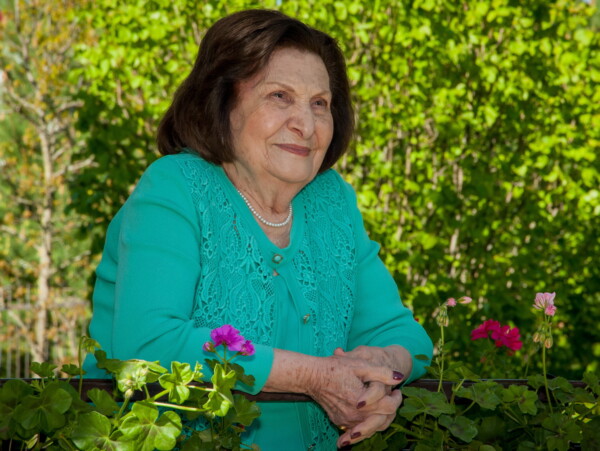
In 2000, on the day of the 80th anniversary of the Foreign Intelligence Service of the Russian Federation, the SVR declassified the identities of the Vartanyanov scouts. Openly public appeared secret materials about the actions of the Soviet intelligence group during the Tehran Conference. Scouts were allowed to lead a public life.
However, after the facts of the secret service, Gevork Vartanyan said that “there are things that will never open at all. Something, perhaps, a little bit. But even in Tehran’s operations so much that is not said about and that is not at all touched. ” The complete disclosure of the results of the Tehran operation never occurred.
After her husband’s death in 2012, Goar admitted that her friends and SVR colleagues helped her survive the loss. After the death of a loved one, Vartanyan, until the last days, met with young students, cadets, Nakhimovtsy and Suvorovites. The intelligence officer shared her experience with young people, answered their questions and helped with advice.
If it were not for my relatives, friends, a collective of foreign intelligence service, who supported me these two years, I would not have got to my feet at all. I thought I had already left with him too, and that’s it ... But they did not leave me in trouble. This is happiness when there are such people around you, devoted.
Goer Vartanyan
This article was created by a participant in the authors league. About how she works and how to join there is described in this material .
#Intelligence #History #Russia #Longrids #Ligantors #Profile