
Translated material
Enough of us to be and!
A wave of Middle Eastern revolutions reached Iraq and Tehran
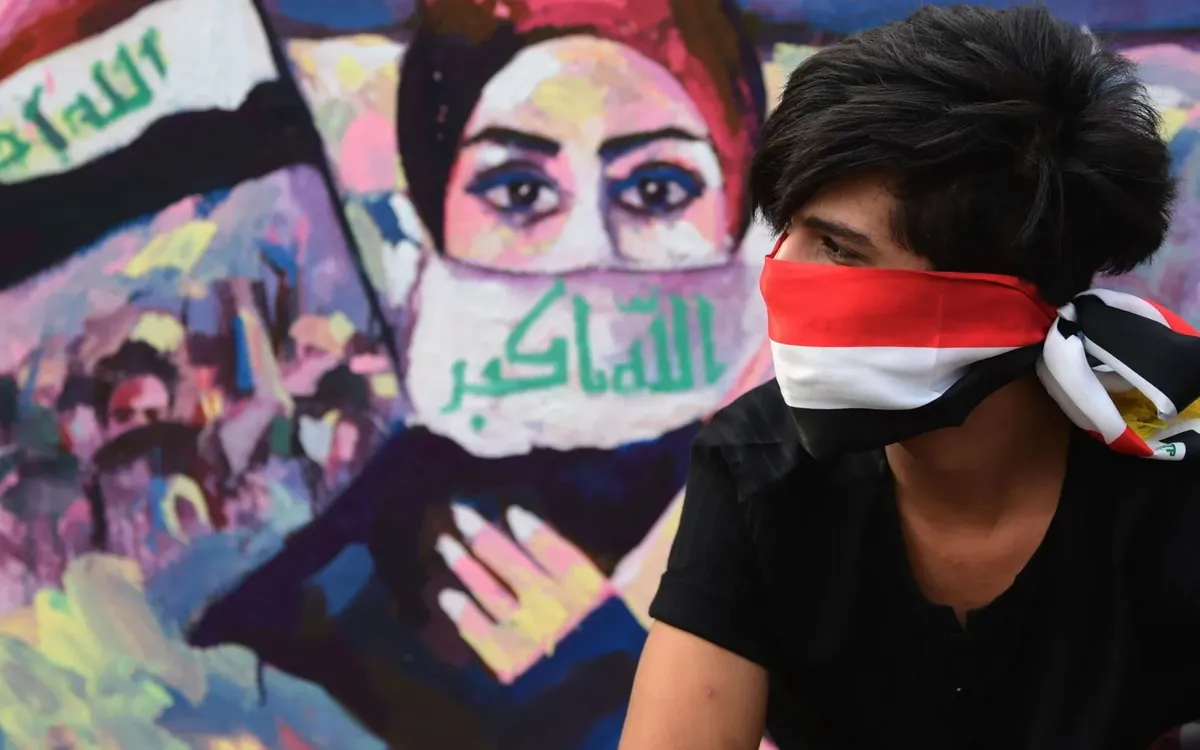
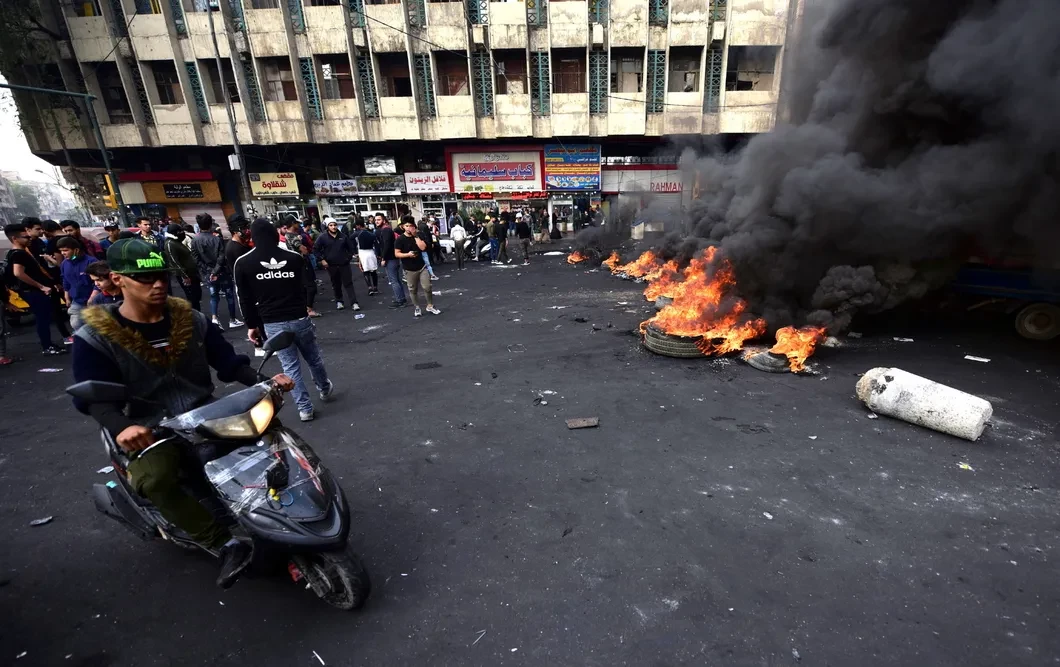
For the third month, mass protests have been continuing in Iraq, during which several hundred people were killed, tens of thousands were injured. The most bloody clashes between law enforcement officers and protesters took place in the cities of Southern Iraq - Basra, Nasseria, Nezhef, in the port of the CASR and in the capital's Baghdad. People took to the streets, protesting against corruption, as well as influence on the internal policy and economic situation of Shiite armed groups, loyal to Iran.
Iran received a complete influence on the internal policy of Iraq in 2003, thanks to America. During the Iraqi Freedom armed operation, the Americans actually cleaned the Iraqi force field, allowing the Right Shiite groups to the place of eliminated police and the army. Since then, these groups have deeply sprouted deep into the Iraqi political system. Sunnis that make up the majority of the country's population, under the new regime, were seriously infringed:
Mass unemployment spread among them, the infrastructure of the Sunni regions did not develop, often they were subjected to household humiliations from the Shiites.
And so the Iraqis went out into the streets: first of all, to protest against corruption, nonsense, and in addition, against the politics and actions of Iran and his Shiite allies in Iraq.
Relations between Iran and Iraq have been hot for many decades during which they have been fighting for influence in the region. In September 1980, Iraq President Saddam Hussein began the war with Iran, she lasted eight years. During this war, hundreds of thousands of people were killed on both sides. Hussein, who was considered the strongest leader of the Arab Sunnis, was a strong partner of the Soviet Union. It was the USSR that helped him in this war with Iran: weapons, ammunition and advisers.
The war did not end with any victory, but left a great desire to take revenge in Iran from the fundamentalist religious regime in Iran. Which was done with the advent of the Americans. Iran then closed his eyes to the fact that America is “big shaitan” - occupying Iraq, was located literally at its borders. Washington, for his part, tried not to notice how Tehran provided the long -awaited ascent of the Shiite crescent - from Iran, through Iraq and Syria to Lebanon, directly bordering Israel.
However, this compromise had serious geopolitical consequences. In fact, this set of factors: the American occupation and oppression of the Shiites of the Iraqi Sunnis - and became one of the main reasons for the rapid birth of the Islamic state (IGIL - ISIS - the organization prohibited in the Russian Federation - ed. ) In Iraq.
The pressure of the Shiite groups in relation to the Sunnis was repeated in Syria and in Lebanon - which also had a considerable impact on the formation of ISIS.
The fruits of such a policy are still reaping - not only in the region, but also in the world.
This fall, shortly after the start of events in Iraq, mass protests flashed both in Lebanon and Iran itself. The protest wave covered three quarters of the Shiite crescent - without touching only Syria, where since 2011 there has been a civil war with the participation of Shiites - not only local, but also from Iraq, Lebanon and Iran.
The fate of the current protests, largely similar in essence, develops differently. In Lebanon, the Prime Minister resigned at the request of the protesters shortly after the start of mass rallies, which somewhat reduced the intensity of protest passions and prevented acts of vandalism and the death of people. His colleague from Iraq resigned only the other day - after the death of hundreds of fellow citizens at the hands of law enforcement officers and Shiite armed groups, as well as after the attack by Iran’s consulate in the non -Zhezhaf consulate. (The consulate was burned, the Iranian flag was torn off, the flag of Iraq was hooked instead).
Mass protests in Iran began on November 15, citizens came out with the requirements for the government and corps of the Islamic Revolution Guardians: to stop spending the money of the people of Iran on armed conflicts in the Gaza, Syria and Livan sector.
The main speech of this revolution: "Neither gas nor Lebanon is my life for Iran."
People are extremely angry with Hezbollah and Hamas, who, having their own armies, are very serious political and power players in the region.
How the fate of the protest in Iran develops is known a little - in connection with the disconnection of the Internet in the country. It is known that dozens were killed, thousands were injured, many were arrested or simply disappeared. At the same time, no officials recognized the requirements of the protesters, but on the contrary accused them of acting in the interests of Western states.
However, similar accusations sounded to the protesters both in Lebanon and Iraq, which did not affect their determination to stand to the end. It seems that the Arab autumn has come for all repressive regimes, reaching even the Persian Gulf.