
Translated material
Rhythm 10, rhythm 5, rhythm 0
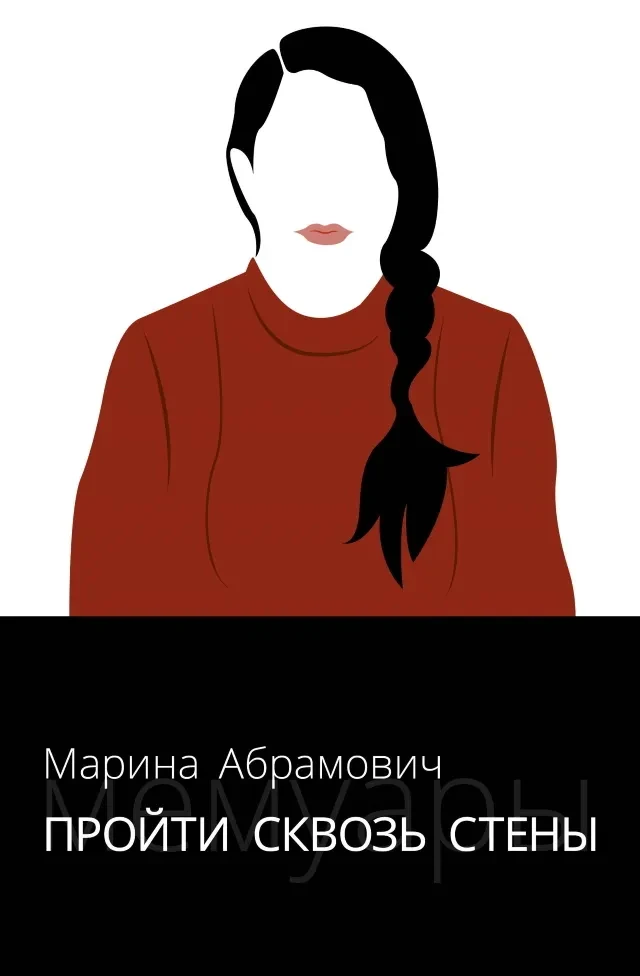
In Russian, an autobiography of the famous Marina Abramovich was released in Russian

The basement of the Italian pavilion. A pile of bloody bones, and on it - a woman who scraps them from meat for four days for seven hours, sobs and sings Yugoslav songs. Stench and stuffiness, continuous madness. Spectators come out, stunned by someone else's pain. Against the background - silent personnel interviews with her parents. This is the “Balkan Baroque” - a performance for which Marina Abramovich was awarded the “golden lion” of the Venetian Biennale, in it Eros and Tanatos merged together.
Who is she and what drives it?
Why today, in the 21st century, the century of technological progress and lack of time, read other people's memoirs? Not a classic Leo Tolstoy, but of our contemporary, Serbian artist-professor Marina Abramovich? Why be forgotten on 350 pages, plunging into a verbose life with an abundance of names and toponyms scattered throughout the text? Who will like this verbal performance performance? Exposure is a very strong artistic technique. Skillful - doubly. The audience of this book can be huge - from specialists interested in contemporary art to those who simply watch other people's streams. It is a pity that the circulation of the book is only 3,000 copies, although it is no worse than the popular “tuning of” Lilianna Lungina.
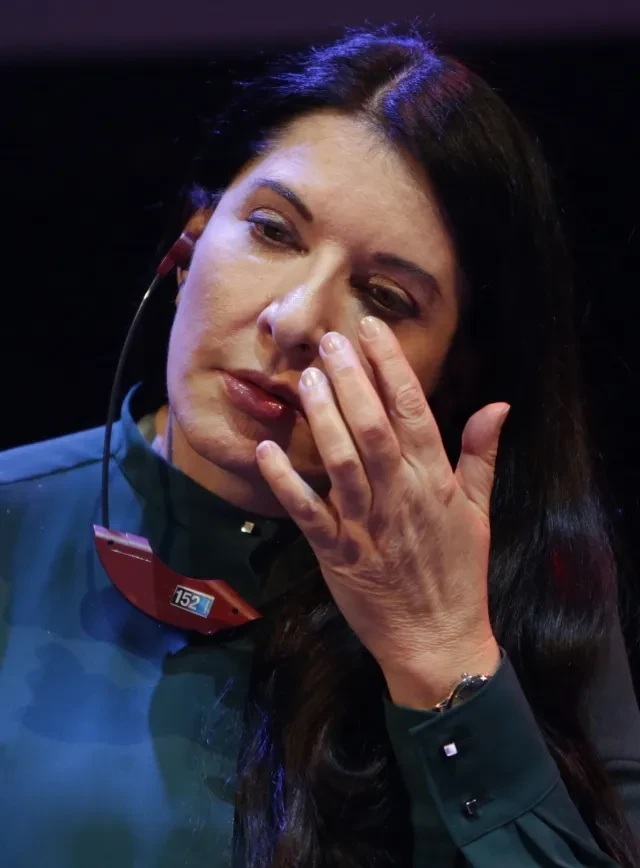
Abramovich is a master of art of world -famous endurance. The discoverer and violator of the foundations. A woman who did the impossible with her body, which she used as an instrument for experiments - on the verge of madness, at the limit of pain and physical capabilities. Art for her has always been life and death.
Autobiography Abramovich “Go through the walls”, which came out this fall in “Anghedonia” (AST), is inscribed in the series “In the Rhythm of the Age”. In AST, it seems, there was already a line of “modern biographies” - there, in a similar format and binding, the “courageous” actress Rose McGowen published on the wave of #Metoo and discussions of harassment in Hollywood came out. It is pointless to compare these two books - the Person caliber is completely different, like the tasks - but it is interesting that where McGowen has expression, Abramovich seems to be consciously icy coldness of speech. And it hits more painfully - like a whisper against a angry scream.
The beginning - before the birth of Abramovich - actually "how I met your mother." The story of her parents in the midst of World War II seems fantastic: the soldier, dying of typhus from typhus, saves the soldier, so that in six months he would “return this salvation” - becoming a donor when he was dying.
But only in fairy tales there is a beautiful happy end-in reality, Abramovich reigned a real nightmare that traumes a little girl.
In the Socialist-Revolutionary Mother, which prohibits her any manifestations of her own will, and forever elusive father-such was her childhood. And no love to all love, even on holidays. Quarrels, scandals, screams, eternal scenes. Neither mutual understanding, nor support. And then - as a result - the expected departure of the father from the family to another woman. The figure of a leaving beloved man will pursue Marina all his life, repeating in her personal stories.
Close your eyes after reading. If you close, you can find yourself inside this book and consider the life of life and the world that has formed a person who turned his body into a tool. A person whose whole life is like an Ommage Theater of cruelty Antonen Arto.
The artist is growing up in the post -war Yugoslavia, the poor and exhausted by the communist regime of Tito. In the books - the salvation of Marina, she reads excitedly: on the orders of her mother - the whole Proust, Camus, Andre Jew, for love - Kafka, Rilke, Pasternak, Marina Tsvetaeva. Communication with peers does not add up - he feels herself rejected by a teenager in ugly shoes. In an attempt to find your own identity and come to terms with your bodily, the first part of the artist’s life passes. Her body is like a camera in which she is and from which she later escapes.
Abramovich slowly unfolds the canvas of his life, talking about how the stages of its formation as an artist and an independent person passed.
For example, it is admitted that until the age of 29, being a married woman, lived with her mother and had no right to return home later than 10 pm.
It is curious to track the psychological state of the artist, preparation for each of the performances and the motivation that moved it. Grown in the conditions of the internal war on the fragments of the external, Abramovich through her life carried her childhood injuries and learned to work with them, creating magical performances in the fierce connection of reality and danger.
The dedicated, according to the author, to “friends and enemies”, the autobiography “Pass through the Walls” goes through chronology. The context from which this or that performance has grown is easily restored. For example, the story of the first planned - “Rhythm 10” - using 10 knives that Abramovich stuck between the fingers to the sounds of a tape recorder. It is dedicated to the unity of the present and past tense with random errors. Or the way “Thomas Lips” (“Thomas’s Lips”) took place at the limit of human capabilities. Or “Rhythm 5”, where it was lying, crucified on a five -pointed burning star - a symbol of communism and repressive power.
Abramovich tells about the first clash with death even mockingly, although she feels guilty-she did not have time for a friend, art critic from Zagreb, because of the rain, and she killed herself: “One morning we had to meet with coffee, but all day it was poured heavy rain, and I never went to the meeting. On this rainy day, she did this - she committed suicide.
But when we, the Slavs, do something, we do it thoroughly. She committed not one, but four suicides: she turned on the gas, cut her veins, drank sleeping pills and hanged herself. ”
The only fragments of speech in the entire book, where sentimentality suddenly slips, is love dialogues, and not so much with the stake, which is considered to be the love of her life, but with her second husband, Paolo Kanevari. One of the dialogs took place after the performance “in the presence of the artist”, who became key in her life, when Paolo, who came after the end, hugged her and said: “You are incredible. You are a great artist. " Instead of the words she expected, "I love you." But she always needed more.
Some reviewers divide the book into three periods, such “childhood”, “adolescence”, “my universities”: “before the Ulya”, “with Ulya” and “after”, which looks greater simplification, because, as follows from the book, in the life of Marina Ulya was not a plot -forming rod, and albeit bright, in nature. A like -minded person and a creative partner who existed with her for 12 years, but not a source of her artistic power.
Abramovich chose the tone of the narrative very accurate: cold - when it speaks of the strategic planning of the artist, ironic and alive - when it comes to life descriptions (for example, how she talks about the situation with the monks or sees the Tuscan landscape: “A rat -fiber swimmed in olive oil. Kuri had epilepsy, every time you fed them, they have pasted. He called Rudolfin, there was a hernia, and the donkey was in love with a pig - he did not know that he was a donkey and slept with a pig . Perhaps, about her autobiography, one can even say the blasphemous word “exciting”, although it is not known that it is more blasphemous - to respond like that, to mark the beginning of the book as a “edition for leisure” or not to place a single illustration of performances, without which a book is a house without walls.
In its most famous performance - “Rhythm 0” - Abramovich laid out a set of 72 items to the audience, allowing them to decide what to do with them and her. With autobiography, in fact, the same: all the facts of the author’s life before the reader, and then - use how it pleases.