
Translated material
"My third hand"
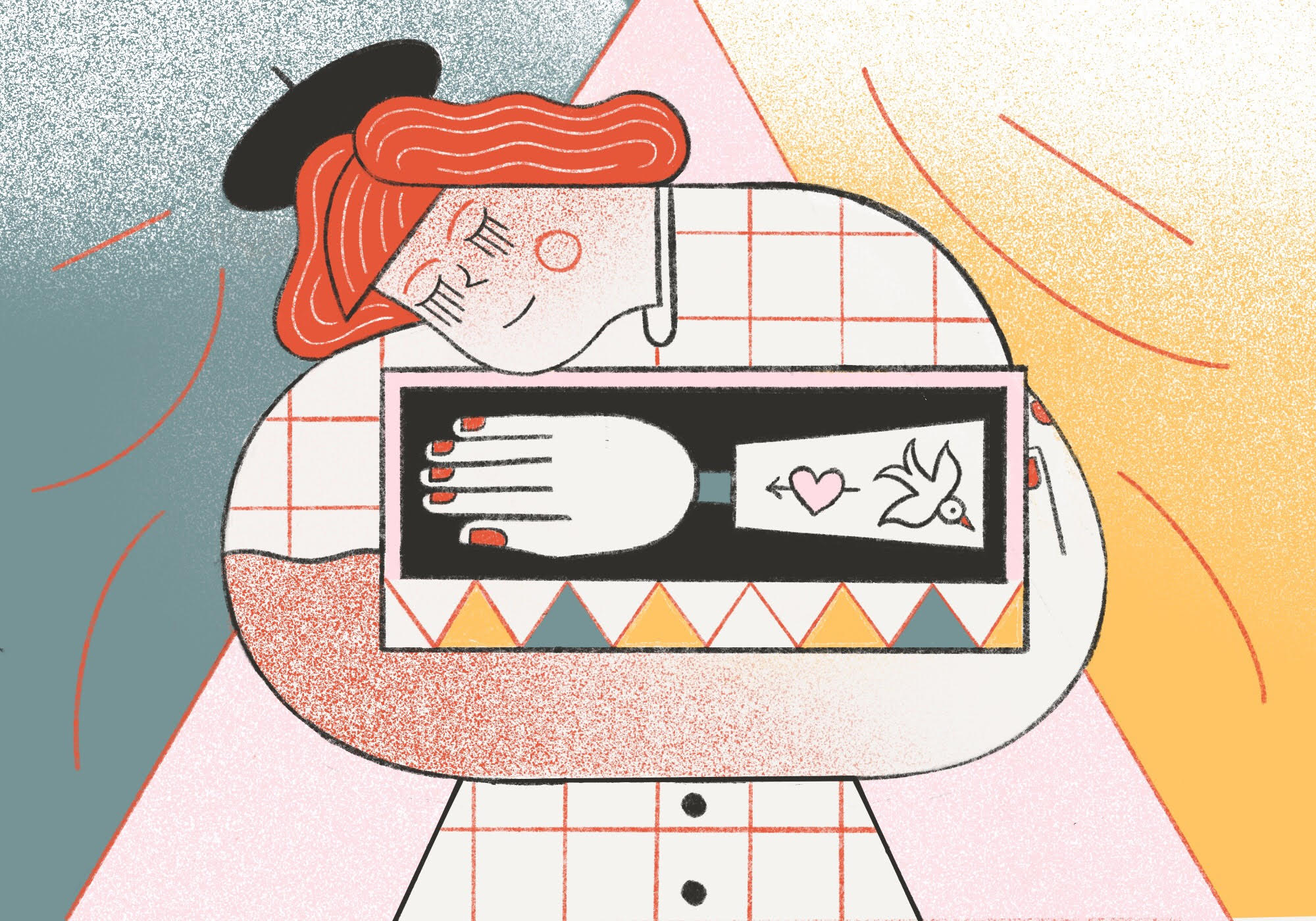
Pillow of safety, second wife, armor - the so their owners call their prostheses. Therefore, a forced or accidental loss of prosthesis can become an injury for them
"Ay, it hurts"
“I have no fingers from childhood,” says Anastasia. -Because of this, other children often humiliated me. And when I was put a mechanical prosthesis, I began to like it myself, I wanted to show it. When you like yourself, you feel more safety. Although I don’t like it with cyborg. ”
Anastasia is 16 years old. She lived with a prosthesis for a year practically without parting, she could only rent at home and very rarely - at school lessons. For her, he is the “third hand” and “airbag”, therefore, when Anastasia gave a prosthesis to repainting during school holidays, her life changed.
“All the week I could walk, I sat at home. Without a prosthesis, I experienced terrible discomfort. All self-confidence disappeared, the desire to go anywhere without him. My friends did not care, with or without a prosthesis, but even the most fun company would not have pulled me out of the house. ”
Now Anastasia has been going on with a new prosthesis for a month and so far has been getting used to it. He seems to her more beautiful than the old, albeit less convenient. But both prostheses are important and loved the same.
“ Once, leaving the entrance without a prosthesis, I immediately returned after him,” says Anastasia. - I got so used to the prosthesis that it seems to me that I even learned to feel them. I never knew and I don’t know how my fingers on my left hand hurt, but when I hit the prosthesis, I say: “Ay, it hurts” - and I squat a little, as it happens if I hit my whole hand and feel pain. ”
Loss
The rehabilitologist of Motorika, Alina Kuzyakina, believes that the prosthesis with prolonged use begins to be perceived by the body as his own limb: if a person wore a prosthesis for a long time, and then was forced to abandon it, it may be painful.
“The prosthesis user can experience all stages of loss. At first, a person can deny that, for example, the prosthesis is close to breakdown and it must be repaired. An internal bargaining begins, attempts to cope with the problem on your own. When you still have to part with the prosthesis, some people can change their life much: someone does not go out without a prosthesis, refuses usual communication, some come to depressive states, ”says Kuzyakina.
According to her, children can especially painfully experience the replacement of the prosthesis when they grow out of it, because they themselves come up with design, drawings, sometimes treat prosthesis as a favorite toy, create their own story for him: “Then parents are advised to keep the old prosthesis at home so that the child does not lose sight of it, getting used to the new one.”
"Armor"
“I perceive each scratch as my own, and it’s a little insulting to realize that these will not overgrow,” Elina says about her prosthesis. She is 19 years old, she works in a PR agency. From birth, she has no left brush. For several months she has been living with a black mechanical prosthesis. Elina used to wear only cosmetic prostheses and was ashamed of them. The new mechanical prosthesis has become for her “psychological armor”.
Elina talks about cases when people accidentally touched her prosthesis and began to apologize in fright, and she joked: "Now there would be a bruise." But in fact, the girl worries in such situations and compares her prosthesis with a new long -awaited smartphone: when you only buy, you treat very carefully, but gradually relax and get used to it.
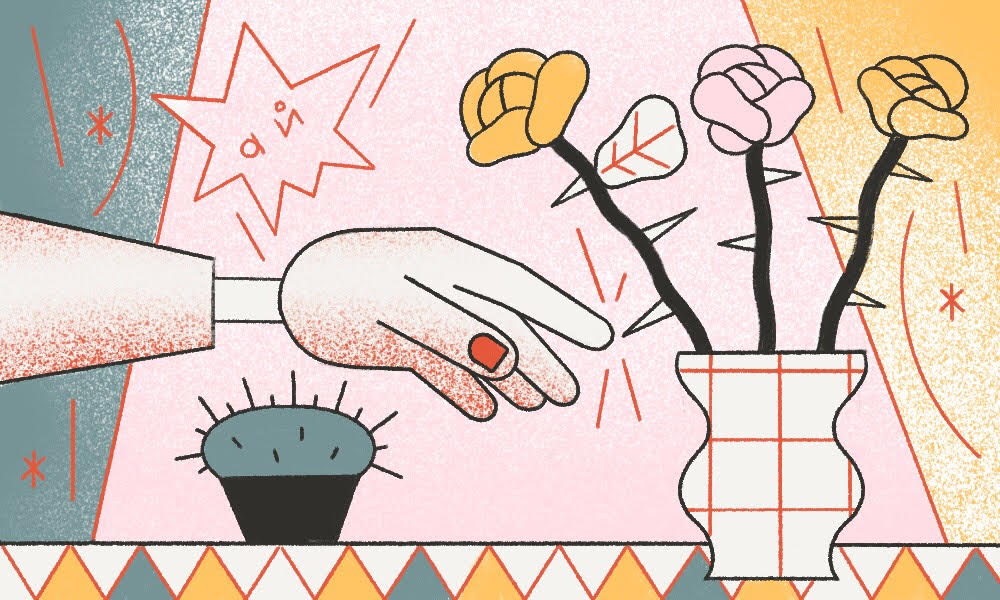 Illustration: Vera Khokhlova for TD
“As to my hand, I probably do not belong to him. This is something else. At home and at work, I can take it off, but I can’t go out into the street without it. Without a prosthesis, I feel a feeling of guilt and shame for not being like everyone else, ”says Elina. - He attracts more attention, but this is attention to the prosthesis itself, and not to the problem. And it calms. One grandfather in the subway even crossed himself at the sight of him. Since then, I will call myself a cyberstan. "
Bodily
The social anthropologist and creator of the project “Life of things” Alexander Endaltseva believes that the concept of the fullness of the body arises from relations that are built between the human body, processes within it, the surrounding world and other people. How full they are, a person feels so full -fledged.
“If my friend with a bioonic prosthesis asks him to shake his hand, this does not happen because the prosthesis became a hand for him,” explains Alexandra. - But because he forms an understanding of his body. This “hand” does not appear as an object out of nowhere, but as a relationship between a person, his prosthesis, me and a social ritual of shaking hands. ”
The perception of the body as a process and part of a large ecosystem is called “multiplicity” in anthropological studies - according to the terminology of the Dutch researcher Annmari, they say. The body does not exist as something ready and, in the case of loss of limbs, as damaged - it is in the process of creating ourselves constantly, because we breathe, microbes and bacteria live in us, substances dissolve. Such a view of bodily, is sure of Alexander, helps to create a comfortable material and psychological environment for people with disabilities, where they cease to be such: relations with replaced parts of the body are perceived as any other relationships between people or objects.
Vulnerability
When Ayman studied at a school in Kazakhstan, she wore cosmetic prostheses, masking the innate absence of her right hand. Aiman raised a grandmother. She raised strictly and never made the girl the concessions from behind, did not allow herself to regret. There was an installation: Ayman is like all children.
Once in the amusement park on one of the carousels, the prosthesis Aiman flew away: where exactly, she did not see. “I was terribly scared that my grandmother was scolding me. With my aunt, we ran to look for a prosthesis and saw that he had a girl, ”Ayman recalls. “She held my cosmetic hand, and inside she put a jar of cola.”
Ayman did not like cosmetic prostheses that had to be constantly changed as the body grew and constantly cleansed of pollution. In addition, she never felt good with them: to pretend that everything is in place, such a prosthesis should be hidden all the time behind long sleeves.
When Ayman got a mechanical one -grinding prosthesis, the girl felt very differently: “Without him, I am inferior, even if others can accept me. Without it, I am vulnerable. Once I had to send a prosthesis for repairs for a week. And all this week I, like Brodsky, sat in the room. I just could not go anywhere without him. I live in a house with several neighbors, and they constantly tell me that I should not wear it all the time, that my stump is not embarrassed, but I myself can’t do without a prosthesis. ”
Ayman 23, she works as a model and organizes photo shoots in Istanbul. Before she was returned from the repair, she still had to go to work without him. In the office, everyone knew that Ayman did not have a biological brush, and the prosthesis is in the repair, and it was not embarrassed by anyone - except for herself: “Then I made a certain likeness of gypsum and hid it in my pocket. It was a negative experience and stress, I was very worried. ”
The prosthetician Anton Kruglov from the company Scoliologic believes that the situation when a person with the innate underdevelopment of the limb did not use the prosthesis, installed it for the first time, and after some time sent for repairs, it is unlikely to be traumatic. At the same time, much is due to how much a person depends on the prosthesis. It is more difficult for people to move their feet than those who lose their hands.
“There are those who really cannot without their prosthesis. For example, people with a paired trimming limbs who learn to treat prostheses for a long time do a lot with their help. These difficulties are not comparable with a simple unwillingness to show people without a prosthesis. In the end, the prosthesis itself does not restore the self -sufficiency and integrity of a person. ”
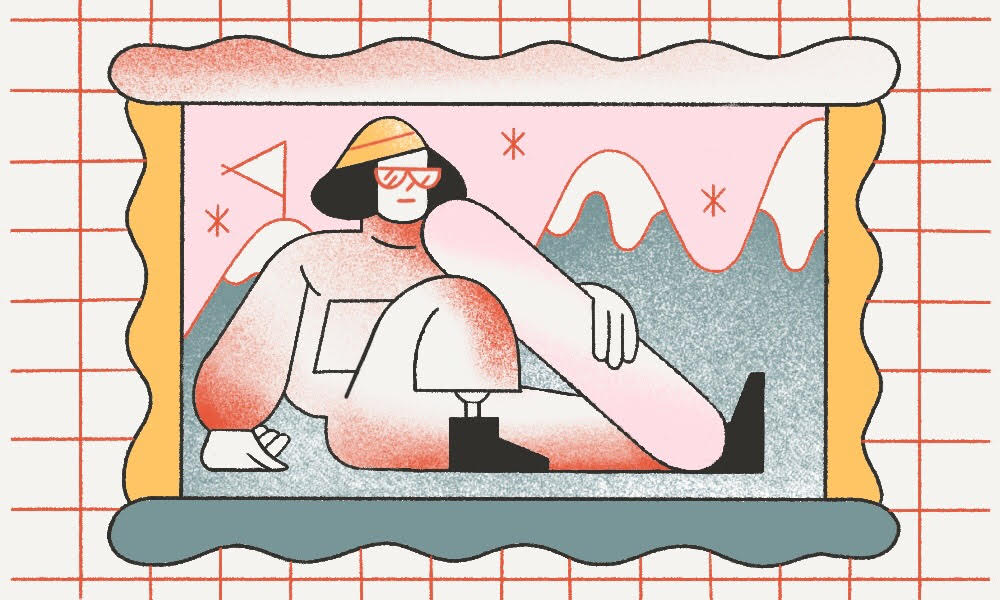 Illustration: Vera Khokhlova for TD
Intimacy
Tatyana Demyanova works as an IT engineer in Moscow. Thirty years ago, a two -year -old child, she lost her hand by mistakes of doctors. From the fifth grade, she wore cosmetic prostheses, which she always hid under a long sleeve.
“I hid that I had a prosthesis, but how could you not notice it? - says Tatyana. - In the kindergarten they say: children, stand in a circle, pick up hands - it was a serious stress. When they made me a mechanical prosthesis, I began to walk with short sleeves. ”
Tatyana did not immediately become comfortable with a new prosthesis, I had to get used to about a year. But even for the first time she was able to wear it only in New York: “There is a common thing for everyone. After this experience, I was able to begin to wear it at home in Moscow. But when I arrived with him in Tbilisi, there was some kind of tin: men constantly looked at me as if I had to die and cry. ”
When Tatyana gave her mechanical prosthesis for repair, she had to return to the old, cosmetic for two weeks. Tatyana did not hide it, but she felt much worse. Just then she wanted to perform on the open microphone TED.
“I coped,” says Tatyana. “But it was comparable when you want to come in a beautiful dress, like the rest, and come in a mint T -shirt with a spot.” The same story was with bionic one global (a prosthesis that works due to electrical impulses read by the device at tension of the muscles of the body. - Approx. TD ). It is functionally very cool, it opens and closes when necessary, but I had great stress when I went to meet him. This is a heavy foreign object, the skin is sweating under it. The feeling that this is a shovel, not a hand. ”
For Tatyana, her prosthesis is a zone of intimacy: “There are things that do not need to show people. For example, when I go to the mirror, I admire my body. But the public is not necessary to look at my naked body. ”
(Independence
Ilnur Khannanov from Tatarstan is 36 years old. In 2015, he fell into an accident, injuries led to amputation of the legs. And if before the accident Ilnur was constantly involved in sports, he loved snowboarding and skiing, then after her some hobbies had to be forgotten: for example, a man can still run only with a special prosthesis. During this time, Ilnur had four prostheses and four different experiences associated with them.
“My first prosthesis was the treatment, mechanical. Everything was difficult with him: you stumble at every step, any turn is hardly given. And I broke it when I got fought. He damaged the knee module due to the fact that during the fight it was simply not to the prosthesis. ”
The second prosthesis was hydraulic, recalls Ilnur. It is almost possible to run on it, but it was necessary to master it to master it. Nevertheless, it managed to walk, climb, ride a bicycle: “But I broke it when the roof was winged: I lifted weights - and the structure could not stand it.”
The third - an electronic prosthesis - was almost like a leg, but it was also necessary to learn to go on it: “You can get it very much to such a prosthesis, and when you switch from it again to a modular prosthesis, you very much feel the difference. But the electronic prosthesis was damaged when I cleaned the snow: I damaged the turn signal - and that’s it. Then I had another prosthesis - with which I could ride a snowboard, and it was a feeling that was not comparable to nothing: when you control the board without a leg, you fly at high speed - and the prosthesis does not bother you at all. ”
But Ilnur does not agree with the fact that the loss of the prosthesis in somewhat repeats the loss of the limb. He says that when you lose your leg, at first you feel that you are nobody. And when you lose the prosthesis, you immediately think to replace it or repair it.
“A prosthesis is your second wife, who needs to be careful for, cherish her,” says Ilnur. “You're anywhere without him.” With him you are side by side. Over the years, you understand that your body is one with a prosthesis. The brain slowly takes a prosthesis as its own, while a person masters all his capabilities with him. ”
psychology