
Translated material
Loyal alliance
Balkan countries develop relations with NATO. Even Serbia
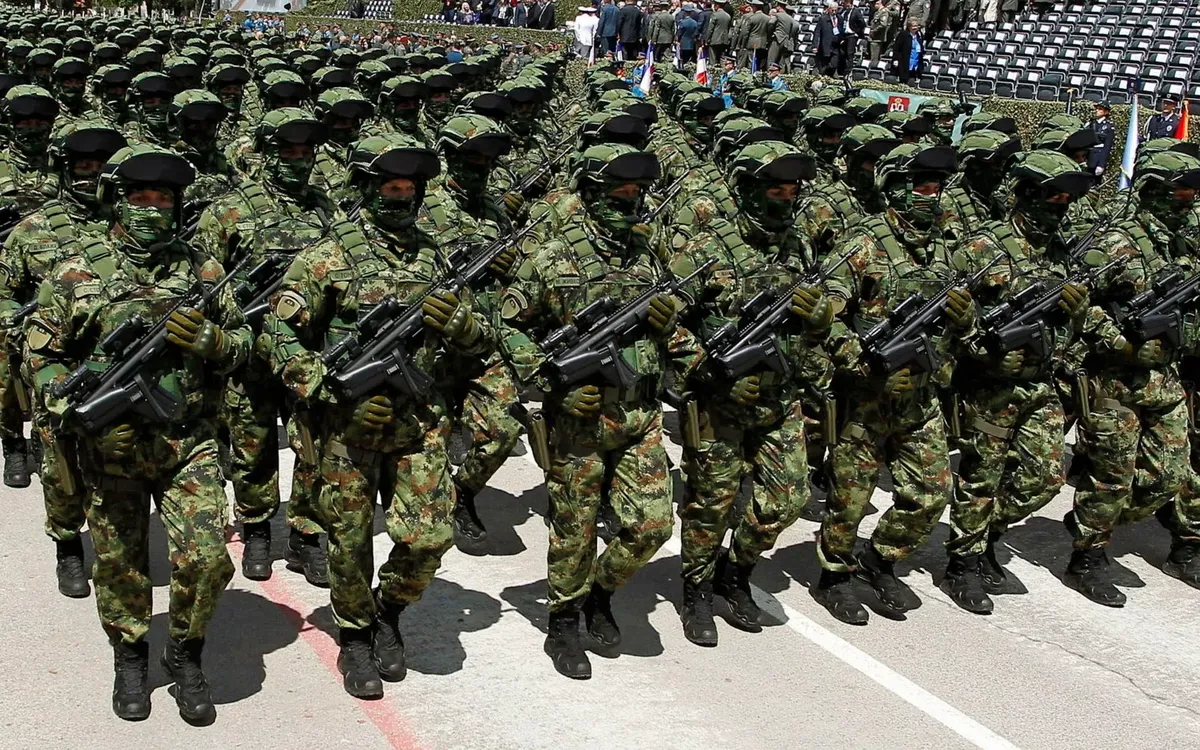
On the very eve of the visit of President Serbia Vucic in Sochi, when a giant electronic billboard was already lit with the inscription “Brothers forever”, a small information grenade was neatly blown up in Belgrade. Serbia will no longer purchase weapons, President Wucic said, and will develop the army efficiently. The reform of our army will continue, he said, we will build a system of defense, but we will stop buying weapons.
In order to make such a cardinal decision, there were enough consultations of three people: the president himself, the Minister of Defense Alexander Vulin and the head of the General Staff, Milan Moisilovich. But why did this happen on the eve of the “Meetings at the top”, how was the Russian Foreign Ministry of the Bocharov Foreign Board christened the working visit of Vucic?
Recently, Russia has sold Serbia seven Mi-17 and Mi-35 helicopters, and also donated six MiG-29 fighters as a gift (by the way, it will have to be paid very decently for the service) and ten BRDM-2MS armored personnel carriers. More recently, Belgrade ordered from Moscow and already paid for the “shell-s”-an anti-aircraft missile-gun complex designed “for air defense of small-sized military and administrative-industrial facilities and regions”. Some of the helicopters arrived in Serbia ahead of schedule - it is believed that by personal order of Putin. It seemed that this would continue.
The reason for the turn of Belgrade to the new defense policy here is practically unanimously seen in the fact that Serbia received a warning from the outside. After the Grozny S-400 Terrible Complex was visited by the Grozny Complex, which could withstand all imaginary air threats, including cosmic Balkans, Matthew Palmer, expressed concern “not only by the placement of Russian military equipment in Serbian territory, but also the possibility of acquiring a Serbia, in the rear of NATO. large Russian weapons systems. ”
Immediately, an assistant to the US Secretary of State to combat the spread of weapons, sanctions and regional issues of Thomas Zarzheski arrived in Belgrade - it is he who is responsible for American sanctions against participants in transactions with Russian defense and intelligence sectors. I must say, in anticipation of this visit, the Serbian side was noticeably nervous. “There will be no sanctions” from the mouth of the Minister of Foreign Affairs Ivitsa Dachich, said based on the results of the inspection of the Washington emissar, was relieved.
In truth, the Declaving military neutrality of Serbia began to look somewhat inadequate, acquiring a party of weapons or receiving it on other conditions in Russia, the USA, China.
Moreover, there is no visible threat to Serbia. And when Vuchich, as it were, in the fusion, also stated that Serbia would like to buy superweapon-S-400 complexes, but could not afford-this caused a predicted reaction from the West.
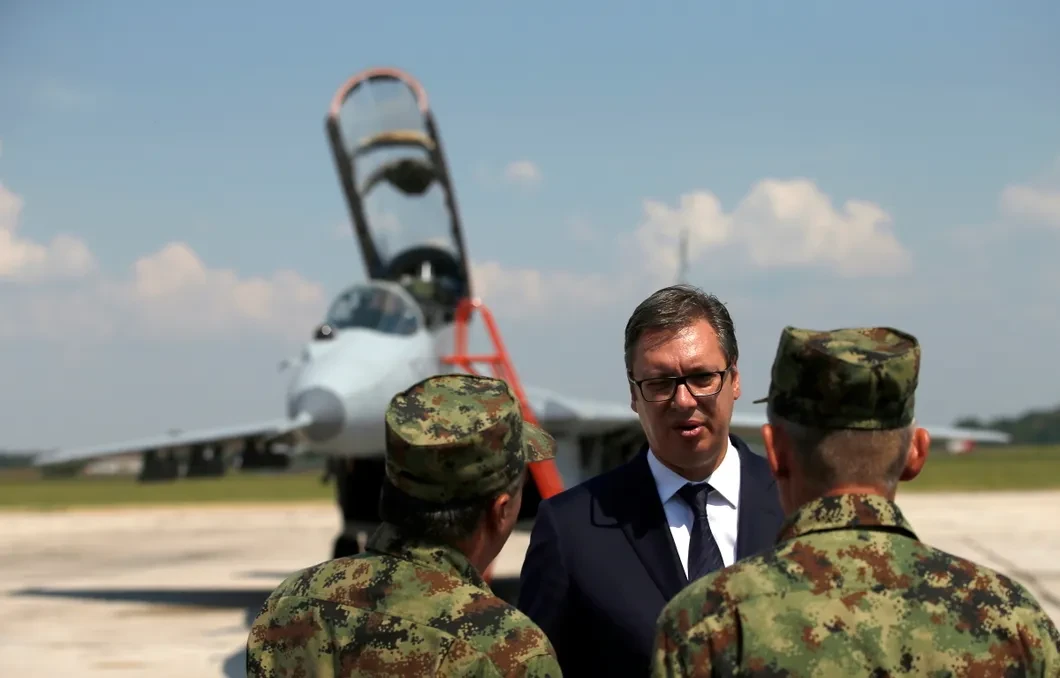
Why "how"? Vucich, excellent tactics, knows when and what to say. He uttered these words a couple of weeks before Serbia was to extend the plan of individual partnership with NATO (Individual Partnership Action Plan - IPAP) for 2019–2021, which was done. The first prisoner in 2014, the Serbian IPAP gave the Alliance forces access to the country's military infrastructure. Then the popular buying -up ratified the agreement with NATO, which guaranteed his staff in Serbia diplomatic immunity, exemption from taxes, as well as free movement and access to any objects throughout the territory.
Now Serbia conducts teachings with NATO divisions ten times more than with the Russian army. But at a meeting with Vucic in the Bocharov stream, Putin said: “Supporting the adherence of the Serbian side to the military-political neutrality, Russia is assisting in strengthening the defense capabilities of Serbia.” Thus, the status quo status-quo necessary to the Balkan partner was recorded. The meeting ended symbolically: the Russian president gave a colleague a gun bought at the auction, Prince Milan Obrengovich, who occupied the Serbian throne in the 80s of the XIX century.
And in the neighboring, Bulgarian, plot of the Balkan political garden is also news: Prime Minister Boyko Borisov brought at the end of November from the White House (directly from the hands of President Trump) a luxurious joint communique, which speaks of the development of bilateral cooperation in the field of defense “with the aim of opposing the sea, hybrid and cyberosis in the Black Sea over the next fate,” including By providing Bulgaria, assistance in facilitating access to advanced American defense technologies and expanding the scale of military exercises. “Our armed forces are united in the interests of protecting freedom, and, as expected, they will strengthen their defensive and preventive positions on the eastern NATO flank, including in the Black Sea, which is of particular importance for Euro -Atlantic security,” the document says.
And one more important point: "The United States welcomed Bulgaria's readiness to accept the NATO coordination center in the Black Sea on its territory."
The format of the center is still known, in addition, it will be in the resort Varna. This is not a base, and not a logistics center, Rumen Radev President, President of Bulgaria, explained vaguely.
No one in the region has such a level of cooperation with the United States itself and the alliance! Borisov was met in Washington with volleys of artillery fireworks, a joint statement of the two presidents says that "the United States supports Bulgaria’s desire to join the visa -free travel program and welcome the gradual implementation of its criteria." They even hinted at the possibility of a visit to the Bulgaria of the current inhabitant of the White House.
All this is partly gratitude for the acquisition by Bulgaria this year by eight American F-16 Block 70 fighters to replace Russian MiG-29 aircraft. Having laid out the incredible 1.25 billion dollars and spent on this purchase two -thirds of the annual defense budget, Bulgaria fulfilled and even exceeded two NATO criteria: to allocate at least 2% of GDP for defense, and 20% of these funds should be aimed for the purchase of new weapons. Now it is set as an example to other members of the Union.
But not only out of gratitude to the United States open a non -standard echelon of relations with Bulgaria. No matter how relate to Borisov, his words that his country is a loyal member of NATO and the EU correspond to the truth, and the degree of anti -Americanism here does not exceed the level of the natural background. The latest news: Bulgaria will take part in the NATO initiative “from 4 to 30”, according to which from 2020 the Alliance will have 30 mechanized battalions, 30 warships and 30 air squadrons, ready to turn out for 30 days if necessary.
... The newly-ended 70th anniversary session of the NATO Council de facto accepted Northern Macedonia in its members: her flag became the thirtieth on the flagpole at the entrance to the Brussels headquarters. The official ceremony was prevented by the government crisis in Spain, which is why she did not manage to ratify the corresponding protocol, and this will happen in the near future. But life continues, and on the outskirts of NATO his brain works satisfactorily. “We spoke with my Macedonian colleague Zoran Zaev that when we get new fighters, we will protect the airspace of Northern Macedonia,” Borko Borisov Bulgarian national radio told Borko. “This option is convenient for both skewers and Sofia, since F-16 aircraft will not be able to unfold at small distances and will inevitably fly into the territory of Macedonia.”