
Translated material
Retired hegemon
Why America refuses the role of superpower and what model of geopolitics is needed by the modern world

After the collapse of the Soviet Union, a significant part of the American analytical elite agreed with the thesis of Professor Francis Fukuyama that the driving force of history is a conflict of ideologies. The social-communist concept remained the only barrier to the global triumph of the capital-democratic model.
Indeed, in the classical interpretation under the Cold War, it is customary to understand the clash of two worldview philosophy, led by two superpowers - the United States and the USSR. The decay of the latter was regarded as the end of history, because with the death of communism the world conflict of ideologies ended, and the new goal of America was to contribute to the spread of the ideas of a market economy, strengthening international institutions and fundamental human rights.
Traditionalist George Bush Sr., who went through all the stages of political growing up-a congressman, a representative of the UN, the head of the National Republican Committee, the ambassador to China, the director of the CIA and the Vice President-spent only one period in the oval office and unexpectedly lost the 1992 election unremarkable Bill Clinton. This event may have become more significant for conditional “Fukuymists” than the same collapse of the Soviets.
According to the Neovilsonians (liberal democrats), the internal configuration has changed, and the Americans for the first time in history gave preference to a candidate who did not fit into the traditional idea of what the country's president should be. Clinton did not serve in the army and was a vivid representative of the hippie movement, he received higher education not in the States, but in British Oxford and believed that any ethnopolitical conflict could be resolved if appropriate social and economic conditions for the democratization of the warring countries were created.
Passing through the army was an important condition for the success of any election campaign in the Cold War, because the president is the Supreme Commander. This unspoken rule extended to both parties, so even the democrats-presidents of that period-Harry Truman, John Kennedy, Lindon Johnson and Jimmy Carter-served and had military ranks.
If the majority ignored this fact, then the psychology of perception has changed, and humanity led by updated America enters a qualitatively different era.
All other theories were pushed into the background, including the “clash of civilizations”, which was nominated by Samuel Huntington in response to his former student Fukuyama. Realists and geopolitics such as Henry Kissinger and Zbignev Brzezinsky ceased to play a significant role in the process of developing and implementing international politics.
It was this “Fukuyama trap” that created the conditions that brought the world to the stage of complex uncertainty and, as a result, led to the return of geopolitics. Neovilsonians believed in the exclusive mission of the United States as an unconditional leader of the free world and defender of forces interested in transforming their countries according to the American model. From this position, America must maintain hegemony in order to prevent attempts by the losers of the revenge, as well as prevent the revival of old ideologies, especially nationalism.
However, faith in the success of this goal each time broke against the wall of immortal Machiavellism. The started negotiations between Israel and Palestine in Oslo ultimately ended not only the murder of Prime Minister Yitzhak Rabin, but also led to even greater problems and uncertainty, creating many new phobias on both sides. Later, the Clinton administration could not clearly explain the indifference to the genocide in Rwanda, and the flared conflicts in Yugoslavia and Olster did not leave stone on a stone from neoliberal romanticism. Various approaches were used to each case, but realism and geopolitics returned to the decision -making process.
In the case of Yugoslavia, neoliberalism justified the use of force as a means of coercion to the world. And supporters of this approach tried to explain why the theory that rejects the war and violence as an instruments of foreign policy nevertheless uses typical geopolitical elements of the Hard Power. They just changed their goal: geopolitics use force to intimidate, intimidate and conquer, and liberal democracy indicates intervention as a way of preventing a humanitarian catastrophe.
True, in the North Irish conflict, Clinton made a decision as a realist. Not wanting to spoil relations with the Irish Catholic lobby in America, which at that time was widely represented in the party elite and had a serious influence in the Senate (Ted Kennedy, Joe Bayden and John Kerry), the president carefully sympathized with the Irish. On his part, loud accusations against them in radical nationalism no longer sounded, which was characteristic of his rhetoric in relation to the Middle East and Yugoslav Caseam. Groups of influence, the actions of which Clinton tried to limit it to limit to new legislative acts.
After the signing of the famous “contract of the century” with Azerbaijan, the democratic administration began to focus on the interests of its oil corporations, and not on the problems of political regimes and human rights.
In fact, in another of the most difficult conflicts of modernity-Karabakh-Azerbaijan-the theory of the democratic world receded before realism and geopolitics. In other words, a new ideology, which was supposed to become a hope for the upcoming victory of universal values over political benefits, completely failed and was turned into one of the conjunctural instruments of a real politician.
The concept of humanitarian intervention, or “good should be with fists,” in the future was actively used by non-conservative hawks in the administration of George Bush Jr. to explain a completely unreasonable military invasion of Iraq. Obama’s attempts to return to the forgotten dream with the slogan of YES, We Can were marked by the next disappointments: from restarting with Russia to sanctions policy, inciting even greater fires in the Middle East, numerous scandals about illegal auditions, unrealistic problem of Guantanamo prison, etc. There were so many poorly geopolitics that Henry Kissinger warned of a possible overstrain with all the ensuing consequences.
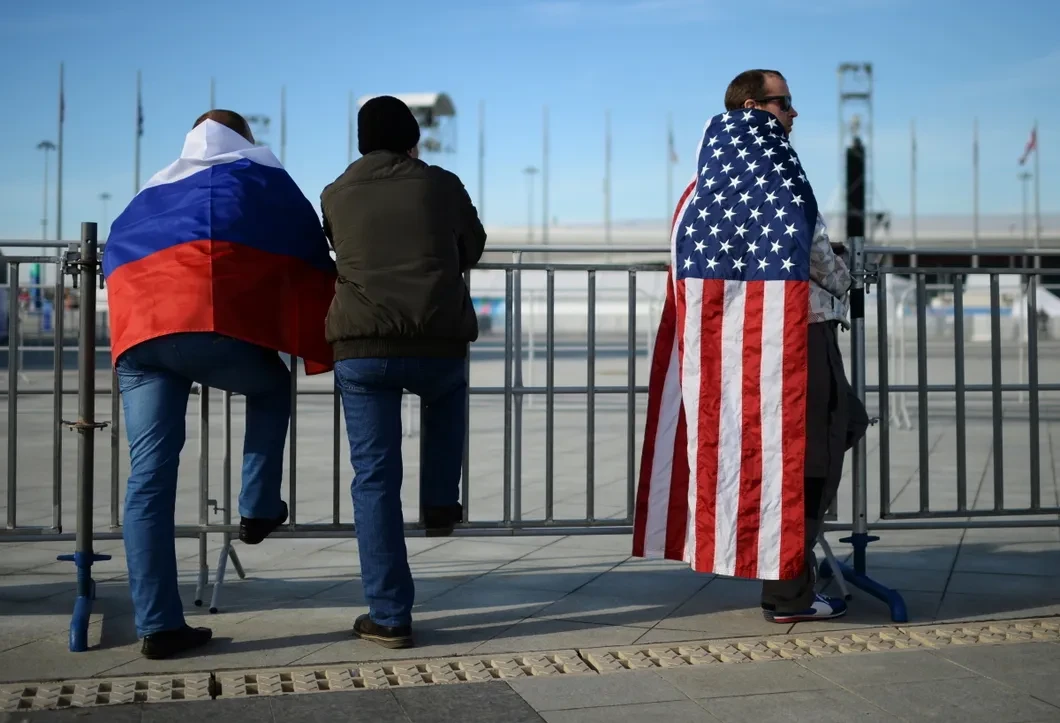
The 2016 elections were an internal call from the departure from that model of the American dream, which the Neovilsonians confidently promoted. It turned out that most Americans are not ready to sacrifice “their own”, national for the universal human.
Voices for Donald Trump are a total request to curtail globalist projects that are not able to make the life of an ordinary American better.
This event can be safely put on a par with the war for independence, taking into account the steepness and sharpness of the united states.
Today is the internal process of regrouping of various forces and understanding the further plans of America on a global scale. The Nejeconian administration of Trump, unlike the previous ones, is trying to behave rationally and build international policy, based on an adequate perception of his own resources and the potential consequences of certain decisions. How qualitatively it is possible to implement these decisions is a separate issue, but the change in the motives of their adoption can already be considered a great success.
The internal struggle of individual groups of influence is just beginning, so it is impossible to say that there was a final turn from neoilsonianism (neoliberalism) to neo -Joeconianism (nationalism). However, in the event of the victory of the latter, one can count at least on serious discussions of the great powers about the need to form a new system of international relations. Washington realists are aware of the importance of this process, understanding the limitations of their capabilities to maintain the status of a hegemon in the long run.
And a similar task has long lost all expediency: the world has not become safer, conflicts acquire other formats, and the number of new challenges and threats is growing exponentially. In the medium -term period of time, it is necessary to at least overcome the system disagreements between the great powers.
The most optimal for all parties can be a model based on the fundamental principles of past systems: respect for sovereignty and non-interference in the internal affairs of each other (Westphalian), the balance of power (Vienna), the separation of zones of influence and responsibility (Yalta-Potsdam). An alternative is a further aggravation of conflict, because it is obvious that at the moment geography, realism, specificism, nationalism and selfishness have laid the theory of the democratic world on the shoulder blades, including in the United States.