
Translated material
Why human rights activists against the person recognition system?

The court abolished private life in Moscow - this is how journalists commented on the decision of the capital's Savelovsky court of Moscow, who rejected the lawsuit of the human rights activist Alena Popova. She demanded to prohibit the person recognition system in the metropolitan video surveillance system. Why the trial and the public campaign are required by public outcry, Julia Kalenkova, journalist of Telitsa, discussed with the lawyer of Roskomsvoboda Sarkis Darbinyan .
What happened?
In early October 2019, Roskomsvoboda launched a public campaign to introduce a moratorium on the use of persons recognition technology in the city video surveillance system in Moscow. As part of the campaign, the lawyers of Roskomvoboda, representing the interests of the human rights activist Alena Popova, filed the first lawsuit regarding the recognition technology of persons. The defendants were the Ministry of Internal Affairs, the Department of Information Technology of Moscow (DIT), and the Office of Roskomnadzor for the Central Federal District was involved as a third party. It is his responsibility that is the protection of personal data of citizens.
The requirements of the claim were based on statements by officials themselves, which spoke about the use of the recognition system, as well as on video recordings from the observation camera submitted to the court. They can see that a 32-fold zoom was carried out with fixation on the face of a human rights activist. However, this was not enough to impose a ban on a person recognition system. The authorities denied the application of technology, referring to the fact that "video surveillance is necessary not only for identifying citizens, but also to detect snow at the entrance and crowded garbage tanks."
What is the essence of the Roskomvoboda claim?
The reason for applying to the court was the statements of the capital's officials about the large -scale deployment of the system with the recognition technology and the application of this technology, including for “ensuring security at public events”. The video with the image of Alena Popova was required in the framework of the case, in which she received a fine for participating in a single picket against harassment with the cardboard deputy Leonid Slutsky ( more about the case ).
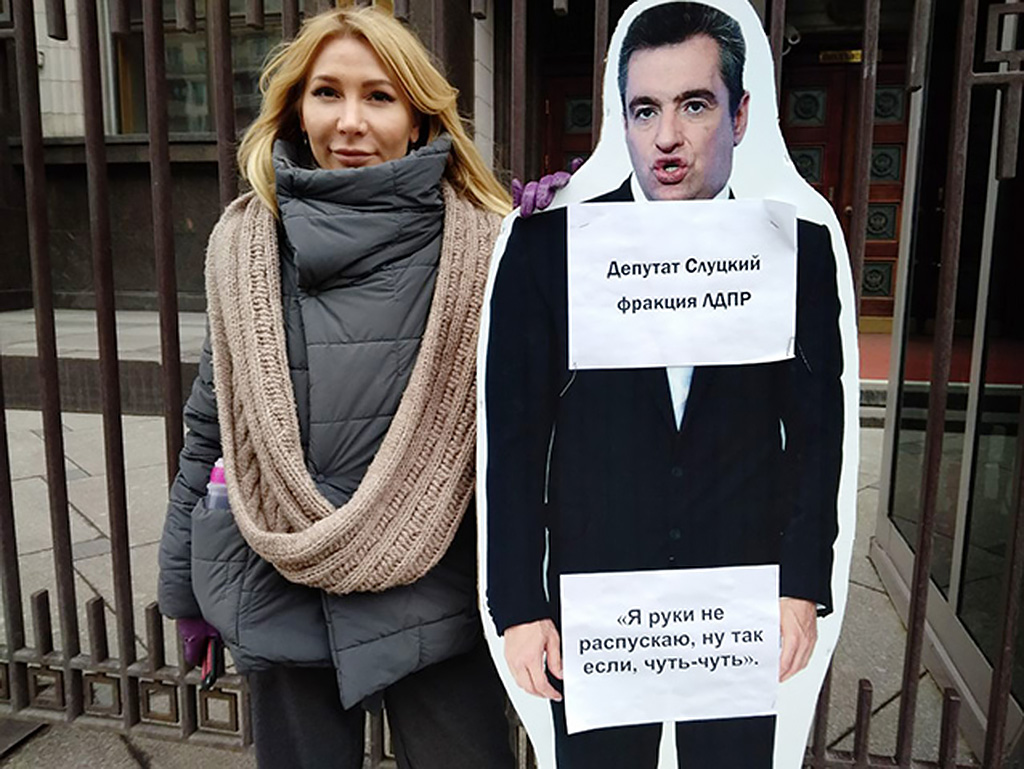
“I was detained six times and at the sixth was accused of holding a mass action. At the trial, the lawyer and I requested data from video surveillance cameras to prove that there was no mass action, and only me and cardboard Slutsky were. On the record we saw that the cameras brought my face to 30 times, that is, recognized me. I decided to go to court because I want to understand why my face is in the base. There is no appropriate court decision on this, I was not charged in the framework of a criminal case. Moreover, this is surveillance, an invasion of private life, which are prohibited by the Constitution, ” said Alena Popova.
Why was they refused a lawsuit?
The processing of biometry of citizens without written consent violates the law on personal data, as well as the right to private life. However, representatives of DIT Moscow assured: the human rights activist was not accused on the basis of the record. The fact of the picket was established by the police officer. I did not use video recording of the Ministry of Internal Affairs. Dit does not confirm the use of recognition technology, since such information is stored 120 hours.
Another topic: do not smile, they try to recognize you
Moreover, after the transmission of information to the carriers, DIT is no longer responsible for its safety - the image was received in a public place, this is publicly available data, formally it is “freedom of searching for information”. Also, the defendants in the lawsuit stated that the recognition of persons needs "not only for people, but also to determine the cleanliness of roads, places for installing playgrounds, road repair sites." Allegedly, technology is used in public spaces, and "citizens are not objects of observation."
What to do next?
“The claim was really refused. The main task was to obtain regulations that establish the procedure for accessing data in the police. This would help to understand how the Bacunde works (the hardware-hardware part of the service.- Approx. Ed. ). But we did not receive much information, ”comments the leading lawyer of Roskomsvoboda, the head of the Digital Rights Center Sarkis Darbinyan.
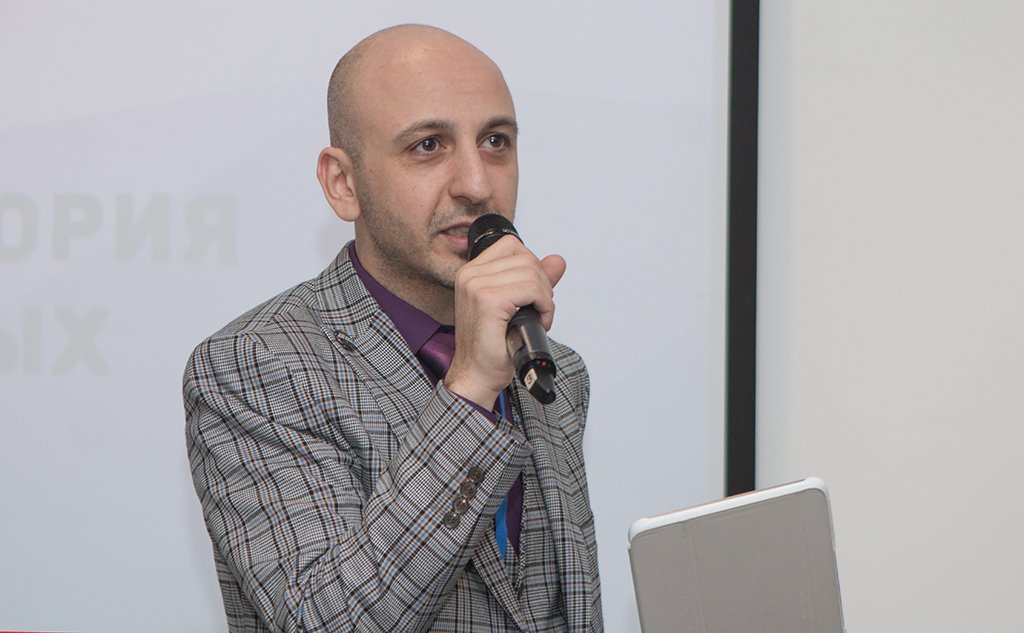
According to him, this was only the first lawsuit. Now work is underway in two directions. First: Development of a bill related to the introduction of a moratorium on the use of persons recognition technologies in the city video surveillance system. And the second: the collection of evidence, the direction of requests and the preparation of another claim for the Ministry of Internal Affairs regarding precisely data leaks and unauthorized access to the system. “With the help of journalists, we managed to get enough information on this issue and now we are trying to give it legal significance. I think the next lawsuit will be associated with leaks, and the defendant will act as the Ministry of Internal Affairs, ”summed up Sarkis Darbinyan.
Journalist Andrei Kaganski conducted for MBH Media (access to this resource was blocked by Roskomnadzor), checking the availability of the Moscow CCTV system “Safe City” and found out that the city is not so safe. Access to the cameras and even the person recognition system is not controlled by anyone, but thus police can check any, and not just the criminal on the wanted list. And transfer this information to anyone.
What are the arguments of the authorities?
Firstly, the department claimed that only the image of a citizen without personal data states, so nothing can be deleted. The technique is only a comparison of one image with another. Video algorithms translate the image into a cache code, so " Dit is not engaged in identification of personality ." Consent to processing is necessary only if the image goes along with personal data, and the movement of a citizen is not the purpose of video surveillance.
“According to DIT, personal data are not processed. This is a fairly controversial statement when it comes to collecting and providing access to images of citizens. Both the media and the website of the Moscow Government indicate information on the use of the recognition system. Another question is that the cameras are not as much for recognition as stated. As a rule, these are cameras at the entrances. Now we are also dealing with the infrastructure in Moscow: which cameras where are they, which model, what information can they collect and transmit, ”explains Sarkis Darbinyan.
Secondly, in a return lawsuit, Dit argued that biometric data are not collected. The object of video surveillance is snowdrifts, cars, anyone, supposedly people are not an object of observation. Consequently, there are no contradictions with the Constitution of the Law on Personal Data, which prohibits the collection of biometry of citizens without written consent.
“In addition, Dit believes that images are not personal data. That is, a video image on which there is a person does not apply to personal data and does not require consent to process it. This, from our point of view, is a rather controversial argument. Nevertheless, a specific face is recorded in the image and image processing occurs. How everything happens: first, the cache is removed from the image that is received from the picture, and is compared with the image cache that is in the database. If there are coincidences, the face is identified. Therefore, of course, the processing takes place, ”Sarkis Darbinyan quotes the counterargument.
“It is not known where this technology (recognition. - approx. Ed. ) It is used why it is used without our consent and what algorithms work for,” says Alena Popova.
Why is it important to monitor the situation?
Persons recognition systems - dual -purpose technology. They can be used for pressure on society. Mass recognition of persons should be prohibited until complete transparency and safety of its use for citizens are ensured.

What is the problem with person recognition
- By law, citizens must consent to the processing of biometric data. But no one gave him.
- Those who have access to the system often abuse it: sell access for money or monitor their relatives and acquaintances.
- Drenches: data obtained by recognizing persons will be available to people with a variety of intentions and goals.
- Mass surveillance and transformation of behavior. Constant observation changes the behavior of citizens and affects the possibility of peaceful protest.
- Depending on nationality, age and floor, the percentage of erroneous recognition reaches 35% .
For these reasons, human rights activists demand to introduce a moratorium , which will allow you to conduct all the necessary sociological and legal studies, to study the practice of applying technologies around the world. It takes time and sufficient examination to develop safe practices of using technology. A transparent mechanism for monitoring the procedure for accessing data and tightening punishment for abuse of access to them is also necessary.
How ideally the situation should be resolved?
According to Sarkis Darbinyan, the system should be open and transparent: access to the regulations that would control the right to access the recognition technology is needed. Institutes of control over police - for the procedure for accessing the system, for the use of biometric data of citizens should be created.
“At the moment, for any criminal act and even for administrative supervision, the technology can be used. We believe that the restriction of human rights to privacy is possible only in the case of really serious crimes. If, for example, a person is caught for pocket theft, then the use of technology is unreasonable. But if pedophiles and terrorists are sought out for incorpected matters, then, of course, this access should be, ”the expert comments.
Now access to data is absolutely opaque. There is no independent privacy protection body in Russia. Roskomnadzor has no authority - he can neither go to the base of the Ministry of Internal Affairs, nor carry out verification, nor conduct an inquiry. Therefore, an independent body of supervision is necessary, which will monitor compliance with the access regulations. And of course, we need more understandable policies of processing this data. Sarkis Darbinyan
Throughout the world, there is also a fight against such technology. In England, the state’s attempts to use Face Recognition in football stadiums even face the protests of society, and in the States the same wave is raised by the employees of IT giants like Amazon and Google, who are forced to develop such algorithms by order of the authorities.
Human rights activists are sure: a person should be warned of video surveillance using persons recognition technology. Citizens need to understand what a recognition system is and what are the risks of its application.