Date
Author
Юрий Сафронов, Наталья Данилова
Source

Preserved copy
Translated material
President, a pension soon!
In France, 800 thousand people came out against pension reform. The authorities are prepared for concessions, but citizens intend to continue the pressure
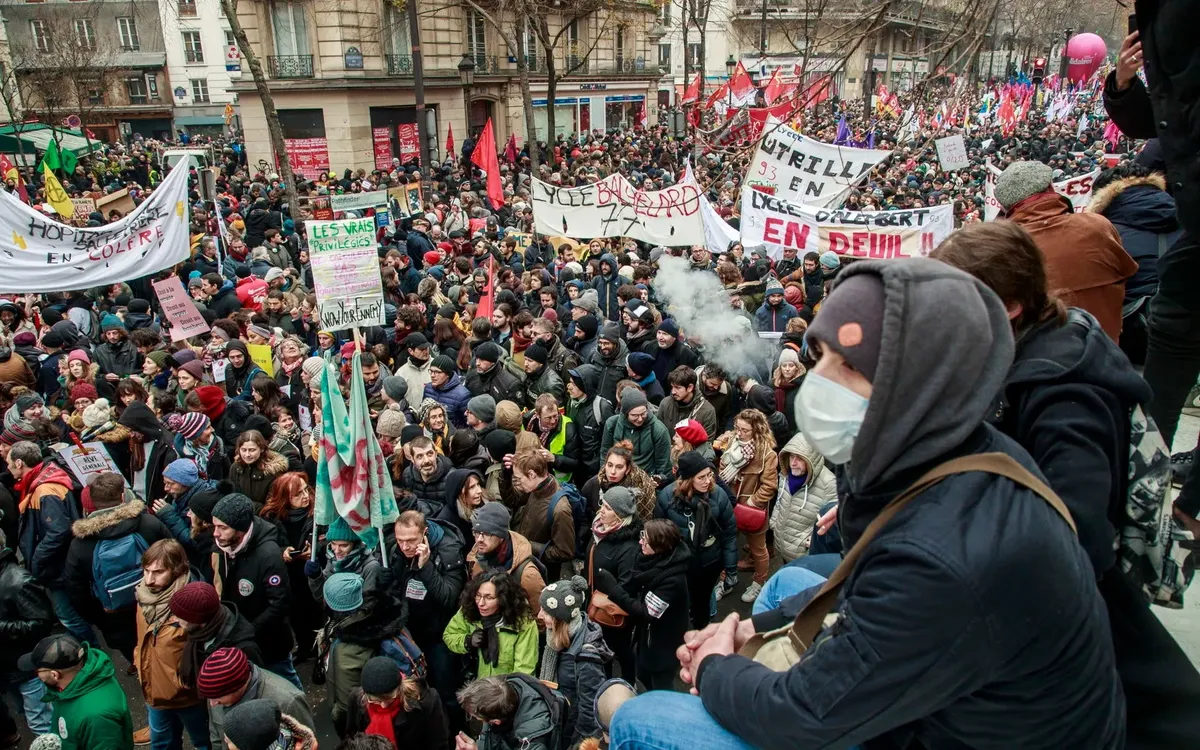
On Saturday, transport workers continued to strike in France: there were ten times less trains than usual, with large intervals and interruptions, the Paris metro moved (9 out of 14 branches were generally closed), many bus lines did not work. Trade Unions of the State Railway Monopolist SNCF and the Paris transport company RATP were advised to passengers without the need not to try to leave somewhere on Monday. Not to mention Tuesday, when a second large strike against pension reform should pass throughout the country.
The first large was on Thursday, December 5. Protested in one hundred cities.
According to the police, 806 thousand people went to protests. Of these, 65 thousand - in Paris. The CGT trade union announced 1.5 million and 250 thousand in the capital.
But even police numbers talk about the success of the protesters. Success is not at all deafening, France saw larger strikes-for example, in 1995, when the trade unions managed to “paralyze” the country and force the novice President Shirak and Prime Minister Juppe to abandon the pension reform.
But in recent years, there have not been such mass social protests. 806 thousand - this is two and a half times more than on the largest action of "yellow vests" in November last year.
On December 6, immediately after the first large strike from the office of Prime Minister Eduar Philip, “leaks” leaked to the press about the readiness to soften the conditions of the reform. For example, to move her into force for several years, as well as eliminate millions of citizens born from 1963 to 1973 of her beneficial influence. (It was originally planned that the new order will affect those who were born in 1963 and later).
Just in case, Prime Minister Philip also performed on TV, emphasizing: “The logic of my actions” on the execution of the reform “will not be built in confrontation”. He promised that already on Wednesday at noon, December 11, he would present to the fellow citizens the “clear contours” of the transformations, the purpose of which is to build a “more solid” and “more fair” pension system.
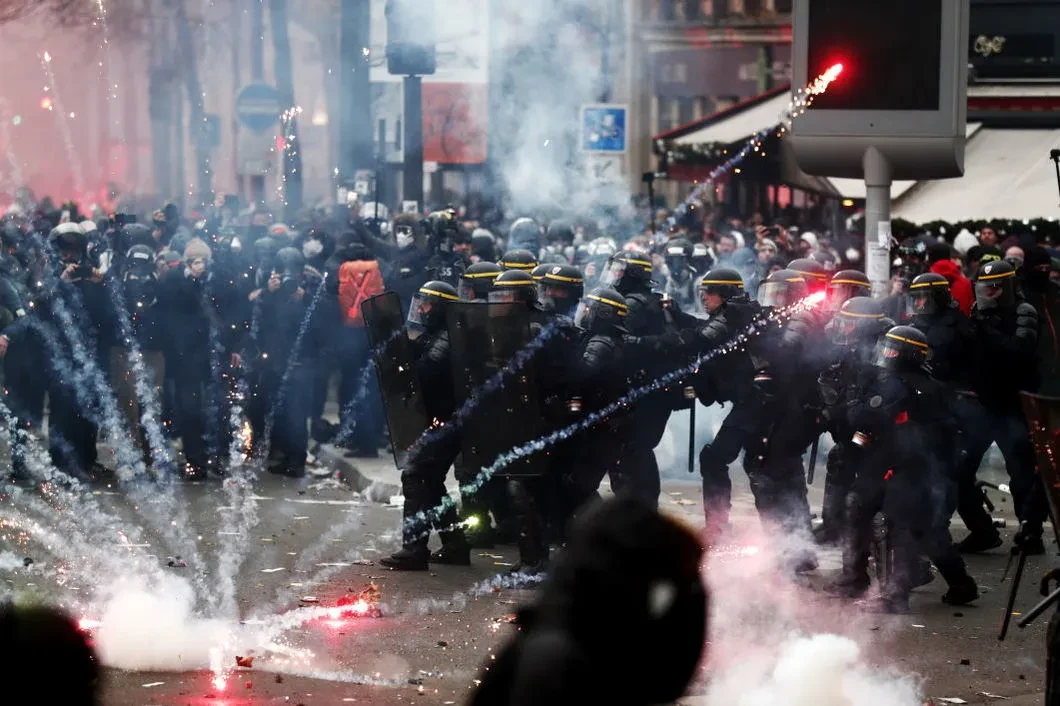
In particular, the authorities intend to cancel 42 special regimes that allow representatives of many professions, mainly in the public sector, retire earlier and have other benefits. Privileges are planned to be preserved only to those whose work is related to “increased risk”: police, military, firefighters. But not to drivers, controllers, postmen and not bus drivers.
Another innovation: each working, regardless of the profession, should receive an equal number of pension points for each euro of contributions, and points will be calculated taking into account the entire career (now the pension of the private sector depends on the most “high -paying” 25 years, the pension of civil servants - on the salary of the last six months).
In addition, the reform implies “stimulating measures” so that the French, with a “standard” pension regime, work two years more - that is, up to 64 years old, instead of the current 62.
Many future pensioners are afraid that the authorities want to cut their pensions. Fear is found.
The authorities, speaking of a “more fair” system, hint that, having cut off the “excessive” benefits that are still assuming to many civil servants, as well as very prosperous categories (for example, to lawyers who are also striking), they will be able to balance the Pension Fund and fulfill the macron’s election promise of 1000 euros per month.
REFERENCE
The average pension in France is about 1,400 euros “clean”, but this is average, but still among 17 million pensioners there are poor people in French standards (about 7%). However, among the pensioners, the proportion of the poor is much lower than in the whole country (14.7%). The poor include those whose income below 60% of the average - that is, those who receive less than 1026 euros.
This reform has great political significance for Macron. He himself said: "I intend to bring it to the end, I am sure that it is necessary for the country, so I will protect it." But at the same time, the president, although he launched the “big debate” about the reform, speaking on October 3 at the Palace of Culture of the town of Rodeza, but then went into the shadows, making the main responsible Prime Minister and people a lower rank-for example, a specially appointed Supreme Commissioner for Pensions.
And yet, if the protests are gaining momentum, the president will have to get out of the shadow and offer new concessions, as it was a year ago, when Macron announced the issuance of “gingerbread” to extinguish the anger of “yellow vests”-in the form of an increase in the minimum salary, etc.
Gingerbread cookies cost 17 billion euros (by the way, now in the government, explaining the need for reform, they say that by 2025 the deficit of the Pension Fund will be from 8 to 17 billion).
If the concessions are insufficient, the protests will continue - and will cause great damage to the economy, if the concessions are too significant, then the right liberals - the “core” of Macron's support - may be disappointed in the president. When he went to power, he promised the country “deep altitude”. No wonder it is called "Forward, Republic!" To retreat under the pressure of trade unions means to be in the eyes of ultraliberals with the same passive “agreement” as the previous residents of the Champs Elysees, who preferred to increase the public debt, but not annoy the electorate.
And citizens who gravitate to a more socially oriented approach will in any case remind you that the gap between the rich and the poor is growing all the time, and the oily top will not be able to get rid of a single handouts, it is necessary to change the entire system.
So for Macron, it is important that protests against pension reform do not lead to the fact that in France they call L A Convergence des Luttes -
To the unity of different groups of citizens dissatisfied with various "injustices."
In a joint draft for the action on December 5, trade unions say that the matter should not limit themselves to a pension agenda, it is necessary to demand from the authorities “answers about unemployment, salaries, equality between men and women, changes in working conditions”.
180 intellectuals and cultural figures, on the initiative of the Left Magazine of REGARDS, supported the "those who fight" by publishing an open letter in the newspaper Le Monde.
“Faced with the offensive by the neoliberal and authoritarian government, we consider it our duty to confirm that our present and future will be provided as a result of social protests and political struggle,” wrote the authors, including economist Tom Picketti, theater director Ariana Mnushkin, actress Arian Askarid, writer Alain Mabanka. In the corner “France we want” the authors draw the contours of this country: “The distribution of wealth, power ..., professional and social protection for everyone throughout life.”
And although in France it is one of the most generous social security systems, and the rich should give more than half of their income in the form of taxes (despite the fact that half of the citizens of taxes does not pay), the authors urge “everyone to join yellow, red, green, black ( anarchist. - Ed. ) Or rainbow” protest movements and break down the system together.
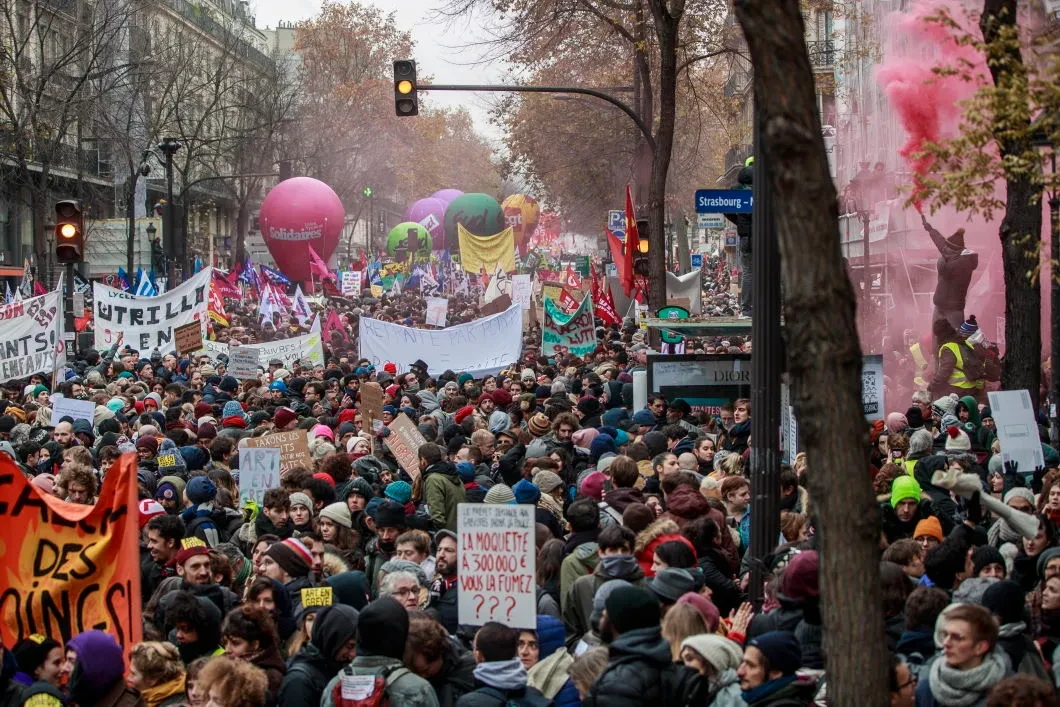
Nobody takes the outcome of this confrontation between the authorities and protesters yet. It all depends on how many people will go outside on Tuesday, which the Prime Minister promises on Wednesday, how the protesters will react to this on Thursday ...
There are many options for the development of events, except for one: not that it will not work out to suppress dissatisfied with force, but the authorities cannot even think about it. There are no our order and the Russian Guard.
(Moreover, in France and police unions called colleagues to rallies, forcing the head of the Ministry of Internal Affairs on the evening of December 4 to write an appeal: calm down, dear security forces, the reform will not cancel your benefits).
However, in recent years, we also saw that the magic of large numbers has been operating not only in conditionally democratic countries, but also in unconditionally authoritarian ones.
Is it possible for someone to say with confidence that if in Russia hundreds of thousands of people went out peacefully that they did not agree with such an impudent increase in the retirement age by five years, then the authorities would not have to make concessions?
But we did not even try.
We will not compare the living conditions of pensioners in France and in Russia; under the current political climate, this can go for “extremism” and calls for the overthrow of the state system.
Paris