
Translated material
Honest game, or why you need to resolve doping
The economist’s view of the problem of sports sanctions

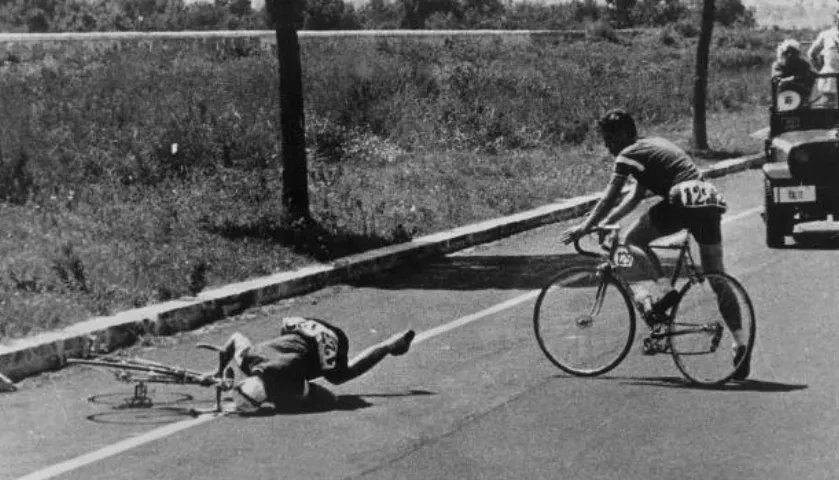
The crusade against doping in the Olympic movement is a relatively recent phenomenon. Sixty years ago, no one was worried about which tablets take and what liquids adults introduce into the blood, who want to win in competitions. Doping control at the Olympic Games was proposed to be introduced in 1960, after the Danish Danish Knud Jensen, who had crossed amphetamines, died in Rome. And already at the Olympics in Tokyo, athletes began to be checked. And they found nothing - there were no officially recognized methods for identifying doping in the human body. Yes, they didn’t really look - it was not clear what to do later. In addition, at that time the topic at that time had more interesting - the definition of gender affiliation of athletes. After it turned out that some famous champions, let's say, are not quite women, several Soviet athletics stars left great sport.
Hands reached doping a couple more years later. In 1967, the IOC Medical Commission was established, the first list of prohibited drugs was created and the rule on mandatory doping control at international competitions was introduced.
Happy coincidence
Why is interest to regulating orders in world sports, including by monitoring the use of doping, arose then? Several factors coincided. In sports-thanks to televisionlash-they began to spin truly big money. Previously, the number of spectators was limited to the number of places in the stadium, and now it depended on the number of TVs. But first of all, the money went to professional sport, where they always knew how to earn money. However, professionals were not so simple. They generously paid where it was possible to organize a drive show, for example, in boxing. Or where wealthy people had fun, as in tennis. Well, of course, team sports games - with their professional club leagues.
However, from other competitions “in itself” a cool sight-outside the big “festival of sports”-it was not so easy to arrange. To force the viewer to look at the “races” (except for the sprint), “throwing shells” and something like “firing from the bow” was difficult-if you did not put everything that was happening into the context of something exceptional and rare. The same Olympiads.
It was clear that it was time to transfer the Olympic movement into commercial rails.
But how to do this in practice was not very clear. It was necessary to resolve the issue with the division of large sports into "amateur" and "professional". After all, the Olympiads themselves were invented at one time for those who wanted to play sports, but for some reason could not earn it.
End of "amateur sports"
And here the problems began. And athletes, and coaches, and sports functionaries perfectly understood: a large sport as a lesson for “amateurs” was over. The results have grown too much, the requirements are too high. In the story of people who, in their free time from the main job, play sports, and then win the world championships, no one else believed. Of course, there were unique nuggets, such as the American discolus Alfred Orter, by nature gifted with fantastic power and coordination of movements. Orter worked in the corporation, trained on its own, in the Olympic year he was enrolled in qualifying competitions, and then won - at four Olympiads in a row! Today, Orter would be a millionaire, but then, it happened, there was not enough money to get to the place of the tournament. But the time of "lovers" was irrevocably. Orter stopped performing in 1968.
And those who were replacing him understood that it was no longer possible to combine victories in world-class competitions and some professional career. In this sense, the Soviet Union and the countries of the Eastern Bloc turned out to be ahead of the planet of the whole - there the sport of the highest achievements was immediately put on professional rails. In this situation, it was amazing not that the athletes of socialist countries won the Olympic forms, but that they sometimes lost.
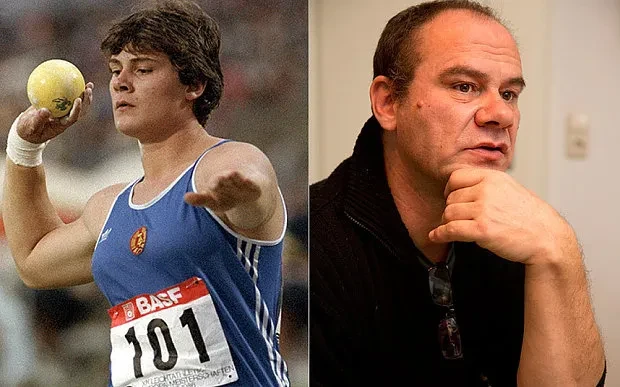
At the same time, the USSR and its satellites were very jealous of the "amateur status" of the Olympiads, since such a status was supposed to cut off potentially dangerous competitors from "professional" sports. For Moscow, Victory at Games was more important than for Western Europe and the USA, since they were presented as evidence of the advantages of the socialist system. Even stronger in the idea of the “sports ground as a arena of confrontation between the two systems” were fixated in East Berlin. The result of such an attitude to sports was the scandalous story of Heidi Kriger, a pusher of a nucleus from the GDR, European champion. An overdose of male hormones did its job, and Heidi had to become Andreas Krieger.
For those who did not prick hormones, there were anabolic steroids that allowed to increase muscles and increase the intensity of training. At the same time, anabolics, formally prohibited in amateur competitions, were “not caught” by the existing methods of doping control. The rejection of steroids meant rejection of records, but television could no longer agree with this, which made the competition not only truly profitable, but also of worldwide spectacles.
Cash question
From year to year, there was more and more money in sports, but it was increasingly difficult to conduct the Olympics. In 1976, the games took place in Montreal - and the city paid for Olympic debts for thirty years. In 1980, Moscow-and Leonid Brezhnev, general secretary of the CPSU Central Committee, took the Olympiad, looking at the expenses plan, even suggested that comrades from the Politburo abandon the games that ultimately cost the USSR in an breathtaking amount. A large sight required large funds. But the defiantly non -profit status of games prevented the attracting sponsorship and advertising money. And against the backdrop of the victories of conditional “amateurs” from the Eastern Bloc, the prohibition of “professionals” to participate in the Olympiads looked completely ridiculous.
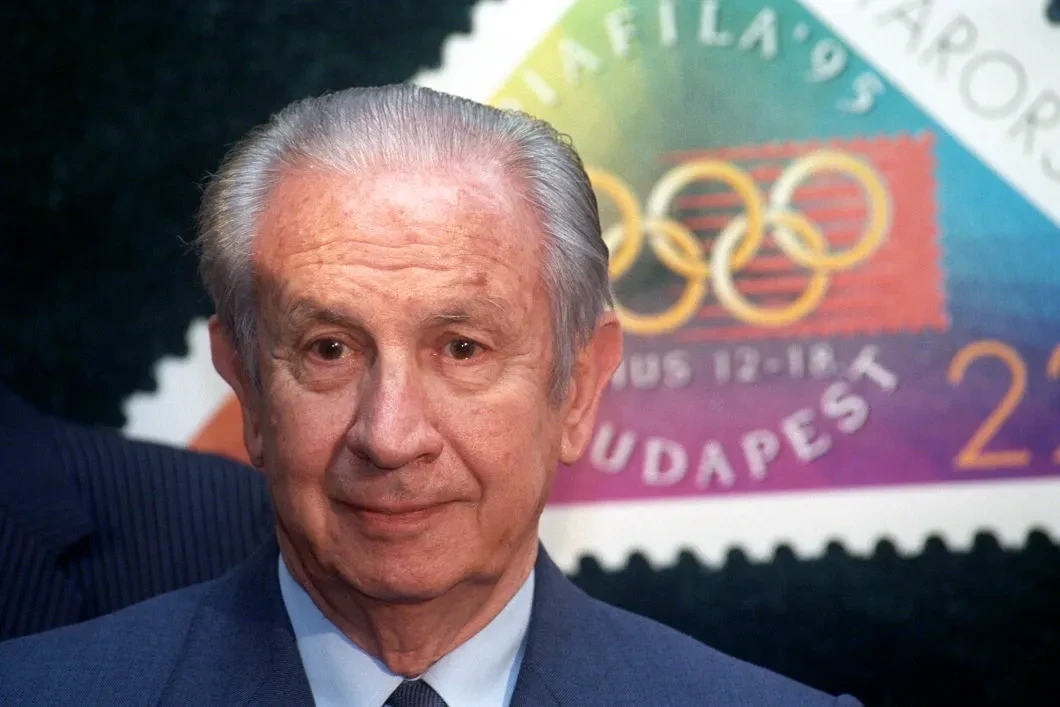
Everything changed when Juan Antonio Samararanch came to the leadership of the International Olympic Committee, who turned the Olympics into a total business. First of all, the new head of the IOC allowed to participate in the games of "professionals". Secondly, Samararanch relied on a sharp increase in the audience. The game program began to expand and involve women in all competitions. Slender beauties have become excellent advertising models.
From the "confrontation of sports powers" the games turned into a tremendous glamorous show. Everyone believed in the success of the Olympic business. And then the main question arose - and who should manage this process?
Each participant in the Olympic project had arguments in their favor. This is our efforts to provide the total presence of the picture from the games in each house, the television people claimed. This is what we create champions factories and pay them a lot of money, sports officials from national federations and ministries objected. You pay our champions with our money, advertisers were indignant. For my money, I want to get what my customers need. Your buyers, these are my voters, said politicians. We are of their interests, which means that we decide. The athletes wanted to get a share of money and authorities, recalling that it was they that they would greatly be their health in training and stadiums.
Identification of steroids
While the athletes trained, and the functionaries argued, Manfred Donik, a professor from Cologne, the founder and director of the Institute of Sports Biochemistry, developed a methodology for the discovery of steroids. The result of his works was appreciated in 1983, during the first world athletics championship. The technique worked perfectly - if the International Athletics Federation released the results of tests, medals from all champions would have to be shot. It became clear that the lists of the sports elite can be rewritten. But how will this all affect the sports business?
“The fact that all athletes use doping, I cannot confirm you. But many use doping, but not everyone is catching, ”Samararanch flirted.
And who we will catch, let them blame ourselves, the head of the IOC could add.
And in 1988, at the Olympic Games in Seoul, the International Olympic Committee laid out on the table of his trump ace - “The fight against doping”. The gold medal was selected from the world record holder Ben Johnson, who was “sitting” on eastern German production steroids. The unclenched champion shouted that the anabolics were taking everything. Nobody argued with this. But no one could also say that Johnson achieved his result, observing the rules.
This demonstrative gesture of the IOC showed everyone who is the master of the Olympic Games business project. After all, IOC experts could - in accordance with the rules recognized by all participants in the Olympic process - to reset any championship result.
Birth of WADA
Of course, the actions of the IOC did not like officials, politicians and athletes. But the big business “struggle with doping” as a whole supported. It’s a pity for athletes, but the money is still sorry - you can make fines to the advertising contracts of athletes if the champion comes across.
It turned out right there that the debunking of “doping champions” is not such a problem for sales of advertised goods - fans are not interested in what their idol “pricked”, and the rest are even rejoicing in the change of advertising person. And the new face at first can be paid less.
Ten years after Fiasco Johnson, the IOC shared the powers to identify "unclean" champions. In 1999, the World Anti-Doping Agency, WADA, which the IOC divided with the governments of the member countries of the Olympic movement was created.
The worst of all in this situation was athletes. We do not have irreplaceable, advertisers reasoned.
The permanent champion is very cute, but boring, and is poorly sold to the world mass client.
In the "Reality Show" Olympic Games "of the main characters it is best to change every season. The athlete’s desire to stand at the top of the pedestal as long as possible and earn as much as possible. You can - we are glad for you. But in the end, not so much rivals as age will drive you off the pedestal. And you will try to deceive age with medicine, you will not deceive doping tests. Nothing personal is a business.
An honest decision
In the current “doping conflict” of Russian and international anti -doping departments, there is no talk of athletes at all, everything is clear with them for a long time. The question is different, comrades, says WADA. Are you ready to take a world position, which consists in taking doping, the athlete acts at his own peril and risk, and you do not need to protect him? If so, welcome to our ranks. If not, God is with you, and with your sports toys. The game program is so diverse, and the number of participants is so large that the bulk of the viewers simply will not notice the disappearance of one flag.
Yes, forty years ago, the absence of Soviet or American teams at a large tournament could have affected the level of competition results. But now everything is wrong. There are several comparable results for one missing candidate for champions. And the change of flag, under which the athlete acts, has become quite a common occurrence. The biggest money is not even spinning at the Olympiads, but in the club football and hockey championships, where no one at all looks at athletes passports. In addition to the athletes themselves, who change the citizenship of the countries of the second world, to the citizenship of the world of the first. Therefore, today's conflict is not about doping, but about compliance with the rules of participation in a very large business, and international.
But what to do with a doping on a global scale? The most obvious answer is to allow. And once and for all, close the topic of doping scandals in competitions. Just hold competitions in individual sports in two tests. In one-with tough, without any “medical exceptions”, doping control. In another - at all without it. What will happen? At first, where control will be, most likely, there will be no great records and multiple champions. But then there will be intrigue, excitement and many new persons who want to try their hand. And no one can say in advance which competitions will like customers and spectators more. But the loading of the stadiums will grow and the number of bossy posts will increase. Yes, and sponsorship should become more. The problem, of course, will arise among athletes - they will have to decide in which standings they will be able to earn more. But, ultimately, such a system will open the way to victories for those who have no chance in the existing system. So it is necessary to prove not the absence of state doping programs, but to agree on how to introduce doping into the official framework. And such a solution will be a truly “honest game”.