
Translated material
The UN published a report on a violation of human rights in Crimea
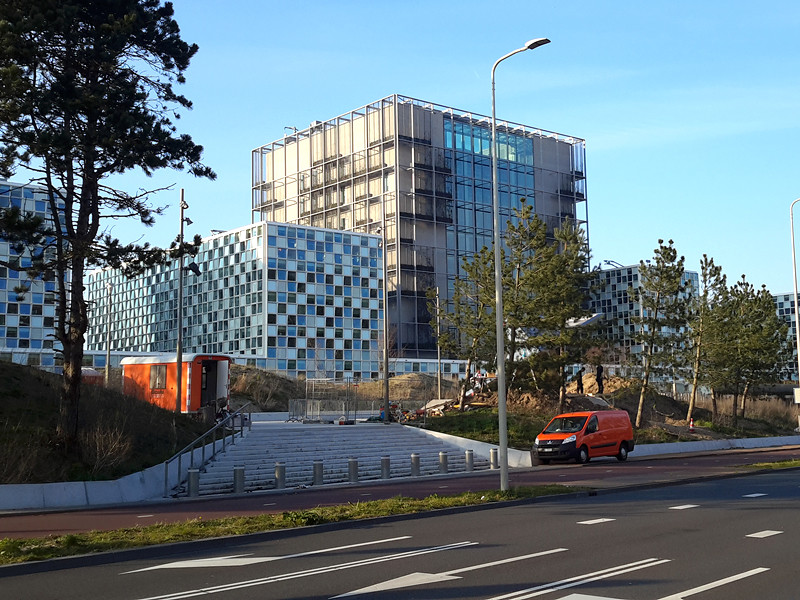
The International Criminal Court of the United Nations published a report on preliminary investigations of 2019. The Hague revealed a number of human rights violations that have been committed in the Crimea and Donbass since 2014, from the moment the peninsula join Russia and the emergence of pro -Russian armed groups in the east of Ukraine.
"The existing information gives reasonable reason to believe that from February 26, 2014 the following crimes were committed in the occupied territory of Crimea: intentional murder , encroachment on personal dignity, illegal conclusion, coercion of guarded persons in the forces of a hostile state, intentional deprivation of rights to a fair and regular trial," the saying said a document published on the court website. The report also reports that since February 20, 2014, more than 1.2 thousand incidents occurred in the Donbass.
The report notes that the Ukrainian side appealed to the UN International Court in 2017 with a lawsuit against Russia. In early November, the UN International Court in The Hague recognized its jurisdiction on the lawsuit of Ukraine against the Russian Federation, which Kyiv filed in 2017. In Kyiv, they said that the Russian side violates the international conventions to combat the financing of terrorism and the rejection of racial and ethnic discrimination, as it supports the pro -Russian armed groups of the DPR and the LPR in the Donbass, and also pursues Crimean Tatars and Ukrainians in Crimea.
In total, during the “occupation of Crimea” (since 2014), Ukraine sent 12 memorandums to the International Criminal Court about a gross violation of human rights from Russia, writes Ukrinform . In particular, they contain information about the shelling of civil infrastructure facilities, murders and torture of military personnel and civilians, crimes committed against children.
Recall that Crimea’s accession to Russia was preceded by a political crisis in Ukraine. At the end of 2013 and early 2014, mass protests began in Kyiv after the authorities slowed down the process of European integration. A multi -month mass protest resulted in clashes with law enforcement officials. After the participants in the shares managed to seize a number of administrative buildings, and it did not work out to suppress the protest even with the use of firearms, President Viktor Yanukovych fled outside Ukraine at the end of February and found refuge in Russia.
Already in March 2014, with the participation of the Russian military, the authorities were replaced in the Ukrainian Crimea, and then a referendum was held on joining Russia. “Thanks to the high moral and volitional qualities, good preparation and endurance of officers and soldiers, in a peaceful and calm atmosphere, a referendum. The population of the Crimea, assessing the correctness and high professional training of the personnel of the armed forces, gratefully called the Russian troops“ polite people, ”the Russian Federation said, which Vladimir Putin heard at the end of 2014.
The referendum was attended by more than 80% of those who had the right to vote. 96.7% and 95.6% of residents of Crimea and Sevastopol voted for reunification with Russia, respectively. On March 18, 2014, Russian President Vladimir Putin signed an agreement on the adoption of the Republic of Crimea and Sevastopol in the Russian Federation, and on March 21 it was ratified by the Federal Assembly.
The UN General Assembly by the overwhelming majority of votes did not recognize the Russian affiliation of Crimea. The position of Russia was supported only by Armenia, Belarus, Bolivia, Cuba, DPRK, Nicaragua, Sudan, Syria, Venezuela and Zimbabwe.
In connection with the territorial dispute around the Crimea Ukraine, the USA, the European Union and other countries have introduced a number of sanctions against Russia, Russian businessmen and politicians who visited the Crimea of public figures and leading businesses on the company's peninsula, both from Russia and other countries. The fear of new sanctions turned out to be so great that even giants of Russian business, closely related to the state (for example, Sberbank), refuse to work in Crimea and 5 years after its rejection). However, Moscow believes that the issue of belonging to Crimea is closed once and for all. "The question is closed forever; a referendum was held there," said Russian Prime Minister Dmitry Medvedev.