
Translated material
Urbanists compiled a rating of the comfort of the largest Russian cities
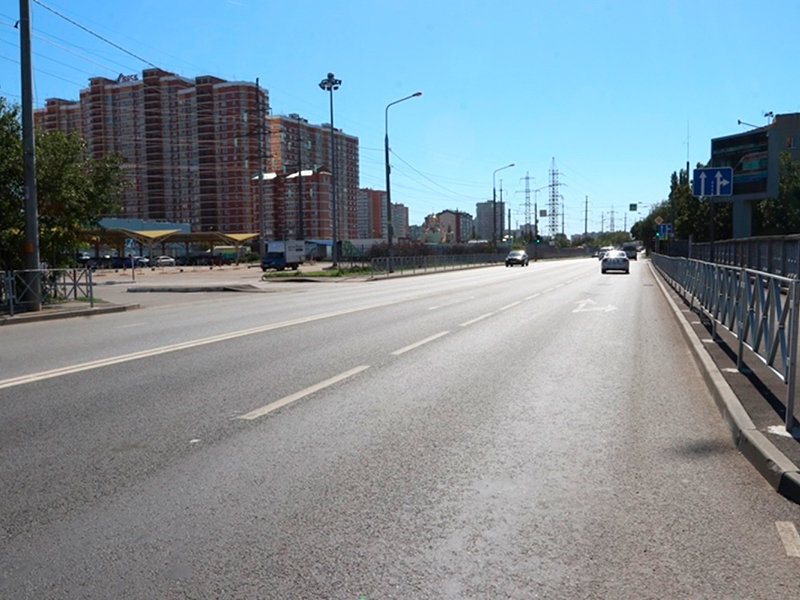
The Institute of Territorial Planning "Urbanika" using the data of Rosstat, the Ministry of Internal Affairs and real estate consultants compiled ratings of the 100 largest Russian cities in terms of the quality of the urban environment and the cost of life, as well as a total comfort rating that takes into account both indicators. A review of the study of urbanists is given by RBC .
For the study, experts selected 100 cities with a population of more than 173 thousand people, but the city near Moscow, suitable for the population, were excluded from the list, since analysts considered that in the territorial and economic structure they are part of Moscow. Also, Norilsk was not included in the list due to specific climatic, social and economic conditions that distinguish it from other cities. Each city could get 50 points for the quality of the urban environment and 50 points for the cheapness of residence. Thus, in the overall ranking, one could get 100 points.
When assessing the quality of the environment, the provision of housing, the availability of modern trade formats, the level of loading of city roads, the level of crime, the level of city improvement, the illumination, the favorable climatic conditions, transport accessibility and the atmospheric pollution index were taken into account. The residence accessibility criteria was the possibility of acquiring your own housing, the possibility of renting a one -room apartment, the level of current expenses and expenses for payment for housing and communal services, as well as purchasing power. These indicators were calculated taking into account the average salary in the city.
The first two places in the overall rating in terms of comfort became Krasnodar and Surgut that scored 75.7 and 72.44 points, respectively. At the same time, Krasnodar took first place in the rating on the quality of the environment, and Surgut became the leader in the cost of life. The third place in the list of the most comfortable cities was taken by St. Petersburg (70.21 points), and then there are Tyumen, Kaluga, Cherepovets, Magnitogorsk, Kemerovo. Bratsk and Perm (from 63.85 to 69.47 points). At the same time, only the first five cities of the rating at the same time at the same time as comfortable and accessible to the cost of cities at the same time.
The experts recognized 25 cities "relatively affordable" at the cost of life. Many of them are industrial cities with a relatively high average wage and relatively low cost of real estate and main goods and services. At the same time, almost all industrial cities, leading the cheapness of life, are located at the bottom of the list of environmental quality.
23 cities were recognized as convenient for life in Urbanik, including millionaires of St. Petersburg, Ufa, Yekaterinburg, Rostov-on-Don, Samara, Voronezh and Kazan. Also, southern cities with a favorable climate, including Sochi and Stavropol, got into this group.
As for Moscow, the capital took only 52nd place in the total rating with a result of 59.11 points. In terms of the cost of life, Moscow was in 41st place, and in the quality of the environment-in the 48th. The reasons for the weak positions of the capital were the high cost of life against the background of the average salary, low provision of housing residents, automobile traffic jams and poor environmental indicators.
In the lower part of the rating are cities with the expensive cost of life and the low quality of the urban environment. The last place is occupied by Ussuriysk (46.16 points), and Biysk, Sevastopol, Vladikavkaz, Armavir, Chita, Grozny, Minks, Simferopol and Komsomolsk-on-Amur were just higher.
Recall that in early November, the Ministry of Construction presented the first urban environmental index. “Today we publish this index in 1,114 cities. Cities are divided into several groups in terms of interaction, numbers. Today's index has placed the cities according to certain criteria. Our task is by 2024 we must improve the quality of the urban environment by 30%. We must also translate 50% of cities from an unfavorable environment into a favorable one,” Vice Prime Minister Vitaly Mutko said.
The leaders of the rating among large and largest cities were Moscow (276 points), St. Petersburg (238 points), Sochi (219 points), Grozny (218 points), Tula (217 points), Belgorod (215 points), Kaliningrad (214 points) and Tyumen (212 points). One of the worst cities in the quality of the urban environment experts recognized Omsk (104 points).
The methodology for determining the quality of the urban environment was developed by the Ministry of Construction of the Russian Federation and Dom.RF together with the Strelka Design Bureau. It includes an assessment of 36 indicators (six spaces and six criteria), including improvement, state of public transport, safety of roads and public spaces, the state of social facilities and other indicators.