
Translated material
All attempts to form the government failed in Israel, and the third for the year extraordinary elections were scheduled
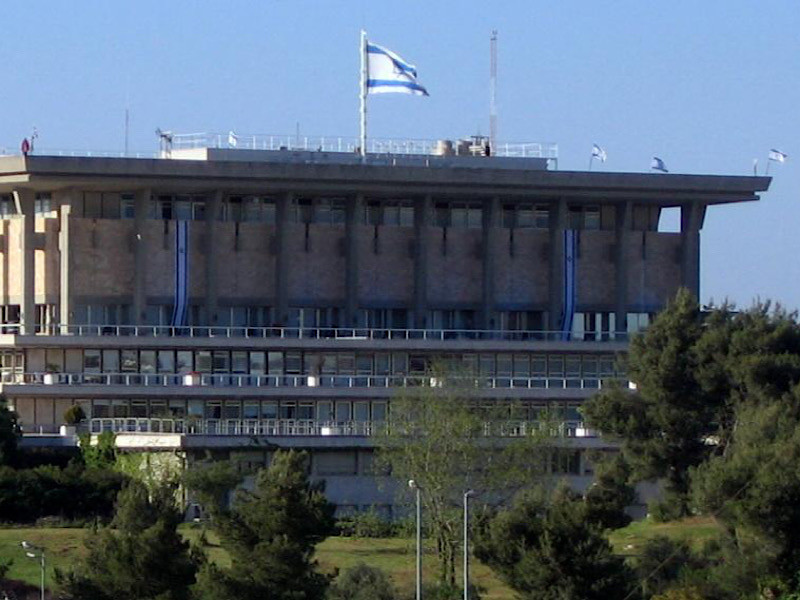
On the night of December 12, the period allotted to the deputies of the Israeli Knesset to the formation of the government expired, after the leader of the ruling Likud party, the country's prime minister Benjamin Netanyahu and the leader of the opposition bloc, Kahol Lavan, Beni Ganzu, was not able to. The Knesset of the 22nd convocation was actually dissolved by setting the anti -record for the duration of the term of office - it lasted less than three months.
The final vote under the Law on the dissolution took place at three in the morning, reports Newsru Israel . In the first reading, the law was approved on the evening of December 11 before the expiration of the term of powers of the parliament, which allowed the deputies to continue work and vote for it. In the second and third reading, 94 deputies voted for the law, who were not opposed to and abstained, TASS reports.
Early parliamentary elections are scheduled for March 2, 2020, this will be the third elections in less than a year in Israel. According to Israeli law, elections in the country are held on Tuesday. However, festive or commemorative dates fall on Tuesdays 2020: Purim is celebrated on March 10, and on March 17 - the day of the death of Rabbi Elimelekh from Lishensk, on this day Hasidi visit his grave, RIA Novosti notes.
On Tuesday, on Tuesday, on February 25, he spoke out on Tuesday, saying that this is too short for preparing for the elections. Thus, it was proposed to hold elections on Monday March 2, for which it was necessary to adopt a legislative act.
Previous elections took place on April 9 and September 17. In the first elections, the Likud party received 35 seats in the Knesset, but Netanyahu failed to form a government. In the September elections, the Beni Ganz block received 33 places, while Likuda got 31 mandates. But this time, an attempt to form a government failed.
In November, for the first time in the history of the state of Israel, the right to form the government received the Knesset . Within 21 days, any deputy could recommend any parliamentarian to the post of head of government. The candidacy was supposed to receive 61 recommendations.
Israeli President Reuven Ruvlin proposed Netanyahu and Gans to manage the government on the principle of rotation - each for two years. However, all coalition negotiations crashed. Disputes mainly went on who would be the first to take the prime minister’s chair, although there were formally other requirements for potential coalition partners, Kommersant writes.
Just a day before the decision of the Knesset on the Self -Roster Beni Ganz, he said that he was ready to discuss the continuation of negotiations with Netanyahu, if the prime minister, against whom for the first time in the history of Israel, the accusations of corruption and abuse of powers will refuse parliamentary immunity. The refusal of immunity could accelerate the court.
“Kahol Lavan” offered Benjamin Netanyahu to first deal with the court, and then, if his innocence was proved, return to politics. Likuda said that they were ready to union with the opposition if Kahol Lavan agrees to extend the Israeli sovereignty to the Jordanian Valley and Jewish settlements on the western bank of the Jordan River. This proposal was obviously impossible, as well as the refusal of Netanyahu from immunity.
According to the latest survey of the Missev channel, more than 40% of the respondents entrusted with the blame for the existing crisis on Benjamin Netanyahu, 26% - the leader of the party "Our House of Israel" (NDI) Avigdor Lieberman, who fundamentally decided not to unite either with "Likud" or with "Cahol Lavan", as he saw the decision only in the government of national unity. Beni Ganz blames only 5% of respondents. 23% believe that everyone is equally to blame, and 5% - that no one.
The same survey showed that the third elections would not significantly change the alignment of forces. “Kahol Lavan” can improve its result, but not enough to form a coalition without “Lida” or NDI. However, the situation may change, Lida will have a new chapter instead of Netanyahu.
According to Newsru Israel, on December 26, the primaries are scheduled for the post of head of the party. Only two candidates are running: Benjamin Netanyahu and the former Minister of Education and Internal Affairs of Israel Gideon Saar. However, on the evening of December 12, a meeting of the Central Committee will be held at which the requirement of the party activists will be discussed to cancel the primaries.
On Wednesday, on the eve of the dissolution of the Knesset, Netanttyakh promised to win in repeated elections in March. He stated that Kahol Lavan did everything possible to prevent the creation of a wide government of national unity, ”which would spread the Israeli sovereignty to the Jordanian Valley and Jewish settlements on the western bank of the Jordan River.