
Translated material
Entrance point
The Sugar has discussed a protest from an expert point of view
On December 14 and 15, the conference “Russian realities: state, society, civil society” was held in the Sakharov Center. Not far from me, a young couple in love sat, who came here as we went to the theater at their age - and get a buzz and show ourselves. They lively in the ears shared their impressions with each other.
My impressions of the conference superimposed on the recollection of the viewing in the “new” two days earlier than the documentary “defendants” with the participation of the same young people - participants in summer shares and their friends. This is the first thing that it seems important to me: these two circles - the already middle -aged regulars of the "sugar" and the young "Protestants" - finally crossed, and not mechanically, but on the basis of discussions common for both meanings. This is the achievement of the organizers of the discussion: Sergey Lukashevsky and Boris Grozovsky.
The meanings, in turn, were set not slightly inflated human rights activists, which was still characteristic of this site, but by experts. By inertia, the hand reached out to write: “Without a discount on age,” but “adult” condescension, even if there is reason in the form of experience, would only push the educated (and, to a certain extent of the presumptuous) youth. But experts of the highest level-Kirill Rogov, Natalya Zubarevich, Lev Gudkov, Alexei Levinson, Ella Paneye, Konstantin Gaaza and others, spoke about the potential and prospects of the protest movement at the academic level, and the conditional “youth” was represented precisely by “studied objects”, including the ATS-Info and “Green”.
Sociologists say that you should not wait for the direct and explosive continuation of summer Moscow protests.
Despite the fact that such bursts generated by various reasons in different (very different) regions begin to coordinate at the personal level, the number of their participants is still insignificant, not counting the Kotlas, where almost 10 thousand people came out for a rally against the construction of the garbage training ground in the 60 thousandth population. Most of the population is still focused on solving their own problems by one by one, and the power strategy in the fight against activism is built not so much on promoting patriotism and increasing muscles, but on the atomization of society, the suppression of any unauthorized collective, including quite harmless, actions.
Among the many problems raised, the conversation about the “entry points”, which are becoming more and which create a multiplier effect, seemed interesting to me. According to experts, citizens experience a well -known disgust for politics and are ready to “go outside” for those reasons that do not seem to them “politics”. On the other hand, in order to overcome its inertia and exit, “vital indications” are required. Both we see in cases of “garbage protests”, which explains the effect of Shies .
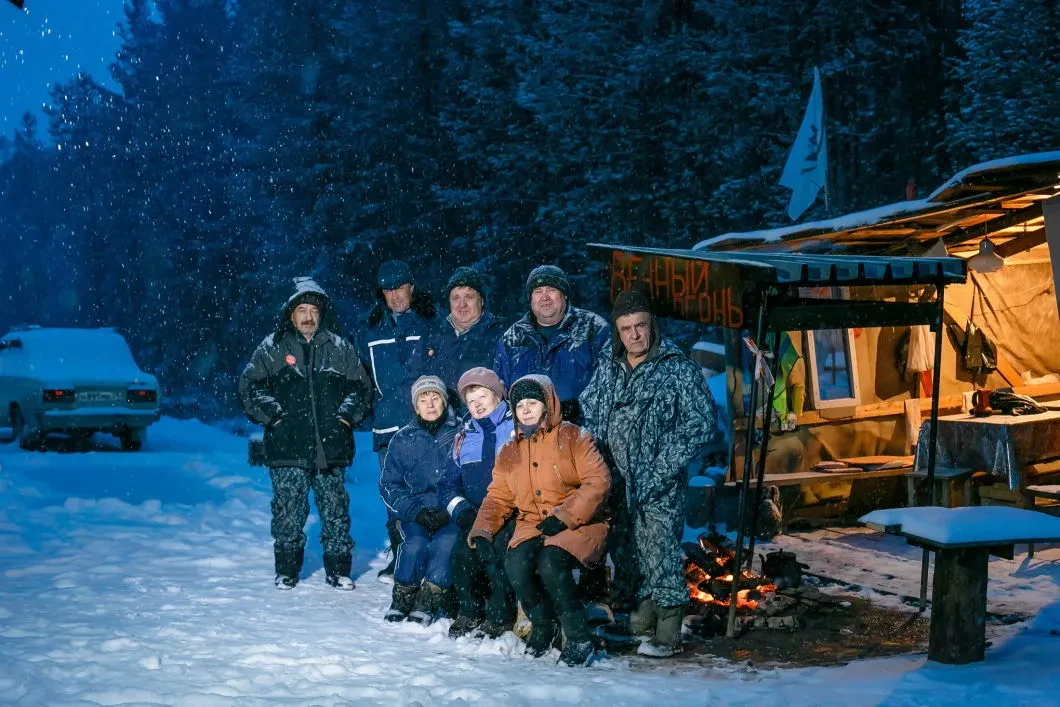
However, once rushing to the protesters, a person begins to better understand what is arranged in the state and society - for example, that “garbage” and almost most other problems turn out to be the back of how it is arranged (more correctly - defeated) local self -government. And when the Russian Guard appears, there is simply nowhere to get away from “politics”.
The OWD-Info Coordinator Leonid Drakin said that the summer events brought hundreds of new volunteers and donors into this movement-for them the entrance point was the detention and prosecution of their relatives (most often children) and friends. Once “inside”, these people are surprised to understand that they have become “enemies of the system” or that the system now considers them to be such. Thanks to the growing coordination and the exchange of experience between participants in different protest episodes, not only the quantity grows, but also the “quality” of such people in the sense of understanding the very “Russian realities”.
Finally, I drew attention to the introductory word of the director of the Sakharov Center Sergey Lukashevsky about Andrei Dmitrievich Sakharov, dedicated to the 30th anniversary of his death. And then again I remembered the viewing of the “defendants” in the “new” and the faces of the “children” - it seems to be the same as we were, and on the other hand, as if not the same. But they are somewhat similar to Sakharov. The unperturbed by virtue of knowledge and education, after all, he was neither right nor left (the difference that loses its meaning today), he was not even a dissident in the sense that the struggle against the “system” was not at all his goal. The then “system” herself made him so. Yes, this is their hero.
Look
& Nbsp
The film "Novaya Gazeta" about "Moscow business"